

A new legal shield for reproductive and transgender care, a public worker insurance system actuaries say is in a genuine death spiral, and looming federal Medicaid changes are all colliding in New Jersey at once, alongside real new investment in rural clinics and life sciences.
Five Healthcare Stories Reshaping New Jersey Right Now
New Jersey’s healthcare landscape is moving on several fronts simultaneously right now, spanning new legal protections, a genuinely troubled public insurance system, looming federal eligibility changes, and fresh state investment in both rural care and life sciences research. Here is a closer look at five developments worth understanding together.
A New Shield Law Now Covers Gender-Affirming Care Too
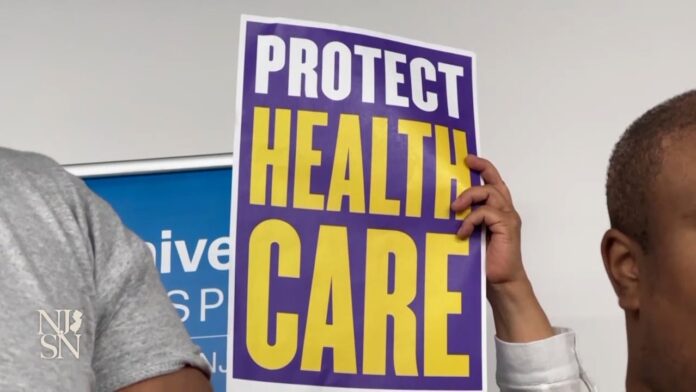
Governor Mikie Sherrill signed S2260/A2218 into law on August 20th during a ceremony outside Planned Parenthood of Montclair, expanding New Jersey’s existing shield law protections to explicitly cover gender-affirming care alongside abortion, IVF, and contraception. The law bars state entities from assisting out-of-state investigations or legal actions tied to jurisdictions where that care has been criminalized, prohibits extraditing individuals over it, and prevents state licensing boards from disciplining local providers who perform it. It also creates a new criminal offense specifically for interfering with reproductive healthcare, making it illegal to injure, threaten, intimidate, or physically block patients or providers, or damage property, in an effort to disrupt access to these services.
Sherrill framed the law primarily as a healthcare issue rather than a purely political one, pointing to cases where pregnant women faced life threatening complications in states where physicians hesitated to perform necessary procedures out of legal fear. Asked afterward about gender-affirming surgery specifically for minors, she said that decision should remain a matter for individual families. The signing drew a crowd estimated at more than 100, including Senate Majority Leader Teresa Ruiz and Assembly Speaker Craig Coughlin, reflecting how central reproductive rights has remained as a political issue for New Jersey Democrats heading into the midterms. It is worth noting reproductive and transgender healthcare policy remains a genuinely contested issue nationally, with supporters framing these protections as essential healthcare access and critics raising separate concerns, particularly around care for minors, that continue to play out in courts and legislatures across the country.
The Public Worker Health Plan Is in an Actual “Death Spiral”
Separately, and with genuinely serious financial stakes, the local government portion of New Jersey’s State Health Benefits Program has entered what state Treasury officials and the plan’s own actuaries now openly describe as a death spiral. As premiums climbed year after year, healthier, younger municipal workforces increasingly left the state run plan for private insurance, leaving a smaller, sicker, and more expensive population behind, which then drives premiums higher still and pushes even more towns to leave. Only 56.2 percent of local governments remained enrolled in the program as of this past January, and actuaries have recommended local government premiums rise between 17.3 and 22 percent this year, with active state worker premiums projected to climb 13 to 15.1 percent.
Compounding the crisis, municipalities and school districts collectively owed the public worker health programs nearly 50.5 million dollars in unpaid arrears earlier this year, and the local plan separately owes the state worker plan roughly 120 million dollars under a 2025 law that let it borrow money just to remain solvent, a loan legally required to be repaid within a year of being taken. The New Jersey League of Municipalities, Conference of Mayors, and Association of Counties issued a joint statement warning that without meaningful structural reform, the death spiral will continue worsening, eventually making the plan unaffordable for employees and taxpayers alike.
Medicaid Eligibility Rules Are About to Shift
Beginning October 1st, specific groups of non-citizen immigrants will no longer qualify for NJ FamilyCare benefits, a change driven by shifting federal eligibility alignment rather than a New Jersey specific policy decision. Separately, New Jersey health officials are actively pushing back against new federal Centers for Medicare and Medicaid Services guidelines set to take effect in January, which would require individuals seeking temporary medical exemptions to submit extensive employment and physician documentation to maintain that status. State officials have warned the new federal paperwork burden risks inadvertently stripping coverage from disabled, mentally ill, or otherwise vulnerable residents who may struggle to navigate the added documentation requirements even when they remain genuinely eligible.
Real Money Moving Into Rural Care and Life Sciences
Amid the financial strain elsewhere in the system, New Jersey has also launched new investment on two considerably different fronts. The state opened a dedicated tracking portal for its New Jersey Rural Health Transformation Program, a five year, 147.25 million dollar funding pipeline aimed at overhauling medical access and clinic operations across 11 designated rural counties, serving more than 1 million residents who often face considerably longer travel distances to reach specialty or emergency care than their counterparts in denser parts of the state.
Separately, the New Jersey Economic Development Authority partnered with RWJBarnabas Health to commit 10 million dollars into a new life sciences venture fund, based out of the upcoming Health and Life Science Exchange, known as HELIX, in New Brunswick. The fund is specifically targeted at translational medicine and drug discovery startups, positioning the state to compete more directly for early stage biotech investment that has historically concentrated more heavily in neighboring markets.
Taken together, these five developments capture a healthcare system moving in genuinely different directions at once, expanding legal protections for reproductive and transgender care, absorbing a public insurance system under real financial strain, bracing for federal Medicaid rule changes, and still finding real new money to invest in rural access and biotech innovation. How those threads intersect over the next year will likely shape New Jersey’s healthcare landscape considerably more than any single piece of this puzzle could on its own.
















