

- This event has passed.
Time for Three Ranaan Meyer, Nick Kendall & Charles Yang
Time for Three Brings a Boundary-Breaking Musical Experience to Princeton Festival: Grammy-Winning Trio Set to Transform Morven Museum & Garden
June 18 @ 7:00 PM – 11:30 PM
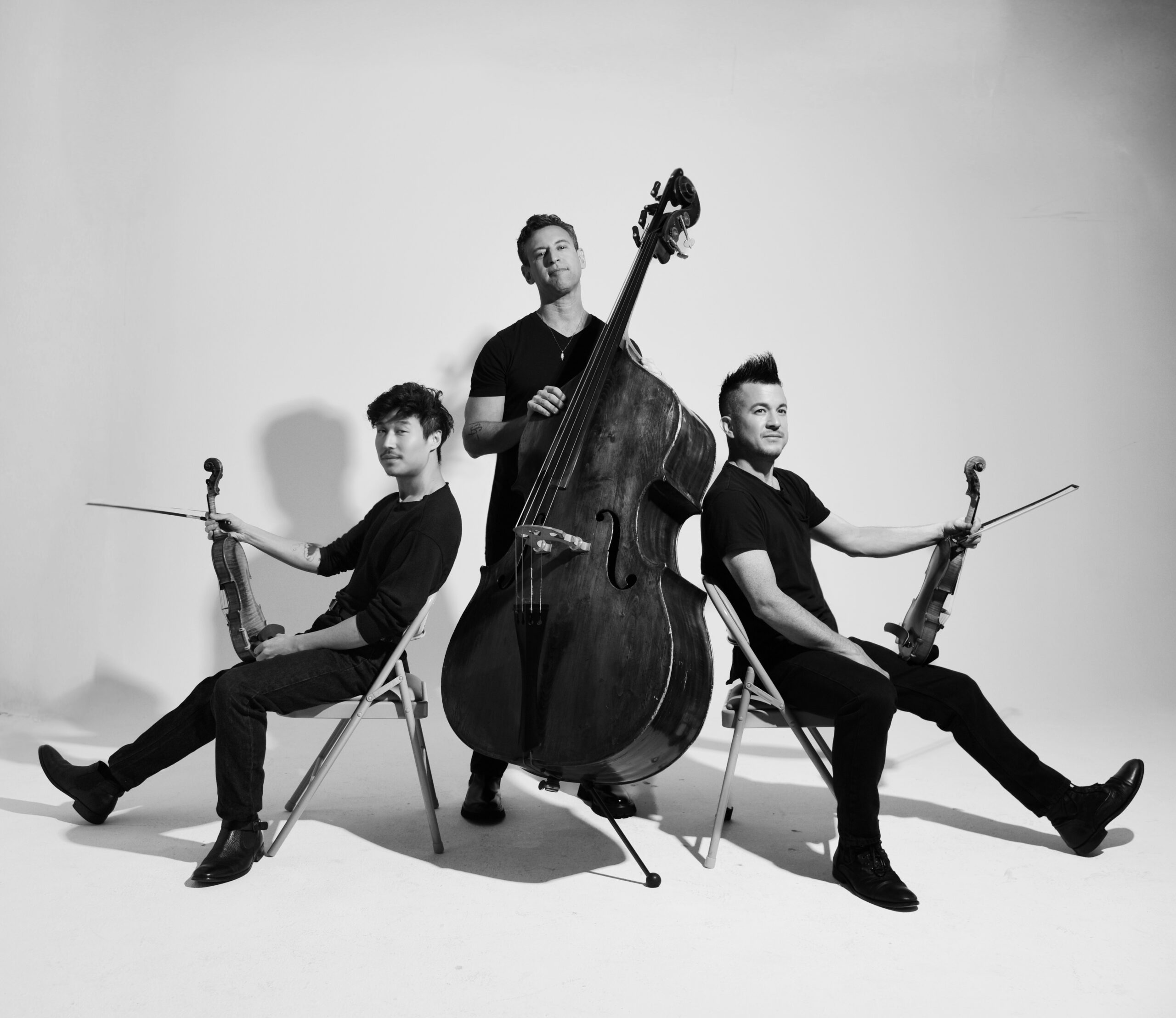
Every generation produces artists who challenge expectations and redefine what audiences believe is possible within a particular art form. In classical music, those moments of transformation often arrive quietly before suddenly becoming impossible to ignore. Time for Three has spent more than two decades creating exactly that kind of disruption, building a reputation as one of the most innovative and captivating ensembles in contemporary music. On June 18, Princeton audiences will have the opportunity to experience that creative energy firsthand when the Grammy and Emmy Award-winning trio takes the stage at Morven Museum & Garden’s Performance Pavilion as part of the Princeton Festival.
At a time when audiences increasingly seek experiences that break down traditional barriers between genres, generations, and musical styles, Time for Three has emerged as one of the most compelling success stories in American music. Their approach is both sophisticated and accessible, virtuosic and welcoming, technically brilliant and emotionally immediate. The result is a sound that feels simultaneously rooted in classical traditions and completely unrestricted by them.
For many music lovers, genres serve as convenient categories that help define expectations. Classical music follows one path. Folk and Americana follow another. Singer-songwriters occupy their own lane. Jazz, bluegrass, pop, and contemporary acoustic music often exist in separate worlds. Time for Three ignores those boundaries entirely.
The ensemble’s performances operate in a space where technical mastery meets fearless creativity. Classical precision merges with improvisational freedom. American roots traditions collide with contemporary songwriting. Chamber music elegance exists comfortably alongside the energy and spontaneity of a rock concert. The result is something remarkably rare in today’s cultural landscape: a musical experience that genuinely feels new.
Comprised of double bassist and vocalist Ranaan Meyer alongside violinists and vocalists Nick Kendall and Charles Yang, Time for Three has developed a reputation for delivering performances that challenge preconceived notions of what a string ensemble can accomplish. Their chemistry as performers is immediately apparent. Years of collaboration have produced an intuitive musical connection that allows the trio to move seamlessly between styles, moods, and influences while maintaining a distinctive identity all their own.
That identity has attracted acclaim from some of the most respected figures in the music world. Their performances have earned praise not only from audiences but from leading conductors, composers, and musicians who recognize the extraordinary technical and artistic achievement behind the group’s seemingly effortless performances. Few endorsements carry more weight than that of legendary conductor Sir Simon Rattle, who described the ensemble as “three benevolent monsters” whose extraordinary abilities are matched by an infectious joy that resonates throughout every performance.
The description is fitting because joy remains one of the defining characteristics of Time for Three’s music. In an era where technical excellence is often celebrated in isolation, the trio reminds audiences that virtuosity and emotional connection are not opposing forces. Their performances are as engaging emotionally as they are impressive musically. Audiences do not simply admire the musicianship; they become part of the experience.
That quality has helped Time for Three build a diverse and devoted following around the world. Traditional classical audiences appreciate the remarkable technical skill and musical sophistication that underpin every performance. Younger listeners are drawn to the ensemble’s contemporary sensibilities and willingness to embrace influences from across the musical spectrum. Casual concertgoers find themselves captivated by performances that feel welcoming rather than intimidating.
Their rise to international prominence reflects broader changes occurring throughout the performing arts. Today’s audiences increasingly value authenticity, innovation, and experiences that feel relevant to contemporary life. Time for Three embodies all three. Their music honors tradition without becoming trapped by it. They celebrate musical history while actively participating in its evolution.
The Princeton Festival performance arrives during a period of remarkable growth and recognition for the ensemble. Grammy and Emmy honors have elevated their profile while introducing their music to new audiences. Yet despite growing acclaim, the group has maintained the adventurous spirit that first distinguished them from conventional ensembles.
What makes their success particularly significant is the way it reflects the changing nature of American music itself. The United States has always been a cultural crossroads where traditions intersect, influence one another, and evolve into something entirely new. Time for Three embraces that spirit. Their music draws from multiple traditions not as a novelty, but as a natural reflection of America’s diverse musical heritage.
Listeners may hear echoes of classical concert halls, Appalachian folk traditions, contemporary songwriting, bluegrass virtuosity, jazz improvisation, and cinematic storytelling all within a single performance. Yet the experience never feels fragmented. Instead, the trio creates a unified musical language that feels both familiar and surprising.
The setting for the performance adds another layer to what promises to be a memorable evening. Morven Museum & Garden has become one of New Jersey’s most treasured cultural destinations, providing a backdrop that combines history, architecture, and natural beauty. The Performance Pavilion offers audiences an intimate connection with performers while preserving the communal energy that makes live music such a powerful experience.
Summer concerts possess a unique magic, particularly when presented in outdoor settings. As daylight gradually gives way to evening, music takes on a different dimension. The natural environment becomes part of the performance itself. Audiences relax into the experience in ways that are difficult to replicate within traditional concert halls. For an ensemble like Time for Three, whose performances emphasize connection and spontaneity, the setting is particularly well suited.
The Princeton Festival has earned a reputation for presenting artists who challenge, inspire, and elevate the cultural conversation throughout New Jersey. By bringing Time for Three to the festival stage, organizers continue a tradition of introducing audiences to performers who represent the future of their respective art forms while maintaining deep respect for the traditions from which they emerge.
That balance between innovation and tradition is perhaps the defining characteristic of Time for Three’s artistic mission. They understand that music is not a museum piece preserved behind glass. It is a living, evolving language capable of connecting people across generations, cultures, and experiences. Every performance serves as a reminder that artistic excellence and broad accessibility are not mutually exclusive goals.
For New Jersey audiences, the June 18 appearance represents an opportunity to experience one of contemporary music’s most exciting ensembles at the height of their creative powers. Whether attendees arrive as devoted classical enthusiasts, Americana fans, curious first-time listeners, or simply lovers of exceptional live performance, they are likely to leave with a renewed appreciation for music’s ability to transcend labels and expectations.
In a world increasingly defined by categories and divisions, Time for Three offers something refreshingly different. Their music celebrates the possibilities that emerge when boundaries disappear and creativity takes center stage. It is a philosophy that resonates far beyond the concert stage and helps explain why audiences around the world continue to embrace the trio’s distinctive artistic vision.
When the first notes ring out across Morven Museum & Garden on June 18, Princeton Festival attendees will witness far more than a concert. They will experience a powerful example of what happens when extraordinary talent, fearless imagination, and genuine passion converge. It is the kind of performance that reminds audiences why live music remains one of the most meaningful and transformative cultural experiences available today.
For one summer evening in Princeton, Time for Three will once again demonstrate that the future of music is not about choosing between traditions. It is about bringing them together in ways that inspire, surprise, and move audiences long after the final note fades into the night.
Princeton Symphony Orchestra
info@princetonsymphony.org
info@princetonsymphony.org











