

- This event has passed.
Mark Morris Dance Group: Dances to American Music
Mark Morris Dance Group Brings “Dances to American Music” to New Jersey in a Landmark Night of Movement, Rhythm, and Cultural Expression
May 30 @ 8:00 PM – 11:30 PM
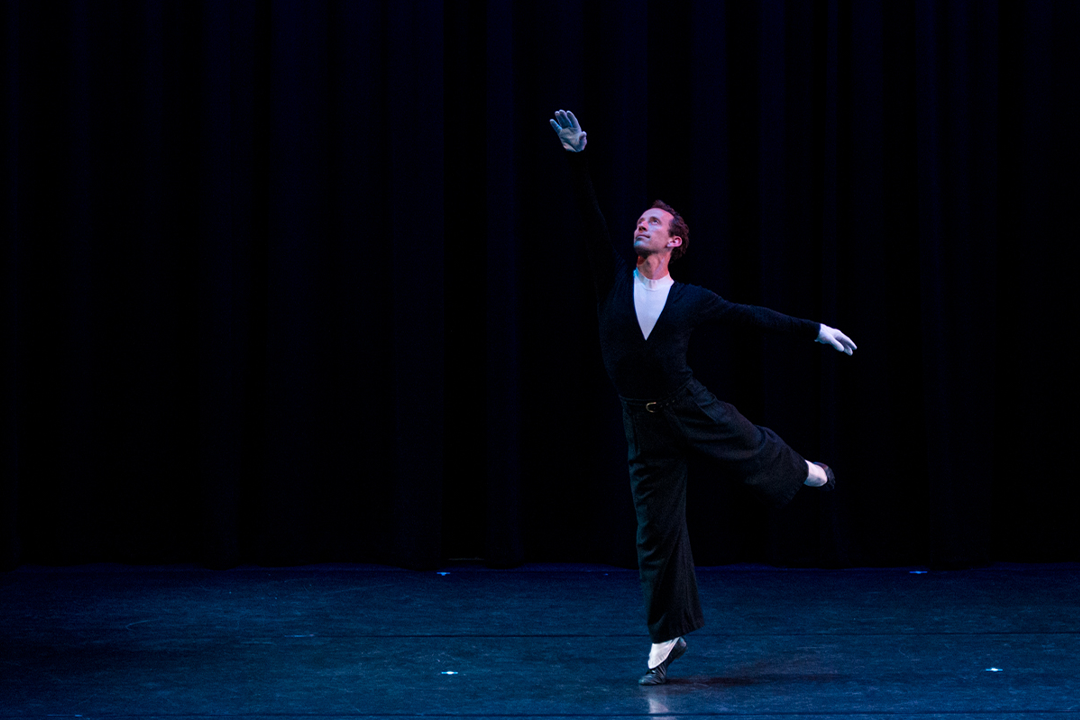
The arrival of the Mark Morris Dance Group at Matthews Theatre on Saturday, May 30, 2026 at 7:30 PM represents more than a performance—it marks a defining cultural moment within New Jersey’s evolving performing arts landscape. With “Dances to American Music,” one of the most influential choreographers of the modern era delivers a program that does not simply interpret American music, but reframes it through movement, structure, and emotional clarity in ways that continue to challenge and elevate the art form.
For audiences following the most compelling theatre and dance programming across the state, Explore New Jersey continues to spotlight productions that shape the region’s cultural identity through its dedicated theatre coverage, where performance, choreography, and artistic innovation intersect at the highest level.
At the center of this program is Mark Morris himself—an artist whose reputation has been built on an uncommon ability to fuse music and dance into a single expressive language. Morris does not treat music as accompaniment. He treats it as architecture. His choreography exists within the structure of the score, responding to phrasing, rhythm, and tonal shifts with a level of musical intelligence that places him in a category few choreographers occupy.
“Dances to American Music” is constructed as both a celebration and an examination of American sound. It draws from multiple musical traditions—country, jazz, contemporary classical, and early American forms—while maintaining a cohesive artistic voice. The result is not a collage, but a carefully calibrated program that reflects the diversity, contradiction, and vitality of American cultural expression.
The evening opens with “Going Away Party,” set to the music of Bob Wills, a figure synonymous with Western swing and the blending of country and jazz traditions. Morris approaches this material with a sense of playfulness that never sacrifices precision. The choreography captures the buoyancy of Wills’ sound while introducing subtle emotional undercurrents, allowing the piece to oscillate between exuberance and introspection. It is a work that invites the audience into its energy, but also challenges them to consider the emotional complexity embedded within seemingly lighthearted music.
From there, the program shifts into a markedly different register with “Northwest,” set to music by John Luther Adams. Here, Morris engages with rhythmic traditions influenced by Yup’ik and Athabascan cultures, translating them into a contemporary movement vocabulary that emphasizes community, connection, and spatial awareness. The choreography becomes more grounded, more deliberate, and more expansive, creating a visual language that feels both ancient and immediate. This is not an appropriation of tradition, but a respectful dialogue with it, filtered through Morris’s distinct choreographic sensibility.
The tonal transition continues with “Three Preludes,” a solo work set to the music of George Gershwin. Gershwin’s compositions have long occupied a unique space within American music, bridging classical structure with jazz improvisation. Morris responds to this duality with choreography that is both disciplined and fluid, allowing the dancer to navigate between control and spontaneity. The result is a piece that feels intimate and expansive simultaneously—a focused exploration of rhythm, phrasing, and the expressive potential of a single performer.
The program concludes with “You’ve Got to Be Modernistic,” set to the music of James P. Johnson, a pioneering figure in the development of stride piano and early jazz. Morris treats Johnson’s work not as a historical artifact, but as a living, breathing source of inspiration. The choreography reflects the kinetic energy and syncopation of the music, translating its complexity into movement that is both technically demanding and visually accessible. It serves as a fitting conclusion to the evening, reinforcing the program’s central thesis: that American music, in all its forms, remains a dynamic and evolving force.
What distinguishes this performance within New Jersey’s theatre and dance calendar is not only the caliber of the work, but the context in which it is presented. Matthews Theatre provides an environment that supports the clarity and nuance required for a program of this nature. Morris’s choreography demands attention to detail—subtle shifts in timing, precise spatial relationships, and the interplay between dancers and music—and the theatre’s setting allows those elements to resonate fully.
This engagement also underscores a broader trend within New Jersey’s performing arts ecosystem. The state continues to attract world-class companies and artists, not as secondary stops, but as integral components of their touring schedules. Productions like “Dances to American Music” reinforce the idea that New Jersey audiences are both knowledgeable and engaged, capable of appreciating work that operates at a high level of artistic sophistication.
Morris’s enduring appeal lies in his refusal to separate technical rigor from emotional accessibility. His work is deeply informed by musical theory, yet it never feels academic. It is grounded in humanity—humor, vulnerability, and a keen awareness of how movement can communicate what language cannot. That balance has allowed him to connect with audiences across the globe, and it remains central to the experience he delivers on stage.
For those attending on May 30, the evening promises more than a sequence of performances. It offers a comprehensive exploration of how American music can be interpreted, transformed, and reimagined through dance. It invites the audience to listen differently, to see differently, and to engage with familiar sounds in unfamiliar ways.
As the curtain rises at Matthews Theatre, “Dances to American Music” will not simply present choreography set to music. It will present a dialogue between disciplines, between traditions, and between past and present. In doing so, it affirms the enduring relevance of both the music it celebrates and the dance that brings it to life, solidifying its place as one of the most significant cultural events in New Jersey’s 2026 performance season.











