

- This event has passed.
Cinderella
Princeton Youth Ballet Brings a Reimagined “Cinderella” to the Stage With Heart, Humor, and the Next Generation of New Jersey Dance Talent
May 7 @ 8:00 AM – 5:00 PM
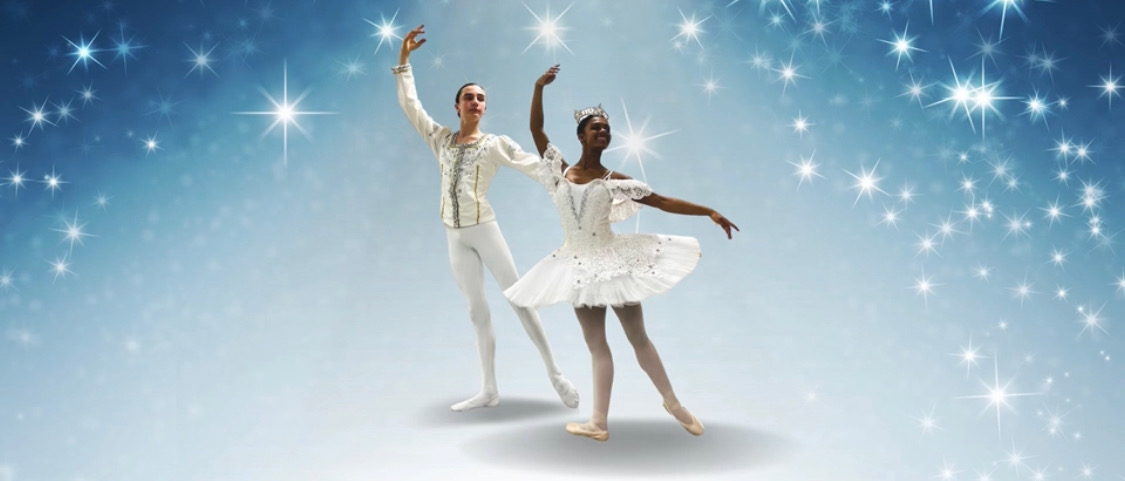
New Jersey’s arts community has always thrived when institutions balance tradition with reinvention, and this spring, Princeton Youth Ballet appears poised to do exactly that with its upcoming production of Cinderella at the Princeton High School Performing Arts Center on May 9 and 10. At first glance, the announcement may read like another seasonal staging of one of ballet’s most recognizable stories. But beneath the familiar title is a production rooted in something much deeper: original interpretation, serious artistic craftsmanship, and a continued commitment to developing young performers inside one of New Jersey’s most respected youth dance organizations.
That distinction matters because productions like this increasingly represent the backbone of the state’s performing arts ecosystem. While New York and Philadelphia often dominate national conversations surrounding dance and theater, New Jersey’s regional arts organizations continue producing ambitious work that develops future professionals while simultaneously cultivating audiences who value live performance as something far more meaningful than disposable entertainment.
Princeton Youth Ballet has long occupied an important place within that conversation.
Its productions are not built around novelty or spectacle alone. They are built around storytelling, disciplined performance, and the idea that young artists deserve the opportunity to work within productions that demand real theatrical commitment. Cinderella becomes particularly interesting through that lens because it requires far more than technical dance ability. It requires emotional clarity, timing, theatricality, comedy, musical awareness, and an understanding of narrative pacing that can be difficult even for seasoned professional companies to achieve successfully.
This new production appears designed to embrace all of those challenges directly.
At the center of the ballet is Artistic Director and choreographer Risa Kaplowitz, whose creative philosophy reflects a growing movement within contemporary ballet that values both classical structure and personal interpretation. Rather than simply recreating an existing version of Cinderella, Kaplowitz approached the production through extensive narrative and musical exploration, building a version that blends emotional familiarity with a distinct point of view.
That process alone separates serious choreographic work from routine repertory staging.
Kaplowitz has spoken openly about her lifelong attraction to choreography and storytelling, tracing it back to childhood performances staged in her family living room alongside neighborhood productions she organized herself. That instinct for narrative construction eventually evolved through years of professional performance experience, including extensive exposure to original ballet creation during her time dancing with Dayton Ballet.
Those formative experiences clearly continue influencing her work today.
In discussing Cinderella, Kaplowitz describes a process rooted first in emotional connection rather than technical design. Before choreography begins, she immerses herself in the story’s history, themes, variations, and emotional architecture. In this case, she explored both the gentler Charles Perrault version familiar to many audiences and the darker Grimm Brothers interpretation, ultimately blending elements of each into a version that feels cohesive to her artistic sensibilities.
That willingness to reinterpret rather than merely reproduce gives the production a stronger artistic identity.
The result is expected to deliver the romantic fantasy audiences associate with Cinderella while also emphasizing atmosphere, character nuance, and theatrical humor in ways that make the ballet feel alive rather than preserved behind glass. According to PYB, the production leans heavily into magical and comedic elements, which may ultimately become one of its defining strengths. Too often, youth productions approach classical storytelling with excessive caution, prioritizing technical execution while losing spontaneity and personality in the process. This staging appears interested in the opposite approach: using movement to fully communicate character and emotional energy.
That philosophy aligns closely with Kaplowitz’s belief that dance can express things words cannot.
The production’s musical structure also reflects an unusually detailed level of creative involvement. Kaplowitz has described the process of building a ballet score as assembling a massive emotional puzzle, spending countless hours listening through compositions, testing arrangements, restructuring sequences, and shaping transitions until the narrative rhythm feels emotionally correct. Rather than treating music as accompaniment alone, she approaches it as a collaborative storytelling force.
That attention to musical architecture often separates memorable dance productions from forgettable ones.
And in ballet specifically, where dialogue is absent, music becomes inseparable from character psychology and dramatic movement. Every entrance, pause, gesture, and ensemble sequence depends on musical momentum. The strongest narrative ballets succeed because audiences instinctively feel the emotional transitions happening underneath the choreography itself.
That appears to be exactly the kind of immersive theatrical experience Princeton Youth Ballet is attempting to create.
The production also arrives at a moment when youth arts education continues facing growing pressure nationally. Across many school systems and communities, arts programming has increasingly been treated as secondary despite overwhelming evidence that music, theater, dance, and visual arts education contribute directly to cognitive development, emotional intelligence, discipline, collaboration, and confidence.
Organizations like Princeton Youth Ballet continue proving the opposite of the argument that arts programs are expendable.
Productions such as Cinderella require months of preparation, technical rehearsal, character development, physical training, costume coordination, musical synchronization, and collaborative problem-solving. Young dancers are not merely memorizing steps. They are learning timing, adaptability, emotional communication, professionalism, and stage discipline inside an environment that mirrors the expectations of professional performing arts organizations.
That developmental process becomes visible to audiences whether they consciously recognize it or not.
It is one reason live performance still matters in an era dominated by streaming entertainment and digital distraction. Theater asks audiences to remain present. Ballet asks viewers to engage emotionally without relying on dialogue-heavy exposition or cinematic shortcuts. When done successfully, the effect can feel remarkably immediate.
That immediacy is part of what continues making productions like Cinderella resonate across generations.
The story itself remains remarkably durable because it operates on multiple levels simultaneously. For younger audiences, it is fantasy and transformation. For older viewers, it often becomes a meditation on resilience, identity, isolation, hope, and recognition. Ballet intensifies those themes because movement strips away literal explanation and forces emotional clarity through physical expression.
Kaplowitz’s choreographic influences help illuminate why that emotional storytelling appears central to the production’s vision. She has frequently cited Frederick Ashton’s narrative ballets for their humanity and romantic nuance while also admiring George Balanchine’s extraordinary musicality and structural precision. More contemporary influences such as Alexei Ratmansky and Justin Peck further reveal a creative interest in balancing classical technique with modern energy and interpretive freedom.
Those influences collectively suggest a production interested not simply in preserving ballet tradition, but in keeping it emotionally relevant.
That idea has become increasingly important within New Jersey’s evolving performing arts landscape. Audiences today are highly selective. They are not attending productions simply because they are familiar titles. They are searching for experiences that feel thoughtful, immersive, and artistically alive. Regional arts organizations that survive long term tend to be the ones capable of offering both accessibility and artistic seriousness at the same time.
Princeton Youth Ballet has steadily built that reputation over the years.
Its continued investment in full-scale productions demonstrates confidence not only in its dancers but also in New Jersey audiences themselves. There remains a strong appetite throughout the state for ambitious live arts programming that values craftsmanship over gimmickry. Productions like Cinderella help reinforce that reality while also strengthening New Jersey’s broader cultural identity beyond the shadow of neighboring metropolitan markets.
The setting itself also contributes to the production’s accessibility. Staging the performances at the Princeton High School Performing Arts Center allows audiences to experience the ballet inside a community-centered environment that feels welcoming rather than inaccessible. That matters because one of ballet’s longstanding challenges nationally has been the misconception that the art form exists only for elite or specialized audiences.
Productions like this help dismantle that perception.
They create entry points for younger viewers, families, students, and first-time theatergoers while still delivering the artistic sophistication serious dance audiences appreciate. The balance between those worlds is not easy to achieve, but when organizations manage it successfully, the result often becomes one of the most valuable forms of regional arts programming.
This year’s Cinderella production appears determined to occupy exactly that space.
At a time when live arts organizations continue navigating changing audience habits, economic pressures, and shifting cultural attention spans, productions built around sincerity, craftsmanship, and genuine artistic investment stand out more than ever. Princeton Youth Ballet’s upcoming performances are not simply another entry on the regional arts calendar. They represent the continuation of a longstanding New Jersey tradition where community arts institutions create work that is simultaneously educational, ambitious, entertaining, and emotionally resonant.
And in a cultural landscape increasingly dominated by disposable content, that kind of live theatrical experience still carries enormous value.











