

2027 United States Super 8mm Film & Digital Video Festival
The Longest-Running Super 8mm Festival in North America Returns to Rutgers in February 2027
February 20, 2027 – February 21, 2027
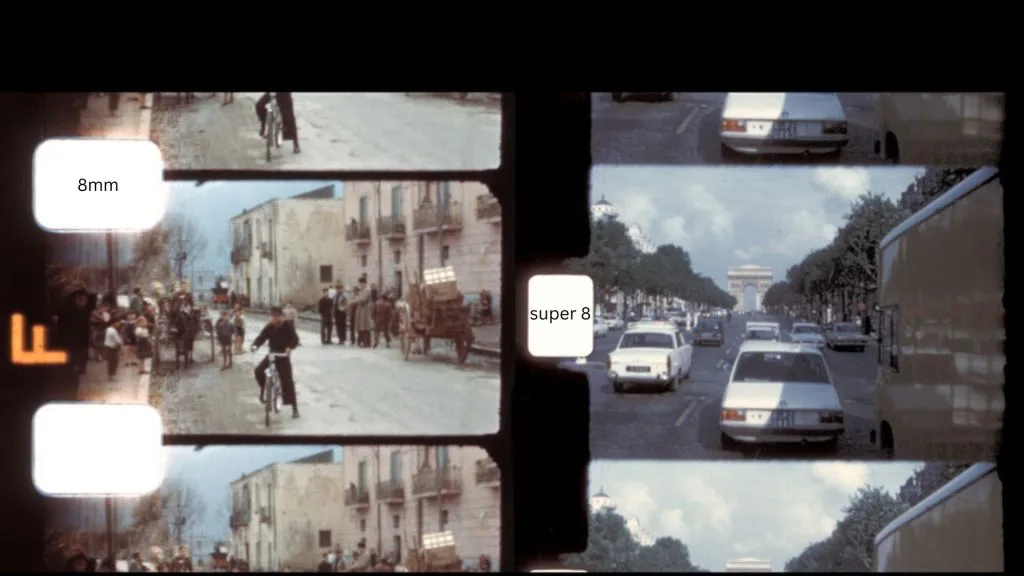
There are film formats that belong to history, and there are film formats that refuse to stay there. Super 8mm falls emphatically into the second category. Introduced by Eastman Kodak in 1965 at the New York World’s Fair as a tool for everyday people to document their lives, the format became the dominant medium for home movies through the late 1980s, then was displaced by digital video, and then — in one of the more interesting reversals in contemporary visual culture — staged a quiet but durable return among filmmakers, artists, and students who understood that the format’s grain, its warmth, its physical relationship between light and celluloid, produced an image quality that digital technology could approximate but not replicate.
The 39th Annual United States Super 8mm Film and Digital Video Festival will be held on February 20 and 21, 2027, at Rutgers University in New Brunswick, New Jersey — continuing a tradition that began in 1988 and that has made New Brunswick the recognized center of Super 8mm festival culture in the United States. Produced by the Rutgers Film Co-op and the New Jersey Media Arts Center, the festival is the largest and longest-running juried competition of its kind in North America, a distinction earned not through institutional promotion but through nearly four decades of consistent programming, curatorial integrity, and a demonstrated commitment to the proposition that small-gauge filmmaking deserves the same serious critical attention as any other mode of cinema.
The Origin of the Festival and the Organization Behind It
The United States Super 8mm Film and Digital Video Festival did not emerge from a film industry initiative or an institutional mandate. It was created by necessity — specifically, by the closure of the largest Super 8mm festival in the country. The Ann Arbor, Michigan-based Super 8mm festival that had dominated the form through the 1970s and 1980s ceased operations in 1988, creating a void in the small-gauge film community at precisely the moment when the format needed institutional support to survive the commercial transition to digital video. Albert Gabriel Nigrin, the filmmaker, Cinema Studies Lecturer at Rutgers University, and Executive Director of the Rutgers Film Co-op, stepped into that void.
Nigrin had established the Rutgers Film Co-op and the New Jersey Film Festival in 1982, building over six years the infrastructure and the audience relationships that would allow a new festival to launch with credibility rather than as a speculative venture. He had attended the Ann Arbor festival himself, bringing a curated package of experimental films in 1986, and understood what the American Super 8mm community stood to lose when that event ended. The foundation he had built at Rutgers — a 250-seat screening venue, an established relationship with the independent film community, and an institutional framework rooted in Rutgers University’s Cinema Studies program — made New Brunswick the logical successor to Ann Arbor as the country’s primary venue for juried Super 8mm exhibition.
Credit for the festival’s origins belongs in part to Bob Brodsky and Toni Treadway, a husband-and-wife team who founded and ran the International Center for 8mm Film and Video in Massachusetts for more than thirty years. Through their nonprofit organization they subsidized Super 8mm filmmakers to attend festivals in the United States, England, France, Venezuela, Brazil, Canada, and beyond, sustaining an international community of practitioners during decades when the format had little commercial support. It was their encouragement that led Nigrin to establish the festival at Rutgers in 1988, and the community they had helped build became the festival’s initial audience and submission base.
Super 8mm: A Format With Contemporary Relevance
The argument for Super 8mm as a contemporary artistic medium rather than a nostalgic curiosity requires some examination of what the format actually produces and why practitioners continue to choose it in an era when digital video is universally accessible, infinitely cheaper, and capable of achieving photographic quality that would have been technically impossible at any budget level during the format’s commercial peak.
Super 8mm film was designed for non-professional use. The frame is small — roughly half the area of Standard 8mm — and the emulsion characteristics that result in the format’s distinctive visual quality are a direct consequence of those physical constraints. The grain is visible. The color rendering favors warmth over accuracy. The temporal resolution creates a motion quality that differs perceptibly from both 16mm and digital capture. These are not defects. For filmmakers who choose Super 8mm in 2027, they are intentional aesthetic parameters — the specific visual language of a medium that encodes its physicality into every frame.
The format remains less expensive than 16mm while still providing the irreplaceable quality of photochemical image formation — the actual inscription of light onto a physical surface through chemical reaction. This is categorically different from what happens when a digital sensor records an image, and the difference is visible to anyone who looks carefully. The grain in a Super 8mm image is not a filter applied in post-production. It is the physical record of light interacting with silver halide crystals on a strip of celluloid. That materiality — the fact that the image exists as a physical object before it is projected — gives Super 8mm filmmaking a relationship to its subject matter that digital video cannot approximate.
The format’s contemporary relevance is confirmed by its presence in theatrical features whose visual ambitions required something beyond what digital tools could achieve. James Mangold’s 2024 Bob Dylan biopic A Complete Unknown incorporated Super 8mm imagery. J.J. Abrams built his 2011 film Super 8 entirely around an homage to the format. Guy Maddin, Jim Jarmusch, and numerous other directors with established visual identities have employed Super 8mm for specific expressive purposes — not as a retro gesture but as a deliberate choice among available tools, each suited to different artistic requirements.
The Festival’s Scope: Format, Genre, and Global Reach
The 39th annual edition of the United States Super 8mm Film and Digital Video Festival is open to U.S. and international submissions across the full range of filmmaking genres: animation, documentary, experimental, fiction, personal film, and any other mode of production the medium permits. The primary requirement is not genre but origin — the submitted work must have predominantly originated on Super 8mm, 8mm, Hi-8, or digital video formats. This parameter is deliberately inclusive of the broader small-gauge and early digital community rather than restrictive to celuloid purists.
The digital video eligibility reflects the festival’s understanding of how these formats existed in relationship to each other historically. When consumer digital video cameras became widely available in the 1990s, they occupied the same cultural and economic space that Super 8mm had held for the previous three decades: accessible technology for non-industrial moving image production. Many filmmakers moved between the formats. Many works originated in one and were completed in the other. The festival’s mandate to spread the 8mm and digital word is precisely that — a commitment to the community of small-gauge and early digital practitioners as a community, not a competition between celuloid and electronic formats.
Winners of the festival receive prizes from the event’s sponsors, which have included OVID — the streaming platform dedicated to independent, international, and documentary film — and Pro 8mm, the company that has maintained Super 8mm processing and production services in an era when the major film manufacturers have reduced their support for the format. Pro 8mm’s ongoing investment in the Super 8mm infrastructure — processing, reversal stocks, equipment repair — is part of what has allowed the format to remain viable as a production medium, and its sponsorship of the festival is a material expression of that commitment.
Rutgers University and New Brunswick: Forty-Five Years of Alternative Film Culture
The 39th Super 8mm Festival takes place within the broader ecosystem of the Rutgers Film Co-op and the New Jersey Media Arts Center, which has operated as New Jersey’s only year-round media arts center since its founding in 1982. Over that period the organization has presented more than one hundred annual screenings and events, building an audience that draws viewers from across New Jersey and establishing New Brunswick as a consistent destination for independent, international, experimental, and classic cinema in a way that has persisted through every major shift in the film industry’s distribution landscape.
The festival’s home base — Voorhees Hall #105 on the Rutgers University campus in New Brunswick — provides a 250-seat theatrical space on a major research university campus, with the academic infrastructure of Rutgers’ Cinema Studies program as an institutional partner. That partnership matters in ways that extend beyond venue access. The involvement of Cinema Studies faculty, students, and resources connects the festival to serious scholarly engagement with film as a cultural and aesthetic object, and ensures that the conversations around the screened work — between filmmakers, audiences, students, and critics — are shaped by that intellectual framework.
The Rutgers Film Co-op has hosted, over its history, figures including Todd Solondz, Bill Plympton, Martin Scorsese, and Thelma Schoonmaker-Powell among the many filmmakers and film professionals who have appeared in connection with its programming. The Super 8mm Festival has brought to that campus filmmakers from across the United States and internationally — practitioners whose work exists primarily outside the commercial distribution system and whose primary audience is the community of people who seek it out at events like this one.
What the Festival Means for the Small-Gauge Film Community
The significance of the United States Super 8mm Film and Digital Video Festival to the practitioners whose work it represents is difficult to overstate. Independent filmmakers working in small-gauge formats — whether on Super 8mm celluloid, vintage digital video, or the hybrid approaches that have characterized much of the most interesting work in this space — operate without the distribution infrastructure, press relationships, or institutional visibility that shapes the reception of work in larger film markets. A juried festival with a nearly four-decade track record, institutional backing from a major research university, and a demonstrable commitment to the format as a serious artistic medium provides something that individual practitioners cannot build for themselves: a recognized context within which the work can be encountered, evaluated, and discussed.
The interviews that the festival’s organizers conduct with finalists each year — distributed through New Jersey Stage and other media — produce a record of why individual filmmakers choose the format, what specific projects led them to submit, and what the creative and personal stakes of the work are. These are not publicity documents. They are primary source material for understanding why artists continue to work in a format with no commercial future and significant practical inconveniences, and what those artists have found in the format’s specific constraints and possibilities that justifies those choices.
The answers vary substantially. Some filmmakers are drawn to Super 8mm’s relationship to memory — the format’s grain and color rendering produce images that look, in a literal physical sense, like the photographs and home movies through which most people access their personal pasts, making it a natural tool for autobiographical and memorial work. Others use the format’s technical limitations as creative constraints, working with its frame rate, its exposure latitude, and its processing characteristics as deliberate compositional parameters. Others simply prefer the object — a roll of film that passes through a camera, registers an image through chemical reaction, and requires processing before the image can be seen. The irreversibility and the physicality of that process produce a different relationship to the filmed subject than digital capture does, and for some filmmakers that difference is the point.
Submitting Work to the 2027 Festival
The 39th Annual United States Super 8mm Film and Digital Video Festival is open to U.S. and international entries. Filmmakers whose work originated on Super 8mm, 8mm, Hi-8, or digital video formats and who are interested in submitting for the 2027 festival can find submission information through the official festival listing on FilmFreeway or by contacting the Rutgers Film Co-op and New Jersey Media Arts Center directly at uss8fdvf@gmail.com.
The festival takes place on February 20 and 21, 2027, at Rutgers University, New Brunswick, New Jersey. The program will be presented in the hybrid format the organization has employed in recent years, combining in-person screenings at Voorhees Hall #105 with online Video on Demand access, maintaining both the communal exhibition experience and the broad accessibility that has characterized the festival’s contemporary presentation model.
For the New Jersey arts and film community, for independent filmmakers working in small-gauge formats nationally and internationally, and for anyone with a serious interest in the history and present of celluloid and early digital image-making as artistic practices, the 2027 United States Super 8mm Film and Digital Video Festival represents one of the most substantive film events the region will host in the coming year. It is the kind of event that does not announce itself with mainstream publicity or commercial marketing. It finds its audience through the community it has built over thirty-nine consecutive years — and that community, on the evidence of those years, is not going anywhere.
The Rutgers Film Co-op/New Jersey Media Arts Center
908-239-3481
NJMAC12@gmail.com











