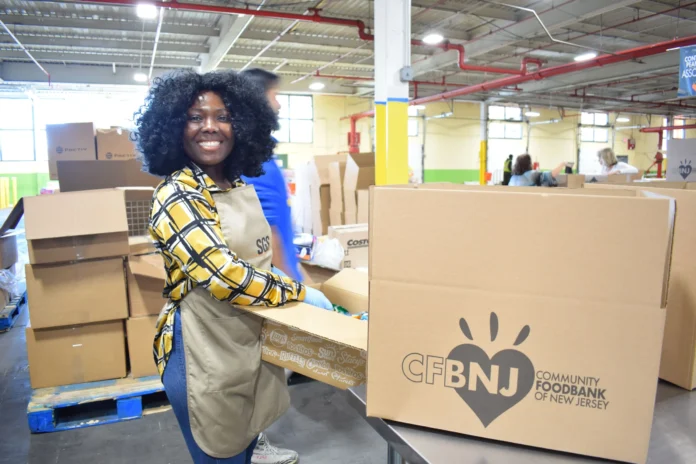

Across New Jersey, where the conversation around food and beverage often centers on culinary innovation, restaurant culture, and the evolving dining economy, there is a parallel system operating at a scale and urgency that is equally critical to the state’s identity. The Community FoodBank of New Jersey stands at the center of that system, functioning not only as the largest anti-hunger organization in the state but as one of the most sophisticated food distribution and community support networks in the region. Its reach extends far beyond traditional food assistance, shaping how New Jersey addresses poverty, access, workforce readiness, and long-term stability in a rapidly shifting economic landscape.
At its core, the Community FoodBank of New Jersey operates as a high-capacity logistics engine, distributing more than 90 million meals annually—equating to over 108 million pounds of food—across 15 counties. This is not a static pipeline but a dynamic, multi-channel distribution system that connects more than 800 community partners, including food pantries, soup kitchens, shelters, and local nonprofits. Each of these organizations serves as a critical last-mile touchpoint, ensuring that food reaches families, seniors, and individuals who might otherwise fall through the cracks of traditional support systems.
The infrastructure behind this operation reflects a level of operational sophistication that rivals major commercial supply chains. With primary facilities in Hillside and Egg Harbor Township, complemented by the specialized Unity Pantry in Garfield, the organization has built a geographically balanced network capable of responding to both urban density and suburban spread. These hubs are designed not just for storage, but for rapid intake, sorting, and redistribution, allowing the FoodBank to move massive volumes of product efficiently while maintaining quality and safety standards that align with the broader food and beverage industry.
Sourcing this volume of food requires a diversified strategy that blends purchasing power, philanthropic engagement, and federal support. Nearly half of the inventory is secured through bulk purchasing, enabling the organization to stabilize supply and negotiate cost efficiencies. Corporate and individual donations account for a significant share, reflecting both community engagement and the role of New Jersey’s business ecosystem in supporting food access initiatives. Federal programs round out the supply chain, providing a baseline that helps sustain operations even as demand fluctuates. This hybrid model ensures resilience, allowing the FoodBank to scale up quickly during periods of increased need while maintaining consistency throughout the year.
What distinguishes the Community FoodBank of New Jersey from a traditional distribution organization, however, is its commitment to addressing the root causes of hunger rather than simply responding to its symptoms. The organization has deliberately expanded into what it defines as “wrap-around services,” recognizing that food insecurity is often intertwined with employment instability, lack of access to benefits, and broader economic pressures.
Workforce development has emerged as one of the most impactful components of this strategy. Through programs such as the Warehouse Logistics Training Academy and culinary and life-skills training initiatives, the FoodBank is creating pathways for individuals to enter stable, livable-wage careers. These programs are structured to align with real market demand, particularly within logistics and food service sectors, ensuring that participants are not only trained but positioned for immediate employment opportunities. In doing so, the organization is effectively transforming a portion of its client base into a workforce pipeline, reinforcing both economic mobility and long-term food security.
Equally important is the organization’s role in navigating public assistance systems. A dedicated multilingual team provides direct support to individuals and families applying for programs such as SNAP and WIC, removing barriers that often prevent eligible residents from accessing benefits. This service is particularly critical in a state as diverse as New Jersey, where language and administrative complexity can significantly impact participation rates. By embedding this support within its operations, the FoodBank is extending its influence beyond distribution and into advocacy and access.
The organization has also recognized that food insecurity rarely exists in isolation. Programs such as the Diaper Initiative and Period Initiative address a category of need that is frequently overlooked yet deeply consequential for families. Hygiene products, which are not typically covered by food assistance programs, represent a recurring expense that can strain already limited budgets. By incorporating these resources into its distribution model, the FoodBank is addressing a broader definition of basic needs, one that aligns with real-world household dynamics rather than policy boundaries.
Youth-focused programming further reinforces this comprehensive approach. Through Kids Cafés and Family Pack initiatives, the organization ensures that children receive consistent nutrition beyond the school day and into weekends, where gaps in access are most pronounced. These programs are designed not only to meet immediate needs but to support long-term developmental outcomes, recognizing the direct link between nutrition, academic performance, and overall well-being.
In 2026, the Community FoodBank of New Jersey continues to expand both its operational capacity and its visibility through high-impact initiatives and events. The annual 24-hour Pack-a-Thon, completed in April, mobilized hundreds of volunteers to assemble more than 418,000 meals in a single continuous effort. The scale and coordination required for such an event underscore the organization’s ability to activate community participation at a level that goes well beyond traditional volunteer models. With participation from state leadership, including Governor Sherrill, the event also reflects a growing alignment between public policy and on-the-ground execution.
Looking ahead, the Blue Jean Ball, scheduled for May 6 at NJPAC in Newark, represents one of the organization’s most significant fundraising events. Positioned at the intersection of philanthropy and community engagement, the event serves as both a financial driver and a platform for raising awareness about food insecurity across the state. Its continued growth signals strong support from both corporate and individual stakeholders, reinforcing the FoodBank’s role as a central pillar within New Jersey’s nonprofit ecosystem.
At the same time, the organization is navigating a period of uncertainty tied to potential federal changes in food assistance programs. Anticipated reductions in SNAP and related benefits could significantly increase demand at the local level, placing additional pressure on already stretched resources. In response, the Community FoodBank of New Jersey has taken an active advocacy role, working to ensure that the needs of vulnerable populations remain visible within broader policy discussions. This dual role—operator and advocate—positions the organization as both a service provider and a strategic voice in shaping the future of food access in the state.
Leadership within the organization continues to play a critical role in sustaining and evolving this mission. Figures such as Tiana Mijatovic, an HR operations and talent leader, exemplify the internal focus on organizational effectiveness and employee engagement. Her work highlights the importance of building a resilient workforce within the nonprofit sector itself, ensuring that the scale and complexity of the FoodBank’s operations are supported by a team capable of delivering at a consistently high level.
Within the broader narrative of New Jersey’s food and beverage landscape, the Community FoodBank of New Jersey represents a foundational layer that often operates behind the scenes but is essential to the system as a whole. While restaurants, producers, and hospitality venues define the visible face of the industry, organizations like CFBNJ ensure that access to food remains a universal baseline rather than a privilege. This duality—innovation at the top, access at the foundation—is what ultimately defines the strength and sustainability of the state’s food ecosystem.
For those following the evolving dynamics of food access, community impact, and statewide initiatives, continued coverage across New Jersey’s food and beverage landscape reflects a growing recognition that the conversation must include both ends of the spectrum. The Community FoodBank of New Jersey is not simply responding to need; it is actively reshaping how that need is understood and addressed, setting a standard for what a modern, integrated approach to hunger relief can achieve.