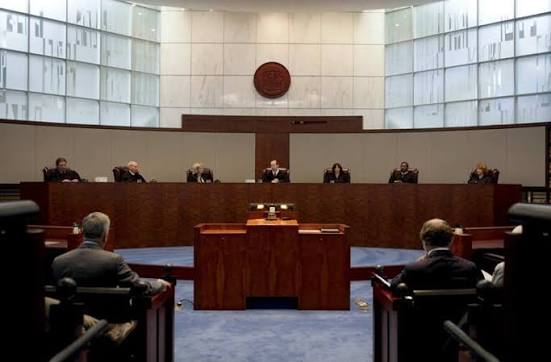

A significant decision from the New Jersey Supreme Court is poised to reshape civil litigation across the Garden State, establishing a clearer and more rigorous standard for the admission of expert witness testimony in courtrooms from Bergen County to Cape May. While the case itself arose from a pharmaceutical product liability dispute, the implications extend far beyond a single lawsuit, potentially influencing medical malpractice claims, personal injury litigation, toxic tort actions, consumer protection cases, commercial disputes, and virtually every civil proceeding in which expert testimony plays a central role.
The Court’s unanimous decision in Beavan v. Allergan U.S.A., Inc. represents one of the most consequential legal rulings affecting New Jersey civil practice in recent years. At its core, the ruling reinforces the judiciary’s responsibility to carefully scrutinize expert opinions before they reach a jury, ensuring that testimony presented as scientific or professional expertise is supported by reliable methodologies and sound reasoning rather than speculation, assumption, or unsupported conclusions.
The decision centers on a dispute involving allegations that a pharmaceutical product caused serious eye injuries. As is common in complex product liability and medical causation cases, expert witnesses became critical to determining whether the plaintiff could establish a connection between the product and the alleged injuries. Expert testimony often serves as the foundation upon which entire cases are built, particularly when scientific, technical, medical, or specialized issues are beyond the understanding of the average juror.
The plaintiff relied heavily on experts who used a methodology known as differential diagnosis, a process frequently employed in medicine to determine the most likely cause of a patient’s condition by systematically considering and eliminating alternative explanations. Differential diagnosis has long been recognized as an accepted medical tool, but the question before the Court was whether the mere use of that methodology automatically rendered expert testimony admissible.
The Supreme Court’s answer was clear: it does not.
Instead, the Court reaffirmed and expanded the importance of the gatekeeping framework established in the landmark Accutane litigation decision. In doing so, the justices made it unmistakably clear that trial courts throughout New Jersey must actively evaluate the reliability of expert methodologies whenever their admissibility is challenged.
The significance of this ruling cannot be overstated. For years, legal practitioners have debated how broadly the Accutane standard should apply. Some viewed it primarily as a tool for highly technical scientific disputes involving pharmaceutical products and complex medical research. Others argued that its principles should govern all civil litigation involving expert testimony.
The Supreme Court has now resolved that debate.
Under the Court’s interpretation, the rigorous gatekeeping obligations established in Accutane are no longer limited to a specific category of litigation. They apply universally to all civil cases where questions arise concerning the reliability of expert testimony under New Jersey’s rules of evidence.
For New Jersey’s legal community, this represents a substantial development. Judges will now be expected to conduct more detailed evaluations of expert methodologies before allowing testimony to be presented at trial. Attorneys offering expert witnesses will face increased scrutiny regarding the foundations of those opinions. Experts themselves may be required to provide more comprehensive explanations demonstrating how they reached their conclusions.
The Court’s decision also highlights a growing national trend toward demanding greater scientific rigor in civil litigation. Across the country, courts have increasingly adopted standards requiring judges to act as gatekeepers rather than simply allowing juries to evaluate competing expert opinions. The objective is not to determine which expert is ultimately correct but to ensure that any testimony reaching a jury is grounded in reliable principles and accepted professional methodologies.
In practical terms, the ruling is likely to affect a broad spectrum of cases throughout New Jersey.
Medical malpractice claims frequently rely on physician testimony regarding standards of care, diagnosis, treatment decisions, and causation. Product liability actions often involve engineers, scientists, toxicologists, and medical specialists. Construction disputes regularly feature architects, structural engineers, and safety experts. Commercial litigation may require economists, accountants, valuation specialists, or industry professionals.
All of these experts may now face heightened examination concerning the methodologies supporting their opinions.
The decision also sends a strong message regarding the distinction between accepted methodologies and properly executed methodologies. Simply invoking a recognized technique such as differential diagnosis is no longer sufficient. Courts must examine whether the methodology was applied reliably, whether alternative causes were appropriately considered, and whether the conclusions reached are supported by the available evidence.
This aspect of the ruling could prove especially important in future medical and pharmaceutical litigation. Differential diagnosis remains a widely respected diagnostic tool, but the Supreme Court emphasized that experts must demonstrate how they “rule in” plausible causes and how they systematically eliminate competing explanations using scientifically reliable methods.
For businesses operating in New Jersey, the decision may offer greater predictability when defending complex civil claims. Companies facing product liability lawsuits, toxic exposure allegations, or other scientific disputes often argue that questionable expert testimony can create costly litigation even when the underlying science remains uncertain. By requiring courts to conduct more rigorous admissibility reviews, the ruling may reduce the likelihood that unsupported expert opinions survive long enough to reach a jury.
At the same time, plaintiffs and consumer advocates may view the decision as creating additional procedural hurdles for injured individuals seeking compensation. Expert witnesses often serve as the critical bridge between alleged wrongdoing and provable harm. Any increase in admissibility requirements inevitably raises questions about access to justice and whether legitimate claims could face greater challenges reaching trial.
The Court attempted to strike a balance between these competing concerns by emphasizing that reliability review does not automatically exclude expert testimony. Rather, the process is designed to ensure that courts carefully evaluate methodology and reasoning before evidence is presented to jurors.
Another noteworthy aspect of the decision involves the Court’s treatment of the so-called net opinion doctrine. New Jersey courts have long prohibited experts from offering conclusions unsupported by factual or analytical foundations. In Beavan, the Supreme Court disagreed with portions of the Appellate Division’s analysis and concluded that the retained expert had sufficiently explained the basis for his opinions. This portion of the ruling reinforces the principle that admissibility questions require careful examination of the actual substance of an expert’s report rather than broad assumptions regarding its adequacy.
Beyond the legal profession, the decision reflects broader societal questions concerning science, evidence, and public trust. Courts increasingly confront disputes involving sophisticated scientific issues, emerging technologies, environmental concerns, pharmaceutical products, artificial intelligence, and evolving medical research. As these cases become more complex, judges face growing pressure to ensure that courtroom evidence meets appropriate standards of reliability.
The Beavan decision positions New Jersey firmly within that evolving legal landscape.
For attorneys, the ruling will likely influence litigation strategy from the earliest stages of a case. Expert selection, report preparation, evidentiary motions, and pretrial hearings may become even more critical as parties anticipate deeper judicial review. For experts, the decision underscores the importance of documenting methodologies, explaining analytical processes, and demonstrating adherence to accepted professional standards.
For trial courts, the ruling reinforces their central role as evidentiary gatekeepers. Rather than deferring difficult admissibility questions until trial, judges are expected to engage directly with the reliability of proposed expert testimony, creating a more developed record and providing clearer guidance regarding what evidence juries ultimately hear.
As New Jersey continues to handle increasingly sophisticated civil litigation, the Supreme Court’s decision establishes a framework likely to influence legal practice for years to come. Whether involving pharmaceutical products, medical treatments, engineering failures, environmental claims, consumer products, or emerging technologies, expert testimony often determines the trajectory of modern litigation. By extending the Accutane gatekeeping framework to all civil cases, the Court has effectively raised the standard for how expertise is evaluated within the state’s judicial system.
The result is a decision that reaches far beyond a single lawsuit. It reshapes the evidentiary landscape for civil litigation throughout New Jersey, reinforces the judiciary’s responsibility to evaluate scientific reliability, and establishes a precedent that attorneys, businesses, medical professionals, and courts will be analyzing long after the Beavan case itself has concluded. In an era where expert testimony frequently serves as the foundation of major civil disputes, the Supreme Court has made one point unmistakably clear: expertise alone is not enough. Reliability, methodology, and rigorous analysis must accompany it every step of the way.