
Every generation of the music industry has a handful of executives who become larger than the companies they lead. Their names carry as much weight as the artists they sign because their decisions reshape popular music for decades. Few executives fit that description more completely than Clive Davis. His career spans more than six decades, countless hit records, multiple record labels, and one of the most extraordinary artist rosters in recording history. While performers understandably occupy the spotlight, executives like Davis built the infrastructure that allowed generations of musicians to reach audiences around the world.
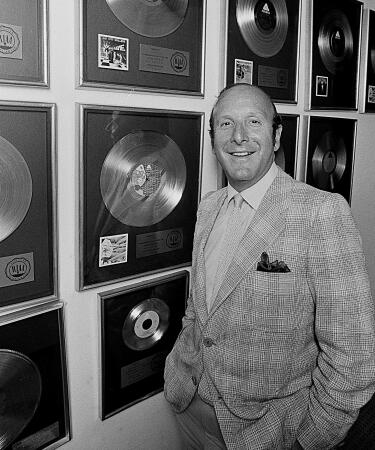
For anyone who worked in the record business during its peak years, Clive Davis was more than simply another chairman or chief executive. He represented what many considered the gold standard of artist development, A&R, marketing, and long-term career building. His influence reached virtually every corner of the industry, and for thousands of young professionals trying to build careers in music during the 1980s and 1990s, working for Arista Records wasn’t just another job opportunity. It was one of the most coveted destinations in the business.
I never came close to meeting Clive Davis personally, although it certainly wasn’t for lack of trying.
During my years working in the major-label system, Arista was the company I wanted to work for more than any other. Every opportunity that surfaced seemed worth pursuing because, from the outside looking in, the label appeared to have something that many of its competitors struggled to maintain: consistency. Artists were developed rather than simply signed. Marketing campaigns felt coordinated. Promotion departments were respected throughout the industry. Album releases appeared organized instead of rushed. Everything about the company projected professionalism.
I knew members of his staff over the years, and through those relationships I was fortunate enough to attend numerous Grateful Dead concerts while Arista handled the band’s releases. Yet despite spending years around the industry, I never found myself sitting across the table from the man whose name appeared on so many album credits. In some ways, that probably made the mystique even greater. Like many people working in music during that era, you heard stories. One of the most famous rumors suggested that Davis would occasionally fall asleep during an A&R meeting, only to wake up moments later and immediately pronounce whether a song should be signed or rejected. Whether every version of that story is true almost doesn’t matter anymore because it has become part of music industry folklore.
Ironically, I understand the underlying point.
People often imagine that evaluating music requires hours of analysis, but experienced A&R executives frequently know very quickly whether something captures their attention. For me, it has never taken very long. Within four to eight seconds, I usually know whether a record has the potential to connect and whether an artist works. It can be a person with an acoustic guitar or a 90-piece orchestra; within seconds, I know whether it’s working on a level that I can develop into something huge. That doesn’t mean I can predict commercial success with certainty because no one can, but first impressions remain incredibly important in the music business. Great songs have a way of announcing themselves almost immediately.
Clive Davis built an entire career around trusting that instinct.
His reputation wasn’t simply based on discovering artists. Plenty of executives discovered talented musicians. What separated Davis was his ability to recognize careers rather than singles. Throughout his time leading Columbia Records, Arista Records, J Records, and later Sony Music divisions, he repeatedly identified artists capable of sustaining long-term commercial and creative success. Barry Manilow, Whitney Houston, Aretha Franklin’s resurgence, Alicia Keys, Carlos Santana’s remarkable comeback with Supernatural, and countless others became part of a legacy that few executives will ever equal. Patti Smith, Alan Jackson, Kenny G, and so many others, but the label was also committed to developing emerging rock bands, country artists, adult contemporary performers, and niche acts that larger companies sometimes overlooked.
The Grateful Dead occupy a particularly interesting place within that story.
When people think of Clive Davis, psychedelic improvisational rock is rarely the first genre that comes to mind. Yet Davis understood something many executives overlooked. The Grateful Dead represented one of the most loyal audiences in entertainment, even if mainstream radio never fully embraced much of their catalog. Under Arista, the band released In the Dark, which became the most commercially successful studio album of their career and introduced millions of new listeners through “Touch of Grey.” It proved that even after decades together, the Grateful Dead still possessed untapped commercial potential when paired with the right label, marketing strategy, and distribution network.
That success required an executive willing to believe in an unconventional artist whose business model differed dramatically from almost everyone else in popular music.
Perhaps the greatest endorsement of Davis came from someone not known for handing out compliments to record executives.
Bob Weir once described Clive Davis as the only “suit” he truly trusted.
Within the music industry, that statement carries extraordinary significance. For decades, musicians often viewed record executives with skepticism, particularly artists who valued creative independence as much as the Grateful Dead did. I remember the Warner Music legal files on the Grateful Dead occupying what seemed like an entire aisle. If my memory is correct, there were somewhere between 16 and 25 boxes of litigation files involving the band. Today, however, they are one of the flagship artists for Rhino Records, a Warner Music company, which seems to release a new Grateful Dead boxed set every few weeks. Regardless of licensing arrangements today, the relationship between artists and record labels has historically been filled with tension over contracts, royalties, creative control, and commercial expectations. For a member of the Grateful Dead to publicly express that level of trust spoke volumes about the respect Davis earned over the course of his career.
My appreciation for Arista grew stronger as I got older.
When you’re young, you often judge labels by their current hits. Later, you begin studying album liner notes, producer credits, executive producers, marketing teams, and distribution strategies. You start recognizing patterns. Again and again, Arista appeared behind artists whose careers were carefully managed rather than simply exploited for immediate commercial gain. Looking back now, it becomes easier to understand why so many professionals spent entire careers there. At a time when many record companies employed hundreds of people while experiencing constant turnover, Arista developed a reputation as a place where employees built long-term careers. People simply didn’t leave.
The New York headquarters possessed an energy that is difficult to describe to anyone who never experienced the record business during its golden era. This was the 1990s, by the way. Walking through those offices, you felt connected to an industry that still revolved around artists, albums, radio promotion, publicity, touring, and long-term career development. The Beverly Hills office carried that same professionalism, and during my years traveling to see Grateful Dead shows, I found myself visiting frequently to get my tickets. Every major label had impressive offices, but Arista always projected a unique confidence where everyone seemed relaxed, approachable, and completely at ease.
I also tend to forget until I start thinking back on those years is that I actually had a direct connection to the Arista roster. While I was at Chalet Sound Studios in Manasquan, one of the projects I booked involved Babylon A.D., who were signed to Arista Records at the time. They never developed into one of the label’s blockbuster acts, but they generated legitimate rock radio airplay and built a loyal following during the late 1980s and early 1990s. Looking back, that project serves as another reminder of just how deep Arista’s artist roster really was.
That may have been what impressed me most about Arista. The company wasn’t built around chasing one genre or one trend. It operated like a well-oiled machine that believed great music could come from virtually anywhere if the right team was behind it. Even when an artist didn’t become a multi-platinum success, the label still invested in professional recording, thoughtful marketing, experienced promotion staffs, and long-term artist development. From the outside looking in, that philosophy distinguished Arista from many of its competitors and helped explain why so many people in the industry viewed it as one of the best-run record companies of its era.
Those years also coincided with a very different chapter in Grateful Dead history.
It’s almost difficult for younger fans to believe today, but there was a time when attending Grateful Dead concerts carried very different perceptions within the record industry. The cultural phenomenon surrounding Deadheads had not yet become widely celebrated. Back then, tickets weren’t impossible to obtain, and in some markets they could be surprisingly easy to find. Within portions of the industry, openly admitting you used your vacation days and week off Xmas to New Years to attend dozens of Grateful Dead shows ayear wasn’t necessarily viewed as a professional advantage. At MCA, I often understated how many concerts I had actually seen because the stereotype surrounding the band’s audience remained stronger than the recognition of what the Grateful Dead had quietly built. They were one of the most successful touring organizations in music history, but the scene was also synonymous with partying.
One memory from that period has remained remarkably vivid.
On the morning Jerry Garcia died in August 1995, I was interviewing at Atlantic Records. As I stepped off the elevator, I heard someone mention Jerry Garcia’s name over a radio sitting atop a janitor’s cleaning cart. My first thought wasn’t that anything terrible had happened. I assumed the announcer was discussing upcoming Meadowlands concerts or another tour announcement. Moments later, someone burst into the office during my interview and, in unmistakable New York fashion accent wise, announced that Jerry Garcia had died. The atmosphere changed instantly. Everyone in the room understood that the music business had just lost one of its defining figures. I ultimately received the job offer, although it wasn’t the position I later accepted after helping establish Lava Records’ offices. Still, that interview became permanently linked with one of the most significant days in modern rock history.
Looking back now, that era feels almost impossible to recreate.
The record industry operated differently. Labels invested in artist development. Promotion departments cultivated relationships over years rather than weeks. Executives debated albums instead of streaming metrics. Success wasn’t measured solely by opening-week numbers but by careers that could last decades.
Clive Davis helped build that world.
His influence also reaches into New Jersey in ways that are sometimes overlooked. Although Clive Davis built his legendary career from offices in New York and Los Angeles, one could easily argue that no state benefited more from his vision than New Jersey. Throughout more than five decades in the music industry, Davis helped shape the careers of some of the Garden State’s most influential and internationally celebrated artists, leaving a legacy that remains permanently woven into New Jersey’s cultural identity. New Jersey has long produced internationally influential performers across rock, pop, jazz, R&B, soul, folk, hip-hop, and alternative music. The state’s artists did not succeed in isolation. They emerged within an ecosystem of recording studios, promoters, managers, radio stations, publishers, independent labels, and major record companies whose executives recognized exceptional talent when it appeared.
Perhaps no relationship better illustrates that legacy than his partnership with Newark native Whitney Houston. In 1983, Davis attended a New York nightclub where a 19-year-old Whitney was singing backup for her mother, Cissy Houston. Recognizing something extraordinary almost immediately, he signed her to Arista Records and personally guided every stage of her development into one of the biggest recording artists in music history. Their professional relationship lasted for decades and evolved into one built on deep mutual respect and genuine affection. Following Davis’ passing, many New Jersey fans revisited interviews, performances, and photographs documenting the remarkable bond they shared throughout Whitney’s career.
His impact on New Jersey music history extends just as deeply to Bruce Springsteen. When a 22-year-old musician from Freehold walked into Columbia Records for an audition in 1972, it was Clive Davis who ultimately approved signing him. That decision forever changed the course of American rock music. The relationship was not without honest conversations, however. After hearing Springsteen’s debut album, Greetings from Asbury Park, N.J., Davis reportedly told the young songwriter that he did not hear a hit single. Rather than becoming discouraged, Springsteen returned to the Jersey Shore and wrote “Blinded by the Light” and “Spirit in the Night,” songs that became defining moments early in his career. More than fifty years later, after Davis’ death, Springsteen reflected on that relationship by writing that Davis had treated him with the same respect and kindness when he was an unknown 22-year-old as he did after decades of worldwide success. It was a tribute that perfectly captured the loyalty Davis inspired throughout the industry.
South Jersey also occupies an important place in Davis’ legacy through his work with Patti Smith. Raised in Deptford Township in Gloucester County, Smith emerged as one of the defining voices of punk rock and alternative music. After signing her to Arista Records, Davis championed her uncompromising artistic vision at a time when many executives would have pushed for a more commercial sound. He stood behind her first five albums, defended her creative independence inside corporate boardrooms, and helped establish one of the most influential recording careers of the modern era without asking her to become someone she was not.
His New Jersey connections extended well beyond those three iconic artists. Davis also played an important role in revitalizing the career of East Orange native Dionne Warwick after bringing her to Arista Records, where she enjoyed a remarkable commercial resurgence through a series of successful recordings during the late 1970s and 1980s. In one of the more poignant moments near the end of his life, Davis also made what would become his final major concert appearance at Newark’s Prudential Center, where he watched Bruce Springsteen and the E Street Band perform on the Land of Hope and Dreams Tour. Following his passing, Springsteen shared a backstage photograph from that evening, preserving what became their final meeting together.
Even some of the industry’s legendary behind-the-scenes stories eventually found their way to New Jersey. Among them is the oft-repeated tale involving the Allman Brothers Band, whose management reportedly spent hours searching a New Jersey hotel for Gregg Allman before a scheduled meeting with Davis, creating one more memorable chapter in the colorful history that surrounded one of the music business’s most influential executives.
For that reason, while Clive Davis’ death occurred across the Hudson River in New York City, much of the legacy he leaves behind belongs to New Jersey as well. Few executives have influenced so many artists who helped define the state’s musical identity, and even fewer have earned the lasting respect of musicians whose careers were built on creative independence. His fingerprints remain on some of New Jersey’s greatest musical achievements, and that legacy will continue to be heard for generations to come.
Overall, Clive Davis built one of the greatest careers in music history doing exactly that. For those of us who worked during the major-label era—even those who never managed to shake his hand—his influence was impossible to ignore. His legacy isn’t measured simply by platinum records or Grammy Awards. It is measured by the countless careers he helped shape, the standards he established for artist development, and the enduring reminder that, at its best, the record business has always been about recognizing extraordinary talent before the rest of the world catches up.