
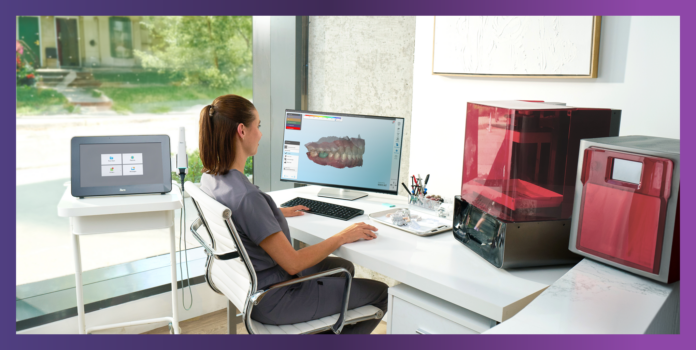

The future of dental care is increasingly digital, and a New Jersey company is positioning itself at the forefront of that transformation with a program that could fundamentally change how dental practices access advanced technology.
In an industry where cutting-edge equipment often comes with significant financial barriers, long-term obligations, or restrictive placement agreements, Lyndhurst-based PRODIRECT Dental Laboratory has introduced a new model designed to give dental practices something many have never had before: a clear path to ownership.
The launch of Omni Connect marks a significant development in the evolving relationship between dental laboratories and clinical practices. Rather than requiring dentists to remain locked into indefinite scanner placement arrangements, the new program provides participating practices with the opportunity to earn full ownership of one of the industry’s most advanced digital imaging platforms, the iTero Lumina™ intraoral scanner.
For New Jersey’s healthcare and dental sectors, the announcement represents more than just the introduction of a new equipment program. It reflects the broader modernization of dentistry, where digital workflows, precision imaging, and integrated treatment planning are rapidly becoming standard components of patient care.
As practices across the Garden State continue investing in technologies that improve efficiency, accuracy, and patient experience, programs that make those technologies more accessible are drawing significant attention.
The timing is particularly noteworthy.
Dental practices nationwide are facing increasing pressure to balance rising operating costs, staffing challenges, patient expectations, and ongoing investments in technology. Digital dentistry remains one of the most important growth areas within healthcare, but acquiring advanced equipment often requires substantial capital expenditures that can be difficult for independent practices and growing multi-provider groups to justify.
For many dental offices, scanner placement programs have served as a practical solution. Yet these arrangements have traditionally come with tradeoffs.
In many cases, scanners are provided under long-term agreements that require dentists to maintain ongoing production commitments with a laboratory. While the equipment may remain physically inside the practice, ownership frequently remains with the provider of the placement program. The result is an arrangement that can continue indefinitely, often without a defined endpoint.
Industry professionals have commonly referred to these arrangements as “forever placements,” a term that reflects the reality of open-ended commitments and perpetual production requirements.
PRODIRECT’s Omni Connect initiative seeks to change that model.
Instead of viewing the scanner as permanently borrowed equipment, the program establishes a milestone-based framework through which participating practices can earn ownership of the technology.
For dental offices, that distinction is significant.
Ownership transforms the scanner from a temporary operational tool into a long-term business asset. It becomes part of the practice’s infrastructure and can continue generating value long after acquisition milestones have been achieved.
The centerpiece of the initiative is the iTero Lumina™ intraoral scanner, a system that represents one of the most advanced developments in digital dental imaging currently available.
Manufactured by Align Technology, the platform incorporates several innovations designed to improve both clinical performance and patient comfort.
Among its most notable features is Multi-Direct Capture™ technology, which utilizes direct imaging sensors within the scanner tip itself. This design allows the device to capture significantly more visual information during the scanning process, expanding the field of view and improving efficiency throughout clinical workflows.
The increased data capture capability enables practitioners to collect detailed digital impressions more quickly while reducing the need for repeated scans or patient repositioning.
In practical terms, this means improved workflows for restorative procedures, crowns, bridges, implant planning, orthodontic treatment, and comprehensive digital treatment design.
The scanner’s ergonomic design also addresses another longstanding challenge within digital dentistry.
Traditional scanning systems can sometimes be cumbersome for both clinicians and patients. The iTero Lumina™ platform incorporates a substantially smaller and lighter scanning wand compared to previous generations, helping improve accessibility during procedures while reducing patient discomfort.
The result is a technology platform designed not only for precision but also for usability.
For patients, these improvements can translate into shorter appointments, greater comfort, and more efficient treatment experiences.
For providers, the benefits include streamlined workflows, improved digital integration, and enhanced diagnostic capabilities.
One of the most compelling aspects of the system is its ability to capture highly detailed digital impressions without requiring constant contact with the tooth structure.
The scanner’s enhanced depth of field allows practitioners to collect accurate data from a greater distance, reducing procedural complexity while improving efficiency during restorative and implant-related procedures.
As dentistry continues moving away from traditional physical impressions toward fully digital workflows, capabilities like these are becoming increasingly important.
The launch of Omni Connect reflects a larger trend reshaping healthcare delivery across New Jersey and the country.
Technology adoption is no longer viewed as optional. Instead, it has become a core component of practice competitiveness, patient satisfaction, and long-term growth.
Patients increasingly expect modern treatment experiences. They want precision, convenience, transparency, and technology that supports faster diagnoses and more predictable outcomes.
Practices that successfully integrate digital systems often benefit from improved operational efficiency, stronger patient engagement, and enhanced treatment planning capabilities.
However, technology adoption remains closely tied to affordability.
Programs that lower barriers to entry while creating long-term value for providers are likely to play an increasingly important role as healthcare continues its digital transformation.
That is where PRODIRECT’s New Jersey roots become particularly relevant.
Founded in 1987 and headquartered in Lyndhurst, the company has spent nearly four decades building a reputation as a full-service dental laboratory focused exclusively on supporting dental professionals.
Operating as a 100-percent in-house laboratory, PRODIRECT serves practices throughout New Jersey and across the country while maintaining a strong commitment to quality control, workflow integration, and clinical collaboration.
Its decision to develop an ownership-focused scanner program demonstrates a deeper understanding of the challenges facing today’s dental practices.
Rather than simply providing technology, the company is attempting to align technology adoption with long-term practice growth.
The Omni Connect model also includes implementation support designed to help practices maximize the value of their investment from day one.
Participating offices receive scanner installation assistance, onboarding resources, clinical integration support, and continuing education opportunities intended to ensure that teams can fully leverage the platform’s capabilities.
Training and adoption remain critical components of successful digital transformation.
Even the most advanced technology delivers limited value if staff members are not comfortable incorporating it into everyday workflows.
By combining equipment access with education and support, the program aims to accelerate adoption while reducing common implementation challenges.
For New Jersey’s healthcare economy, developments like these reinforce the state’s position as a hub for medical innovation, healthcare services, life sciences, and professional technology solutions.
While much attention often focuses on major hospital systems, pharmaceutical research, and biotechnology initiatives, smaller healthcare-focused companies continue driving meaningful innovation throughout the state.
Dental technology represents an increasingly important component of that broader healthcare ecosystem.
As artificial intelligence, digital imaging, cloud-based collaboration, and advanced diagnostics continue reshaping clinical care, practices are looking for partners who can help them navigate complex transitions while maintaining financial sustainability.
Programs that combine technology access, education, workflow support, and ownership opportunities represent a new generation of healthcare solutions focused on long-term value rather than short-term transactions.
The introduction of Omni Connect arrives at a moment when many dental professionals are reevaluating how they invest in technology and how those investments contribute to future growth.
Ownership matters because it creates permanence.
It allows practices to build infrastructure, develop expertise, and create lasting value without remaining indefinitely tied to restrictive arrangements.
For dentists seeking greater control over their digital future, the concept is likely to resonate.
As digital dentistry continues its rapid evolution, New Jersey companies like PRODIRECT are helping shape what comes next. By challenging traditional placement models and creating new pathways to technology ownership, they are contributing to a future where advanced tools become more accessible, more practical, and more closely aligned with the long-term success of dental practices and the patients they serve.
The result is a model that reflects the direction of modern healthcare itself: technology-driven, patient-focused, and built around sustainable growth rather than temporary solutions.
















