
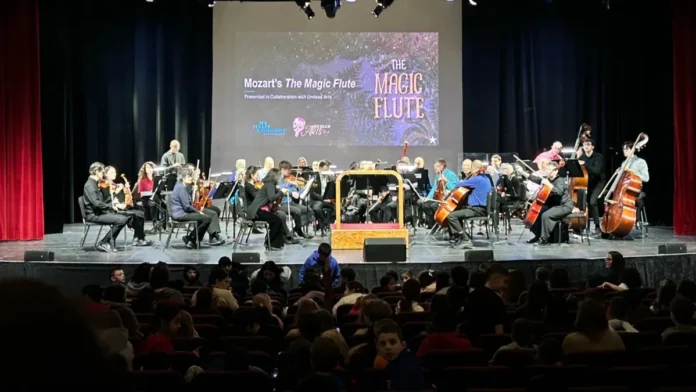

New Jersey’s performing arts scene has never been more willing to challenge expectations, and few recent productions captured that spirit more vividly than the ambitious collaboration between the New Jersey Symphony and Undead Arts, whose inventive reinterpretation of The Magic Flute transformed Jersey City’s Harborside Atrium into a surreal, theatrical version of the New Jersey Pine Barrens. Equal parts opera, immersive theater, musical comedy, and regional folklore experience, the production demonstrated how classic works can be reimagined without losing their emotional core or artistic power.
At a time when arts organizations across the country continue searching for ways to make classical performance more accessible to modern audiences, the NJ Symphony and Undead Arts partnership delivered something increasingly rare: a production that felt genuinely original while remaining deeply connected to both Mozart’s music and New Jersey’s cultural identity. Rather than treating opera as a distant or overly formal experience, the performance embraced immediacy, humor, regional mythology, and audience accessibility in ways that made a 235-year-old masterpiece feel unexpectedly current.
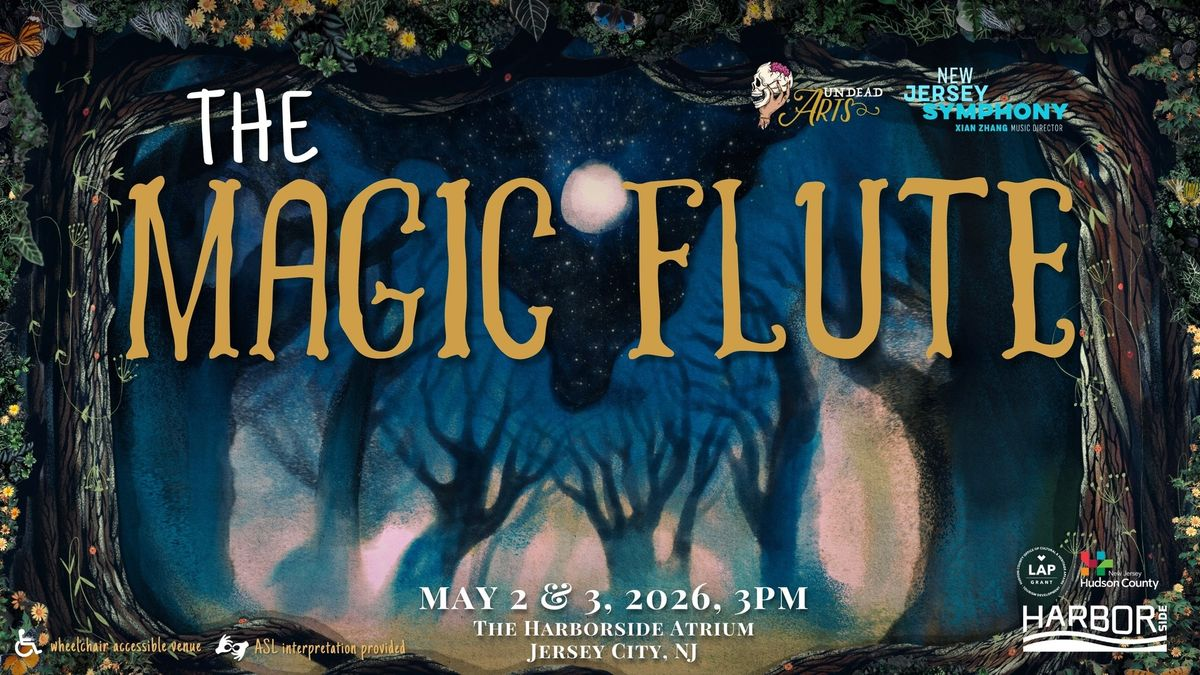
The decision to stage the production inside the Harborside Atrium in Jersey City proved central to the experience itself. The vast corporate-style public space became an unlikely but highly effective theatrical environment, allowing the production to blur the line between performance venue and immersive installation. Instead of traditional curtains and velvet theatrical framing, audiences entered a transformed environment where the mythology of the Pine Barrens collided with Mozart’s fantastical storytelling.
That collision became the production’s defining strength.
In this version of The Magic Flute, the familiar European fairy-tale landscape was replaced with a fictional New Jersey summer retreat known as “Camp Starlight,” situated deep within the Pine Barrens. The legendary Jersey Devil took the place of the opera’s traditional serpent, instantly grounding the production within one of the Garden State’s most enduring folk legends. Rather than feeling gimmicky, the adjustment gave the production a regional texture that resonated strongly with local audiences while creating an entirely new visual and thematic framework for Mozart’s score.
The Pine Barrens themselves have long occupied a unique place in New Jersey culture. Simultaneously mysterious, historic, ecological, and mythological, the region continues to inspire filmmakers, musicians, writers, and artists drawn to its isolation and folklore. By transplanting The Magic Flute into that world, Undead Arts effectively created a distinctly New Jersey interpretation of a globally recognized opera.
Critics and audiences responded enthusiastically to the production’s “campy, offbeat” tone, but the humor and theatrical experimentation never overshadowed the music itself. Instead, the balance between comedy, visual invention, and musicianship allowed the production to reach younger audiences and first-time opera attendees without diluting the sophistication of the work underneath.
One of the production’s most important achievements was its pacing and accessibility. Traditional presentations of The Magic Flute can run close to three hours, a runtime that can intimidate casual audiences or families introducing children to opera for the first time. This reimagined version condensed the experience into roughly 90 to 100 minutes, creating a streamlined narrative structure that maintained momentum while preserving the emotional and musical highlights of the original composition.
That decision fundamentally changed the audience dynamic. Families, younger viewers, and nontraditional opera audiences were able to engage with the performance without the endurance test often associated with classical productions. The shortened structure gave the performance an energy and immediacy more aligned with contemporary theater while still allowing Mozart’s music to remain central to the experience.
The inclusion of the Rising Voices Youth Chorus added another powerful layer to the production. Local elementary students appeared throughout the performance as imaginative camp-inspired characters, including Girl Scouts outfitted in animal and bird-themed hats that enhanced the whimsical Pine Barrens atmosphere. Their presence brought genuine warmth and unpredictability to the production while reinforcing the event’s broader community-centered mission.
In many ways, that youthful energy became symbolic of the production itself. Rather than treating opera as a museum piece, the collaboration presented it as something alive, playful, communal, and open to reinterpretation.
Musically, the production embraced a more intimate chamber-style presentation rather than attempting to recreate the scale of a traditional opera house staging. Approximately 30 musicians from the New Jersey Symphony performed an amplified adaptation of Mozart’s score, allowing the music to interact directly with the unconventional performance environment. The reduced orchestration created a surprisingly immersive atmosphere, where audiences felt physically connected to the musicians and singers rather than separated by theatrical distance.
That intimacy proved particularly effective inside the Atrium setting, where sound and movement could travel fluidly through the space. The result was a production that often felt more experiential than observational.
The creative departures from Mozart’s original libretto generated considerable conversation among theatergoers and opera enthusiasts alike. Purists may have bristled at some of the bolder reinterpretations, but even many traditional opera fans acknowledged the production’s inventiveness and commitment to theatrical coherence.
Perhaps the most talked-about creative decision involved the overture itself. Famously, the production interrupted the overture after only the first three chords before launching immediately into the action. The abrupt transition set the tone instantly, signaling to audiences that this would not be a conventional staging.
Other reinterpretations pushed even further into musical comedy and regional absurdism. The character Monostatos, traditionally portrayed as a more overtly sinister figure, became an overenthusiastic arts-and-crafts counselor attempting to drape hand-knitted scarves across unsuspecting characters. Mature allegorical themes from the original opera were softened or reframed in favor of playful theatricality, allowing the production to maintain a genuinely family-friendly atmosphere without becoming overly sanitized.
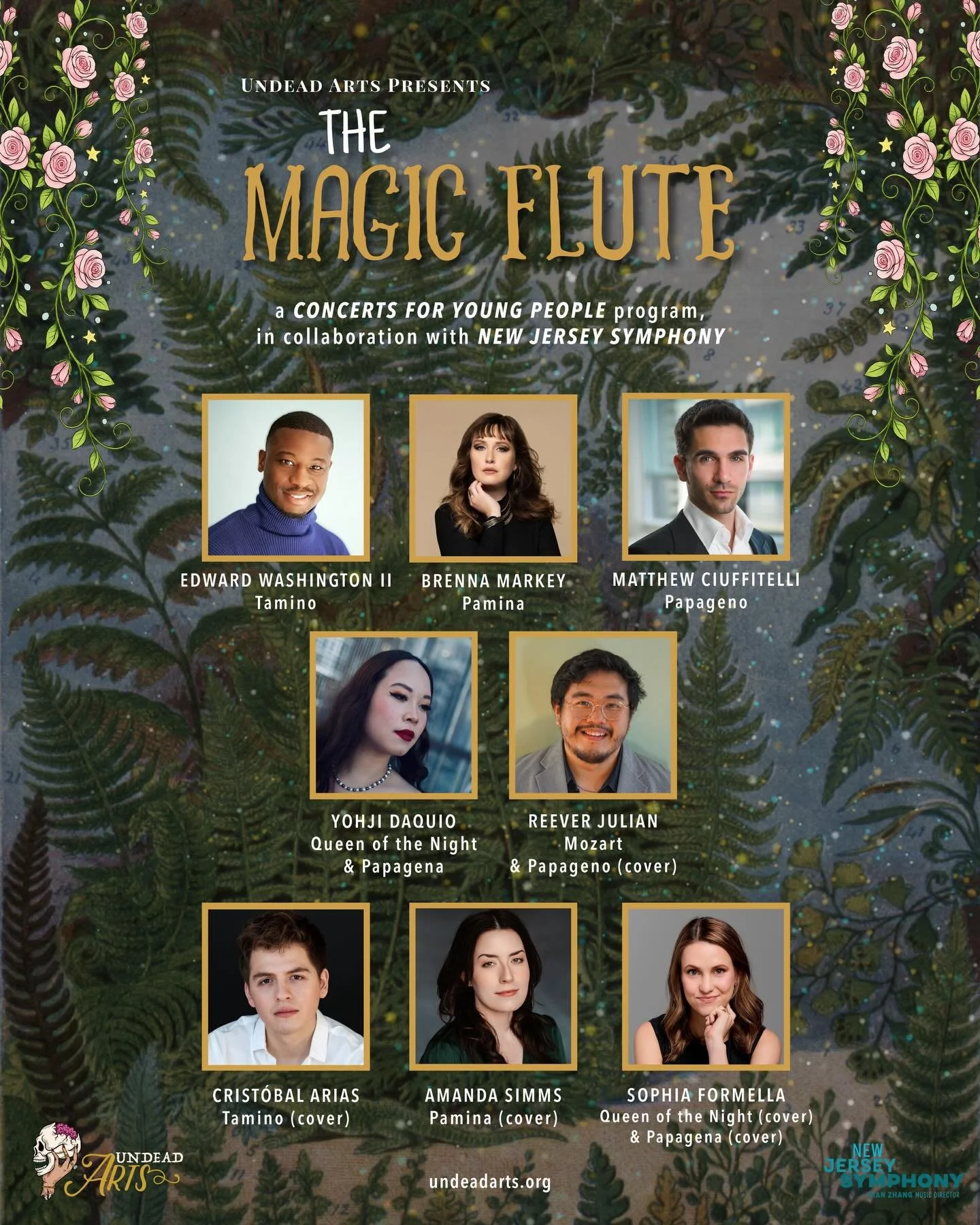
Modern props and visual gags reinforced the adaptation’s uniquely New Jersey identity. In one particularly memorable twist, Pamina wielded one of the Jersey Devil’s severed horns rather than a traditional dagger during a critical moment in the story. The substitution captured the production’s broader philosophy perfectly: irreverent but purposeful, playful but surprisingly thoughtful.
What ultimately made the collaboration between NJ Symphony and Undead Arts so compelling was its refusal to separate artistic ambition from accessibility. Too often, arts organizations approach audience development through simplification rather than reinvention. This production instead trusted audiences to engage with opera through creativity, humor, regional identity, and emotional immediacy.
The result was not merely a modernized Magic Flute, but a distinctly New Jersey theatrical event.
That distinction matters within the broader context of the state’s evolving cultural identity. Across New Jersey, performing arts organizations increasingly are embracing unconventional venues, interdisciplinary collaboration, and community-based storytelling. Rather than competing directly with Manhattan’s institutional arts ecosystem, many New Jersey organizations have begun developing a more experimental and regionally grounded creative identity of their own.
Productions like this demonstrate why that evolution matters.
The NJ Symphony continues expanding its role far beyond the traditional concert hall experience, while Undead Arts has established a reputation for fearless theatrical experimentation that embraces humor, pop culture, folklore, and visual invention. Together, the organizations created something that felt simultaneously sophisticated and accessible, deeply local yet creatively ambitious.
For Jersey City, the event further reinforced the city’s growing importance as one of the state’s most dynamic arts destinations. The Harborside Atrium itself became proof that transformative performance can emerge far outside conventional theaters when artists are willing to rethink space, audience interaction, and presentation.
As Explore New Jersey continues documenting the growth of the state’s arts and theater scene, productions like this represent an increasingly important shift in how audiences experience live performance. They are immersive without becoming exclusionary, experimental without losing emotional clarity, and accessible without sacrificing artistic intelligence.
Most importantly, they remind audiences that great art does not need to remain frozen in tradition to retain its power.
By the end of the production, what lingered most was not simply the novelty of seeing Mozart collide with the Jersey Devil or the Pine Barrens. It was the realization that opera, when approached with imagination and conviction, can still surprise audiences centuries after its creation.
And in Jersey City, for one unforgettable run inside the Harborside Atrium, The Magic Flute became not just an opera, but a uniquely New Jersey theatrical experience that felt vibrant, strange, communal, and entirely alive.
















