

New Jersey’s health and wellness conversation often centers on prevention, innovation, access, and long-term care. All of that matters. But one of the most urgent realities in public health is far more immediate: when a cardiac emergency happens, the outcome can depend on whether someone nearby knows what to do in the first few critical minutes. That is the message now being carried with unusual force and credibility by Daniel Frier, the Frier Levitt co-founder and co-managing partner who has transformed the devastating loss of his longtime law partner and close friend John Morrone into a broader campaign for CPR and AED readiness in workplaces and communities across New Jersey.
Frier’s story is not an abstract lesson in preparedness. It is personal, painful, and immediate. In November 2020, while training in Brazilian jiu-jitsu at the firm’s Little Falls gym with Morrone and fellow co-founder Jonathan Levitt, Morrone suddenly collapsed. Frier and those around him administered CPR, but Morrone died from a sudden cardiac event. In the years since, Frier has made a deliberate decision to turn grief into action, becoming certified in CPR and advocating for broader CPR and automated external defibrillator training so more people can be ready when seconds matter most.
For Explore New Jersey readers following the state’s broader public health, community care, and wellness landscape, this is exactly the kind of story that resonates beyond a single firm or one tragic moment. It touches employers, schools, parents, coaches, civic leaders, health care professionals, and everyday residents. It is a reminder that health and wellness is not only about what happens in hospitals and doctors’ offices. It is also about whether a workplace, a gym, a school, a venue, or a neighborhood is equipped to respond when someone’s heart suddenly stops. Readers exploring more statewide coverage in this space can follow the ongoing conversation through Explore New Jersey’s Health & Wellness section. (Explore New Jersey)
What makes Frier’s advocacy especially compelling is that it comes from someone who has spent more than three decades immersed in the health care legal world and who now speaks openly about the gap between sophisticated health policy and the simple, lifesaving value of emergency response training. After Morrone’s death, Frier began organizing CPR and AED training at Frier Levitt and became certified twice in both skills. His view is direct: widespread CPR education is one of the lowest-cost, highest-impact ways to save lives, especially in places where people gather and work every day. (NJBIZ)
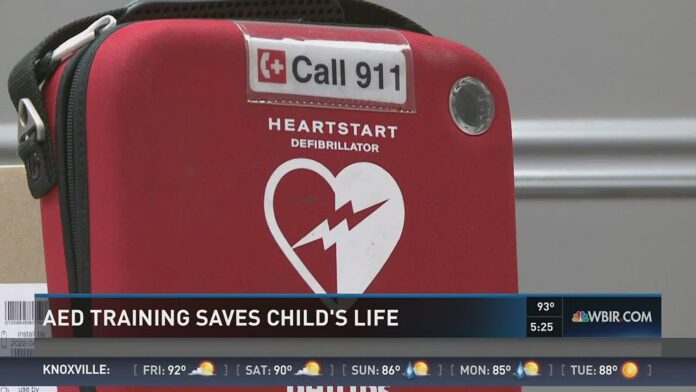
That argument becomes even more powerful when placed against the national preparedness problem. The American Heart Association reports that about 436,000 Americans die from cardiac arrest each year. Of the roughly 350,000 cardiac arrests that occur outside hospitals annually in the United States, about 10,000 happen in the workplace. The same AHA workplace statistics show that 55 percent of workers cannot get first aid or CPR and AED training from their employer, and half of U.S. workers cannot locate an AED at work. At the same time, more than 90 percent of employees say they would take CPR and AED training if their employer offered it. In other words, the interest is there, but the infrastructure and culture of preparedness remain inconsistent.
That inconsistency is where this story moves from personal reflection to public challenge. New Jersey prides itself on being home to world-class hospitals, major health systems, research institutions, pharmaceutical innovation, and some of the most sophisticated health care professionals in the country. Yet even in highly educated, professionally managed environments, emergency readiness can still be uneven. A workplace may have wellness benefits, insurance coverage, annual screenings, and extensive compliance programs, but still lack regular CPR instruction or clear AED visibility. Frier’s message exposes that disconnect with unusual clarity. Preparedness is not a luxury add-on. It should be treated as a core element of responsible workplace culture.
There is also a deeper emotional truth in Frier’s advocacy that makes this story especially resonant. Morrone was not someone disconnected from health care realities. He was widely experienced in the field, served as managing partner of Frier Levitt’s New York office and co-chair of its health care department, and also had a background as a critical care nurse and paramedic, with prior senior leadership experience across health care organizations. By Frier’s account, Morrone was active, worked out regularly, and understood medicine. That is part of what makes his death so sobering. Cardiac emergencies do not always arrive with obvious warning signs, and knowledge alone is not a guarantee of survival. The point is not fear. The point is urgency, humility, and preparation.
This is why the CPR and AED conversation deserves much more attention in New Jersey’s broader health and wellness coverage. Preventive care remains essential. Blood pressure management matters. Cholesterol treatment matters. Cardiology visits matter. Lifestyle changes matter. But Frier’s public stance underscores another reality: survival can also hinge on what a bystander does before emergency responders arrive. According to the American Heart Association, immediate CPR can double or even triple survival chances in cardiac arrest cases, and yet bystander response remains far from universal. That gap between what is possible and what is actually happening is where advocacy, training, and awareness can make a measurable difference. (cpr.heart.org)
The workplace dimension of this issue is especially important for New Jersey, where office campuses, distribution facilities, health care sites, schools, retail settings, hospitality venues, law firms, manufacturing operations, and public-facing institutions all bring people together for long hours every day. When an employer invests in CPR and AED readiness, the payoff is not merely symbolic. It can affect employee safety, emergency outcomes, operational continuity, risk management, and long-term disability exposure. More importantly, it can save a colleague, customer, patient, visitor, family member, or friend.
Frier has now tied that mission to one of New Jersey’s most visible cardiovascular fundraising and awareness events. He is serving as chair of the 2026 New Jersey Heart Ball campaign, which is scheduled for May at The Legacy Castle in Pompton Plains. The event is designed to celebrate the American Heart Association’s work, honor volunteers and patrons, spotlight survivor stories, and raise support for the organization’s broader mission in heart and brain health. The AHA announced Frier’s chairmanship in November 2025, describing him as a leader whose passion, community awareness, and drive to make a difference make him well-suited to lead the campaign. (American Heart Association)
That role matters because it expands Frier’s message beyond his own firm and into a larger statewide platform. The New Jersey Heart Ball is not just a fundraising evening. In practical terms, it functions as a convening point for business leaders, health advocates, philanthropists, clinicians, and community stakeholders. Under Frier’s leadership, it also becomes a vehicle for amplifying the importance of CPR training, AED access, public education, and the idea that community health depends on preparedness as much as it depends on treatment.
There is a broader narrative here about how leadership evolves. Frier has spoken openly about reaching a stage in his career where he wants to devote more energy to work that creates long-term public impact rather than simply advancing business outcomes. That perspective gives this story an unusual depth. It is not just about corporate citizenship in the conventional sense. It is about someone with influence deciding that one of the most meaningful ways to honor a colleague’s memory is to push for practical tools that ordinary people can use in extraordinary moments.
For Explore New Jersey, this is also a distinctly New Jersey story. It is rooted in Little Falls. It touches Pompton Plains. It involves a law firm built in the region, a major statewide American Heart Association initiative, and a public health issue with consequences that reach into every county. It speaks to the kind of civic-minded leadership that often defines the strongest stories in the state: professionals using experience, networks, and lived loss not just to react, but to organize, educate, and move the public conversation forward.
The health and wellness implications extend well beyond one fundraiser or one employer initiative. Schools can look at this story and ask whether staff are adequately trained. Youth sports leagues can ask whether coaches and volunteers know CPR and where the AED is kept. Offices can review whether employees would know how to respond in a break room, lobby, or parking lot. Apartment communities, houses of worship, gyms, entertainment venues, and community organizations can ask similar questions. Preparedness culture spreads when leaders stop treating training as optional and start treating it as essential.
That is part of why Frier’s advocacy lands with such force. He is not presenting CPR and AED education as a niche interest or a compliance box to check. He is describing it as a civic responsibility and a public health opportunity hiding in plain sight. In an era when health care conversations are often dominated by billion-dollar therapies, reimbursement models, insurance friction, and regulatory complexity, the simplicity of this message cuts through: more people should know how to save a life.
It is also notable that Frier’s broader public engagement appears to be moving in that same direction. In addition to his heart health advocacy, he is organizing an event designed to connect self-insured employers directly with providers and intermediaries in an effort to explore more effective care arrangements and potentially reduce costs while improving outcomes. That initiative sits in a different lane than CPR awareness, but the underlying philosophy is similar: challenge inefficiency, think beyond inherited systems, and focus on practical change that can improve health and care in the real world. (NJBIZ)
For readers, employers, and community leaders across New Jersey, the takeaway is as clear as it is urgent. A cardiac emergency can happen at a law firm, a gym, a grocery store, a school event, a concert venue, a youth game, or an office hallway. The distance between tragedy and survival is often measured not in miles, but in minutes. Daniel Frier’s campaign is a reminder that while not every life can be saved, many more lives could be given a better chance if CPR training were more common, AEDs were easier to locate, and preparedness were built into everyday environments rather than treated as an afterthought.
New Jersey already has the institutions, the expertise, the civic networks, and the public health infrastructure to lead on this issue. What stories like this do is turn that abstract capability into a moral and practical imperative. Frier’s advocacy asks a simple but profound question of the entire state: if the moment comes, will the people nearby be ready?
That question is now at the center of one of the most compelling health and wellness stories in New Jersey right now, and it deserves attention not only because it began in loss, but because it is being carried forward with purpose.
















