
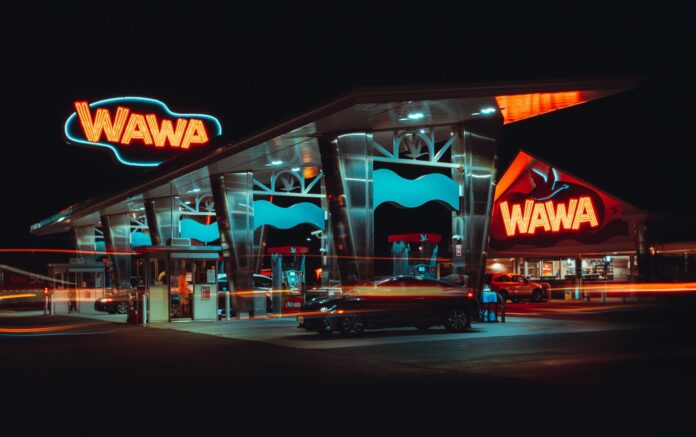

Something unmistakably Jersey is taking shape in the heart of the Wildwoods.
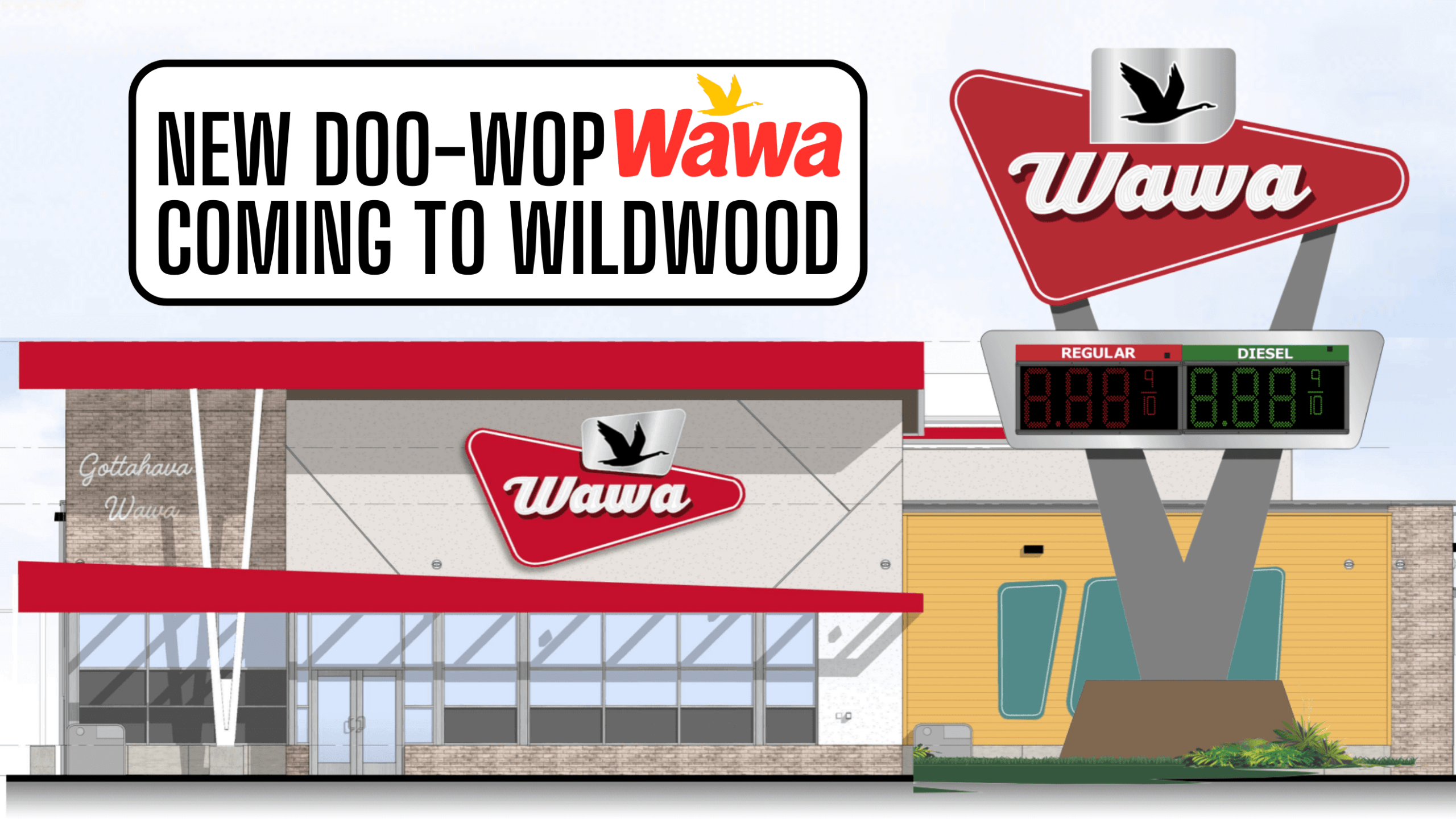
At 3400 New Jersey Avenue, on the corner of Schellenger Avenue, construction crews are building more than just another convenience store. They’re creating a Doo Wop-inspired Super Wawa designed to visually and culturally integrate into one of the most iconic retro destinations on the East Coast: Wildwood.
This 6,372-square-foot location will replace a former Rite Aid that was demolished late last year, and when completed, it will stand as the second Doo Wop-themed Wawa in the Wildwoods — a bold architectural tribute to the island’s mid-century identity.
For a town synonymous with neon lights, Googie signage, and atomic-era motel façades, this is not just development. It’s design alignment.
A Super Wawa Designed for the Shore
Wildwood’s mid-century “Doo Wop” aesthetic is nationally recognized. The architecture is playful, optimistic, and unapologetically vibrant — an era defined by bold geometry, neon glow, and futuristic curves. City officials made it clear from the outset that any new major commercial project needed to respect and reflect that heritage.
The result: a Super Wawa infused with retro DNA.
Plans include Googie-style signage, bold geometric roof lines, and stylized “atomic” accents that echo the classic motor lodges that line Ocean Avenue. The building will feature a distinctive “V”-shaped column and a cantilevered canopy — architectural nods to the mid-century roadside aesthetic that made Wildwood famous.
The color palette will lean into vibrant oranges, aquas, and pinks, complemented by a neon-style sign reminiscent of the existing retro-themed Wawa on Rio Grande Avenue at the island’s entrance.
This is not a generic prototype dropped into a beach town. It is site-specific design intended to reinforce place.
Fuel for the Island’s Core
Beyond aesthetics, the new Super Wawa addresses a practical gap.
The property will include a five-pump fueling station (10 fueling positions), delivering much-needed gas access to this portion of the island. Currently, options are limited in this corridor, particularly during peak summer tourism season when demand surges.
The project will also consolidate operations. The existing Wawa two blocks away at 3200 New Jersey Avenue — a smaller location without fuel pumps — will close once the new Super Wawa opens.
That relocation signals a strategic upgrade: larger footprint, expanded service capacity, and integrated fueling infrastructure in a single destination.
Construction Timeline and Progress
Demolition of the former Rite Aid began in late December 2025. As of March 2026, site preparation is underway, including foundational utility work and fuel infrastructure installation.
While no official opening date has been announced, early projections suggest completion could extend into late 2026. For Wildwood’s year-round residents and seasonal visitors alike, anticipation is building.
Designed with Neighborhood Sensitivity
Despite its scale, the project incorporates buffering measures to mitigate neighborhood impact. Plans call for a six-foot privacy fence and extensive landscaping, including 20- to 30-foot-tall northern white cedar trees to create a natural barrier between the commercial site and surrounding residential areas.
This balance — development without disruption — reflects evolving Shore planning standards that seek to modernize amenities while protecting community character.
A Broader Food & Beverage Evolution at the Jersey Shore
Explore New Jersey has consistently tracked the evolution of the Garden State’s food and beverage landscape — from boutique coffee shops and craft breweries to large-format convenience retail upgrades. The Wildwood Super Wawa fits squarely within that broader narrative.
The Jersey Shore is no longer defined solely by boardwalk stands and seasonal snack counters. It is experiencing a multi-layered transformation that blends heritage tourism with contemporary convenience.
Wawa’s expansion in Shore communities illustrates how iconic regional brands can adapt architecturally and operationally to reinforce local identity rather than dilute it.
For a deeper look at how food and beverage innovation continues reshaping communities across the state, visit our dedicated Food & Beverage section.
Doo Wop as Economic Identity
Wildwood’s embrace of Doo Wop architecture is not accidental nostalgia. It is economic strategy.
The mid-century design language differentiates the Wildwoods from other Shore towns, creating a visual identity that attracts heritage tourism and Instagram-era visibility. Integrating new construction into that framework preserves the authenticity that fuels visitation.
By aligning with this aesthetic rather than defaulting to a standardized build, Wawa positions itself not as an outsider retailer, but as a participating stakeholder in the Wildwoods’ visual legacy.
What This Means for Visitors
When the Super Wawa opens, it will serve multiple audiences:
Year-round residents seeking upgraded convenience.
Seasonal homeowners preparing for summer influx.
Tourists fueling up before long beach days or late-night boardwalk strolls.
Road-trippers entering or exiting the island.
And, of course, fans of Jersey’s most beloved hoagies and coffee rituals.
The difference is that this stop will feel unmistakably Wildwood — neon-lit, retro-inspired, and visually cohesive with the surrounding mid-century streetscape.
A Jersey Original, Reimagined
Wawa has long been woven into New Jersey’s daily life. Its evolution into larger-format “Super Wawas” with fueling capabilities reflects shifting consumer patterns and demand for one-stop convenience.
But in Wildwood, it is doing something more ambitious: fusing brand identity with architectural storytelling.
The Doo Wop-themed Super Wawa at 3400 New Jersey Avenue stands as a case study in contextual design — where corporate expansion meets municipal vision, and where convenience retail becomes part of the cultural fabric rather than an interruption of it.
As construction continues and summer approaches, one thing is clear: when those neon-style letters flicker on for the first time, they won’t just illuminate a storefront. They’ll light up another chapter in Wildwood’s evolving Shore story — retro spirit intact, modern convenience included.
















