
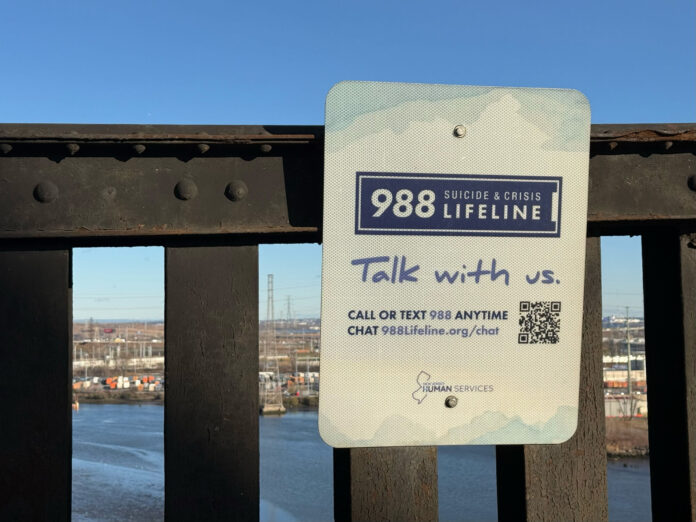

When Governor Mikie Sherrill signed New Jersey’s $60.7 billion budget for the fiscal year beginning July 1, 2026, the state’s 988 crisis hotline received flat funding of roughly $28 million, keeping the program’s existing infrastructure intact without providing any new money to expand it. That funding decision has reignited a genuinely important debate among mental health advocates, lawmakers, and fiscal policymakers over exactly how New Jersey should be paying for crisis mental health services going forward, and whether relying on the state’s annual budget process is even the right approach at all.
Understanding what flat funding actually means in practice requires separating what the $28 million allocation covers from what it deliberately leaves out. That funding represents what advocates describe as the bread and butter of New Jersey’s current 988 operations, ensuring call centers can keep answering the roughly 10,900 local calls they receive every month while also keeping the state’s mobile crisis outreach response teams operating and available. What that flat funding does not provide, though, is any new money to build the crisis stabilization centers many advocates consider the next essential step for the system. These centers would give people experiencing a severe mental health crisis a specialized place to receive care, rather than defaulting to a local hospital emergency room that may be poorly equipped to handle a psychiatric emergency and already strained by unrelated patient volume. Without new funding specifically earmarked for that expansion, New Jersey’s 988 system remains capable of maintaining its current operations but structurally unable to grow into the more comprehensive crisis response network advocates argue the state genuinely needs.
That funding gap has pushed mental health advocates and sympathetic lawmakers toward pursuing an entirely different funding mechanism, one designed to remove 988 from the yearly uncertainty of the general state budget altogether. State Senator Joe Vitale is among the lawmakers backing a pending bill that would establish a 40 cent monthly fee applied to all New Jersey phone lines, a structure deliberately modeled on how the state already funds its 911 emergency system on a permanent, dedicated basis. Under the proposal, that small telecom fee would generate an estimated $67.3 million annually, considerably more than the current flat funded budget allocation, and critically, that revenue would bypass the general state budget entirely, flowing instead into a dedicated 988 trust fund insulated from the annual political negotiations that currently determine the hotline’s funding level year to year.
Despite that funding potential, the bill has stalled amid genuine pushback within the State House. Opponents have characterized the 40 cent fee as effectively a new tax on residents already grappling with New Jersey’s notoriously high cost of living and steep property tax burden, framing even a modest per line monthly charge as one more financial obligation piled onto households already stretched thin. That characterization has proven politically potent enough to keep the bill stuck in both Assembly and Senate committees, particularly with election year dynamics making many lawmakers genuinely hesitant to support anything that could be labeled a new fee or tax, regardless of how directly the revenue would be tied to a specific, widely supported public safety service. Supporters of the bill counter that framing the fee as equivalent to a new tax overlooks how directly comparable it is to the existing 911 funding model that residents have accepted without controversy for years, and argue that a permanent, dedicated funding stream would ultimately serve residents far better than a crisis line that has to renegotiate its budget from scratch every single year.
Stepping back from the funding debate itself, the 988 Suicide and Crisis Lifeline remains the national hotline dedicated specifically to mental health emergencies, substance use crises, and other emotional crisis situations. It launched nationwide in July 2022, replacing the far more cumbersome ten digit National Suicide Prevention Lifeline with a simple, three digit number designed to be considerably easier for anyone in crisis to remember and dial quickly. Callers and texters can reach trained counselors free of charge and entirely confidentially, 24 hours a day, without triggering any automatic law enforcement involvement, a distinction that has made the service considerably more approachable for people who might otherwise hesitate to seek help during a genuine mental health emergency.
The 988 number itself belongs to a broader category of three digit shortcodes the Federal Communications Commission has designated for various forms of public use, often referred to collectively as N11 codes. Beyond 988 and the widely known 911 emergency line, several other N11 numbers serve genuinely useful, distinct purposes worth knowing. Dialing 211 connects callers to community and social services, linking residents with local resources like housing assistance, utility bill support, food pantries, and disaster relief programs. The number 311 handles non emergency municipal service requests, allowing residents to report city level issues like potholes, broken streetlights, graffiti, or missed trash pickup directly to local government without tying up emergency lines. Directory assistance remains available through 411, the traditional line for looking up local business phone numbers or residential addresses, though many providers now charge a fee for that service. Travelers can dial 511 for real time, state specific highway updates, road construction reports, transit delays, and current weather conditions affecting travel. The number 611 automatically routes callers to their own wireless or landline provider’s internal repair and billing help desk, while 711 provides a specialized Telecommunications Relay Service designed to help people who are deaf, hard of hearing, or speech disabled communicate over standard phone lines. Homeowners and contractors planning any excavation work rely on 811, the mandatory Call Before You Dig hotline used to request that underground utility lines be safely marked before digging begins. And 911 itself remains reserved strictly for immediate physical emergencies genuinely requiring police, fire, or ambulance response.
Taken together, New Jersey’s ongoing debate over how to permanently fund 988 sits within a much larger national conversation about how state governments should be building out mental health crisis infrastructure to match the same level of reliability and permanence already built into emergency services like 911. Whether New Jersey ultimately adopts the proposed phone fee, continues relying on annual flat funding, or finds some other path forward, the underlying question, how to build a crisis response system residents can count on regardless of that year’s budget politics, remains very much unresolved heading into the next legislative session.
This is a sensitive topic, and if you or someone you know is personally struggling, please reach out for support. I’m happy to help point you toward the right resources if that would be useful.
















