
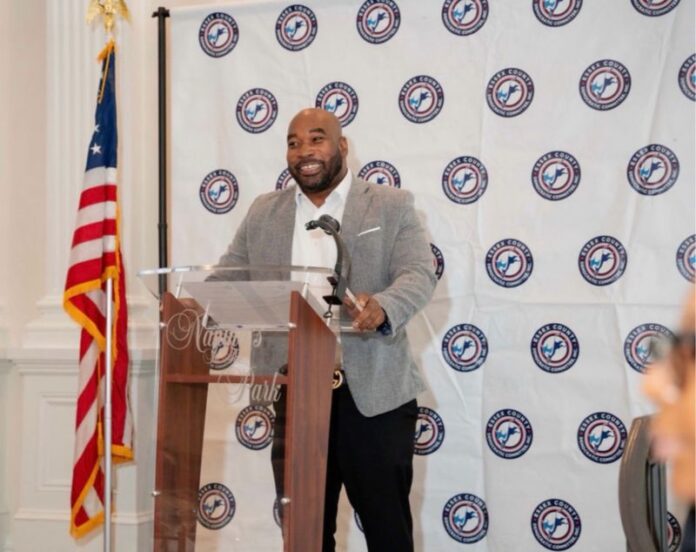

When Mikie Sherrill campaigned for governor last year, she made a point of crediting a specific piece of her political infrastructure back in her home county, the operation known simply as Team Akeem. That nod referred to Akeem Cunningham of East Orange, the organizer who ran Sherrill’s Essex County operation during her gubernatorial run and who has since gone on to take the top operational job at the Essex County Democratic Committee, stepping into the role of executive director under longtime party chairman LeRoy Jones Jr. For a state where county party organizations still wield enormous influence over who wins elections, Cunningham’s ascent into that seat marks one of the more consequential behind-the-scenes moves in New Jersey Democratic politics this year.
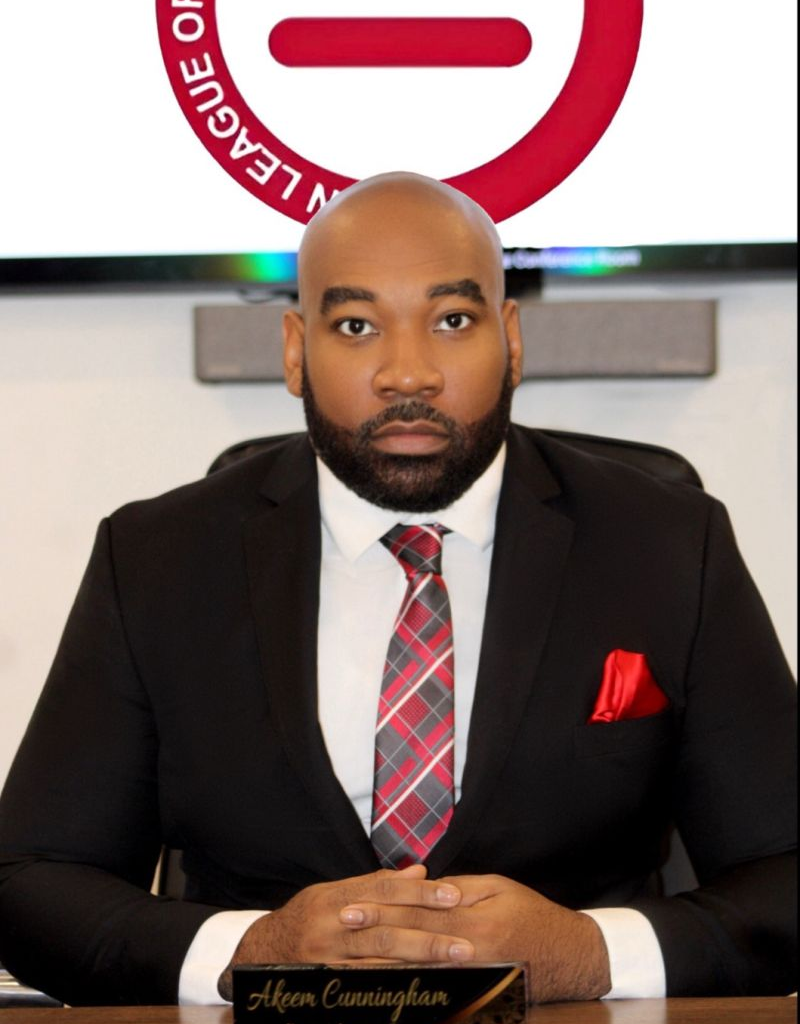
Cunningham does not hold elected office himself, and that distinction matters, because it places him squarely in the category of political operator rather than politician, the kind of figure who builds campaigns and shapes outcomes without ever appearing on a ballot. Within New Jersey Democratic circles, he has increasingly been discussed as one of the party’s genuine rising stars, someone whose influence runs through field operations, coalition building, and organizational leadership rather than through elected title. His new role as executive director puts him in charge of the day-to-day operations of one of the most powerful county Democratic committees in the entire state, working directly under Chairman Jones to steer how the organization approaches elections, messaging, and internal party dynamics going forward.
In a recent conversation, Cunningham addressed one of the more consequential structural changes to hit New Jersey politics in years, the elimination of the county line, or ballot bracketing system, that for decades allowed party-favored candidates to appear grouped together in a privileged ballot position. Conventional wisdom around Trenton has generally treated the end of the line as a blow to established county organizations like Essex’s, stripping them of a built-in structural advantage that once made straight-ticket voting the norm. Cunningham pushed back on that framing directly, arguing instead that the change has actually created an opportunity for the organization to grow stronger, precisely because it now has to earn accountability from its elected officials and hold them to a higher standard rather than relying on an automatic ballot advantage. He described how the old system had conditioned voters to simply select an entire party line without individually engaging with each race, whereas the current landscape demands real coalition building and genuine voter engagement in a way the organization historically didn’t need to practice. In his view, that shift has forced a healthier, more demanding version of grassroots politics onto an organization that had grown comfortable leaning on structural advantages rather than persuasion.
That same emphasis on listening rather than assuming carried through into how Cunningham described his broader approach to leading the county committee amid a Democratic Party grappling with a surging progressive wing alongside genuine voter skepticism toward party organizations generally. Rather than positioning himself or the committee as having all the answers, Cunningham committed to conducting listening tours across the county, treating direct engagement with voters as a starting point rather than an afterthought. He framed the diversity of voices within the party, including ones that challenge existing leadership or strategy, as something the organization needs to actively welcome and act upon rather than merely tolerate, arguing that real growth requires putting genuine action behind whatever the party hears from its most engaged and most skeptical voters alike.
Cunningham’s path to this position has been built through a genuinely varied career that blends grassroots organizing, direct public service, and executive government experience in a way that few operators his age can claim. Just months before taking over at the county committee, he stepped into a significant role within state government, joining the New Jersey Department of Community Affairs as Chief of External Affairs and Strategic Initiatives in February 2026. In that capacity, he has led community engagement work centered on affordable housing, rental assistance, and homelessness prevention, giving him direct policy experience on some of the state’s most pressing quality-of-life issues well beyond the campaign trail.
It was the 2025 gubernatorial race, though, that first brought Cunningham’s name into wider political conversation. Serving as regional campaign director for Sherrill’s Essex County operation, he built and ran what became known as Team Akeem, an innovative, youth-driven get-out-the-vote field operation that mobilized young volunteers to knock on more than 60,000 doors across the county. That effort helped deliver historically strong vote margins for Sherrill in Essex, a result significant enough that the candidate herself referenced the operation by name on her way to winning the governorship, cementing Cunningham’s reputation as a field organizer capable of translating grassroots energy into real electoral results.
Cunningham’s roots in East Orange run deep and predate his rise within Democratic Party leadership by well over a decade. At just 23 years old, he ran an underdog campaign for a seat on the East Orange City Council back in 2013, and although he came up short in that race, the campaign was enough to catch the attention of party leaders who recognized his organizing talent early. Long before his political career took shape, Cunningham served his community directly as a professional union firefighter with the East Orange Fire Department, a role that earned him the department’s Firefighter of the Year honor in 2018 and gave him a direct, hands-on relationship with the community he would later organize politically. He went on to serve as Deputy Chief of Staff to East Orange Mayor Ted R. Green, adding municipal government experience to a résumé already built around firefighting and grassroots campaigning. Alongside all of that, Cunningham currently serves as president of the Urban League of Essex County Young Professionals, a civic leadership role that keeps him directly connected to the county’s next generation of community and political leaders even as his own influence continues to grow at the county and state level.
Taken together, Cunningham’s trajectory, from a firehouse in East Orange to a losing city council bid to a defining role in a successful gubernatorial campaign to now running one of New Jersey’s most powerful county party organizations, reflects exactly the kind of ground-up political rise that has become increasingly rare in an era dominated by professional consultants and national party operatives. As Essex County Democrats navigate a political landscape reshaped by the end of the county line and a party base increasingly demanding to be heard rather than simply organized, Cunningham’s stated commitment to listening tours and genuine coalition building will likely be tested quickly, and how he balances that grassroots instinct with the institutional weight of the Essex County machine may end up shaping not just county politics, but the direction of New Jersey’s Democratic Party well beyond it.
















