Home Blog Page 4

New Jersey Matzah with Bold Flavors, Traditions, and Culinary Creativity

New Jersey’s culinary identity has always been defined by its ability to preserve tradition while pushing it forward, and nowhere is that more evident than in the way matzah continues to evolve across the state. Long associated with Passover observance and deeply rooted in Jewish heritage, matzah in New Jersey has become something more expansive—a canvas for creativity, a source of comfort, and a reflection of generational influence that stretches from Newark and the Jersey Shore to South Jersey kitchens and beyond. With the state’s historic connection to the Manischewitz brand and a vibrant community of home cooks and food innovators, matzah has taken on new life in forms that are both familiar and unexpectedly modern.

As highlighted across the Explore New Jersey recipes section, this culinary transformation is not about replacing tradition but enhancing it. In households throughout the Garden State, matzah is no longer confined to its role as a simple cracker served at the Seder table. Instead, it is being reimagined in ways that reflect both regional personality and contemporary taste, resulting in dishes that are as diverse as New Jersey itself.

🫓 Classic Traditional Matzah (Flour + Water Only)

This is the most authentic version—simple, fast, and crisp.

Ingredients

  • 1 cup all-purpose flour
  • 1/3 cup water

Instructions

  1. Preheat oven to 500°F (as hot as possible).
  2. Mix flour and water quickly into a dough.
  3. Divide into 2–3 small balls.
  4. Roll each extremely thin (almost paper-thin).
  5. Transfer to baking sheet.
  6. Dock (poke holes) all over with a fork.
  7. Bake 3–5 minutes until lightly browned and crisp.

Key Rule

  • From mixing to baking: under 18 minutes (traditional standard).

🫓 Hillary Sterling–Style Modern Matzo (Crispier, Tastier)

This is the upgraded version—more flavor, more texture.

Ingredients

  • 1 cup all-purpose flour
  • 1/2 tsp fine sea salt
  • 1 tbsp extra-virgin olive oil
  • ~1/3 cup water

Instructions

  1. Preheat oven to 500°F with a baking stone or sheet inside.
  2. Mix all ingredients into a soft dough.
  3. Rest dough 15 minutes.
  4. Roll very thin on an unfloured surface.
  5. Transfer to hot surface, dock with fork.
  6. Bake 4–9 minutes until golden and slightly blistered.

Pro Tip

  • Thinner = better. You want it almost translucent.

🧀 New Jersey “Matzah Machos” (Passover Nachos)

Ingredients

  • 4–6 sheets matzah
  • 2 cups shredded cheese
  • Toppings:
    • diced tomato
    • avocado
    • shredded lettuce
    • beans or brisket (optional)

Instructions

  1. Preheat oven to 375°F.
  2. Break matzah into pieces and layer on tray.
  3. Cover with cheese and toppings.
  4. Bake 8–10 minutes until melted and bubbly.
  5. Add fresh toppings after baking if desired.

🍫 Chocolate Matzah Toffee (Jersey Classic)

Ingredients

  • 4–6 sheets matzah
  • 1 cup butter (or margarine)
  • 1 cup brown sugar
  • 1 1/2 cups chocolate chips
  • Optional: nuts + flaky salt

Instructions

  1. Preheat oven to 350°F.
  2. Line tray with foil + parchment, add matzah.
  3. Melt butter + sugar, boil 3 minutes.
  4. Pour caramel over matzah.
  5. Bake 10–12 minutes.
  6. Remove, sprinkle chocolate chips, let melt.
  7. Spread chocolate evenly, add toppings.
  8. Cool and break into pieces.

🍲 Fluffy Matzah Balls (South Jersey Style)

Ingredients

  • 1 cup matzah meal
  • 4 eggs
  • 1/4 cup schmaltz (or oil)
  • 1/4 cup seltzer (key for fluffiness)
  • 1 tsp salt

Instructions

  1. Mix all ingredients.
  2. Refrigerate 30 minutes.
  3. Roll into balls (wet hands help).
  4. Drop into boiling salted water or broth.
  5. Cover and simmer 30–40 minutes.

Secret

  • Seltzer = lighter texture
  • Schmaltz = richer flavor

🍳 Savory Matzah Brei (Quick Meal)

Ingredients

  • 2 sheets matzah
  • 2 eggs
  • 2 tbsp butter
  • Salt + pepper
  • Optional: onions

Instructions

  1. Soak matzah briefly, then drain.
  2. Beat eggs, mix with matzah.
  3. Melt butter in pan.
  4. Cook like scrambled eggs until set.

🥣 Old-School “Matzo Milk” (North Jersey Comfort Dish)

Ingredients

  • 2 sheets matzah
  • 1 cup warm milk
  • Pinch of salt

Instructions

  1. Break matzah into a bowl.
  2. Pour warm milk over it.
  3. Add salt and eat immediately.

One of the most talked-about reinterpretations is the rise of what many have come to call “Matzah Machos,” a distinctly Jersey-inspired take on nachos that has gained traction as a go-to Passover-friendly indulgence. Built on a foundation of broken matzah pieces layered across a baking dish, the dish transforms into something entirely new once topped with melted cheese and a range of customizable ingredients. From fresh lettuce and tomato to avocado, refried beans, or even leftover brisket, the combination creates a dish that is both celebratory and practical. It captures the essence of New Jersey cooking—resourceful, bold, and unafraid to blend cultural influences into something uniquely local. The result is a dish that satisfies cravings without compromising the spirit of the holiday, making it a staple for families looking to bring a sense of fun and flavor to their Passover tables.

Equally iconic is the enduring popularity of chocolate-covered matzah toffee, a dessert that has become synonymous with New Jersey’s deep-rooted connection to Manischewitz. This recipe, passed down and perfected across generations, takes the simplicity of matzah and elevates it into a confection that rivals any traditional dessert. The process begins with a caramel made from butter or margarine and brown sugar, carefully heated until it reaches a rich, golden consistency. Once poured over the matzah and baked, it creates a crisp, candy-like layer that serves as the perfect base for melted chocolate. Topped with pistachios, flaky salt, or other creative additions, the finished product delivers a balance of sweetness, texture, and indulgence that has made it a perennial favorite in New Jersey homes. It is a dessert that speaks to both nostalgia and innovation, bridging the gap between tradition and modern taste.

In South Jersey, the conversation around matzah often turns to one of its most beloved forms: the matzah ball. Here, the focus is not just on flavor but on texture, with passionate debate surrounding what constitutes the perfect consistency. For many local cooks, the goal is a light, airy matzah ball that floats delicately in a rich chicken broth, rather than one that is dense or heavy. Achieving this texture has become something of a regional art form, with techniques passed down through families and refined over time. One of the most widely embraced methods involves substituting water with seltzer—or even ginger ale—when preparing the mixture. The carbonation introduces air into the batter, resulting in a noticeably lighter final product. Another defining element is the use of schmaltz, or rendered chicken fat, which adds a depth of flavor that many consider essential. These choices reflect a commitment to authenticity while also embracing the subtle adjustments that elevate a dish from good to exceptional.

Further north, a different kind of matzah tradition continues to hold its place in New Jersey’s culinary landscape. Known informally as “matzo milk,” this simple preparation is as much about memory as it is about taste. In homes across North Jersey and along the Shore, matzah is broken into pieces and added to warm milk, often with just a pinch of salt. The result is a dish that is understated yet deeply comforting, a reminder of childhood breakfasts and family traditions that have endured for decades. It is a testament to the idea that not all great food needs to be complex; sometimes, the most meaningful dishes are the ones that remain closest to their origins.

Another staple that continues to evolve in New Jersey kitchens is matzah brei, often described as a “Jewish omelette” but carrying a character all its own. By soaking matzah briefly to soften it and then combining it with eggs, onions, and butter, cooks create a dish that is both hearty and versatile. Some prefer it savory, incorporating additional ingredients such as herbs or vegetables, while others lean toward a sweeter version with sugar or fruit. In diners and home kitchens alike, matzah brei represents a bridge between tradition and everyday cooking, offering a familiar yet adaptable option during the Passover season.

Adding a contemporary dimension to this rich culinary tapestry is the introduction of Hillary Sterling’s modern matzo recipe, which has begun to influence how New Jersey cooks think about the very foundation of these dishes. Inspired by the Sardinian flatbread pane carasau, Sterling’s approach introduces olive oil and sea salt into the dough, creating a texture that is lighter, more delicate, and far more flavorful than conventional matzah. The technique emphasizes rolling the dough to an ultra-thin consistency and baking it at high temperatures until it achieves a crisp, golden finish with slightly charred edges. While not kosher for Passover due to its ingredients and preparation method, the recipe has nonetheless sparked interest among those looking to expand their culinary repertoire beyond traditional constraints.

This evolution speaks to a broader trend within New Jersey’s food culture, where respect for heritage coexists with a willingness to experiment. Whether it is transforming matzah into a savory snack, elevating it into a dessert centerpiece, or reimagining its very structure through modern technique, the state’s approach reflects a deep appreciation for both where these traditions come from and where they can go.

What emerges from this landscape is a portrait of a state that understands food not just as sustenance, but as a living expression of identity. In New Jersey, matzah is more than a ritual food—it is a medium through which stories are told, innovations are tested, and communities are connected. From the enduring legacy of Manischewitz to the inventive energy of today’s kitchens, the journey of matzah in New Jersey continues to unfold, one recipe at a time, shaped by the hands and voices of those who keep it alive.
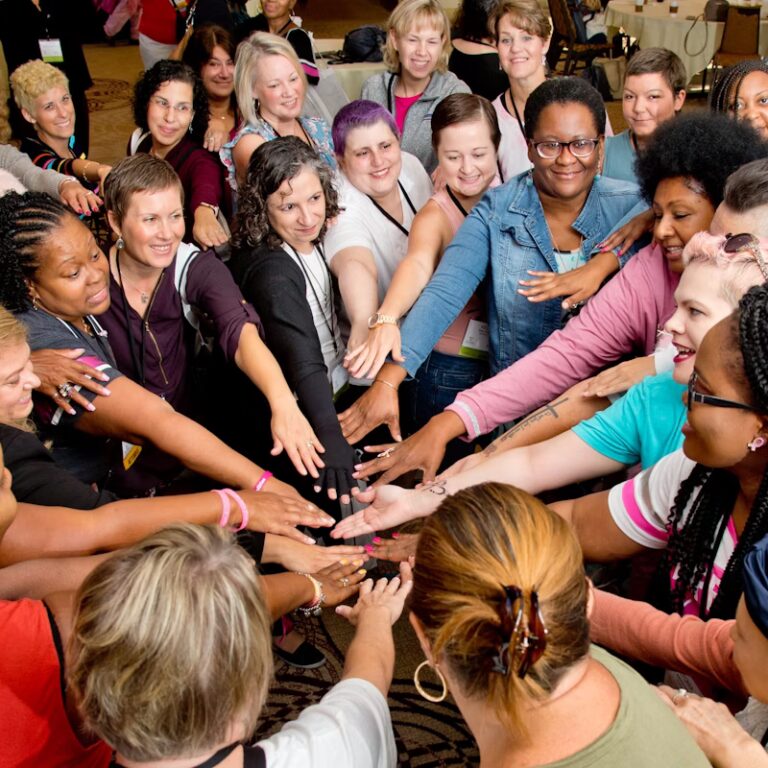
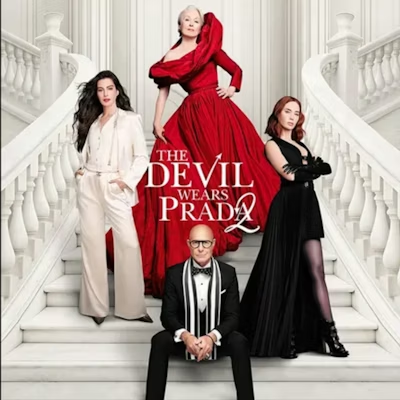
Fashion, Film & Wellness in Fort Lee: New Jersey Hosts Powerful Gala Spotlighting Triple Negative Breast Cancer with “The Devil Wears Prada 2” Screening and Expert Panel

New Jersey’s role as a cultural and community-driven hub continues to expand in meaningful ways as Fort Lee prepares to host a high-impact event that merges entertainment, advocacy, and medical insight into one cohesive and purpose-driven experience. The upcoming Fashion, Film & Wellness gala, organized by the Triple Negative Breast Cancer Foundation, is set to bring together leaders in media, medicine, and advocacy for an evening that reflects both the urgency of its mission and the evolving power of storytelling in driving awareness.

Set against the backdrop of Fort Lee—one of the most historically significant locations in American film—the event carries an added layer of symbolism. Long before Hollywood became synonymous with the entertainment industry, Fort Lee served as a foundational center for filmmaking, making it a fitting location for an event that uses cinema as a vehicle for education and change. Those looking to explore how New Jersey continues to shape the entertainment landscape can find deeper context through Explore New Jersey’s film and TV section, where modern productions and legacy storytelling intersect across the state.

At its core, the Fashion, Film & Wellness event is designed to elevate awareness around triple-negative breast cancer (TNBC), one of the most aggressive and complex forms of the disease. Unlike other breast cancer subtypes, TNBC lacks the receptors that are commonly targeted in treatment, making it more challenging to treat and requiring a more nuanced, research-driven approach. The foundation’s mission is clear: to accelerate progress through education, funding, and community engagement while improving the quality of life for those affected.

The structure of the evening reflects that mission with precision. It begins with an expert-led panel discussion that bridges clinical knowledge with lived experience, creating a multidimensional perspective on TNBC. This is not a surface-level conversation. It is a deep, focused exploration of treatment advancements, early detection strategies, and the emotional realities faced by patients and their families. By bringing together voices from different disciplines, the panel creates a comprehensive dialogue that is both informative and deeply human.

Among the featured participants is Carson Kressley, an Emmy Award-winning television personality and style expert whose presence brings both visibility and relatability to the event. His involvement underscores the intersection of fashion and identity, highlighting how personal expression can play a role in confidence and resilience during challenging times. Joining him is Dr. Eleonora Teplinsky, a medical oncologist with the Valley Health System, who provides critical insight into the latest developments in cancer treatment and patient care. Melissa Berry, a breast cancer survivor and founder of Cancer Fashionista, adds a powerful voice rooted in lived experience, offering perspective on navigating diagnosis, treatment, and life beyond cancer. The discussion is guided by Carissa Lawson, a contributing news anchor for CBS News, whose role as moderator ensures that the conversation remains both accessible and impactful.

This blend of expertise and storytelling transforms the panel into more than an educational session—it becomes a platform for connection, empathy, and empowerment. It reflects a broader shift in how health and wellness conversations are being framed, moving away from purely clinical narratives and toward integrated discussions that consider the emotional, psychological, and social dimensions of care.

Following the panel, the evening transitions into a curated dining experience, creating space for attendees to engage, reflect, and build connections within a shared environment of purpose. This element of the event reinforces the importance of community in both awareness and healing, emphasizing that progress is not achieved in isolation but through collective effort.

The night culminates with a private screening of The Devil Wears Prada 2, one of the most anticipated film releases of the year, scheduled for national theatrical debut on May 1, 2026. The inclusion of this film is both strategic and symbolic. As a continuation of a cultural phenomenon that has long defined conversations around fashion, ambition, and identity, the sequel serves as a bridge between entertainment and the themes explored throughout the evening. It brings a sense of familiarity and excitement while reinforcing the event’s central idea: that storytelling—whether through film, fashion, or personal narrative—has the power to shape perception and inspire action.

Beyond the gala itself, the influence of the event is already extending into the broader New Jersey community. Additional themed screenings and related gatherings are emerging across the state, reflecting a growing interest in blending entertainment with purpose-driven experiences. These satellite events, while more casual in nature, contribute to the overall momentum, ensuring that the conversation around TNBC reaches a wider audience.

What distinguishes the Fashion, Film & Wellness event is its ability to operate on multiple levels simultaneously. It is a fundraiser, generating critical support for research and patient services. It is an educational platform, providing access to expert knowledge and real-world insight. It is also a cultural moment, leveraging the appeal of film and fashion to draw attention to an issue that demands greater visibility.

For New Jersey, this event represents a continuation of a broader trend: the integration of lifestyle, entertainment, and wellness into cohesive experiences that resonate with diverse audiences. It highlights the state’s capacity to host events that are not only engaging but also impactful, reinforcing its position as a center for innovation in how stories are told and causes are championed.

As Fort Lee prepares to welcome attendees for this significant evening, the message is clear. Awareness is not a passive concept—it is something that must be actively built, shared, and sustained. Through a carefully designed blend of expert insight, cultural relevance, and community engagement, the Fashion, Film & Wellness gala is doing exactly that, creating an experience that informs, inspires, and ultimately drives meaningful progress in the fight against triple-negative breast cancer.

New Jersey Devils Face Rangers as Season Nears Breaking Point, But the Real Story Is What Comes Next

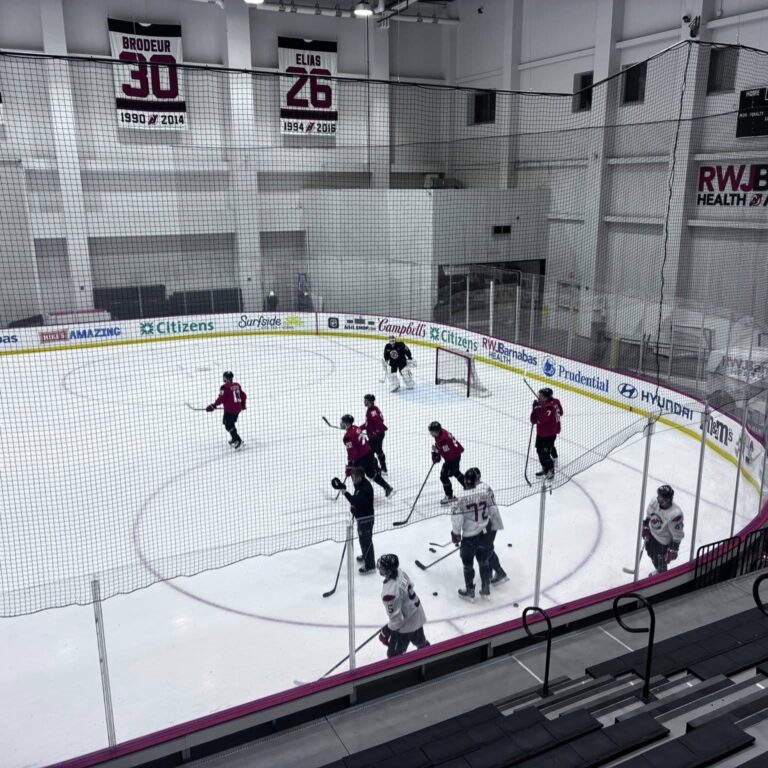
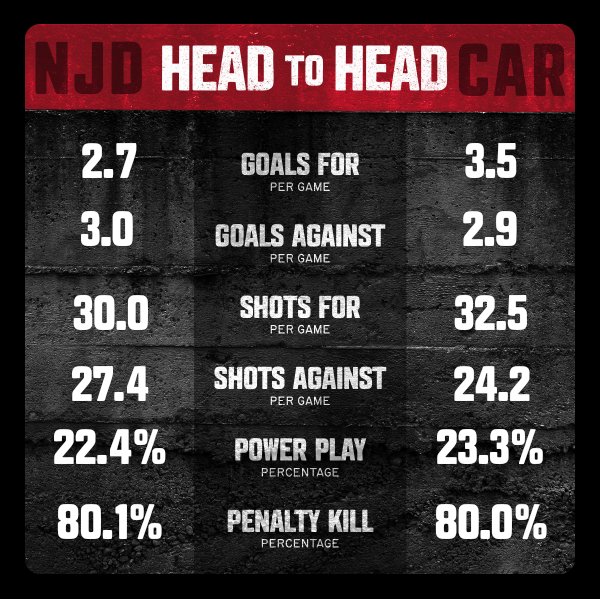
As the New Jersey Devils prepare to take the ice at Madison Square Garden tonight against the New York Rangers, the stakes are both immediate and symbolic. On paper, it is another chapter in one of hockey’s most intense rivalries. In reality, it is a moment that captures the tension between what this season has been and what this franchise must become moving forward. Entering the matchup with a 38-33-2 record and just nine games remaining, the Devils sit 10 points outside of a wild-card position, with playoff odds effectively reduced to near zero. The math is unforgiving, but the story is not over. It is simply shifting direction.

Even within the disappointment of the standings, there are signs of life that cannot be ignored. The Devils have won 10 of their last 14 games, a stretch that suggests a team capable of competing at a high level when structure, execution, and confidence align. That recent momentum was on full display in their 5-3 victory over the Chicago Blackhawks on March 29, a game driven by Jack Hughes, who delivered a dominant performance with two goals and two assists. It was the kind of performance that reminds everyone—from fans to management—exactly what this roster is capable of when its core players are operating at full strength.

Now, the Devils turn their attention to the Rangers, a team they have already beaten twice this month by identical 6-3 scores. A win tonight would complete a season sweep, offering a measure of pride in a rivalry that never loses its intensity, regardless of standings. But beyond the immediate result, the game represents something larger: an opportunity to define identity in a season that has struggled to find consistency.

For those following the evolving story of the team and its trajectory, the full scope of the Devils’ season and future outlook continues to unfold across Explore New Jersey’s dedicated New Jersey Devils coverage, where analysis, roster movement, and organizational direction are shaping the next chapter of hockey in the Garden State.

At the center of everything is Jack Hughes, whose post-Olympic surge has been nothing short of elite. Since returning from the 2026 Milan-Cortina Games—where he delivered a defining moment for Team USA with a gold medal-winning goal—Hughes has elevated his play to another level, recording 27 points in just 16 games. His season totals now sit at 63 points, reinforcing his role as the engine of the Devils’ offense and one of the most dynamic players in the league. His ability to control pace, create opportunities, and shift momentum remains the single most important factor in the team’s performance.

Captain Nico Hischier continues to provide leadership and scoring stability, leading the team with 26 goals, while Timo Meier’s 22-goal contribution adds another layer of offensive depth. In net, Jacob Markström has carried a heavy workload, posting a 22-17-1 record with a 3.09 goals-against average. These numbers, while not dominant, reflect the broader inconsistency that has defined the season—a team capable of high-end play, but unable to sustain it over extended stretches.

Injuries have played a significant role in shaping that inconsistency. The loss of Stefan Noesen and Zack MacEwen for the remainder of the season has thinned the roster, while uncertainty surrounding Brett Pesce’s availability adds another layer of instability on the blue line. These challenges, combined with uneven performance across the lineup, have contributed to a campaign that has fallen short of expectations.

Off the ice, attention is already beginning to shift toward the organization’s structure and leadership. Speculation surrounding General Manager Tom Fitzgerald’s future is gaining traction, with discussions emerging about the potential separation of his dual roles as President of Hockey Operations and GM. While Fitzgerald has indicated alignment with ownership, including co-owner David Blitzer, the offseason is expected to bring a comprehensive evaluation of the team’s direction.

That evaluation will need to extend beyond leadership into the construction and deployment of the roster itself. As the Devils move through the final stretch of the season, there is a growing argument for using these remaining games as a testing ground—an opportunity to explore combinations, evaluate emerging talent, and gather data that can inform critical offseason decisions.

One of the most compelling areas of focus is line chemistry, particularly alongside Jack Hughes. The potential pairing of Hughes with Dawson Mercer presents an intriguing option supported by strong underlying metrics. In limited ice time together, the duo has demonstrated the ability to control possession, generate scoring chances, and create high-danger opportunities at an impressive rate. Their complementary skill sets—Hughes’ playmaking and Mercer’s positional awareness—suggest a partnership that could evolve into a long-term solution.

If Mercer is not deployed in that role, another option emerges in Lenni Hameenaho, whose style mirrors many of the attributes that make Mercer effective. While his sample size at the NHL level remains small, his ability to find space and support play-driving centers aligns with what the Devils have been missing since key roster changes earlier in the season. Providing him with meaningful minutes alongside elite playmakers could accelerate his development while offering insight into his long-term potential.

The same philosophy applies to the blue line, where experimentation could yield valuable information. Pairing Luke Hughes with Dougie Hamilton—two of the team’s most offensively inclined defensemen—may not represent a traditional approach, but the underlying numbers suggest there is potential worth exploring. Alternatively, giving extended minutes to a Luke Hughes–Simon Nemec pairing could provide a glimpse into a future that has long been envisioned within the organization. Nemec, in particular, represents a critical piece of the Devils’ long-term puzzle, and increasing his ice time could serve both developmental and evaluative purposes.

Beyond individual pairings, there is a broader opportunity to integrate players from the AHL affiliate Utica Comets. With several forwards posting comparable production at the AHL level, the final games of the season present a low-risk environment to assess their readiness for NHL competition. This approach would not only inject fresh energy into the lineup but also provide valuable insight into organizational depth.

Perhaps the most intangible—but equally important—objective is how the Devils choose to finish the season. With upcoming games against teams still fighting for playoff positioning, including Pittsburgh, Detroit, Ottawa, and Boston, there is a chance to play spoiler while simultaneously building internal momentum. Winning these games may not change the standings in a meaningful way, but it can influence mindset, culture, and confidence heading into the offseason.

For a team that entered the season with elevated expectations, the current reality is undeniably disappointing. Yet within that disappointment lies clarity. The Devils are not a team in need of a complete rebuild; they are a team that must refine, recalibrate, and recommit to the principles that drive consistent success.

Tonight’s game against the Rangers is one more data point in that process. It is an opportunity to compete, to assert identity, and to demonstrate that even in a season that has fallen short, there is still a standard to uphold. More importantly, it is part of a larger transition—from chasing a playoff spot that is no longer within reach to building a foundation that ensures this position is not repeated.

The New Jersey Devils’ future is not defined by the standings of March 31, 2026. It will be defined by what they choose to do next.

Paramus Native Jake Thistle Breaks Into American Idol Top 14 as New Jersey’s Music Scene Powers a National Moment

New Jersey’s influence on the national music stage is once again undeniable as Paramus native Jake Thistle continues his remarkable ascent on American Idol Season 24, officially securing a place in the Top 14 following a standout live performance that has positioned him as one of the most compelling artists in the competition. At just 21 years old, the singer-songwriter is not only representing his hometown, but also carrying forward a deep-rooted Garden State tradition of authentic, emotionally driven musicianship that continues to resonate far beyond state lines.

Thistle’s latest performance, delivered during the show’s “Songs of Faith” themed live broadcast on March 30, marked a defining moment in his journey. Choosing John Hiatt’s “Have a Little Faith in Me,” he stepped away from the guitar-centered rock style that initially introduced him to viewers and instead took to the piano, revealing a different dimension of his artistry. The decision was both strategic and transformative, allowing him to showcase vocal control, emotional nuance, and stage maturity that elevated his performance into one of the night’s most talked-about moments.

From the opening notes, the performance carried a quiet confidence that quickly built into something more expansive. Seated at the piano, Thistle demonstrated an ability to command attention without theatrics, relying instead on tone, phrasing, and presence. As the arrangement developed, so did his intensity, culminating in a powerful second half that drew immediate reactions from the judging panel. Carrie Underwood rose to her feet, recognizing the professionalism and completeness of the performance, noting that it felt less like a competition moment and more like a fully realized live show. Luke Bryan reinforced that sentiment, describing Thistle as a “seasoned entertainer” whose comfort on stage belies his age, while Lionel Richie highlighted the emotional ignition that defined the latter portion of the song.

The moment extended beyond the performance itself, capturing the kind of cultural crossover appeal that often signals a contestant’s broader potential. Host Ryan Seacrest’s comparison of Thistle to a young Tom Cruise—delivered with a sense of spontaneity—was met with humor and humility, further endearing him to audiences. It was a fleeting exchange, but one that underscored the charisma and relatability that continue to define his presence on the show.

What followed behind the scenes only amplified the significance of the moment. The live broadcast generated an overwhelming surge in audience engagement, with voting numbers reaching into the tens of millions—an unprecedented volume that ultimately delayed the planned results announcement. Instead of narrowing the field to the Top 12 as scheduled, all 14 contestants, including Thistle, advanced to the next round, setting the stage for a high-stakes episode on April 6 that will see multiple eliminations as the competition intensifies.

For Thistle, the timing of this momentum aligns with a broader narrative that has been building throughout his career. A recent graduate of Rutgers University, he has spent years honing his craft within New Jersey’s vibrant live music ecosystem, particularly in Asbury Park—a city synonymous with raw talent, storytelling, and a lineage of artists who have shaped American rock and roll. His sound, often drawing comparisons to classic influences associated with Bruce Springsteen and the Jersey Shore tradition, reflects a commitment to authenticity that resonates with both local audiences and national viewers.

This connection to New Jersey’s music culture is not incidental; it is foundational. The state has long served as a proving ground for artists who blend lyrical depth with performance grit, and Thistle’s journey is a continuation of that legacy. Those exploring the broader landscape that has shaped artists like him can dive deeper into the state’s evolving scene through Explore New Jersey’s music section, where the stories of emerging and established performers intersect with the venues, communities, and movements that define the region’s sound.

Thistle’s rise also reflects the importance of live performance as a developmental platform. His regular appearances in venues throughout Asbury Park have provided not only technical experience but also the intangible skills that separate performers from artists—connection, adaptability, and the ability to read and respond to an audience in real time. These are qualities that cannot be replicated in rehearsal rooms alone, and they are now translating directly to his success on a national stage.

As the competition moves forward, the stakes are becoming increasingly clear. The upcoming April 6 episode will compress the field from 14 contestants to 11, placing immediate pressure on every performance. For Thistle, this moment represents both an opportunity and a test—an opportunity to solidify his identity as a frontrunner and a test of his ability to maintain consistency under heightened scrutiny. The voting process, which remains a critical component of advancement, will once again play a decisive role, with fans able to support him during the live broadcast on ABC or through streaming platforms the following day.

Beyond the mechanics of the competition, however, there is a larger story unfolding. Jake Thistle’s presence in the Top 14 is not just a personal achievement; it is a reflection of New Jersey’s enduring impact on the national music conversation. It is a reminder that the state’s venues, communities, and creative culture continue to produce artists capable of competing—and thriving—at the highest levels.

As audiences across the country tune in, they are witnessing more than a contestant progressing through a televised competition. They are seeing the emergence of an artist shaped by a distinct musical heritage, grounded in live performance, and driven by a commitment to authenticity. From Paramus to Asbury Park and now onto the national stage, Thistle’s journey is a testament to what happens when talent, preparation, and opportunity converge.

With momentum building and the next round approaching, one thing is certain: New Jersey is not just watching this moment—it is part of it.

New Jersey’s Dr. Larry Grogin Takes on 100 Marathons in 100 Days, Turning a Parkinson’s Diagnosis into a National Movement of Strength, Awareness, and Purpose

A remarkable story of resilience, endurance, and purpose is unfolding out of New Jersey as Dr. Larry Grogin, a longtime Franklin Lakes resident and respected chiropractor and licensed acupuncturist, embarks on one of the most ambitious athletic and humanitarian journeys in the country. After being diagnosed with Parkinson’s disease in 2019, Grogin has refused to allow the condition to define his limits. Instead, he is redefining what is possible, launching a cross-country mission to complete 100 marathons in 100 consecutive days—an extraordinary undertaking designed to raise both awareness and funding for those living with Parkinson’s.

This is not simply an athletic challenge. It is a statement, a philosophy, and a call to action rooted in decades of experience, personal adversity, and an unwavering belief in the power of movement. Grogin began his journey on March 26 from Montvale, New Jersey, setting off across the country with a goal that pushes the boundaries of endurance even for elite athletes. For Grogin, however, the journey is about far more than mileage. It is about reclaiming a challenge that was altered by his diagnosis and transforming it into something even more impactful.

Years earlier, Grogin had planned a full cross-country run, only to have those plans reshaped after learning he had Parkinson’s. What might have been seen as a setback became the catalyst for something far greater. His current effort is, in his own words, a return—an opportunity to face the challenge again, this time with deeper meaning and a broader mission. It is a demonstration of what it means to adapt, evolve, and move forward with intention.

Grogin’s credentials as an endurance athlete are already extraordinary. With more than 300 marathons and over 30 Ironman triathlons completed, he has spent a lifetime pushing physical and mental boundaries. Yet this journey represents a different kind of test. Parkinson’s introduces unpredictability, physical limitations, and daily challenges that require constant adjustment. Rather than attempting to “defeat” the condition, Grogin has embraced a philosophy centered on coexistence and adaptation. He speaks openly about learning to live in harmony with Parkinson’s, using it as a framework for growth rather than an obstacle to be eliminated.

That philosophy is deeply connected to his professional life. Since 1980, Grogin has dedicated his career to helping patients improve their quality of life through movement, holistic care, and personalized treatment. His belief that “movement acts as medicine” is not theoretical—it is a principle he has applied in practice for more than four decades. Now, he is embodying that belief on a national stage, using his own journey as proof of concept.

The science behind his approach aligns with a growing body of research emphasizing the role of physical activity in neurological health. Movement has been shown to stimulate neurotrophic growth, supporting brain function and potentially slowing the progression of certain conditions. For individuals living with Parkinson’s, this insight is particularly significant. Yet fear often becomes a barrier. Many patients worry about falling, injury, or worsening symptoms, leading them to reduce activity levels at the very moment when movement is most beneficial.

Grogin’s mission directly confronts that fear. By running a marathon every day, he is sending a powerful message that activity—when approached thoughtfully and consistently—can be transformative. His journey is not about unrealistic expectations; it is about demonstrating that progress is possible, that adaptation is achievable, and that life with Parkinson’s can still be active, engaged, and purposeful.

Central to this effort is Grogin’s partnership with the Davis Phinney Foundation, an organization dedicated to helping people with Parkinson’s live well today. Rather than focusing exclusively on a distant cure, the foundation emphasizes practical improvements in quality of life, including education, independence, and the integration of movement into daily routines. Every mile Grogin runs contributes to this mission, raising funds that directly support individuals and families navigating the realities of the disease.

His philanthropic work builds on a long-standing commitment to service. Following the 2013 Boston Marathon bombing, Grogin founded Strides for Humanity, an initiative aimed at using endurance events to support meaningful causes. This latest journey represents a continuation of that work, scaled to a level that reflects both the urgency of the cause and the depth of his personal commitment.

The journey itself is as compelling as the mission behind it. From the roads of New Jersey, Grogin’s route will carry him through multiple states, including Pennsylvania, Indiana, Arizona, and beyond, ultimately concluding in California in early July. Along the way, he is encountering the kind of grassroots support that defines the human side of endurance challenges. Early in the run, a stranger in Morris County stopped to offer encouragement and a small donation—a moment that captures the broader impact of what Grogin is doing. These interactions, repeated across towns and states, are turning his journey into a shared experience, one that connects communities through a common message of resilience and hope.

For New Jersey, Grogin’s effort resonates on multiple levels. It reflects the state’s longstanding culture of determination, community engagement, and innovation in health and wellness. It also aligns with a broader movement toward active living and holistic health practices that continues to gain momentum across the region. Those looking to explore similar approaches to wellness, fitness, and mindful living can find additional inspiration through Explore New Jersey’s health and wellness section, where stories like this connect with a larger narrative about living well in today’s world.

Grogin’s journey also highlights the evolving conversation around what it means to face chronic illness. Rather than retreating, he is advancing—literally and figuratively—demonstrating that challenges can be met with creativity, determination, and a willingness to redefine expectations. His message is clear and consistent: falling is inevitable, but getting back up is a choice. That perspective, grounded in both personal experience and professional insight, offers a powerful framework for anyone facing adversity, regardless of its form.

As the miles accumulate and the days progress, Dr. Larry Grogin’s run is becoming more than a physical feat. It is a living example of resilience in action, a demonstration of how purpose can transform challenge into opportunity, and a reminder that strength is not measured solely by what we overcome, but by how we continue to move forward. From the streets of Montvale to the far reaches of the country, his journey is carrying with it a message that extends well beyond Parkinson’s awareness—a message about perseverance, adaptation, and the enduring power of the human spirit.

Sea-Con Returns to Sea Bright as New Jersey’s Ultimate Family-Friendly Pop Culture Festival Blends Comics, Collectibles, and Coastal Community Energy

Along the Jersey Shore, where boardwalk culture meets year-round community pride, one of New Jersey’s most accessible and engaging pop culture experiences is once again capturing attention as Sea-Con prepares for its next highly anticipated return. Hosted at the Sea Bright Community Center and organized through a dynamic partnership between the Jersey Shore Comic Book Show and Sea Bright Recreation, Sea-Con has steadily evolved into a signature local event—one that delivers the excitement of a full-scale comic convention while maintaining the welcoming, community-first atmosphere that defines the Shore.

This is not a sprawling, overwhelming convention built for industry insiders or exclusive access. Sea-Con is intentionally designed as a grassroots, family-friendly gathering where collectors, fans, artists, and newcomers all converge in a space that feels approachable, interactive, and deeply connected to the region. In a state where experiential entertainment continues to expand across festivals, attractions, and live events, Sea-Con stands out as a model of how to deliver high-impact fun without losing the personal touch. Those exploring similar experiences across the state can discover even more opportunities through Explore New Jersey’s activities and fun guide, where events like this reflect the growing appetite for immersive, all-ages entertainment.

At the heart of Sea-Con is its expansive marketplace—a carefully curated environment that transforms the community center into a treasure-filled destination for collectors and casual fans alike. Tables and displays are packed with thousands of items spanning decades of pop culture history. Attendees can move seamlessly from bins of vintage comic books to modern graphic novels, from rare trading cards to contemporary collectibles that reflect today’s most popular franchises. The diversity of inventory is part of the experience itself, inviting discovery at every turn. Whether searching for a specific issue, revisiting childhood favorites, or introducing a new generation to iconic characters, the event creates a sense of exploration that feels both nostalgic and fresh.

The collectibles extend far beyond comics, reinforcing Sea-Con’s identity as a multi-dimensional pop culture festival. Toys from across eras—including classic lines like Barbie and enduring franchises such as Star Trek and Star Wars—share space with detailed Lego builds, Pokémon trading cards, and even vinyl records that appeal to music enthusiasts. This blend of categories transforms the event into something broader than a convention; it becomes a cultural marketplace that reflects the evolution of fandom itself.

What elevates Sea-Con beyond a traditional vendor-driven event is its commitment to interactive experiences. A defining feature of the festival is the presence of high-level costuming groups, most notably the 501st Legion and the House Skirata Mandalorians. These are not casual appearances—they are meticulously crafted, screen-accurate representations of beloved Star Wars characters, brought to life by dedicated fans who engage directly with attendees. For children, the opportunity to stand face-to-face with these characters creates a sense of wonder that extends far beyond passive entertainment. For adults, it reinforces the depth and passion that continues to fuel fandom communities worldwide.

Equally important is the event’s emphasis on creative talent. Sea-Con consistently brings in professional artists, writers, and performers who provide insight into the craft behind the content. Past appearances by comic artists, voice actors, and television performers have added a layer of authenticity and inspiration, giving attendees the chance to connect with the individuals who shape the stories and characters they admire. This direct access transforms the experience from consumption to engagement, allowing fans to gain a deeper appreciation for the creative process.

The accessibility of Sea-Con is one of its most defining strengths. With admission traditionally set at an affordable price point—often around three dollars for adults, with children under twelve admitted free—the event removes the barriers that can make larger conventions feel out of reach. This pricing structure is not incidental; it reflects a deliberate commitment to inclusivity, ensuring that families across New Jersey can participate without hesitation. In a time when entertainment costs are rising, Sea-Con offers a compelling alternative: high-quality, immersive fun that remains firmly within reach.

The event’s structure further reinforces its accessibility. Typically running from 10:00 AM to 4:00 PM, Sea-Con is designed as a full-day experience that fits seamlessly into a weekend schedule. Families can arrive in the morning, explore the exhibits, meet guests, participate in interactive moments, and still have time to enjoy the surrounding Shore environment. The location itself—1167 Ocean Avenue in Sea Bright—places the event within one of New Jersey’s most scenic coastal communities, adding another layer of appeal for those looking to combine entertainment with a day by the water.

While exact dates for the next installment are expected to follow the event’s established pattern of spring or fall scheduling, the anticipation surrounding Sea-Con continues to build. Its consistent success has positioned it as a recurring highlight within the state’s calendar of events, drawing attendees not only from Monmouth County but from across New Jersey and neighboring regions.

Sea-Con’s continued growth reflects a broader trend within New Jersey’s entertainment landscape: the rise of localized, experience-driven events that prioritize engagement, creativity, and community connection. Unlike large-scale conventions that can feel impersonal, Sea-Con thrives on its ability to bring people together in a setting that feels both intimate and expansive. It is a place where seasoned collectors share space with first-time attendees, where children discover new worlds, and where creativity is celebrated at every level.

For Explore New Jersey, events like Sea-Con represent the essence of what makes the state’s cultural scene so compelling. They showcase the diversity of experiences available, the strength of local partnerships, and the enduring appeal of bringing people together around shared interests. As Sea-Con prepares for its next chapter, it stands as more than just a festival—it is a reflection of New Jersey’s ability to create meaningful, memorable experiences that resonate far beyond a single day.

In Sea Bright, pop culture is not confined to screens or pages; it becomes a living, interactive experience. Sea-Con captures that transformation, delivering a celebration that is as dynamic as the fandoms it represents and as welcoming as the community that hosts it.

Award-Winning Creative Director Heather Pinheiro to Headline Rutgers Mason Gross Alumni Panel, Bringing Real-World Creative Leadership Insight Back to New Jersey’s Next Generation

New Jersey’s creative and academic communities are set to converge in a meaningful and forward-looking way as award-winning Esquire Digital Creative Director Heather Pinheiro returns to Rutgers University to participate in a highly anticipated alumni panel at Mason Gross School of the Arts. The event represents more than a speaking engagement—it is a full-circle moment that underscores the strength of New Jersey’s talent pipeline, the influence of Rutgers on the national creative landscape, and the increasing demand for leadership that blends design, technology, and strategic thinking.

As Rutgers continues to solidify its position as a cornerstone of higher education and innovation in the region, events like this alumni panel highlight the powerful connection between academic foundation and real-world execution. Those following ongoing developments, stories, and opportunities tied to the university and its athletic and cultural ecosystem can explore more through the Explore New Jersey Rutgers Scarlet Knights section, where the broader narrative of Rutgers’ impact continues to unfold across disciplines.

Heather Pinheiro’s return to Mason Gross is particularly significant given her trajectory within the competitive world of digital creative leadership. As Creative Director at Esquire Digital, she operates at the intersection of design, user experience, branding, and performance-driven digital strategy—an environment where creative decisions are directly tied to measurable business outcomes. Her work reflects a sophisticated understanding of how visual storytelling, interface design, and user behavior converge to shape modern digital experiences.

For students and emerging creatives at Rutgers, this is a rare opportunity to gain direct insight into the realities of the industry from someone actively shaping it. Pinheiro’s perspective extends beyond theory, offering a grounded, practical understanding of what it takes to succeed in today’s rapidly evolving digital economy. Her experience navigating high-level projects, leading creative teams, and delivering results in a competitive agency environment provides a blueprint for translating academic training into professional excellence.

The focus of the panel—spanning web design, user experience, and creative leadership—aligns precisely with the skills that are increasingly defining the future of work. In a landscape where digital presence is often the primary interface between organizations and their audiences, the ability to design intuitive, engaging, and effective user experiences has become a critical differentiator. Pinheiro’s work exemplifies this shift, demonstrating how thoughtful design can drive both engagement and growth.

Her emphasis on user experience is particularly relevant. UX is no longer a niche discipline; it is a foundational component of every successful digital product and platform. Pinheiro brings a strategic lens to UX, viewing it not just as a design challenge but as a problem-solving framework that integrates research, empathy, and data-driven decision-making. For Rutgers students, understanding this approach offers a competitive advantage as they prepare to enter fields where user-centric thinking is essential.

Equally important is her perspective on creative leadership. In an era where collaboration, adaptability, and cross-functional communication are critical, the role of a creative director has evolved far beyond managing aesthetics. It now requires the ability to guide teams, align creative vision with business objectives, and navigate complex project environments with clarity and confidence. Pinheiro’s career reflects this evolution, positioning her as a model for what modern leadership looks like in the creative industries.

Her participation in the Mason Gross alumni panel also reinforces the value of Rutgers’ educational ecosystem. The university has long been recognized for cultivating talent that excels across a wide range of fields, from the arts and humanities to science, business, and athletics. The Mason Gross School of the Arts, in particular, has built a reputation for producing graduates who are not only technically skilled but also creatively ambitious and professionally prepared.

This event serves as a tangible demonstration of that success. By bringing accomplished alumni like Pinheiro back to campus, Rutgers is creating a dynamic exchange of knowledge that benefits both current students and the broader community. It is an opportunity to bridge the gap between education and industry, ensuring that the next generation of creatives is equipped with both the technical skills and the strategic mindset required to thrive.

The broader implications extend beyond the university itself. New Jersey continues to emerge as a hub for innovation, creativity, and digital entrepreneurship, with institutions like Rutgers playing a central role in that growth. Events like this alumni panel contribute to a larger ecosystem that supports talent development, professional networking, and the exchange of ideas that drive progress across industries.

For students attending the panel, the experience offers more than inspiration—it provides actionable insight. From understanding how to build a portfolio that stands out to learning how to navigate the transition from classroom to career, Pinheiro’s perspective is expected to deliver practical guidance that can be applied immediately. Her ability to translate complex industry dynamics into accessible, relevant advice makes her an invaluable voice for those at the beginning of their professional journeys.

For Rutgers alumni and the wider New Jersey community, the event is a reminder of the enduring connection between the university and its graduates. It highlights the impact that Rutgers continues to have, not only in shaping individual careers but in contributing to the broader cultural and economic landscape of the state.

As Heather Pinheiro takes the stage at Mason Gross, the message is clear: the path from New Jersey classrooms to national creative leadership is not only possible—it is being actively realized. Through a combination of talent, discipline, and strategic vision, Rutgers graduates are continuing to influence industries at the highest levels, and events like this ensure that their knowledge and experience are passed on to those who will follow.

In bringing together education, creativity, and leadership, this alumni panel stands as a defining moment within Rutgers’ ongoing story—a story that continues to evolve, inspire, and shape the future of New Jersey and beyond.

Faith, Discipline, and Purpose Converge in New Jersey: Joseph Hyacinthe Jr. Unveils “Becoming The Anchor That Does Not Move,” a Transformational Blueprint for Wealth, Stability, and Lasting Relationships

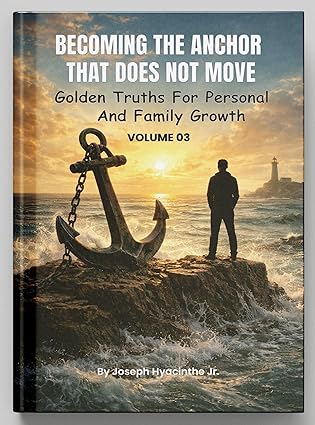
A new voice emerging from Mullica Hill is redefining what it means to pursue success with clarity, conviction, and balance. Author Joseph Hyacinthe Jr., rooted in South Jersey and gaining recognition across regional media, is preparing to release Becoming The Anchor That Does Not Move, the highly anticipated third and final installment in his Golden Truths for Personal & Family Growth series. Positioned at the intersection of faith-based living, disciplined execution, and relationship alignment, the book arrives at a moment when individuals across New Jersey are actively seeking a more grounded and intentional approach to success—one that extends beyond financial gain into purpose, resilience, and meaningful human connection.

This final volume is not simply a continuation of a series; it is the culmination of a philosophy that reframes stability as the foundation of achievement. Hyacinthe’s central concept—becoming an “anchor” in one’s own life—moves beyond metaphor into a structured framework for decision-making, leadership, and personal accountability. In a region known for its fast-moving professional environments and deeply rooted communities, this message resonates with a growing audience that recognizes the need for both ambition and equilibrium. Readers exploring broader perspectives on intentional living and modern lifestyle alignment can continue that journey through the Explore New Jersey lifestyle section, where evolving definitions of success are shaping how individuals live, work, and build their futures.

At its core, Becoming The Anchor That Does Not Move introduces a disciplined model for personal and financial growth that integrates mindset, behavior, and belief systems. Hyacinthe draws from widely recognized principles in success psychology, Christian-based teachings, and leadership development to present a cohesive path forward—one that emphasizes consistency over chaos and clarity over distraction. The book outlines how internal narratives, daily habits, and long-term vision intersect to determine outcomes across finances, health, and relationships. Rather than offering fragmented advice, it establishes a system designed to produce sustainable, repeatable results.

The financial dimension of the book is particularly relevant in today’s economic climate. Hyacinthe emphasizes that wealth is not an isolated outcome but the byproduct of disciplined thinking and intentional action. He explores the concept of a “wealth mindset” as a learned and cultivated perspective—one that prioritizes responsibility, strategic planning, and long-term vision over short-term gratification. For professionals, entrepreneurs, and families throughout New Jersey, this approach aligns with a broader shift toward financial literacy, generational planning, and stability-driven growth.

Equally central to the book’s framework is the role of discipline as a defining force in achieving success. Hyacinthe challenges readers to move beyond motivation, which he presents as temporary and unreliable, and instead build systems of accountability that sustain progress over time. Through practical strategies focused on habit formation, time management, and personal responsibility, the book reinforces the idea that consistency—not intensity—is what ultimately shapes outcomes. This perspective carries particular weight in a culture that often prioritizes rapid results over long-term mastery.

Where the book distinguishes itself further is in its emphasis on relationships as a core pillar of success. Hyacinthe presents a nuanced exploration of communication, mutual respect, and clearly defined roles within family and partnership dynamics. He addresses the common sources of conflict that arise from misaligned expectations and breakdowns in communication, offering structured guidance on restoring balance and unity. His approach underscores the importance of collaboration and shared purpose, positioning strong relationships not as secondary benefits of success, but as essential components of it.

This relational focus is deeply tied to the book’s faith-based foundation. Hyacinthe integrates Christian principles into practical applications, demonstrating how spiritual alignment can inform everyday decisions, strengthen resilience, and guide leadership within both the home and the broader community. The result is a framework that does not separate faith from action, but instead uses it as the guiding force behind disciplined living and meaningful achievement.

Another defining element of Becoming The Anchor That Does Not Move is its treatment of resilience. Rather than framing adversity as something to be avoided, Hyacinthe positions it as an essential mechanism for growth. The book encourages readers to develop the mental and emotional fortitude required to navigate uncertainty while remaining anchored in their values. This approach reflects a broader cultural reality, particularly in New Jersey’s diverse and dynamic communities, where adaptability and perseverance are often key to long-term success.

Purpose, as explored in the book, is not presented as an abstract ideal but as a practical necessity. Hyacinthe guides readers through the process of identifying their core values, aligning their actions with those values, and building a life that reflects a clear and intentional mission. This focus on purpose-driven living speaks directly to a growing movement across the state and beyond—one that prioritizes fulfillment, contribution, and legacy alongside professional achievement.

As the final volume in the Golden Truths for Personal & Family Growth series, this release serves as both a conclusion and a launch point. It consolidates the key principles introduced in earlier works while delivering a refined and actionable blueprint for those ready to implement lasting change. The structured, step-by-step approach ensures that readers are not left with abstract concepts, but are instead equipped with tangible strategies to elevate every aspect of their lives.

Joseph Hyacinthe Jr.’s emergence from Mullica Hill onto a broader stage reflects the increasing influence of local voices in shaping national conversations around success, faith, and personal development. His work embodies the values that continue to define New Jersey’s identity—resilience, ambition, community, and a commitment to growth that is both practical and principled.

With Becoming The Anchor That Does Not Move now available for pre-order and its official release approaching, the book positions itself as a timely and impactful resource for anyone seeking to build a life defined not only by achievement, but by stability, purpose, and enduring relationships. In a world where uncertainty often dominates the narrative, Hyacinthe offers a clear alternative: become the anchor, remain steady, and build success that lasts.

Middletown Arts Center Expands Its Creative Footprint with The MAC One-Acts 2026 Festival, Spring Marketplace, and Summer Arts Celebration

In a state where the arts are increasingly defining community identity, the Middletown Arts Center is emerging as one of New Jersey’s most dynamic cultural engines—an institution not only presenting programming, but actively shaping the future of creative expression across the region. As 2026 unfolds, the Center is delivering a powerful sequence of opportunities and experiences that reinforce its role as a hub for playwrights, artists, collectors, families, and audiences alike. At the center of this momentum is the return of The MAC One-Acts 2026 Annual Play-Reading Festival, now accepting submissions from across New Jersey, alongside a slate of spring and summer events that collectively reflect the full spectrum of the state’s creative life.

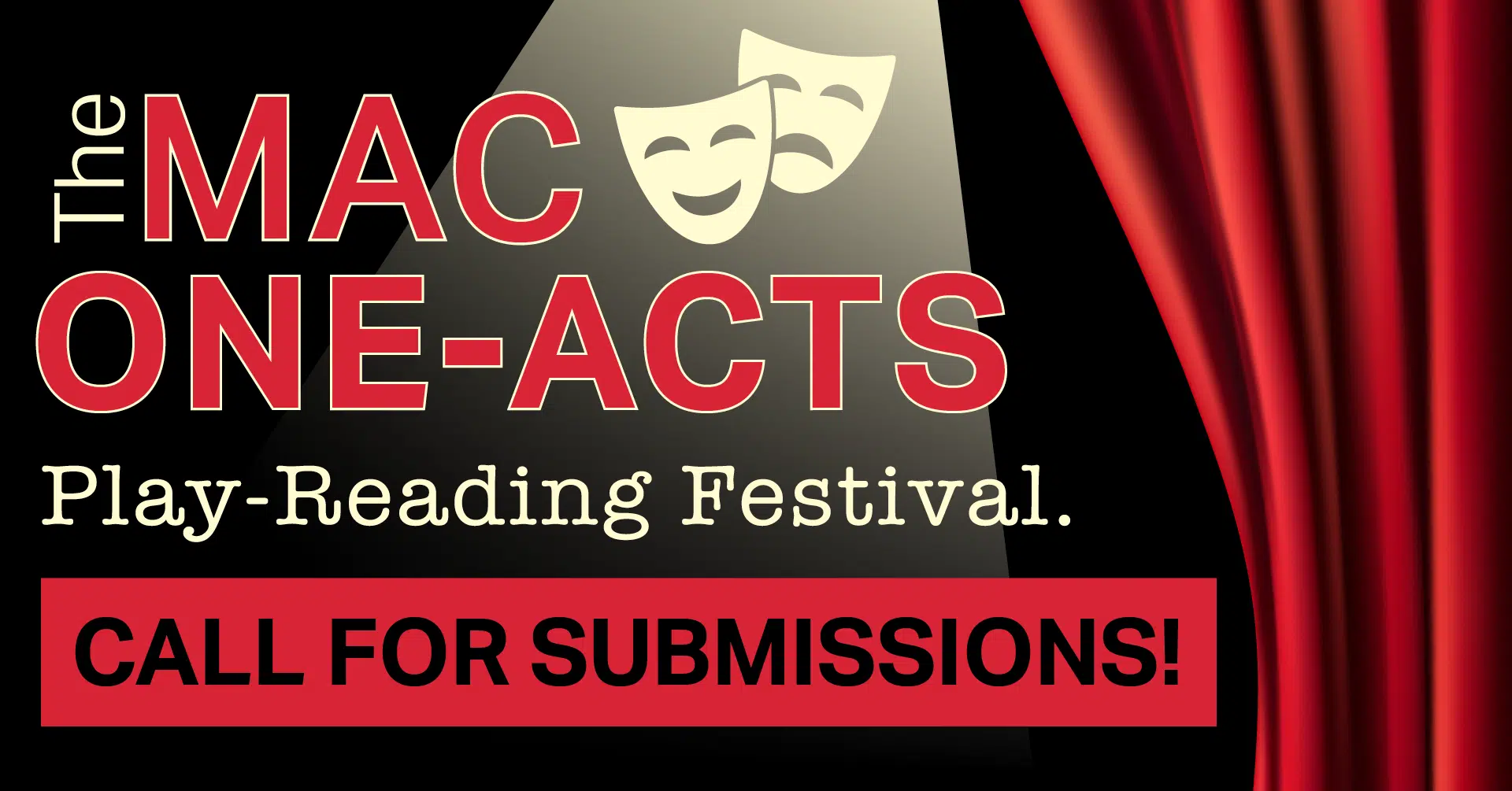
The announcement of submissions for The MAC One-Acts 2026 marks a defining moment in New Jersey’s theatre calendar. With a deadline set for April 12, 2026, at 11:59 p.m., the call is open to New Jersey-based playwrights aged 18 and older who are ready to bring original, unpublished work into a professional, collaborative environment. This is not simply a local writing opportunity—it is a structured platform for theatrical development, offering writers the chance to see their work interpreted by actors, shaped through rehearsal, and presented to a live audience in a curated festival setting. Submit Now.

Now entering its seventh year, The MAC One-Acts has evolved into a cornerstone initiative within the state’s theatre ecosystem. The festival’s design reflects both artistic rigor and accessibility. Submissions are limited to one per playwright, reinforcing a standard of quality and intention, while scripts must adhere to professional formatting, include a synopsis and character breakdown, and be crafted as one-act works with a runtime of no more than 30 minutes. With a maximum of five characters, the format encourages precision in storytelling—an emphasis on dialogue, structure, and character development that aligns with the demands of contemporary theatre production.

Equally important is the requirement that participating playwrights be able to attend rehearsals and the final performance. This ensures that The MAC One-Acts 2026 is not a passive submission process but a fully immersive creative experience. Writers become part of the production journey, collaborating with actors and directors to bring their scripts to life. That collaboration is where the real value lies. It transforms a written work into a living performance, bridging the gap between concept and execution in a way that is essential for any playwright seeking to advance within the industry.

Finalists will be announced on April 16, setting the stage for the festival’s live presentation on May 14, 2026, at 7 p.m. inside the Middletown Arts Center’s theater. The event will feature staged readings of each selected play performed by local actors, offering audiences a rare opportunity to experience new work in its earliest form. The decision to keep the festival free and open to the public reflects a broader commitment to accessibility, ensuring that new theatre is not confined to exclusive spaces but shared with the community that inspires it. Submit Now.

This initiative sits within a much larger framework of artistic activity that defines the Middletown Arts Center’s role in New Jersey’s cultural landscape. As highlighted across the Explore New Jersey theatre coverage, the state’s performing arts scene is experiencing a period of renewed energy, driven not only by major venues but by institutions like the Middletown Arts Center that are investing directly in artists and audiences at the local level. The result is a theatre ecosystem that is both expansive and interconnected, where grassroots creativity feeds into broader cultural momentum.

The Center’s programming does not stop with theatre. In fact, its spring and summer calendar underscores a commitment to multidimensional arts engagement that extends far beyond the stage. Just one day before The MAC One-Acts 2026 submission deadline, on April 11, the Middletown Arts Center will host its Antique, Vintage, and Collectibles Marketplace, transforming the venue into a curated environment for collectors, enthusiasts, and casual visitors alike. Running from 9 a.m. to 3 p.m., the marketplace will feature dozens of vendors offering a wide array of items, from vinyl records and vintage clothing to costume jewelry, postcards, toys, and unique collectibles that reflect decades of cultural history.

This event is more than a marketplace—it is a celebration of material culture and nostalgia, an opportunity for attendees to engage with objects that carry stories of their own. In a state as historically rich and culturally layered as New Jersey, these items are not just artifacts; they are connections to past eras, communities, and artistic movements. The accessibility of the event, with a modest admission fee and opportunities for local vendors to participate, reinforces the Center’s commitment to inclusivity and community engagement.

Looking ahead to the summer, the Middletown Arts Center will further expand its reach with its Arts and Crafts Festival on June 20, 2026, a full-day event designed to bring together artists, families, and the broader community in a celebration of creativity. Running from 10 a.m. to 4 p.m., the festival will feature juried vendors, an Emerging Young Artisans area dedicated to students in grades 6 through 12, live music, food trucks, and interactive art experiences for children. Programming such as free art activities led by figures like Doodle Dude and Miss Fish ensures that creativity is not only showcased but actively encouraged across all age groups.

This layered approach to programming—spanning theatre, visual arts, community markets, and family-oriented events—illustrates a defining principle of the Middletown Arts Center’s mission. Operated by the Middletown Township Cultural and Arts Council, the Center is driven by a commitment to enhancing quality of life through the arts. That mission is not abstract. It is realized through programming that responds directly to the needs and interests of the community, creating opportunities for participation, education, and cultural connection that are both accessible and meaningful.

The facility itself reflects that ambition. As a state-of-the-art venue, the Middletown Arts Center provides the infrastructure necessary to support a wide range of artistic disciplines, from theatre productions and art exhibitions to workshops and large-scale community events. But it is the programming—not just the building—that defines its impact. By consistently prioritizing original work, emerging artists, and inclusive experiences, the Center has positioned itself as a leader in New Jersey’s cultural development.

The MAC One-Acts 2026 Festival, in particular, represents the future of theatre in the state. It is a model that emphasizes creation over replication, community over exclusivity, and development over immediate commercialization. In an industry often dominated by established titles and familiar narratives, the festival offers something different: a space where new voices can be heard, new stories can be explored, and new talent can be discovered.

For New Jersey playwrights, the message is clear. This is an opportunity to contribute to a growing body of original work that reflects the state’s diversity, complexity, and creative energy. It is a chance to move from page to performance, to engage with collaborators, and to present work to an audience that is increasingly invested in local storytelling.

For audiences, the invitation is just as compelling. Whether attending The MAC One-Acts 2026 Festival (Submit Now), exploring the Antique, Vintage, and Collectibles Marketplace, or spending a day at the Arts and Crafts Festival, visitors are participating in a broader cultural movement—one that positions the arts as a central part of everyday life in New Jersey.

As 2026 continues to unfold, the Middletown Arts Center stands as a powerful example of what happens when community, creativity, and opportunity intersect. It is not simply hosting events; it is building a cultural framework that supports artists, engages audiences, and strengthens the identity of the region. In doing so, it is helping to define what the arts look like in New Jersey today—and what they will become in the years ahead.

Deadline: Submit to The MAC One-Acts 2026!

0

New Jersey Playwrights Take Center Stage as The MAC ONE-ACTS Festival Opens Submissions for 2026

April 12 @ 12:00

New Jersey’s theatre scene has always thrived on proximity to New York, but its true strength has never been imitation—it has been creation. Across the state, from community stages to professional venues, a distinct voice has continued to emerge, one shaped by local stories, diverse communities, and a deep-rooted commitment to the performing arts. That voice is now being amplified once again as the Middletown Arts Center officially opens submissions for the 2026 edition of The MAC One-Acts 2026 Annual Play-Reading Festival, a growing platform dedicated entirely to original work by New Jersey playwrights.

Set to culminate in a live festival performance on May 14, 2026, this year’s event marks the seventh installment of a program that has steadily become one of the most important grassroots theatre initiatives in the state. What began as a focused opportunity for emerging writers has evolved into a respected creative pipeline, connecting playwrights, actors, directors, and audiences in a way that reinforces New Jersey’s identity as a serious and self-sustaining theatre ecosystem. With submissions now open through April 12, the call is not simply for scripts—it is a call for voices, perspectives, and stories that reflect the complexity and energy of life across the Garden State.

At its core, The MAC One-Acts 2026 Festival is about access and opportunity. The parameters are intentionally designed to encourage both discipline and creativity. Playwrights must be New Jersey residents aged 18 or older, and each submission must be an original, unpublished one-act play with a runtime of no more than 30 minutes. Scripts are limited to five characters and must adhere to professional formatting standards, including a full synopsis and character breakdown. These guidelines are not arbitrary—they reflect real-world theatrical constraints, preparing writers for professional environments while ensuring that selected works are viable for staged readings and audience engagement.

The single-submission rule underscores the seriousness of the process. Writers are asked to put forward their strongest, most refined work, reinforcing the festival’s reputation as a curated, high-quality showcase rather than an open-ended reading series. The expectation that playwrights be available for rehearsals and the live event also reinforces the collaborative nature of theatre itself. This is not a remote or passive experience; it is an active, in-person creative process that brings writers into direct conversation with performers and audiences.

The timeline for this year’s festival is tightly structured, reflecting both efficiency and ambition. Submissions close on April 12 at 11:59 p.m., with finalists announced just four days later on April 16. That rapid turnaround speaks to both the experience of the selection team and the growing demand for opportunities like this within the state’s theatre community. By mid-May, selected works will be fully realized as staged readings performed by local actors inside the Middletown Arts Center’s theater, creating an immediate bridge between page and performance.

What makes this festival particularly significant within the broader New Jersey arts landscape is its positioning within a larger cultural framework. Theatre in New Jersey is not confined to a single city or venue. It exists as a statewide network of institutions, independent companies, community groups, and educational programs, all contributing to a vibrant and evolving creative economy. Platforms like the Explore New Jersey theatre section continue to highlight just how expansive that ecosystem has become, from major productions and touring shows to intimate, locally driven performances like The MAC One-Acts 2026.

Within that ecosystem, the Middletown Arts Center occupies a particularly important role. Located at 36 Church Street in Middletown, the center has established itself as a multidisciplinary arts hub, supporting visual arts, music, dance, and theatre under one roof. Its commitment to original work—especially through initiatives like The MAC One-Acts 2026—positions it not just as a venue, but as a creative incubator. For playwrights, this distinction matters. It means the difference between simply having a script read and having it developed, interpreted, and experienced in a collaborative environment that values new voices.

The emphasis on original, unpublished work is especially critical at a time when the theatre industry is actively seeking new material. While revivals and established titles continue to dominate commercial stages, there is a growing demand for fresh narratives that reflect contemporary life. New Jersey, with its unparalleled diversity and proximity to major cultural centers, is uniquely positioned to meet that demand. The stories emerging from its communities are inherently varied—urban and suburban, traditional and experimental, deeply personal and broadly social. The MAC One-Acts 2026 Festival provides a structured pathway for those stories to reach an audience.

Equally important is the accessibility of the event itself. The festival is free and open to the public, removing financial barriers and inviting a broader audience to engage with new theatre. This approach reinforces a key principle that has long defined New Jersey’s arts culture: inclusivity. By making the final performances accessible, the Middletown Arts Center ensures that the work being developed is not confined to industry insiders but shared with the community that inspires it.

For audiences, the festival offers a rare opportunity to experience theatre in its most immediate form. Staged readings strip away elaborate production elements and focus attention on the essentials—writing, performance, and storytelling. This format allows audiences to engage directly with the material, often encountering ideas and perspectives that have not yet been shaped by commercial pressures or large-scale production demands. It is theatre at its most raw and, in many ways, its most honest.

For playwrights, the impact can be far-reaching. A successful reading can lead to further development, full productions, or additional opportunities within the regional theatre circuit. It also provides invaluable feedback, both from collaborators and from live audiences, helping writers refine their work and better understand how their stories resonate in a performance context. In this way, The MAC One-Acts 2026 Festival functions as both a showcase and a stepping stone, supporting the next generation of New Jersey theatre artists.

The broader significance of initiatives like this becomes even clearer when viewed through the lens of New Jersey’s evolving cultural identity. The state is no longer defined solely by its proximity to larger markets. It is increasingly recognized as a creative destination in its own right, with a growing infrastructure that supports artists at every stage of their careers. From established theaters to emerging festivals, from educational programs to community-driven events, New Jersey is building a comprehensive arts ecosystem that reflects its diversity and ambition.

The MAC One-Acts 2026 Festival is a clear example of that momentum in action. It demonstrates how targeted, thoughtfully designed programs can have a meaningful impact on both individual artists and the broader creative community. It also highlights the importance of local investment in the arts—investment not just in buildings and programming, but in people, ideas, and opportunities.

As the April 12 submission deadline approaches, the call is clear. New Jersey playwrights have an opportunity to step forward, to contribute to a growing body of original work, and to take part in a festival that continues to shape the state’s theatrical landscape. For audiences, the promise is equally compelling: an evening of new stories, new voices, and new perspectives, all brought to life on a local stage that is increasingly gaining statewide recognition.

In a moment when the arts are redefining their place within communities, The MAC One-Acts 2026 Festival stands as a reminder of what makes theatre essential. It is not just about performance; it is about connection. It is about giving voice to stories that might otherwise go unheard and creating spaces where those stories can be shared, explored, and celebrated. In New Jersey, that mission is not theoretical—it is happening now, one act at a time.

Submit Now

The Middletown Arts Center

732.706.4100

View Organizer Website

The Middletown Arts Center

36 Church Street, NJ
Middletown, New Jersey 07748 United States
+ Google Map
732.706.4100
View Venue Website

Classical Theatre of Harlem Features Fearless Creativity

0

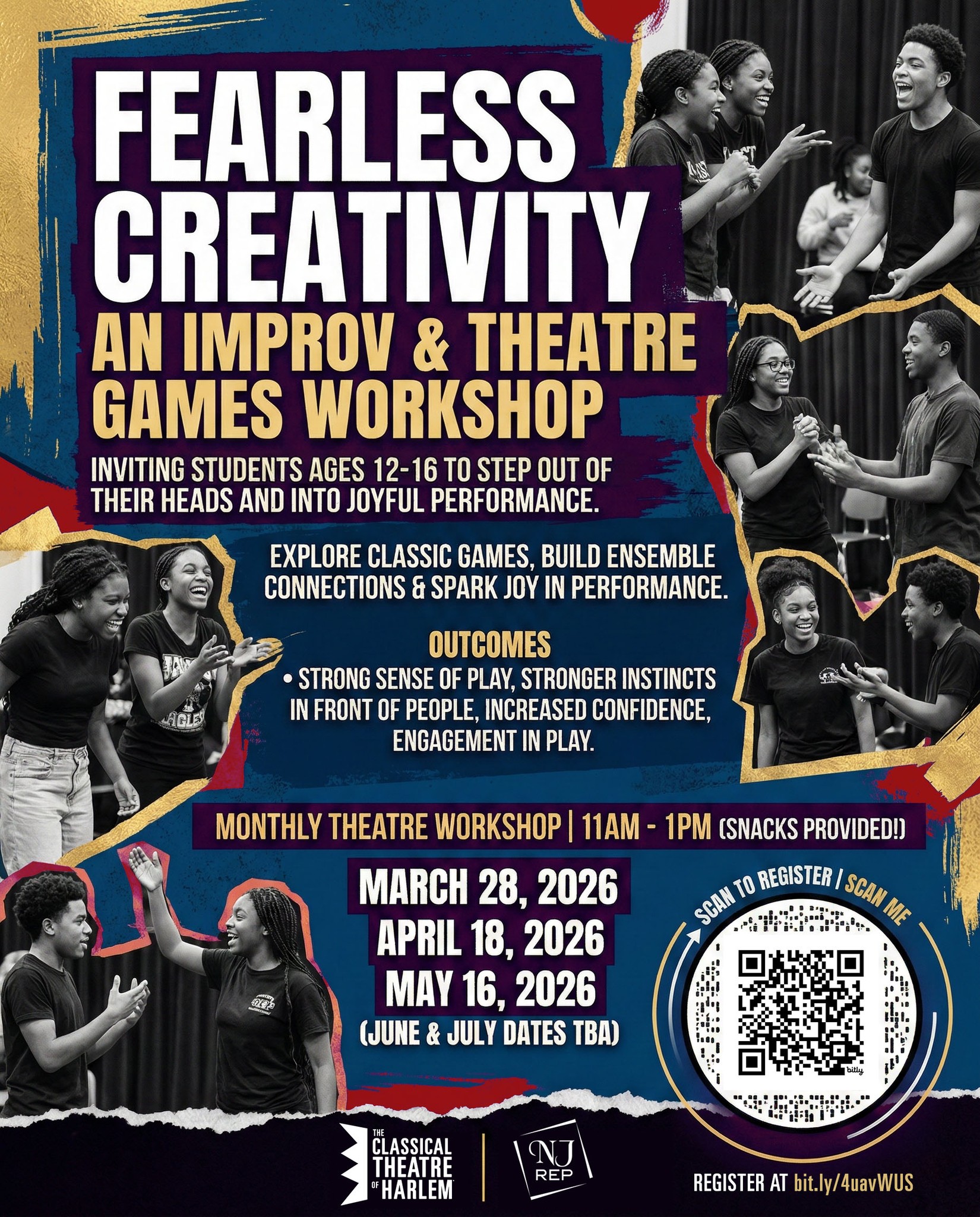
Free Youth Theatre Workshop in Long Branch: Classical Theatre of Harlem Brings “Fearless Creativity” to the Jersey Shore on March 28

March 28 @ 11:00 16:00

New Jersey’s cultural landscape continues to evolve as a destination not just for world-class performances, but for transformative arts education—and this spring, a powerful new opportunity arrives on the Jersey Shore that underscores exactly why the state’s theatre ecosystem is gaining national attention. On March 28 at 11:00 a.m., the West End Arts Center in Long Branch becomes the setting for an immersive, youth-focused theatrical experience as the Classical Theatre of Harlem brings its acclaimed “Fearless Creativity” workshop to New Jersey, offering a dynamic, no-cost program designed to unlock confidence, imagination, and authentic performance skills in the next generation of artists.

Hosted inside the West End Arts Center Auditorium, located at 132 West End Avenue in Long Branch, this two-hour session from 11:00 a.m. to 1:00 p.m. is more than just a workshop—it is a carefully structured creative intervention aimed at empowering students ages 12 through 16 through the language of theatre, improvisation, and ensemble storytelling. With limited class capacity and a focused curriculum built on participation and connection, the event represents a rare opportunity for young performers to engage directly with one of the most respected theatre organizations in the country, right here in New Jersey.

The Classical Theatre of Harlem has long been recognized for its commitment to artistic excellence and community engagement, producing bold reinterpretations of classic works while cultivating emerging talent through outreach initiatives like this one. Bringing that ethos to Long Branch is a meaningful extension of their mission, aligning seamlessly with New Jersey’s growing reputation as a hub for accessible, high-impact arts programming. For families, educators, and aspiring performers, this workshop arrives as a timely invitation to step into a creative environment that prioritizes expression over perfection and collaboration over competition.

At the core of “Fearless Creativity” is a philosophy rooted in removing barriers—the internal ones that often hold young performers back. Through a curated series of improvisational exercises and theatre games, participants are guided to step outside of self-consciousness and into a space of playful exploration. These aren’t passive activities; they are active, ensemble-driven experiences designed to build trust, sharpen instincts, and encourage spontaneous creativity. Students learn to listen, react, and support one another, developing not only performance skills but also interpersonal awareness that extends far beyond the stage.

This type of programming is especially significant within the broader context of New Jersey’s theatre scene, which continues to expand beyond traditional productions into educational and community-based initiatives. Platforms like the Explore New Jersey theatre directory have become essential gateways for discovering these experiences, connecting audiences with everything from professional productions to grassroots workshops that nurture future talent. The inclusion of a program like this further reinforces the state’s commitment to cultivating a vibrant, inclusive arts culture that reaches across generations.

The decision to offer the workshop free of charge speaks volumes about its intent. Accessibility remains one of the most critical challenges in arts education, and by removing financial barriers, the Classical Theatre of Harlem ensures that participation is driven by curiosity and passion rather than circumstance. Snacks are provided, creating a welcoming and supportive atmosphere that encourages students to settle in, engage fully, and focus on the creative process. It’s a small but meaningful detail that reflects a deeper understanding of what it takes to foster genuine participation.

For Long Branch, the event also highlights the continued importance of venues like the West End Arts Center, which serve as cultural anchors within their communities. By hosting programming that blends professional artistry with educational outreach, the center reinforces its role as more than just a performance space—it becomes a place where creativity is actively cultivated and shared. This alignment between venue and programming is exactly what drives the momentum behind New Jersey’s arts renaissance, positioning towns like Long Branch as key players in the regional cultural conversation.

The structure of the workshop is intentionally designed to maximize engagement within its two-hour window. Participants move through a sequence of exercises that gradually build complexity, starting with foundational games that encourage presence and awareness before advancing into more collaborative improvisational work. The emphasis is on process rather than outcome, allowing students to experiment freely without the pressure of performance expectations. This approach not only fosters creativity but also builds resilience, teaching participants to embrace uncertainty and view mistakes as opportunities for growth.

Parents and guardians considering enrollment will find that the workshop offers benefits that extend well beyond theatre. Confidence-building, communication skills, and the ability to think on one’s feet are all outcomes that translate into academic, social, and future professional environments. In an era where adaptability and emotional intelligence are increasingly valued, experiences like this provide a meaningful advantage, equipping young people with tools that support both personal and creative development.

Registration for the workshop is being managed directly through the Classical Theatre of Harlem, with advance sign-up required due to limited class size. Interested participants are encouraged to secure their spots promptly, as demand for programs of this caliber—particularly those offered at no cost—tends to be strong. Additional details, including venue information and contact resources, are available through the New Jersey Repertory Company, further integrating this event into the broader network of performing arts organizations across the state.

As New Jersey continues to assert itself as a destination for both premier performances and impactful arts education, events like “Fearless Creativity” stand out as defining moments in that trajectory. They represent a shift toward inclusivity, accessibility, and community-driven engagement that ensures the arts remain not only relevant but essential. For those exploring opportunities through the state’s growing theatre network, including the expanding offerings highlighted on Explore New Jersey, this workshop is a clear example of what’s possible when visionary organizations bring their expertise directly to local communities.

On March 28, the stage at the West End Arts Center won’t be set for a traditional performance—it will be alive with possibility, discovery, and the kind of fearless creativity that has the power to shape not just future artists, but confident, expressive individuals ready to engage with the world around them.

NJRep

732-229-3166

View Organizer Website

The Middletown Arts Center

36 Church Street, NJ
Middletown, New Jersey 07748 United States
+ Google Map
732.706.4100
View Venue Website

New Jersey’s Changing Faith Landscape Is Reshaping Community Life, Identity, and Civic Culture

New Jersey has long been one of America’s most layered and culturally complex states, a place where old-world religious traditions, immigrant communities, suburban reinvention, urban change, and modern secular life all exist in close proximity. That reality is becoming even more pronounced in 2026, as new data shows that approximately 27% of New Jersey adults now identify as religiously unaffiliated, a major increase from 18% in 2014. In practical terms, that means more than one in four adults in the Garden State no longer identify with an organized faith tradition. Yet the deeper story is not simply one of religious decline. It is a story about transformation—about how New Jerseyans are rethinking belonging, spirituality, identity, and public life in one of the most diverse states in the nation. It is also precisely the kind of statewide cultural shift that belongs in the broader Lifestyle conversation, because in New Jersey, lifestyle is never just about where people go or what they do. It is also about how they live, gather, celebrate, believe, question, and build community.

As of March 2026, the religious landscape across the three states shows a consistent trend toward increasing secularism, though New Jersey maintains a slightly higher religious adherence rate than its neighbors in the Northeast.

Feature New JerseyNew YorkPennsylvania
Religiously Unaffiliated27-29%~30%~24-26%
Catholic32-38%29-33%24-30%
Jewish6% (2nd in U.S.)9% (1st in U.S.)2%
Muslim2-3% (2nd in U.S.)2%1%
Protestant21-25%25%~47%

Key Differences in Diversity

  • Pennsylvania’s Traditional Roots: Pennsylvania is notably more Protestant than its neighbors, with nearly half the population identifying with a Protestant tradition. It also holds the record for the largest number of distinct religious bodies (245) in any single state.
  • NJ/NY Urban Diversity: Both New Jersey and New York have much higher percentages of non-Christian faiths (Jewish, Muslim, Hindu) due to their urban immigrant populations. New Jersey’s Hindu population (3%) is significantly higher than the national average.
  • Catholic Strongholds: New Jersey remains one of the most Catholic states in the country, often ranking 2nd or 3rd nationally, trailing only Rhode Island. While Catholicism is declining in the Northeast, NJ’s large Hispanic and historic European communities keep its numbers higher than NY and PA.
  • Devotion Levels: Interestingly, New Jersey often ranks higher in “religious devotion” (importance of religion and frequency of prayer) compared to New York, which is frequently listed among the least devout states in the U.S.. 

The newly expanded share of religiously unaffiliated adults in New Jersey includes several distinct groups. According to Pew Research Center’s 2023–24 Religious Landscape Study, 17% of adults in the state say their religion is “nothing in particular,” 6% identify as agnostic, and 5% identify as atheist. Those categories are often grouped together under the label “religious nones,” but they do not necessarily describe one single worldview. In New Jersey, as elsewhere, this unaffiliated population includes people who are deeply secular, people who are skeptical of institutions rather than spirituality itself, people who were raised in faith traditions but drifted away, and people who are still searching for meaning outside formal doctrine. That matters because it changes how communities function. Houses of worship are no longer the only places where people seek moral language, fellowship, volunteerism, and emotional support. Increasingly, those roles are also being played by schools, advocacy groups, neighborhood networks, cultural organizations, wellness communities, and civic institutions.

And yet New Jersey is not becoming spiritually empty. In fact, the opposite is closer to the truth. Even with affiliation to organized religion down, roughly 80% of New Jersey residents still report believing in something spiritual beyond the natural world. That distinction is crucial. The state’s religious story is not simply one of belief disappearing; it is one of belief being redistributed, reinterpreted, and expressed in more individualized ways. New Jersey remains a place where prayer, ritual, inherited tradition, personal spirituality, and modern skepticism coexist side by side. About 42% of residents say they pray daily, and 34% say religion is very important in their lives, placing the state in a more complex middle ground than the usual caricatures about the secular Northeast might suggest. New Jersey is not the Bible Belt, but it is also not a spiritually disengaged outlier. It is a state where institutional religious participation has weakened, while spiritual curiosity and private belief remain resilient.

Christianity still remains the largest religious presence in New Jersey, but it no longer defines the state in the singular way it once did. Pew’s latest state profile shows that 59% of New Jersey adults identify as Christian, a clear drop from prior decades and from 67% in 2014. Catholicism remains especially important to New Jersey’s identity, with roughly one-third of adults identifying as Catholic, keeping the state among the nation’s strongest Catholic centers. At the same time, New Jersey’s religious map is unusually varied for the Northeast. Jews make up about 5% to 6% of the adult population, Muslims about 2%, and Hindus about 3%, with all three communities carrying an influence that is larger than the raw percentages alone might suggest because of their concentration in particular counties, municipalities, school systems, business corridors, and civic networks. This is one reason New Jersey feels different from many other states: religion here is not dominated by a single statewide culture, but by overlapping regional and demographic patterns. A resident can move from one county to another and encounter a dramatically different institutional and cultural expression of faith.

That pluralism is one of the defining facts of New Jersey life. Counties such as Middlesex, Hudson, Essex, Union, and Passaic help explain why the state’s faith landscape resists simplification. Middlesex and Essex have ranked among the most diverse counties in the country, while Hudson County’s population profile reflects one of the state’s most urban, immigrant-rich, and internationally connected environments. Middlesex in particular has become synonymous with South Asian growth and with communities that have strengthened Hindu, Muslim, Sikh, and other religious footprints in the state, especially in and around municipalities such as Edison and neighboring parts of central New Jersey. Hudson County’s density and cross-cultural population mix have likewise intensified the visibility of Catholic, Muslim, Hindu, evangelical, and nonreligious identities within a compact geographic space. In practical terms, that means New Jersey’s religious diversity is not abstract. It is visible in storefronts, community centers, school calendars, holiday observances, food businesses, neighborhood festivals, and the rhythms of daily life.

That same diversity also explains why generational change is hitting New Jersey in such a distinctive way. Younger adults, especially Millennials and Generation Z, are far less likely than older residents to define themselves through traditional religious institutions. This is part of a national trend, but in New Jersey it intersects with several local realities at once: high educational attainment, high mobility, immigrant and first-generation identity, digital-era social life, and a civic culture that often prizes personal autonomy over inherited structure. Younger New Jerseyans are more likely to keep elements of ritual or spirituality while distancing themselves from formal affiliation. They may still attend a holiday service with family, still feel rooted in an ethnic or religious background, or still express strong moral commitments shaped by faith traditions, even while declining to call themselves religious in survey data. That shift helps explain why the unaffiliated category has grown so quickly without producing a total collapse in spiritual belief. The state is not losing its moral frameworks so much as renegotiating who supplies them and how openly people claim them.

New Jersey’s comparison with neighboring states makes the point even clearer. Pew’s latest state data shows New Jersey and New York each at 27% religiously unaffiliated, while Pennsylvania stands at 30%. But those surface similarities mask major differences in composition. New York shows a particularly strong Jewish and Muslim profile, while Pennsylvania remains much more Protestant than either New Jersey or New York. New Jersey occupies a singular middle position: less defined by Protestant dominance than Pennsylvania, less identified with New York City’s particular religious and secular profile than New York, and more visibly anchored by Catholicism and suburban immigrant pluralism than either state in quite the same way. The result is a regional religious identity that is unmistakably Northeastern but also distinctly New Jersey—ethnically dense, institutionally varied, politically consequential, and deeply shaped by migration patterns.

Most Religiously Diverse Counties:

Middlesex County currently ranks as the most diverse county in New Jersey. While official “religious diversity” rankings are less frequent than racial ones, high racial and ethnic diversity in NJ is a direct proxy for religious pluralism. 

Middlesex County: Known for having the highest concentration of Asians in the state (25%), it is a major hub for HinduismBuddhism, and Islam. It is also one of the most religiously diverse counties in the entire U.S..

Hudson County: Boasts the state’s highest “diversity index” (77%), driven by massive Catholic (Hispanic), Muslim, and Hindu populations in Jersey City and Harrison.

Essex & Union Counties: Both rank in the top tier for diversity. Essex features a significant Black Protestant population alongside Catholic and Jewish communities.

Passaic County: Notable for its concentrated Orthodox Jewish population in Passaic Park and a large Muslim community in Paterson. 

The political implications are real, even if they are sometimes overstated. Religious affiliation has become an increasingly meaningful marker in modern American politics, and New Jersey is not immune to that shift. Nationally, secular voters have become a major part of the Democratic coalition, while many of the most institutionally religious and conservative Christian constituencies remain core Republican blocs. But New Jersey’s politics are more complicated than a simple red-faith versus blue-secular binary. Black churches continue to matter enormously in civic mobilization and turnout. Reform Jewish advocacy networks and faith-based social justice groups remain influential in public policy debates. Catholic voters are not monolithic, and Hispanic Catholics in particular have become a constituency watched closely by both parties. Meanwhile, PRRI’s 2025 and 2026 state-level findings place New Jersey among the states with the lowest levels of support for Christian nationalism, underscoring the degree to which the state’s political culture is shaped more by pluralism and coalition-building than by any singular religious ideology. That does not mean religion has faded from public life here. It means religion now operates in a more contested, more diversified, and more coalition-driven civic environment.

What all of this ultimately reveals is that New Jersey’s religious future will not be defined by one trend alone. It will not be accurately described as either revival or collapse, faith or secularism, devotion or abandonment. The more honest reading is that New Jersey is becoming a sharper reflection of 21st-century America’s cultural complexity, only faster and more visibly than many other places. This is a state where Catholic parishes, synagogues, mosques, temples, Black Protestant churches, evangelical congregations, and secular households all occupy the same civic ecosystem. It is a state where children grow up with multiple faith traditions in the same classroom, where neighborhood identity can be shaped as much by immigration as by denomination, and where spirituality still matters even when organized religion does not command the same automatic loyalty it once did. That is not a side story in New Jersey life. It is one of the central stories.

For Explore New Jersey, that is what makes this moment so important. The rise of the religiously unaffiliated is not just a polling data point. It is a lens on where the state is headed—socially, culturally, politically, and generationally. It tells us something about trust, institutions, migration, family tradition, and the changing meaning of community in modern New Jersey. And because New Jersey remains one of the most diverse places in America, the answer to what comes next will not arrive in one voice. It will emerge from many voices at once: believers, doubters, seekers, lifelong members of faith communities, and residents building identity outside those structures entirely. That is the real New Jersey story in 2026—not a state abandoning belief, but a state renegotiating how belief, belonging, and public life fit together in one of the most dynamic cultural landscapes in the country.

New Jersey Youth Soccer Builds Toward a Transformational 2026 World Cup Moment

New Jersey is quietly positioning itself at the center of global soccer’s next defining chapter—and at the heart of that momentum is a rapidly evolving youth infrastructure that is scaling, modernizing, and aligning itself with a once-in-a-generation opportunity. As the 2026 FIFA World Cup approaches, New Jersey Youth Soccer is not simply preparing for a spike in interest; it is engineering a long-term ecosystem designed to elevate participation, deepen community impact, and redefine how the sport integrates into everyday life across the Garden State.

The recent Youth Soccer Summit, staged at Sports Illustrated Stadium in Harrison in collaboration with Red Bull New York and presented by RWJBarnabas Health, served as a powerful signal of that trajectory. What began years ago as a modest gathering of internal stakeholders has transformed into one of the most important annual touchpoints for youth soccer leadership in the region. Now in its second year as a statewide collaboration—and marking a decade since the original Red Bulls Youth Club Summit—the event brought together hundreds of club directors, administrators, and decision-makers from across New Jersey. The growth is not incremental; it is exponential, reflecting a broader recalibration of how youth soccer is organized, supported, and experienced.

At the center of this transformation is scale. New Jersey Youth Soccer currently serves approximately 130,000 players between the ages of five and nineteen, supported by more than 10,000 coaches and over 400 clubs operating across multiple leagues. Those numbers alone place the organization among the most influential youth soccer bodies in the country, but the real story lies in how that scale is being activated. The shift is deliberate: away from a traditional governance-heavy model and toward a service-oriented framework that prioritizes connection, accessibility, and sustained engagement.

That philosophy is evident in the design and expansion of events like the Youth Soccer Summit. Attendance has surged from small, board-level meetings into a statewide convening with participation surpassing 300 attendees—each representing a node in a much larger network of players, families, and communities. The Summit itself is no longer just a meeting; it is an operational hub for ideas, strategy, and alignment, featuring contributions from key figures within the professional game, including leadership from Red Bull New York. The integration of professional and youth perspectives underscores a critical objective: building a seamless pathway from grassroots participation to elite-level development while maintaining accessibility at every stage.

This approach extends beyond marquee events into the daily operations of the organization. Communication has become more structured, more frequent, and more responsive, with regular engagement across leagues and clubs designed to ensure that feedback loops remain active and actionable. The emphasis on listening—paired with a commitment to adapt—has become a defining characteristic of New Jersey Youth Soccer’s current phase.

At the same time, the organization is navigating one of the most pressing challenges in youth sports: cost. In a landscape where participation expenses continue to rise nationally, New Jersey Youth Soccer has maintained stable fees for a decade. That decision is not incidental; it is the result of a strategic reliance on partnerships, sponsorships, and operational efficiencies that collectively offset financial pressures. By doing so, the organization is reinforcing its commitment to inclusivity and ensuring that access to the game remains as broad as possible.

Partnerships, in fact, have become a cornerstone of this growth model. Collaborations with organizations such as RWJBarnabas Health, Capelli Sport, and Gotham FC are not transactional—they are integrated, multi-layered relationships that extend into programming, community engagement, and player development. Capelli Sport, with its strong New Jersey footprint, plays a critical role in outfitting programs and supporting competitions such as the State Cups and Olympic Development Program, while also anchoring key events at its facilities. RWJBarnabas Health contributes a vital wellness dimension, reinforcing the importance of physical health and injury prevention within youth athletics. Gotham FC, meanwhile, provides both inspiration and infrastructure for the continued expansion of the girls’ game, aligning initiatives that keep young athletes engaged and progressing within the sport.

That focus on the girls’ game represents one of the most significant areas of growth. By aligning with professional organizations that are actively elevating women’s soccer, New Jersey Youth Soccer is ensuring that its programming reflects both the present momentum and the future potential of the sport. The objective is not merely participation, but retention—keeping players engaged through adolescence and into adulthood, thereby strengthening the overall soccer culture within the state.

Equally important is the organization’s emphasis on recognition and celebration. The NJYS Annual Awards, presented by RWJBarnabas Health, has evolved into a statewide showcase that captures the full spectrum of youth soccer excellence. Its recent expansion into American Dream in East Rutherford marked a turning point, transforming what was once a traditional banquet into a dynamic, large-scale experience. Thousands of players, families, and community members converged for a day that blended competition, celebration, and interactive engagement. From choreographed team entrances on a central stage to immersive activations featuring partners and sponsors, the event created a sense of spectacle that matched the passion of the participants.

This shift toward experiential engagement is not accidental. It reflects a broader understanding that youth sports today operate within a competitive entertainment landscape. To capture attention—and sustain it—organizations must deliver moments that resonate, inspire, and create lasting memories. By incorporating elements such as live interviews conducted by Seton Hall University media students, interactive fan zones, and direct engagement with professional organizations, New Jersey Youth Soccer is redefining what a youth sports event can be.

All of these initiatives are converging toward a singular focal point: the 2026 FIFA World Cup. With matches set to take place in the region and fan engagement expected to extend across the state, New Jersey is poised to become a central hub of global soccer activity. For New Jersey Youth Soccer, this represents more than a surge in visibility—it is a catalyst for long-term growth.

The organization has already established connections with the regional host committee and is actively positioning itself as a key partner in statewide activations. The strategy is comprehensive, aiming to ensure that players, families, and clubs are not just spectators but participants in the broader World Cup experience. By leveraging its statewide reach, New Jersey Youth Soccer is uniquely equipped to distribute opportunities, programming, and engagement initiatives across communities—from urban centers to suburban and rural areas.

This decentralized approach reflects a broader shift in how major events are integrated into local ecosystems. Rather than concentrating activity in a single location, the 2026 World Cup is expected to activate multiple sites across New Jersey, creating a distributed network of fan experiences, community events, and grassroots initiatives. For an organization with a presence in virtually every corner of the state, the implications are profound.

The potential impact extends beyond the immediate event cycle. Historically, World Cups have served as inflection points for youth participation, inspiring new generations of players and expanding the cultural footprint of the sport. The 1994 tournament in the United States triggered a wave of growth that continues to shape the game today. The expectation is that 2026 will have a similar—if not greater—effect, particularly given the expanded global reach and digital integration of modern sports consumption.

For New Jersey Youth Soccer, the objective is clear: convert that momentary surge of interest into sustained engagement. By aligning its programming, partnerships, and outreach efforts with the timeline of the World Cup, the organization is laying the groundwork for a legacy that extends well beyond the final whistle of the tournament.

This is not just about growth in numbers, although those numbers are already substantial. It is about redefining the role of soccer within New Jersey’s cultural and community fabric. It is about creating pathways that begin with a child’s first touch on the ball and extend through a lifetime of participation, whether as a player, coach, official, or supporter.

As New Jersey continues to emerge as a focal point within the global soccer landscape, the infrastructure being built today will determine how deeply that moment resonates tomorrow. Through strategic expansion, meaningful partnerships, and a clear commitment to accessibility and engagement, New Jersey Youth Soccer is not waiting for the World Cup to arrive—it is building toward it, shaping an environment where the sport can thrive long after the world’s attention moves on.

For ongoing coverage of soccer across the state, including youth development, professional clubs, and major events shaping the region’s future, explore the latest updates in the Explore New Jersey soccer section.

New Jersey Devils Surge Late With Statement Wins, But Playoff Odds Remain a Long Shot as Urgency Defines the Final Stretch

The New Jersey Devils are not going quietly. Not now, not with momentum building, not with their young core producing at an elite level, and certainly not with pride, identity, and the expectations of a franchise still very much in transition shaping every shift. As of March 30, 2026, the Devils sit seventh in the Metropolitan Division with a 38-33-2 record, their playoff probability reduced to a razor-thin margin. Yet what is unfolding on the ice tells a far more compelling story than the standings alone suggest.

This is a team playing its most cohesive, urgent hockey of the season at precisely the moment when the stakes are highest—even if the math suggests the climb is nearly impossible. And in New Jersey, that matters.

Returning home after a difficult road loss to the Carolina Hurricanes, the Devils had no luxury of reflection. The turnaround was immediate, the response required instant. Less than 24 hours later, they faced the Chicago Blackhawks in a game that demanded energy, execution, and resilience. What followed was one of the most telling performances of their season—a 5-3 comeback victory that underscored exactly who this team is becoming.

At the center of it all is Jack Hughes, who continues to redefine what elite offensive leadership looks like in New Jersey. Since returning from international play, Hughes has been operating at a pace that places him among the league’s most dangerous playmakers, compiling 27 points in just 16 games. Against Chicago, he once again dictated tempo, controlled possession, and elevated the attack in critical moments. His performance was not just productive—it was commanding, the kind that shifts momentum across an entire bench.

But the Devils’ recent surge is not a one-player narrative. It is structural. It is cultural. It is the result of a roster that, despite adversity, is finding rhythm late in the year. Over their last eight games, the Devils have gone 6-2-0, a stretch that reflects improved defensive discipline, opportunistic scoring, and a renewed commitment to pace. These are not empty wins—they are hard-earned, system-driven results that hint at a team beginning to align with its long-term identity.

Captain Nico Hischier continues to anchor that identity. Recently reaching the 600-game milestone in his NHL career, Hischier represents the connective tissue of this roster—a two-way presence whose leadership extends far beyond the scoresheet. His consistency, positional awareness, and ability to stabilize key moments have been instrumental during this late-season push, reinforcing the foundation the Devils are building around.

The current roster configuration reflects both necessity and forward-thinking management. Injuries have tested depth, most notably with Luke Hughes landing on long-term injured reserve earlier this year. Yet the response from the front office has been decisive. The additions of Nick Bjugstad and Maxim Tsyplakov have provided complementary depth, size, and situational versatility, while the departure of Ondrej Palat signals a continued recalibration of the team’s competitive window and roster balance.

What emerges from these moves is a clearer picture of intent. The Devils are not clinging to the present—they are shaping the future in real time. Every lineup adjustment, every call-up, every transaction reflects an organization that understands where it stands and where it needs to go.

Still, the immediate focus remains on the ice, and the schedule offers no relief. A high-stakes matchup against the New York Rangers looms next, a game that carries both competitive and emotional weight. Rivalry games at this stage of the season amplify everything—intensity, execution, consequence. For the Devils, it is another opportunity to validate their late-season surge against one of the league’s most recognizable opponents.

For fans across the state, this stretch has taken on a different meaning. It is no longer solely about postseason qualification. It is about witnessing growth, resilience, and the emergence of a team that refuses to disengage, regardless of the odds. It is about seeing a young core translate potential into performance, night after night, against opponents with far more immediate stakes.

And that is why attention around the Devils continues to build, both inside arenas and across platforms like <a href=”https://explorenewjersey.org/new-jersey-devils/”>Explore New Jersey’s Devils coverage</a>, where the evolving narrative of this team is being tracked in real time. Because what is happening now is not a footnote—it is a signal.

The numbers may say the path to the playoffs is nearly closed. The projections may place the Devils on the outside looking in. But inside the locker room, and increasingly on the ice, there is a different reality taking shape. This is a team accelerating, not retreating. A roster discovering its edge. A franchise leaning into its next era with conviction.

And if this late-season surge is any indication, the most important chapters of Devils hockey are not behind them—they are just beginning to take form.

Bruce Springsteen Ignites National Spotlight with “Streets of Minneapolis” Performance Ahead of American Tour Launch

New Jersey’s most iconic voice once again stepped onto a national stage and reminded the world why his influence extends far beyond music. On March 28, 2026, Bruce Springsteen delivered a powerful live performance of his protest song “Streets of Minneapolis” before an estimated crowd of more than 200,000 people at the “No Kings” rally in St. Paul, Minnesota. The moment was not just a performance—it was a cultural flashpoint, a statement, and a defining prelude to his upcoming “Land of Hope and Dreams American Tour,” which is set to officially begin in Minneapolis on March 31.

For a state that continues to shape the national entertainment conversation, Springsteen’s presence on this stage reinforces New Jersey’s enduring cultural reach. His performance serves as both a continuation of his legacy and a reminder that artists from the Garden State remain deeply embedded in the broader dialogue shaping music, identity, and expression.

Readers tracking the pulse of live performance, artist impact, and major cultural moments can explore more through the music section, where New Jersey’s influence continues to resonate across every genre and stage.

The rally itself was part of a massive nationwide movement that brought millions into the streets across more than 3,000 coordinated events, with the Minnesota gathering serving as the flagship. Against that backdrop, Springsteen’s appearance carried a weight that extended well beyond entertainment. Taking the stage in front of a sea of demonstrators, he performed “Streets of Minneapolis,” a song written earlier this year in response to federal actions and the deaths of civilians during immigration enforcement operations in the city.

The performance was marked by both intensity and clarity, with Springsteen delivering the song in a stripped-down, emotionally direct style that emphasized its message. The inclusion of guitarist Tom Morello—long associated with politically charged music—added an additional layer of urgency and collaboration, reinforcing the moment as one rooted in both artistic expression and shared purpose. Together, they transformed the rally stage into something closer to a live broadcast of conviction, where music and message became inseparable.

For Springsteen, this was not a departure but a continuation of a career defined by engagement with the American experience in all its complexity. From the earliest days of his songwriting, he has consistently addressed themes of struggle, resilience, and justice, often reflecting the realities of working-class communities and the broader national landscape. “Streets of Minneapolis” fits squarely within that lineage, drawing on the same storytelling tradition that has defined his catalog while responding directly to contemporary events.

What makes this moment particularly significant is its timing. The performance arrives just days before the launch of a major national tour, effectively setting the tone for what audiences can expect as Springsteen returns to arenas and stages across the country. Rather than separating the live show from the cultural climate, he has chosen to integrate the two, signaling that the upcoming tour will not simply revisit past successes, but engage with the present moment in a meaningful way.

This approach aligns with the evolving expectations of live music audiences, who increasingly seek experiences that go beyond entertainment and offer a sense of connection to larger narratives. In New Jersey and beyond, the demand for concerts that carry both emotional and cultural weight continues to grow, and Springsteen’s latest performance underscores his ability to meet that demand without compromising authenticity.

The scale of the rally itself further amplifies the significance of the performance. With hundreds of thousands in attendance in St. Paul and millions participating nationwide, the event has been described as one of the largest coordinated demonstrations in recent history. (The Guardian) Within that context, Springsteen’s set functioned as both a focal point and a unifying element, bringing together diverse audiences through a shared moment of music and reflection.

At the same time, the performance highlights the enduring role of artists in shaping public discourse. In an era where platforms are fragmented and attention is constantly divided, moments like this cut through the noise, creating a shared experience that resonates across audiences and geographies. Springsteen’s ability to command that space—without spectacle, without excess—speaks to the strength of both his voice and his message.

For New Jersey, the significance is equally profound. Springsteen remains one of the state’s most recognizable cultural ambassadors, and each major moment in his career continues to reflect back on the region that shaped him. His connection to New Jersey is not merely biographical; it is embedded in the sound, themes, and perspective that define his work. As he prepares to embark on another national tour, that connection remains central to his identity as an artist.

The upcoming “Land of Hope and Dreams American Tour” now carries an added dimension, shaped by the events of March 28. What begins in Minneapolis will carry forward the energy and message established at the rally, creating a throughline between protest and performance, between moment and movement. For audiences, this represents an opportunity to witness not just a concert, but an artist actively engaging with the world around him.

As New Jersey continues to assert its presence across the national entertainment landscape, moments like this reinforce the state’s role as a source of influence, creativity, and cultural leadership. Bruce Springsteen’s performance in Minnesota was more than a headline—it was a reminder that the voice of New Jersey still carries, still resonates, and still has the power to shape the conversation on the biggest stages in the country.

New Jersey Devils Face Harsh Reality as Playoff Hopes Fade—But the Foundation for the Future Is Already Taking Shape

The New Jersey Devils find themselves at a defining crossroads as the 2025–26 NHL season enters its final stretch, a moment where the urgency of the present collides directly with the long-term vision of the franchise. Sitting seventh in the Metropolitan Division with a 37-33-2 record as of March 29, the Devils remain technically alive in the playoff race—but only in the most mathematical sense. With postseason odds reduced to a fraction of a percent, the conversation has shifted from chasing a near-impossible berth to evaluating what this stretch run reveals about the roster, the system, and the organization’s trajectory heading into next season.

For those following the evolution of the franchise and its long-term outlook, the New Jersey Devils coverage continues to track every development, from roster construction to organizational strategy, as the team navigates this critical inflection point.

The latest setback came in a 5-2 loss to the Carolina Hurricanes, a game that encapsulated both the promise and the frustration that have defined this Devils season. New Jersey opened with purpose, taking a 1-0 lead into the first intermission and showing the kind of structured, fast-paced hockey that had fueled a recent surge. But the second period unraveled quickly, with Carolina responding with three goals that shifted momentum decisively. Goals from Timo Meier and Evgenii Dadonov ultimately proved insufficient, as the Devils were unable to recover from the Hurricanes’ push. The loss not only halted a stretch in which the team had won five of seven games, but also reinforced the steep climb that remains in front of them.

That climb, at this stage, is almost entirely theoretical. To secure a playoff position, the Devils would need to win out while relying on multiple teams ahead of them to collapse simultaneously—a scenario that underscores just how narrow the margin for error has been throughout the season. What makes the situation particularly complex is that the team is not trending downward in terms of effort or structure. In fact, their post-Olympic break performance has been among their most cohesive of the year, suggesting that the system itself is not broken. Instead, it is a case of timing—of momentum arriving too late to fully alter the standings.

This late-season push has also brought individual storylines into sharper focus, none more notable than Dawson Mercer’s continued durability. Reaching the 400-game milestone at such a young age places Mercer in rare territory, not only within the current roster but in franchise history. His consistency, availability, and ability to contribute across situations have made him a foundational piece for the Devils moving forward. In a season marked by injuries and lineup instability, Mercer’s presence has been a constant, reinforcing his value beyond traditional scoring metrics.

Yet while some players are solidifying their roles in the team’s future, others have become central to more immediate roster questions. Evgenii Dadonov’s usage, in particular, has emerged as a point of strategic tension. Inserted into the lineup amid injuries—including the absence of Arseny Gritsyuk—Dadonov has now reached 19 games played this season, a threshold that carries significant contractual implications. His incentive-laden deal includes performance bonuses tied to games played, meaning that each additional appearance increases the financial burden carried into next season’s salary cap.

With the Devils already projected to exceed the cap ceiling, those bonuses translate into overage penalties that will directly impact roster flexibility moving forward. The difference between Dadonov remaining below or surpassing key appearance thresholds is not marginal—it is material, potentially affecting how the organization approaches contract negotiations and roster construction in the offseason. In a league where cap management is as critical as on-ice performance, these decisions carry long-term consequences.

From a performance standpoint, the situation becomes even more complex. Despite his experience and reputation, Dadonov has yet to record a point this season, averaging just under 11 minutes of ice time per game. Advanced metrics further complicate the picture, suggesting that his impact on possession and scoring chances has been limited, particularly when separated from more productive linemates. While there have been isolated moments where the line combinations have shown promise, the broader trend raises legitimate questions about whether his continued presence in the lineup aligns with the team’s immediate and future priorities.

In contrast, younger players within the organization are making a compelling case for increased opportunity. Prospects and AHL contributors such as Angus Crookshank, Brian Halonen, and Xavier Parent have demonstrated both productivity and energy at the AHL level, with each player contributing significantly to the Utica Comets’ offensive output. Their ability to generate scoring chances, combined with their relative youth and development trajectory, positions them as logical candidates for late-season evaluation at the NHL level.

Crookshank, in particular, represents a profile that aligns with the Devils’ evolving identity—speed, forechecking intensity, and a willingness to engage physically. His prior appearances with the Devils have shown flashes of that potential, especially within depth roles that require adaptability and effort. In a season where results are no longer the sole priority, providing extended opportunities to players like Crookshank could offer valuable insight into how the roster should be constructed moving forward.

The broader implication is clear: the Devils are transitioning, whether by design or necessity, into a phase where evaluation outweighs immediate results. The remaining games on the schedule—beginning with a home matchup against the Chicago Blackhawks at the Prudential Center, followed by key divisional and conference games against the Rangers, Capitals, and Canadiens—will serve as a testing ground. These are not meaningless games; they are data points, opportunities to assess combinations, roles, and readiness under NHL conditions.

For fans, this shift requires a recalibration of expectations. The focus is no longer on chasing a playoff berth that has slipped out of reach, but on understanding what this roster can become. The Devils have already demonstrated that they possess the core elements of a competitive team—speed, skill, and a system capable of producing results when executed consistently. What remains is the refinement of that identity, the alignment of personnel with philosophy, and the management of resources in a way that maximizes long-term potential.

There is also a broader organizational context to consider. The Devils are not operating in isolation; they are part of a competitive Metropolitan Division where margins are razor-thin and progression requires both internal development and external strategy. Decisions made in the coming weeks—whether related to lineup usage, call-ups, or contract management—will reverberate well beyond this season, shaping the trajectory of the franchise for years to come.

In that sense, this moment, while disappointing in the standings, is far from lost. It is, instead, a critical phase of definition. The Devils are being forced to confront difficult questions about roster construction, player utilization, and financial strategy—questions that every contending team must eventually answer. The difference lies in how those answers are implemented.

As the season winds down, the narrative surrounding the New Jersey Devils is no longer about what might have been, but about what comes next. The foundation remains intact, the talent pipeline is active, and the organizational vision is still within reach. What unfolds over the final stretch will not determine a playoff berth—but it will help define the team that returns to the ice next season, with expectations reset and opportunity fully in front of them.

Date OpponentTime (ET)Location
Mar 29Chicago Blackhawks7:00 PMPrudential Center
Mar 31@ New York Rangers7:00 PMMadison Square Garden
Apr 2Washington Capitals7:30 PMPrudential Center
Apr 4Montreal Canadiens7:00 PMPrudential Center
Apr 5@ Montreal Canadiens7:00 PMCentre Bell

New Jersey Repertory Company Secures $500,000 State Grant to Expand West End Arts Center—A Transformational Investment in the Future of Theatre on the Jersey Shore

New Jersey’s cultural landscape continues to gain momentum as one of the most dynamic and forward-thinking in the country, and a major new investment in Long Branch is set to accelerate that trajectory in a meaningful way. New Jersey Repertory Company (NJ Rep), the acclaimed professional theatre company led by Artistic Director SuzAnne Barabas and Executive Producer Gabe Barabas, has been awarded a $500,000 grant from the State of New Jersey, administered through the New Jersey Economic Development Authority. This funding will directly support the continued development and programming of the West End Arts Center, positioning it as NJ Rep’s second performance and education venue and significantly expanding the organization’s role as a cultural engine along the Jersey Shore.

This milestone arrives at a pivotal moment for the state’s performing arts sector, where investment in infrastructure, programming, and accessibility is reshaping how audiences engage with live theatre. Across New Jersey, venues are evolving beyond traditional models, becoming multi-dimensional spaces that support not only performances, but also education, community engagement, and artistic development. Readers following this evolution can explore the broader scope of venues and productions shaping the region through the theatre section, where NJ Rep’s expansion stands as one of the most significant developments in recent memory.

For NJ Rep, the grant represents both validation and opportunity. Long recognized for its commitment to producing new works and championing emerging voices, the company has built a national reputation for artistic excellence while maintaining a deeply local identity. Its productions consistently draw audiences seeking original storytelling, innovative staging, and performances that challenge and inspire. With the addition of the West End Arts Center as a fully realized second venue, NJ Rep is now poised to extend that impact even further, creating a more expansive platform for artists and audiences alike.

The vision for the West End Arts Center is both ambitious and strategically aligned with the future of theatre. Rather than functioning solely as an auxiliary stage, the space is being developed as a comprehensive hub for performance, education, and community interaction. This dual focus reflects a broader shift within the performing arts industry, where organizations are increasingly prioritizing accessibility and engagement alongside artistic output. By integrating educational programming into the fabric of the venue, NJ Rep is ensuring that the next generation of artists, writers, and theatre professionals will have direct access to mentorship, resources, and real-world experience.

At its core, NJ Rep’s approach to theatre has always been defined by its dedication to new work. Unlike institutions that rely heavily on established titles, the company has built its identity around the development and presentation of original plays, often working closely with playwrights to bring new stories to the stage. This commitment has not only distinguished NJ Rep within the state, but has also positioned it as a key contributor to the national theatre ecosystem. The expansion into the West End Arts Center will allow for an increased volume of productions, as well as greater flexibility in scheduling, rehearsal, and experimentation.

Equally important is the role that the Arts Center will play in strengthening NJ Rep’s connection to the community. Long Branch, with its evolving cultural and economic landscape, provides an ideal setting for a project of this scale. The addition of a second venue enhances the area’s appeal as a destination for arts and entertainment, drawing both local residents and visitors from across the region. This, in turn, contributes to a broader economic impact, supporting surrounding businesses and reinforcing the importance of the arts as a driver of growth and revitalization.

The leadership of SuzAnne Barabas and Gabe Barabas has been instrumental in bringing NJ Rep to this point. Their ability to balance artistic vision with operational strategy has allowed the company to grow sustainably while maintaining a clear and consistent identity. The securing of this grant is a direct reflection of that leadership, demonstrating both the organization’s credibility and its capacity to deliver on ambitious initiatives. It is also indicative of a wider recognition at the state level of the value that institutions like NJ Rep bring to New Jersey’s cultural and economic landscape.

From a programming perspective, the expansion into the West End Arts Center opens the door to a range of possibilities. In addition to increasing the number of productions, the venue can support workshops, readings, and developmental performances that are critical to the lifecycle of new work. Educational initiatives, including classes, seminars, and outreach programs, will further deepen the organization’s impact, creating opportunities for individuals of all ages to engage with theatre in meaningful ways. This layered approach ensures that the Arts Center will function not just as a performance space, but as a living, evolving institution.

The significance of this development extends beyond NJ Rep itself. It reflects a broader commitment within New Jersey to invest in the arts as a cornerstone of community identity and economic vitality. As audiences continue to return to live performance in greater numbers, the demand for high-quality, accessible theatre experiences is growing. Facilities like the West End Arts Center are essential in meeting that demand, providing the infrastructure necessary to support both established companies and emerging artists.

In an era where the arts must continually adapt to changing audience expectations and technological advancements, NJ Rep’s expansion represents a forward-looking model for how theatre organizations can thrive. By combining artistic integrity with a commitment to education and community engagement, the company is setting a standard that extends well beyond state lines. The West End Arts Center is not simply an addition to NJ Rep’s portfolio—it is a transformative step that redefines what the organization can achieve.

As this next chapter begins, the impact will be felt not only on stage, but throughout the broader cultural landscape of New Jersey. With the support of this significant state investment, New Jersey Repertory Company is positioned to deepen its influence, expand its reach, and continue delivering the kind of theatre that resonates long after the curtain falls.

New Jersey Devils Close Critical Five-Game Road Trip in Raleigh with Playoff Momentum on the Line

As the regular season sharpens into its most consequential stretch, the New Jersey Devils arrive in Raleigh for the final test of a demanding five-game road trip, facing the Carolina Hurricanes in a matchup that carries both immediate and long-term implications. With puck drop set for 5:08 p.m. ET, this game represents more than just the closing chapter of a multi-city swing—it is a defining moment in a season where consistency, resilience, and identity are being tested against elite competition. For a deeper look at the team’s trajectory and ongoing developments, coverage continues to expand across New Jersey Devils news and analysis, where the evolution of this roster remains one of the most closely followed stories in the region.

Road trips of this magnitude are rarely neutral in their impact. They either expose vulnerabilities or solidify cohesion, and for the Devils, this five-game stretch has served as a proving ground. Navigating hostile environments, compressed travel schedules, and playoff-caliber opponents demands more than talent—it requires structural discipline, mental durability, and the ability to execute under pressure. By the time a team reaches the final stop of such a trip, fatigue is a factor, but so is clarity. Roles become more defined, systems tighten, and the margin for error narrows.

Raleigh presents a particularly complex challenge. The Hurricanes have built a reputation as one of the most system-driven teams in the league, combining aggressive forechecking with disciplined defensive coverage and sustained offensive zone pressure. Their ability to control pace and dictate territorial play forces opponents into reactive hockey, making transitional execution and puck management critical areas of focus for New Jersey. For the Devils, success in this matchup will hinge on their ability to break that cycle—moving the puck efficiently through the neutral zone, limiting turnovers, and capitalizing on speed where opportunities emerge.

From a tactical standpoint, this game is likely to highlight the Devils’ evolving identity. The team has increasingly leaned into a high-tempo style built around speed, skill, and quick-strike offense. When executed effectively, this approach can disrupt even the most structured opponents, creating mismatches and forcing defensive breakdowns. However, against a team like Carolina, that style must be balanced with patience and positional awareness. The Hurricanes thrive on forcing mistakes, and any lapse in structure can quickly turn into sustained pressure or scoring chances against.

Goaltending and defensive zone coverage will be central to the outcome. As the season progresses, the importance of a reliable net presence becomes magnified, particularly in road environments where momentum can shift rapidly. The Devils’ ability to manage rebounds, clear traffic, and maintain composure under sustained pressure will be tested against a Hurricanes offense that excels in generating high-volume, high-quality chances. At the same time, disciplined defensive play—particularly in limiting second opportunities—will be essential in keeping the game within controllable parameters.

Offensively, the Devils’ success will depend on their ability to generate sustained pressure of their own. Quick transitions, effective zone entries, and net-front presence will be key components in challenging Carolina’s defensive structure. Special teams may also play a decisive role, with power play efficiency and penalty kill discipline often serving as the difference in tightly contested matchups. In a game where margins are expected to be thin, execution in these situations can shift momentum in a matter of seconds.

Beyond the immediate tactical considerations, this game carries broader significance within the Devils’ season narrative. The team has positioned itself as a rising force within the Eastern Conference, blending a core of emerging talent with strategic additions designed to enhance depth and versatility. Recent roster moves and lineup adjustments reflect a commitment to both short-term competitiveness and long-term sustainability, reinforcing the organization’s belief that the window for contention is not a distant goal, but a present reality.

Closing out a road trip with a strong performance in Raleigh would serve as both a statement and a springboard. It would validate the team’s ability to compete in high-pressure environments and provide momentum heading into the final phase of the season. Conversely, it also presents an opportunity to refine areas that require adjustment, ensuring that lessons learned on the road translate into more consistent execution moving forward.

For fans and observers, this matchup encapsulates what makes late-season hockey compelling. Every shift carries weight, every decision is amplified, and every result contributes to the broader arc of the season. The Devils are no longer a team defined by potential alone; they are operating within a competitive framework where expectations are tangible and outcomes matter.

As the puck drops in Raleigh, the focus will be on execution, discipline, and the ability to rise to the moment. The conclusion of this five-game road trip is not simply an endpoint—it is a benchmark, offering a clear measure of where the Devils stand and where they are capable of going. In a season defined by progression and ambition, this game represents another step in the ongoing effort to establish New Jersey as a consistent and formidable presence in the NHL landscape.

Stockton University Expands Arts and Culture Summit into a Two-Day, Multi-Campus Experience Elevating New Jersey’s Creative Economy

New Jersey’s cultural landscape continues to gain momentum as institutions across the state invest in programming that not only celebrates artistic expression but also strengthens the infrastructure behind it. This year, Stockton University is making a significant statement with the expansion of its annual Arts and Culture Summit, transforming what has traditionally been a single-day gathering into a two-day, dual-location event spanning both its Galloway and Atlantic City campuses. The move represents more than a scheduling adjustment—it reflects a strategic evolution designed to deepen engagement, broaden access, and amplify the role of the arts within New Jersey’s economic and cultural framework.

Positioned within the broader ecosystem of New Jersey arts and culture, the summit has steadily grown into a cornerstone event for artists, educators, policymakers, and creative entrepreneurs. By extending the summit across two days and activating two distinct geographic hubs, Stockton University is effectively doubling its reach while creating a more dynamic and layered experience. The Galloway campus, known for its expansive academic setting, provides a foundation for in-depth discussions, workshops, and institutional collaboration. Atlantic City, by contrast, offers a vibrant, real-world backdrop where creative industries intersect with tourism, entertainment, and urban revitalization. Together, these locations form a complementary framework that mirrors the diversity and complexity of New Jersey’s cultural economy.

The expanded format allows for a more comprehensive exploration of the issues shaping the arts today. Panels and discussions are expected to address topics that range from funding models and public-private partnerships to the integration of digital platforms and the evolving role of cultural institutions in community development. By creating space for both macro-level strategy and grassroots perspectives, the summit positions itself as a forum where ideas are not only exchanged but actively developed into actionable pathways.

Equally important is the summit’s role in fostering cross-sector collaboration. The arts do not exist in isolation, and Stockton’s approach reflects an understanding that creative output is deeply connected to education, economic development, tourism, and public policy. Bringing together stakeholders from these varied fields encourages a level of dialogue that is often difficult to achieve in more siloed environments. It is within these intersections that new opportunities emerge—whether in the form of partnerships, funding initiatives, or innovative programming that extends beyond traditional boundaries.

Atlantic City’s inclusion as a primary host location adds a particularly compelling dimension to this year’s summit. As the city continues to redefine itself beyond its historical identity, the arts have become an increasingly vital component of its transformation. Public art installations, live performance venues, and cultural programming are playing a growing role in attracting visitors and engaging residents, and the summit’s presence reinforces that trajectory. By situating part of the event within this evolving urban landscape, Stockton University underscores the tangible impact that arts and culture can have on economic revitalization and community identity.

The decision to expand also reflects a broader trend within New Jersey, where there is a renewed emphasis on accessibility and inclusivity in cultural programming. A two-day format allows for greater participation, accommodating a wider range of schedules and making it easier for attendees from different regions to engage. It also enables a more diverse lineup of speakers, performers, and contributors, ensuring that the summit reflects the full spectrum of voices that define the state’s creative community.

For emerging artists and students, the summit offers a rare opportunity to connect directly with established professionals and industry leaders. These interactions are not merely inspirational; they are practical, providing insight into career pathways, funding opportunities, and the operational realities of sustaining a creative practice. Stockton University’s role as both an academic institution and a cultural convener places it in a unique position to bridge the gap between education and professional development, creating a pipeline that supports the next generation of talent.

The expanded summit also places a strong emphasis on experiential programming. Beyond traditional panels and lectures, attendees can expect interactive sessions, live performances, and immersive installations that bring the conversation into a tangible, sensory space. This approach aligns with a growing recognition that engagement with the arts is most impactful when it is participatory, allowing audiences to move beyond observation and into direct interaction.

From a statewide perspective, the growth of the Stockton Arts and Culture Summit signals a broader commitment to positioning New Jersey as a leader in creative innovation. The state’s proximity to major cultural centers like New York and Philadelphia has long been an advantage, but it has also, at times, overshadowed the depth of talent and activity within New Jersey itself. Events like this summit play a critical role in shifting that narrative, highlighting the state as a destination for artistic excellence and cultural dialogue in its own right.

The economic implications are equally significant. The arts are not only a cultural asset but also a driver of economic activity, contributing to job creation, tourism, and local business development. By expanding the summit, Stockton University is effectively investing in the infrastructure that supports this sector, creating a platform where ideas can translate into measurable impact. This alignment between cultural and economic priorities is essential for long-term sustainability, ensuring that the arts remain a viable and thriving component of New Jersey’s future.

As anticipation builds for this year’s event, the expanded Arts and Culture Summit stands as a clear reflection of where New Jersey is headed—toward a more integrated, inclusive, and forward-thinking approach to the arts. It is a gathering that not only celebrates creativity but also challenges participants to think critically about its role in shaping communities, economies, and identities. By extending its reach across two days and two campuses, Stockton University is not simply growing an event; it is redefining what a cultural summit can achieve when ambition meets execution.

New Jersey Strengthens Mental Health Protections for First Responders with Landmark PTSD Law

New Jersey has taken a decisive and long-overdue step in recognizing the full scope of risks carried by those who serve on the front lines of public safety. Beyond the visible dangers that define their professions, first responders across the state—police officers, firefighters, EMTs, and other emergency personnel—operate under a sustained psychological burden that has historically been underacknowledged and, in many cases, insufficiently protected. A new state law now directly addresses that gap, establishing clear protections for first responders seeking treatment for work-related post-traumatic stress disorder (PTSD) and reinforcing their right to pursue care without fear of retaliation, stigma, or professional consequence.

This legislative advancement signals a meaningful shift in how New Jersey approaches behavioral health within its workforce, particularly among those whose daily responsibilities place them in high-trauma environments. The law recognizes PTSD not as an abstract or secondary concern, but as a legitimate occupational hazard—one that requires the same seriousness, structural support, and legal backing as physical injury. In doing so, the state is aligning its policies with a growing body of medical and occupational research that underscores the cumulative psychological toll of emergency response work.

For years, first responders have navigated an unspoken paradox. While they are trained to respond to crisis, absorb trauma, and maintain composure under extreme pressure, the systems surrounding them have not always provided adequate pathways for recovery. Concerns over job security, departmental perception, and career advancement have often discouraged individuals from seeking help, even when symptoms of PTSD—such as chronic anxiety, sleep disruption, emotional withdrawal, or intrusive memories—become impossible to ignore. The result has been a silent crisis, one that impacts not only individual health but also team cohesion, long-term retention, and overall public safety outcomes.

The new law directly confronts this reality by codifying protections that eliminate ambiguity around mental health care access. First responders can now pursue diagnosis, counseling, and treatment for PTSD with reinforced assurance that doing so will not jeopardize their employment status or professional standing. This is not merely a policy adjustment; it is a structural recalibration of workplace culture, designed to normalize behavioral health care as a standard component of occupational wellness.

Importantly, the law also reinforces the concept of parity between physical and mental health in workplace protections. Just as an injury sustained in the line of duty would be treated without question, psychological trauma resulting from repeated exposure to emergencies is now afforded the same legitimacy. This alignment is critical in reshaping institutional attitudes and reducing the stigma that has historically surrounded mental health within high-performance, high-resilience professions.

Across New Jersey, this development integrates seamlessly into a broader and increasingly visible emphasis on health and wellness initiatives. The state has expanded its focus on comprehensive well-being, recognizing that physical fitness, mental resilience, and emotional stability are interconnected pillars of a functional and sustainable workforce. Within the context of health and wellness in New Jersey, the law stands as a cornerstone policy—one that not only protects individuals but also elevates the standard for how organizations support their personnel.

From an operational standpoint, the implications are substantial. Departments and agencies are now encouraged—and in many cases required—to ensure that mental health resources are accessible, confidential, and integrated into existing support frameworks. This includes partnerships with licensed professionals, peer support programs, and structured pathways for early intervention. The emphasis shifts from reactive care to proactive engagement, enabling first responders to address symptoms before they escalate into more severe conditions.

The cultural impact may ultimately prove even more significant than the legal protections themselves. By removing barriers to care, the law fosters an environment where seeking help is viewed not as a weakness, but as a responsible and necessary action. This shift has the potential to improve morale, reduce burnout, and enhance overall job performance, creating a more resilient workforce capable of sustaining the demands of public safety over the long term.

New Jersey’s action also positions it as a leader in a national conversation that is gaining urgency. Across the country, states are grappling with how best to support first responders in the face of rising mental health challenges, increased call volumes, and the lingering effects of high-profile crises. By establishing clear, enforceable protections, New Jersey provides a model that other jurisdictions can evaluate and potentially replicate.

At its core, this law is about acknowledgment—acknowledgment that the cost of service extends beyond what is visible, and that those who protect the public deserve comprehensive protection in return. It affirms that mental health is not ancillary to the mission of public safety; it is central to it. By safeguarding the rights of first responders to seek help without fear, New Jersey is not only addressing an urgent need but also redefining what it means to truly support those who stand on the front lines every day.

As awareness continues to grow and implementation unfolds across agencies statewide, the long-term effects of this legislation will be measured not only in compliance but in lives improved, careers sustained, and communities strengthened. In elevating behavioral health to a position of equal importance, New Jersey is setting a new standard—one rooted in responsibility, respect, and an evolving understanding of what it takes to serve and to endure.

New Jersey Spring Festivals, Family Experiences, and Must-See Events Across the Garden State

As winter finally releases its grip and the Garden State reawakens, New Jersey transforms into one of the most dynamic seasonal destinations in the Northeast. Spring is not just a transition here—it’s a full-scale cultural and outdoor revival. From late March through May, the state becomes a living showcase of color, flavor, music, and community, with festivals that stretch from scenic arboretums and historic river towns to beachside boardwalks and bustling downtown corridors. For families, couples, and day-trippers alike, this is the moment when New Jersey delivers one of its strongest annual experiences, blending natural beauty with high-energy public events and deeply rooted local traditions.

New Jersey Spring Festival Calendar 2026 (March–May)

APRIL 2026 – PEAK BLOOM & SIGNATURE EVENTS

Essex County Cherry Blossom Festival

📍 Branch Brook Park, Newark
📅 April 11–April 19, 2026
🎟️ Mostly Free (select events optional)

  • Cherry Blossom Challenge Bike Race: April 11
  • 10K Run: April 12
  • Family Day + Fun Run: April 18
  • Bloomfest (Main Event): April 19 (11 AM–5 PM)

New Jersey’s most iconic spring festival returns for its milestone celebration, transforming Branch Brook Park into a canopy of more than 5,000 cherry blossom trees. The week-long schedule blends athletic events, cultural programming, and family-friendly activities, culminating in Bloomfest—an all-day public celebration featuring live music, food vendors, and artisan markets.


Daffodil Days & Daffodil Day Festival

📍 Reeves-Reed Arboretum, Summit
📅 April 1–April 15, 2026 (Festival Day: April 12)
🎟️ Ticketed Event

  • Daily garden viewing: April 1–15
  • Festival Day: April 12 (11 AM–3 PM)

One of New Jersey’s most refined spring garden experiences, featuring more than 50,000 blooming daffodils. The featured festival day includes curated family programming, live music, art exhibits, and seasonal vendors in a historic arboretum setting.


New Jersey Punk Rock Flea Market

📍 Trenton
📅 April 2026 (Dates vary annually)
🎟️ Ticketed

A large-scale alternative marketplace bringing together hundreds of independent vendors, vintage dealers, artists, and live music acts. One of the most unique cultural events in the region, blending underground energy with festival-scale attendance.


Lambertville Shad Festival

📍 Lambertville
📅 April 25–April 26, 2026 (Typical Late-April Weekend)
🎟️ Free Entry

A historic river-town celebration marking the seasonal return of shad fish to the Delaware River. Expect a strong mix of regional art, food vendors, live music, and street-level festival energy across Lambertville’s walkable downtown.


Haddonfield Music Festival

📍 Haddonfield
📅 Late April 2026 (Typically final weekend)
🎟️ Free

A high-caliber outdoor music showcase featuring original artists across multiple stages. This event transforms downtown Haddonfield into a pedestrian-friendly live music corridor.


Rutgers Day

📍 New Brunswick / Piscataway
📅 April 25, 2026 (Last Saturday in April)
🎟️ Free

One of the largest free public events in New Jersey, Rutgers Day delivers hundreds of hands-on experiences across science, culture, agriculture, and the arts. The event routinely draws tens of thousands of visitors and includes live performances, exhibits, and family programming across multiple campuses.


APRIL–MAY 2026 – FLOWER & FARM EXPERIENCES

Holland Ridge Farms Tulip Festival

📍 Cream Ridge
📅 Mid-April through early May 2026
🎟️ Ticketed

Featuring over 8 million tulips, this is one of the largest tulip festivals in the United States. Visitors can walk through expansive fields, pick flowers, and experience one of the most visually immersive spring attractions in the region.


Dino & Tulip Festival (Family Hybrid Event)

📍 Manalapan
📅 Select Dates: April 9 – May 3, 2026 (approximate seasonal window)
🎟️ Ticketed

A hybrid family experience combining tulip fields with interactive dinosaur exhibits, fossil digs, and live shows—designed specifically for younger audiences and family engagement.


MAY 2026 – COASTAL EVENTS, FOOD & LARGE-SCALE FESTIVALS

Wildwoods International Kite Festival

📍 Wildwood
📅 Memorial Day Weekend (May 22–25, 2026 est.)
🎟️ Free

One of the largest kite festivals in North America, featuring massive display kites, competitive flying, illuminated night shows, and beachside demonstrations. A signature Jersey Shore spring event.


New Jersey Wine & Food Festival

📍 Crystal Springs Resort, Hamburg
📅 Early May 2026
🎟️ Ticketed (Premium Experience)

A multi-day culinary event featuring top chefs, curated tastings, wine pairings, and luxury dining experiences—positioned as one of the state’s most elevated food festivals.


BaconFest at Laurita Winery

📍 New Egypt
📅 Multiple Weekends (April–May 2026)
🎟️ Ticketed

A recurring spring favorite combining themed food menus, live music, winery views, and food trucks in a relaxed vineyard setting.


Collingswood May Fair

📍 Collingswood
📅 May 23, 2026 (Typical date range)
🎟️ Free

A large-scale downtown festival stretching along Haddon Avenue, featuring hundreds of artists, crafters, food vendors, and live performers. One of South Jersey’s highest-attended spring events.


Cape May Earth Day Celebration

📍 Cape May
📅 Mid-to-Late April / Early May 2026
🎟️ Free

A family-focused environmental festival highlighting sustainability, nature education, eco-friendly vendors, and interactive exhibits for children.


New Jersey Renaissance Faire

📍 Burlington County Fairgrounds
📅 Begins Late May 2026 (Runs into June)
🎟️ Ticketed

An immersive, theatrical festival experience featuring live performances, period costumes, artisan vendors, and themed entertainment.


OUR QUICK HITS:

  • Best Overall Spring Event: Essex County Cherry Blossom Festival
  • Best Visual Experience: Holland Ridge Farms Tulip Festival
  • Best Family Event: Rutgers Day
  • Best Shore Experience: Wildwoods International Kite Festival
  • Best Food Festival: NJ Wine & Food Festival / BaconFest
  • Best Small-Town Festival: Lambertville Shad Fest

Across the state, spring festivals serve as both a celebration of renewal and a reminder of New Jersey’s unique identity—diverse, creative, and always active. Whether you’re drawn by fields of tulips stretching endlessly toward the horizon, the delicate bloom of thousands of cherry blossom trees, or the unmistakable energy of food trucks, live bands, and artisan markets, this season offers a curated lineup of experiences that consistently outperform expectations. For a deeper dive into year-round experiences and seasonal activities, exploring things to do across New Jersey reveals just how expansive the state’s recreational and cultural landscape truly is.

At the center of the spring calendar is one of New Jersey’s most visually striking and widely celebrated events: the Essex County Cherry Blossom Festival in Newark’s Branch Brook Park. This is not a modest local bloom—it is one of the largest collections of cherry blossom trees in the United States, surpassing even Washington, D.C. in sheer volume. When peak bloom arrives in early to mid-April, the park becomes an immersive spectacle of soft pink and white canopies, drawing photographers, families, and festival-goers from across the region. The culmination, Bloomfest, brings together live entertainment, food vendors, and community programming in a setting that feels both serene and electric. It is easily one of the most Instagrammable—and genuinely breathtaking—experiences in the entire state.

Further south, another floral phenomenon commands attention at Holland Ridge Farms in Cream Ridge. This tulip festival has rapidly positioned itself as one of the premier spring attractions in the country, featuring more than eight million tulips planted across expansive farmland. Visitors are not just spectators—they are participants, walking through rows of vibrant color, picking their own blooms, and capturing moments that feel closer to the Netherlands than New Jersey. The scale alone makes it a must-visit, but it’s the immersive quality—the ability to step into the landscape—that elevates it into something far more memorable than a typical seasonal event.

Complementing these large-scale floral showcases are more intimate yet equally compelling celebrations like Daffodil Day at Reeves-Reed Arboretum in Summit. With tens of thousands of bulbs in bloom, this event offers a more curated and tranquil experience, ideal for families looking to blend education, nature, and hands-on activities. It reinforces a key aspect of New Jersey’s spring identity: accessibility. These events are not exclusive—they are designed to bring communities together in meaningful, engaging ways.

Beyond flowers, New Jersey’s spring calendar thrives on its ability to fuse culture, cuisine, and local character into highly distinctive festivals. The Lambertville Shad Festival stands out as one of the most unique. Rooted in the historic river town’s connection to the Delaware River, the festival celebrates the annual return of shad fish with a blend of culinary offerings, fine art, live music, and street-level energy. It is both a heritage event and a modern-day street festival, capturing the essence of small-town New Jersey while attracting a regional audience.

Food-centric events continue to dominate the spring landscape, with experiences like the New Jersey Wine & Food Festival at Crystal Springs Resort offering a more elevated, curated take on seasonal indulgence. This is not a casual tasting—it’s a full-scale culinary event that brings together chefs, winemakers, and enthusiasts in a refined setting. At the same time, festivals like BaconFest at Laurita Winery lean into playful, crowd-pleasing themes, combining gourmet food trucks, live entertainment, and vineyard views into an experience that feels both relaxed and indulgent.

Meanwhile, along the Jersey Shore, the Wildwoods International Kite Festival delivers one of the most visually dynamic spectacles of the season. Massive kites—some choreographed, some freestyle—fill the sky above the beach, creating a kinetic display that is as mesmerizing as it is family-friendly. Nighttime illuminations add another layer, turning the shoreline into a glowing canvas of motion and color. It’s a reminder that New Jersey’s coastal towns are not just summer destinations—they are vibrant well before Memorial Day.

Spring in New Jersey also brings a strong emphasis on music and creative expression. The Haddonfield Music Festival transforms a charming downtown into a multi-stage showcase of live performances, featuring original artists and a wide range of genres. Similarly, the New Jersey Punk Rock Flea Market in Trenton offers a completely different energy—raw, eclectic, and unapologetically alternative—combining vintage vendors, independent artists, and live music into one of the most distinctive events on the calendar. This diversity is not accidental; it reflects a state that embraces both tradition and counterculture with equal enthusiasm.

For families seeking educational and interactive experiences, Rutgers Day in New Brunswick stands as one of the most comprehensive public events in the state. With hundreds of hands-on activities spanning science, culture, agriculture, and the arts, it turns a major university campus into an open-access playground of discovery. Paired with the New Jersey Folk Festival, it also highlights the state’s rich cultural tapestry, offering performances, crafts, and food that represent communities from across the region.

As May approaches, events like the Collingswood May Fair expand the scale even further, transforming entire streets into pedestrian-friendly corridors lined with artists, musicians, and vendors. It is a full-day immersion into local creativity, drawing thousands of visitors and reinforcing the importance of Main Street-style events in New Jersey’s spring identity.

What ultimately defines spring festival season in New Jersey is not just the quantity of events—it’s the intentional layering of experiences. A single weekend can include a morning spent walking through tulip fields, an afternoon exploring artisan markets, and an evening enjoying live music or coastal views. The state’s compact geography allows for this kind of multi-stop exploration, making it uniquely suited for both spontaneous day trips and carefully planned itineraries.

As the days grow longer and the weather stabilizes, New Jersey does more than shake off winter—it accelerates into one of its most vibrant and engaging periods of the year. Spring festivals are not a niche offering here; they are a cornerstone of the state’s cultural calendar, delivering consistent, high-quality experiences that appeal to every demographic. For those looking to reconnect with the outdoors, explore local communities, or simply experience something new, there is no better time to step into what New Jersey does best—bring people together through shared, unforgettable moments.

Rider University Expands Its Commitment to Veterans with a Transformational Entrepreneurship Training Program Now Accepting Applications Across New Jersey

In a state defined by innovation, resilience, and a deep-rooted respect for service, Rider University is once again positioning itself at the intersection of opportunity and impact. With applications now open for its highly regarded Veteran Entrepreneurship Training Program, Rider is offering more than a course—it is delivering a launchpad for veterans, military spouses, and dependents ready to translate discipline, leadership, and real-world experience into sustainable business success.

This six-week immersive initiative, housed within the university’s Rider University Center for Entrepreneurial Studies, represents one of the most focused and accessible pathways in the region for veterans seeking to enter the entrepreneurial ecosystem. Offered at no cost to participants, the program reflects a broader mission across New Jersey to empower those who have served with tangible economic mobility and long-term career independence.

The structure of the program is deliberate and refined. With enrollment capped at just 20 participants, Rider has engineered an environment where individualized attention is not a luxury but a guarantee. This intimate cohort model ensures that each participant moves beyond theoretical learning into applied business development, receiving consistent, actionable feedback as they shape their concepts into viable ventures. Whether entering with a raw idea or an existing small business in need of refinement, participants are guided through a disciplined process of feasibility analysis, strategic planning, and execution modeling.

At the center of this experience is Dr. Ron Cook, a longtime professor of entrepreneurship whose leadership has shaped the program’s reputation over more than a decade. Now entering its 13th year, the Veteran Entrepreneurship Training Program has quietly become one of New Jersey’s most effective incubators for veteran-led startups. Cook’s approach is grounded not in abstract theory but in practical decision-making frameworks—teaching participants how to rigorously evaluate opportunities, mitigate risk, and build ventures with durability in mind. The results are measurable, with multiple businesses launched and scaled by alumni who first tested their ideas within this exact program.

What distinguishes Rider’s initiative from traditional business courses is the depth of support that surrounds the curriculum. Participants are not navigating the entrepreneurial journey in isolation. Each individual is paired with a dedicated business mentor, often drawn from the university’s advisory board or its growing network of successful alumni. These mentors provide targeted insight, helping participants refine their strategies, challenge assumptions, and identify pathways to market entry that align with real-world conditions.

Beyond mentorship, participants gain access to Rider’s broader academic and professional resources—an ecosystem that includes research tools, strategic guidance, and exposure to a network that extends well beyond the classroom. This layered support structure reflects a broader understanding: entrepreneurship is not simply about ideas, but about execution, access, and sustained guidance.

Rider University’s leadership in this space is not incidental. The institution has consistently demonstrated a deep institutional commitment to veterans and military families. As a designated Yellow Ribbon school, Rider actively works to reduce financial barriers and expand educational access for those who have served. That commitment has translated into national recognition, including a strong placement among the Best Colleges for Veterans in the Regional Universities North category by U.S. News & World Report, as well as honors from Colleges of Distinction for its continued support of service members.

This program arrives at a critical moment in New Jersey’s economic landscape. Veteran entrepreneurship is increasingly recognized as a powerful driver of local economic growth, bringing leadership-tested individuals into the small business ecosystem with a mindset built on accountability, adaptability, and mission execution. By investing directly in these individuals, Rider is not only supporting veterans—it is strengthening the broader New Jersey business community.

The timing and structure of the program are designed to accommodate working professionals and those balancing multiple responsibilities. Sessions will take place on Wednesday evenings from 6:00 to 9:00 p.m. on Rider’s campus, running from May 13 through June 24. This evening format allows participants to fully engage without disrupting existing commitments, making the program accessible to a wide range of applicants across the state.

Applications are currently open and will be accepted through May 8, though prospective participants are strongly encouraged to apply early due to the program’s limited capacity. Interest in the program continues to grow each year, reflecting both its proven outcomes and the increasing demand for structured, high-impact entrepreneurial training tailored specifically to veterans.

For those tracking innovation, workforce development, and higher education leadership across the state, this initiative reinforces Rider University’s expanding role as a catalyst for real-world opportunity. It is not simply about education—it is about transformation, about equipping individuals with the tools to build something enduring, and about ensuring that the leadership forged through military service continues to shape the economic future of New Jersey.

To explore more opportunities, updates, and initiatives connected to Rider University and its growing impact across the region, visit Explore New Jersey Rider University coverage and stay connected to one of the state’s most dynamic pipelines for innovation, education, and community advancement.

Passover 2026 in New Jersey: A New Era of Kosher Wine Excellence Emerges From Bayonne to the Garden State’s Vineyards

As Passover 2026 approaches with the holiday beginning on April 1, New Jersey is once again positioned at the center of a global conversation—this time through wine. What has traditionally been a deeply rooted cultural and religious celebration is now intersecting with a modern, elevated wine movement that stretches from international vineyards to local tasting rooms across the Garden State. At the heart of this evolution is Royal Wine Corp, headquartered in Bayonne, a global force that continues to redefine what kosher wine means for contemporary audiences while maintaining the integrity and traditions that define Passover observance.

This year’s Passover wine landscape is not simply about selection—it is about curation at the highest level. Royal Wine Corp, recognized as the world’s largest producer and importer of kosher wines and spirits, has introduced a portfolio that reflects both global sophistication and local accessibility. Their 2026 releases, previewed earlier this year at the prestigious Kosher Food & Wine Experience in East Rutherford, have set a new benchmark for quality, diversity, and cultural relevance. Often described as the “Super Bowl” of kosher wine, the event served as the definitive unveiling of bottles that will now define Seders not just in New Jersey, but across the country.

What makes this moment particularly significant for Explore New Jersey readers is the direct connection between global wine culture and local identity. Bayonne is not simply a headquarters—it is a hub. From this New Jersey base, curated collections featuring internationally recognized names are being distributed nationwide, reinforcing the state’s growing influence in the premium wine space. Among the most talked-about releases this year are collaborations that bridge lifestyle, sport, and craftsmanship. Vera Wang introduces two refined Provençal rosés that bring elegance and balance to the Passover table. Isiah Thomas presents ultra-premium Champagnes developed in partnership with Champagne Cheurlin, offering both Brut Spéciale and the Thomas Célébrité cuvée as standout celebratory options. Meanwhile, Amar’e Stoudemire expands his commitment to kosher winemaking with a collection of bold, structured reds produced alongside Herzog Winery, delivering depth and complexity that align with both traditional and modern Seder menus.

While these global selections command attention, the story does not end at international acclaim. New Jersey’s own wine scene continues to rise in parallel, offering residents and visitors an opportunity to explore locally crafted wines that complement the holiday experience. The state’s diverse terroir, ranging from coastal influences to inland vineyard regions, has supported a growing network of wineries producing everything from crisp whites to robust reds. For those seeking to deepen their connection to local wine culture, Explore New Jersey’s curated guide to New Jersey wineries provides an essential entry point into vineyards and tasting experiences that reflect the state’s expanding reputation in the industry.

This dual narrative—global excellence meeting local craftsmanship—has created a uniquely rich environment for Passover 2026. Across the state, opportunities to engage with these wines have already begun to take shape. Community tastings, such as the recent event at Congregation B’nai Israel in Emerson, have allowed participants to experience selections firsthand, while upcoming resort-style Passover programs in destinations like Somerset and Wildwood are incorporating these curated bottles into immersive Seder experiences. These events are not merely tastings; they are cultural touchpoints that bring together tradition, innovation, and community.

What distinguishes this year’s offerings is not just the caliber of the wines but the intentionality behind them. Kosher wine has undergone a transformation over the past decade, shedding outdated perceptions and emerging as a category defined by quality, diversity, and global relevance. The 2026 selections exemplify this shift, with winemakers and collaborators prioritizing terroir expression, balanced structure, and modern winemaking techniques while adhering to strict kosher standards. The result is a portfolio that appeals equally to seasoned collectors, casual enthusiasts, and families seeking to elevate their holiday table.

For New Jersey, this moment represents more than seasonal relevance—it signals a broader positioning within the national and international wine landscape. The presence of a global leader like Royal Wine Corp within the state, combined with the continued growth of local wineries, creates a dynamic ecosystem where innovation and tradition coexist. It is a model that reflects the diversity and ambition of New Jersey itself, where global connections and local pride intersect in meaningful ways.

As families prepare for Passover, the role of wine extends beyond ritual—it becomes an expression of celebration, identity, and shared experience. Whether selecting a refined rosé from Provence, a meticulously crafted Champagne, or a locally produced vintage discovered through Explore New Jersey’s winery network, the options available this year offer an unprecedented level of choice and quality.

Passover 2026 is not just another holiday on the calendar. It is an opportunity to experience the convergence of heritage and modern excellence, with New Jersey at the center of it all.

New Jersey Devils Surge at the Right Moment: Star Power, Momentum, and a Defining Stretch Ahead

The New Jersey Devils are beginning to look like a team unwilling to let the 2025–26 season fade quietly. At 37–32–2 and riding a two-game winning streak as of March 27, the Devils are not just collecting points—they are rediscovering identity, structure, and, most importantly, the high-end offensive execution that has long defined this roster. Their latest statement came in a 4–2 road victory over the Nashville Predators, a performance that underscored a simple but decisive truth: when New Jersey’s elite talent dictates the pace, the outcome shifts in their favor.

This recent surge, which also includes a 6–4 win over the Dallas Stars, has seen the Devils outscore opponents 10–6 over their last two contests. While they remain seventh in the Metropolitan Division with 76 points, the trajectory is beginning to matter as much as the standings themselves. Momentum in late March is not cosmetic—it is foundational. And right now, the Devils are building something that feels increasingly sustainable.

The Nashville victory was a blueprint of what this team is capable of when its core is fully engaged. Captain Nico Hischier delivered a commanding performance with two goals, including the decisive marker late in the third period. His production was not the result of isolated brilliance but rather a reflection of consistent positioning, awareness, and relentless puck pursuit. Hischier’s ability to influence the game beyond the scoresheet continues to define his leadership, and in Nashville, those details translated directly into results.

Alongside him, Jesper Bratt orchestrated one of the most dynamic performances of the season. With three points on the night, including his 19th goal, Bratt blended creativity with decisiveness, attacking from angles that forced defensive breakdowns and creating opportunities that extended beyond traditional playmaking lanes. His evolution into a dual-threat offensive catalyst is one of the most important developments for New Jersey as they push toward the final stretch.

Then there is Jack Hughes, whose influence on the game continues to operate at a different level entirely. Recording two assists and extending his point streak to six games, Hughes dictated tempo with his skating, vision, and ability to maintain possession under pressure. His playmaking instincts were on full display, particularly on Hischier’s game-winning goal, where his ability to generate chaos in the offensive zone resulted in another critical breakthrough. Since his widely discussed “Golden Goal” moment, Hughes has elevated his game even further, reinforcing his status as one of the league’s most impactful offensive forces.

The supporting cast also delivered in meaningful ways. Timo Meier sealed the game with an empty-net goal, while Jonas Siegenthaler continued an unexpected offensive surge with two assists, marking consecutive multi-point games. While Siegenthaler is not traditionally known for offensive production, his recent contributions highlight a broader trend: players throughout the lineup are finding ways to influence outcomes beyond their expected roles.

That adaptability becomes even more critical when considering the current injury landscape. Arseny Gritsyuk is sidelined week-to-week, a significant disruption to a third line that had been building chemistry. Brett Pesce remains uncertain with a lower-body injury, while Stefan Noesen and Zack MacEwen have been ruled out for the season. These absences are not minor—they directly impact depth, physicality, and lineup stability.

Yet even within those constraints, the Devils are finding solutions. The reconfigured third line, featuring Cody Glass and Lenni Hämeenaho alongside Evgenii Dadonov, delivered a quietly dominant performance in Nashville at even strength, controlling play and suppressing chances against at an elite rate. It was not a perfect showing, but it was an effective one, demonstrating that the Devils can still generate structural success even when key pieces are missing.

Dadonov’s presence, however, introduces a layer of complexity that extends beyond the ice. With performance bonuses tied to games played, the Devils face a potential cap implication if he crosses certain thresholds. For a team already navigating a tight salary structure—with emerging players approaching new contracts and strategic decisions looming—every financial detail matters. Whether management continues to deploy Dadonov or pivots toward evaluating younger talent will be one of the more subtle but significant storylines as the season winds down.

Another defining element of this Devils team is their dominance against Western Conference opponents. With a 21–10–0 record against the West following the Nashville win, New Jersey has consistently found success outside its own conference. This trend is not incidental—it reflects a style of play that translates effectively against different systems and travel conditions, reinforcing the team’s broader potential when operating at full capacity.

All of this now leads to a pivotal matchup against the Carolina Hurricanes on March 28, a game that represents more than just another entry on the schedule. It is an opportunity to extend momentum, to challenge a divisional opponent, and to further solidify the identity that has begun to reemerge over the past week.

For fans tracking every shift, every development, and every turning point, the full scope of this evolving story can be followed through Explore New Jersey Devils coverage, where the season’s defining moments continue to take shape in real time.

What is becoming increasingly clear is that this Devils team, even in a crowded and competitive Metropolitan Division, still possesses the most critical ingredient required to shift outcomes late in the season: elite, game-breaking talent. When that talent is aligned—as it was in Nashville and Dallas—the Devils are not simply competitive. They are dangerous. And as the regular season approaches its conclusion, that distinction may ultimately define how far this team can go.

Rider University Expands Its National Reach and Educational Impact with Membership in the Council of Independent Colleges

In a significant development that reinforces its standing within the national higher education landscape, Rider University has officially joined the Council of Independent Colleges (CIC), a respected national association dedicated to strengthening nonprofit colleges and universities through collaboration, leadership development, and shared institutional advancement. This move marks more than a new affiliation—it represents a strategic expansion of Rider’s influence, resources, and long-term value for its academic community.

Positioned in Lawrenceville, New Jersey, Rider University has long maintained a reputation for balancing strong liberal arts foundations with forward-looking professional programs. Its inclusion in CIC places the university among a network of peer institutions that are deeply committed to educational excellence, innovation, and student-centered outcomes. This membership signals Rider’s continued evolution as a university that not only serves New Jersey but actively participates in shaping the broader national dialogue around higher education.

At the core of this development is access to the CIC Tuition Exchange Program (CIC–TEP), a powerful benefit that extends beyond traditional academic offerings. Through this program, Rider’s full-time employees—and in many cases their spouses and dependents—gain the opportunity to attend nearly 420 participating colleges and universities without paying tuition. This network spans 47 states and includes international institutions, effectively opening doors to a wide spectrum of academic pathways and experiences that would otherwise be out of reach for many families.

The impact of this program is both immediate and far-reaching. For faculty and staff, it introduces a meaningful and tangible benefit that enhances recruitment, retention, and long-term engagement. For their families, it creates access to a diverse array of undergraduate and graduate programs across disciplines such as business, health professions, technology, the arts, and the humanities. In practical terms, it transforms Rider’s employment ecosystem into a gateway to a national educational network, strengthening the university’s value proposition in a competitive higher education market.

This expansion aligns directly with Rider’s broader mission. The university has consistently emphasized experiential learning, personalized education, and career readiness. By joining CIC, Rider extends these principles beyond its own campus, allowing its community to tap into a broader academic ecosystem while maintaining its identity as a close-knit, student-focused institution.

Leadership at Rider has framed this move as both a connection and an opportunity. By entering the CIC network, the university gains access to a collaborative environment where institutional leaders share strategies, participate in professional development, and engage in conversations that shape the future of higher education. These opportunities are not abstract—they translate into stronger academic programs, improved operational practices, and enhanced student outcomes.

The Council of Independent Colleges, founded in 1956, has built its reputation on precisely this kind of impact. Its focus on supporting leadership, advancing academic quality, and strengthening institutional performance makes it one of the most influential organizations serving private, nonprofit colleges. Membership is not automatic; it reflects a demonstrated commitment to the principles of independent higher education, particularly the enduring value of the liberal arts as a foundation for critical thinking and lifelong learning.

For Rider University, this alignment is both natural and strategic. The university’s academic structure—blending liberal arts education with specialized professional training—fits squarely within CIC’s framework. More importantly, Rider’s emphasis on adaptability and innovation positions it to fully leverage the resources and relationships that come with membership.

From a regional perspective, this development also reinforces New Jersey’s growing presence within the national higher education landscape. Institutions like Rider are not operating in isolation; they are part of a broader ecosystem that includes research universities, liberal arts colleges, and specialized institutions across the state. By joining CIC, Rider strengthens that ecosystem, bringing additional visibility and connectivity to New Jersey’s academic community.

The timing of this announcement is also notable. As higher education continues to navigate shifting demographics, rising costs, and evolving student expectations, partnerships and networks like CIC are becoming increasingly important. They provide institutions with the flexibility and support needed to adapt while maintaining their core missions. Rider’s decision to join now reflects a proactive approach—one that prioritizes long-term resilience and growth over short-term positioning.

For prospective students and families, the implications are equally compelling. While the CIC Tuition Exchange Program is specifically designed for employees and their families, its existence signals a broader institutional strength. It indicates that Rider is deeply integrated into a network of respected colleges and universities, enhancing its credibility and expanding its reach. That kind of connectivity often translates into stronger academic partnerships, expanded opportunities, and a more dynamic educational environment overall.

As this new chapter begins, Rider University is not simply adding a credential to its institutional profile. It is redefining the scope of what it offers—both internally to its community and externally to the broader higher education landscape. The combination of national affiliation, expanded access, and strengthened leadership resources positions Rider to continue its upward trajectory while remaining grounded in the values that have defined it for decades.

In an era where higher education is being reexamined and reimagined, Rider’s move into the Council of Independent Colleges stands as a clear statement of intent. It is a commitment to growth, collaboration, and excellence—one that will shape the university’s future while delivering immediate and meaningful benefits to those who are part of it.

Working Dog Winery Sets the Stage for a Standout Spring Weekend and a Must-Experience 21+ Cork Hunt in Central New Jersey

New Jersey’s wine scene continues to surge into the spotlight as spring 2026 unfolds, and few destinations are capturing that seasonal energy quite like Working Dog Winery in Hightstown. With a full weekend of live music, food trucks, and vineyard experiences leading directly into one of the most creative adult-only events of the season, this Mercer County favorite is positioning itself as a centerpiece of the state’s early spring wine calendar.

As the final weekend of March arrives, Working Dog Winery is already drawing attention with a lineup that blends relaxed outdoor enjoyment with curated live entertainment. On Friday, March 27, the winery welcomes Rob Silvers for an afternoon performance from 4:00 to 7:30 PM, setting the tone for a laid-back evening among the vines. The weekend continues on Saturday, March 28, with Chris Swatt performing from 1:00 to 5:00 PM, followed by Sunday’s set from Patty Blee, also from 1:00 to 5:00 PM. Each performance is designed to complement the winery’s tasting experience, giving visitors the chance to settle in, sip, and take in the landscape as winter finally gives way to spring.

Adding to the atmosphere, Dani’s Dogs will be on-site both Saturday and Sunday beginning at 12:00 PM, offering a classic food truck pairing that fits perfectly with an afternoon of wine tasting. It’s a simple but effective formula—live music, approachable food, and estate-grown wines—all coming together in a setting that feels distinctly New Jersey yet elevated enough to compete with any regional wine destination.

Upcoming Events This Weekend (March 27–29, 2026)

  • Port Release Weekend (Unionville Vineyards, Ringoes): Friday, March 27. Celebrate the annual release of their VAT #31 port wine.
  • Country Line Dancing (Laurita Winery, New Egypt): Friday, March 27, 7:00 PM – 11:00 PM. Includes beginner lessons from BTK Entertainment.
  • Live Music Series (Working Dog Winery, Hightstown): Saturday, March 28, 1:00 PM. Enjoy live performances during wine tastings. Working Dog Winery Friday, Mar 27th – 4:00 to 7:30 – Rob Silvers, Working Dog Winery Saturday, Mar 28th – 1:00 to 5:00 – Chris Swatt & Working Dog Winery Sunday, Mar 29th – 1:00 to 5:00 – Patty Blee
  • Kricket Comedy Night (Laurita Winery, New Egypt): Saturday, March 28, 7:30 PM. Features comedians Eddie Gallagher, Raj Belani, and Jerrold Benford.
  • Sips & Sounds (Tomasello Winery, Hammonton): Sunday, March 29, 2:00 PM – 5:00 PM. Free admission for live music by Mike Gibbons and a tapas menu.
  • A Taste of Fire and Vine (Autumn Lake Winery, Williamstown): Sunday, March 29, 4:30 PM. A five-course wood-fired pairing dinner at Ash & Oak.
  • Stretch the Mozz Class (Four Sisters Winery, Belvidere): Sunday, March 29, 1:00 PM. A mozzarella-making class paired with wine and cheese ($52).

Featured April 2026 Events

  • Arbor Opening Weekend (Alba Vineyard & Winery, Milford): Saturday, April 4 – Sunday, April 5. Features music, pizza, and charcuterie to kick off the spring season.
  • Adult Cork Hunt (Working Dog Winery, Hightstown): Thursday, April 2 – Saturday, April 4. A vineyard scavenger hunt for guests 21+.
  • Girl’s Getaway Weekend (Laurita Winery, New Egypt): April 11–12 and 18–19. Free admission featuring local artisan vendors, live music, and psychic readers.
  • Uncork Spring (Carteret PAC): An indoor celebration of the 2026 NJ wine season with multiple wineries and specialty vendors.
  • Spring Hunter Pace (Unionville Vineyards, Ringoes): Saturday, April 18, 9:00 AM. A unique event combining trail rides with wine sampling stations.
  • Bacon Fest Food Truck & Music Festival (Laurita Winery, New Egypt): April 25–26. A massive event with food trucks, fire pits, and fireworks on Saturday night. 

Major Upcoming Festivals

  • NJ Wine & Food Festival (Crystal Springs Resort, Hamburg): May 1–3, 2026. This premier event features guest of honor Marco Pierre White and a Grand Tasting with 200+ selections.
  • Down and Derby Wine Festival (Cooper River Park, Pennsauken): Saturday, May 2. An annual celebration with regional food and music.
  • Mother’s Day Wine Trail Weekend: May 8–10, 2026. Special tastings and events for moms at over 60 wineries across the state.

What truly sets this moment apart, however, is what comes next.

As April begins, Working Dog Winery transitions from traditional weekend programming into something far more interactive and memorable with its highly anticipated 21+ Cork Hunt. Designed as a grown-up twist on a classic spring tradition, the event transforms the vineyard into a playful, immersive experience where guests search among the vines for hidden corks, each one offering the potential for prizes, surprises, and exclusive winery perks.

Scheduled for multiple sessions—Thursday, April 2 at 5:00 PM, Friday, April 3 at 5:00 PM, and Saturday, April 4 at both 11:00 AM and 4:00 PM—the Cork Hunt is structured to give guests flexibility while maintaining an intimate, limited-capacity experience. This is not a drop-in event; tickets are required, and availability is intentionally restricted to preserve the quality and atmosphere of the hunt.

The concept itself is deceptively simple but highly effective. Guests move through the vineyard, guided by curiosity and a sense of competition, searching for corks hidden throughout the property. Some are straightforward finds, while others are more elusive, encouraging exploration and engagement with the landscape. The payoff comes in the form of prizes that range from small treats to more significant winery rewards, adding a layer of anticipation to every discovery.

More than just an activity, the Cork Hunt taps into something deeper about the winery experience. It invites guests to interact with the vineyard in a way that goes beyond tasting and touring. It’s about movement, discovery, and the shared energy of a group experience—all set against the backdrop of one of Central New Jersey’s most scenic winery properties.

That setting matters. Working Dog Winery has built its reputation not just on its wines but on the environment it has created. The property offers a balance of open vineyard views and welcoming gathering spaces, making it equally suited for casual visits and structured events. As the weather warms, the outdoor areas come alive, and events like the Cork Hunt take full advantage of that seasonal shift.

This approach reflects a broader trend across New Jersey’s wine industry, where wineries are increasingly becoming experiential destinations rather than just tasting rooms. From interactive workshops to large-scale festivals, the calendar across the state is filled with opportunities for visitors to engage with wine culture in new ways. But what distinguishes Working Dog Winery’s Cork Hunt is its ability to feel both novel and authentic—something that enhances the winery’s identity rather than distracting from it.

The timing is also strategic. Early April represents a turning point in the region’s tourism cycle, as visitors begin to look for outdoor activities and weekend getaways after the winter months. By launching a signature event during this window, Working Dog Winery is not only attracting attention but setting a tone for the rest of the season.

For those planning their spring outings, the combination of this weekend’s live music lineup and the upcoming Cork Hunt creates a compelling reason to visit more than once. The transition from a relaxed music-driven experience to an interactive vineyard event showcases the versatility of the winery and reinforces its role as a destination that evolves with the season.

There is also a broader takeaway here about where New Jersey’s wine scene stands today. The level of programming, creativity, and attention to detail being seen at wineries like Working Dog is not accidental. It reflects a maturing industry that understands the importance of experience, storytelling, and connection. Visitors are no longer just looking to taste wine—they are looking to spend time, create memories, and return.

Working Dog Winery is clearly leaning into that reality.

From the sounds of live music drifting across the vineyard this weekend to the anticipation of discovering hidden corks in early April, the experience being offered is both immediate and forward-looking. It’s about enjoying the present moment while also building momentum for the months ahead.

For anyone watching the evolution of New Jersey’s wine culture—or simply looking for a standout way to spend a spring afternoon—this is one of those moments worth paying attention to.

New Jersey Wellness Movement: Health for Humanity Yogathon Unites Participants Nationwide with Over 911,000 Sun Salutations

New Jersey’s wellness community continues to play a defining role in a growing national movement centered on mindfulness, physical health, and collective purpose, and the latest Health for Humanity Yogathon stands as a powerful example of that momentum in action. Spanning from January 14 through February 1, 2026, this year’s initiative brought together participants across the United States in a coordinated effort that combined personal wellness with a broader humanitarian mission, culminating in an extraordinary total of 911,340 sun salutations performed nationwide.

With strong participation anchored in communities like Rockaway, New Jersey, the Yogathon continues to expand its footprint as both a physical and cultural event, drawing individuals, families, and organizations into a shared practice rooted in discipline, focus, and intentional movement. Now in its 19th year, the annual event has evolved into a cornerstone of wellness programming, reflecting a sustained commitment to promoting holistic health while fostering a sense of unity that extends beyond geographic boundaries.

At the center of the Yogathon is the practice of Surya Namaskar, or sun salutations, a sequence of movements that integrates breath, flexibility, and strength into a continuous flow. While widely recognized within yoga traditions, the scale at which these movements were performed during the event transforms an individual practice into a collective achievement, reinforcing the idea that wellness can be both deeply personal and broadly communal. The cumulative total of more than 911,000 sun salutations is not only a testament to the dedication of participants but also an indicator of the growing interest in structured, purpose-driven wellness initiatives.

In New Jersey, the event’s impact is particularly significant, aligning with a statewide expansion of yoga and wellness programming that continues to gain traction across communities. Through resources like the Explore New Jersey yoga directory, residents have increasing access to studios, instructors, and events that support both beginners and experienced practitioners. The Yogathon fits naturally within this landscape, offering an entry point for participation that emphasizes inclusivity and accessibility while maintaining a clear focus on discipline and personal growth.

The Health for Humanity framework adds an additional layer of meaning to the event, positioning yoga not only as a physical practice but as a vehicle for broader social impact. Participants engage not just for individual benefit but as part of a coordinated effort to support humanitarian causes, reinforcing the connection between personal well-being and collective responsibility. This dual focus has become a defining characteristic of the Yogathon, distinguishing it from traditional fitness events and elevating it into a platform for meaningful engagement.

The structure of the event encourages participation at multiple levels, allowing individuals to set personal goals while contributing to a larger national total. This flexibility is key to its continued growth, enabling participants of varying skill levels to engage in a way that is both challenging and achievable. For some, the Yogathon represents an opportunity to deepen an existing practice; for others, it serves as an introduction to yoga within a supportive and goal-oriented environment.

New Jersey’s role in hosting and supporting this initiative reflects a broader trend within the state’s wellness sector, where community-based programming is increasingly integrated into everyday life. Studios, community centers, and local organizations have embraced events like the Yogathon as a way to bring people together around shared goals, creating spaces where physical activity and social connection intersect. This alignment between local infrastructure and national initiatives is a key factor in the sustained success of programs like Health for Humanity.

The timing of the Yogathon, beginning in mid-January and extending into early February, also reinforces its positioning as a catalyst for new-year wellness commitments. By providing a structured, time-bound challenge, the event offers participants a clear framework for building consistency and accountability, two elements that are often critical to establishing long-term habits. The collective nature of the challenge further enhances this effect, creating a sense of momentum that carries participants through the duration of the program.

Beyond the physical benefits, the Yogathon emphasizes mental clarity and focus, encouraging participants to approach the practice with intention and awareness. The repetitive nature of sun salutations, combined with controlled breathing, creates a meditative rhythm that supports both physical endurance and mental resilience. This integration of mind and body is central to the philosophy behind the event, reinforcing the idea that wellness extends beyond measurable outcomes into the realm of sustained balance and well-being.

The scale of participation in the 2026 Yogathon underscores the growing recognition of yoga as a foundational element of modern wellness culture. What was once considered a niche practice has become a widely embraced discipline, supported by a network of studios, instructors, and community initiatives that continue to expand its reach. In New Jersey, this evolution is particularly evident, with an increasing number of residents incorporating yoga into their daily routines and seeking out opportunities to engage with the practice in both structured and informal settings.

As the 19th annual Yogathon concludes, its impact resonates not only in the impressive total of sun salutations performed but in the broader sense of connection and purpose it has fostered among participants. In communities across New Jersey and beyond, the event has reinforced the idea that wellness is not an isolated pursuit but a shared endeavor, one that thrives on participation, intention, and collective effort.

Bragging Rights Sketch Comedy

0

Red Bank Comedy Theatre Event: “Bragging Rights Sketch Comedy” Brings NYC’s Hottest Competitive Comedy Show to the Basie Center on March 28

March 27 @ 08:00 17:00

New Jersey’s theatre and live comedy scene continues to evolve as a destination for innovative, high-energy performance, and on March 28, 2026, at 8:00 p.m., Red Bank becomes the epicenter of that momentum with the arrival of “Bragging Rights Sketch Comedy” at the Hackensack Meridian Health Theatre. Priced accessibly between $15 and $20, this event represents more than a night of laughs—it introduces a competitive, audience-driven format that redefines how sketch comedy is experienced, blending theatrical performance with the unpredictability of live competition.

Hosted at the Basie Center Theatre, one of New Jersey’s most respected cultural venues, this production reflects the continued expansion of the state’s performing arts landscape, where traditional theatre, stand-up, and experimental comedy formats intersect to create something entirely new. The Basie Center, located in the heart of Red Bank, has built its reputation on presenting a diverse range of programming that appeals to both dedicated theatre audiences and those seeking fresh, contemporary entertainment. “Bragging Rights Sketch Comedy” fits squarely within that mission, delivering a format that is as interactive as it is entertaining.

Created by Matt Algozzini, the show arrives with a proven track record as one of New York City’s longest-running and most talked-about sketch comedy competitions. Its transition into New Jersey signals a significant moment for the region’s comedy scene, bringing a format that has thrived in one of the most competitive entertainment markets in the world directly to local audiences. Unlike traditional sketch comedy, which follows a linear performance structure, “Bragging Rights” introduces a dynamic, head-to-head competition where performers are divided into two teams and tasked with winning over both the audience and a panel of guest judges.

This competitive structure transforms the theatre into an active arena of creativity, where each sketch becomes a strategic play in a larger battle for comedic dominance. The influence of fantasy sports and live competition formats is evident, with the drafting of performers into teams adding an element of unpredictability before the first sketch even begins. As the show unfolds, the energy builds with each performance, culminating in a final decision where one team claims victory and earns the title of sketch comedy champions for the month.

What sets this production apart is its emphasis on immediacy and audience engagement. The outcome is not predetermined; it is shaped in real time by the reactions and votes of those in attendance. This creates a feedback loop between performers and audience that heightens the stakes of every moment, ensuring that each sketch is delivered with maximum energy and precision. It is theatre that thrives on responsiveness, where timing, delivery, and originality are not just artistic choices but competitive advantages.

The lineup for this performance reflects a diverse group of comedic voices, each bringing their own perspective and style to the stage. Featuring Matt Algozzini alongside Tommy Biggiani, Dan Conroy, Daniel Michael Gregory, Sierra Joy, Juan Carlos Merino, Sean Newman, Obi O’Brien, Martyna Reczka, Nikki Shah, Taylor Simon, Michael Wien, and Audrey Yeoman, the ensemble represents a cross-section of emerging and established talent. This diversity is central to the show’s appeal, allowing for a wide range of comedic approaches that keep the performance fresh and unpredictable from start to finish.

Within the broader context of New Jersey’s theatre ecosystem, events like “Bragging Rights Sketch Comedy” highlight the increasing demand for programming that breaks from convention while maintaining a strong connection to live performance. Through platforms like the Explore New Jersey theatre directory, audiences can discover a growing number of events that push the boundaries of traditional theatre, incorporating elements of competition, improvisation, and audience participation. This evolution reflects a shift toward more immersive and interactive experiences, where the line between performer and spectator becomes increasingly fluid.

The Basie Center Theatre’s role in hosting this production reinforces its position as a leader in presenting forward-thinking programming. By bringing a New York-based concept into the New Jersey market, the venue not only expands its own offerings but also contributes to the broader cultural dialogue, positioning the state as a space where innovative performance formats can thrive. This alignment between venue and production is a key factor in the continued growth of New Jersey’s reputation as a destination for cutting-edge live entertainment.

At its core, “Bragging Rights Sketch Comedy” is about more than competition—it is about creativity under pressure, collaboration within constraints, and the ability to connect with an audience in real time. The show’s format demands quick thinking, strong ensemble work, and a willingness to take risks, all of which contribute to a performance that feels alive and constantly evolving. For audiences, this translates into an experience that is both engaging and unpredictable, where no two shows are exactly the same.

As March 28 approaches, Red Bank is set to host an event that captures the energy and innovation driving today’s comedy scene. “Bragging Rights Sketch Comedy” brings with it the excitement of competition, the artistry of sketch performance, and the communal experience of live theatre, all within one cohesive production. At the Basie Center Theatre, this event stands as a testament to the continued evolution of New Jersey’s performing arts landscape, offering an evening that is as dynamic as it is entertaining.

Hackensack Performing Arts Center

(201) -820-3007

View Organizer Website

The Middletown Arts Center

36 Church Street, NJ
Middletown, New Jersey 07748 United States
+ Google Map
732.706.4100
View Venue Website

Gipsy Kings featuring Tonino Baliardo – Historia tour

0

Red Bank Concert Event: Gipsy Kings Featuring Tonino Baliardo Bring the “Historia Tour” to the Basie Center Theatre on March 29

March 27 @ 08:00 17:00

New Jersey’s global music footprint continues to expand as internationally celebrated artists bring world-class performances to stages across the state, and on March 29 at 7:00 p.m., Red Bank will host one of the most distinctive and culturally resonant concerts of the season. The Gipsy Kings, led by founding member Tonino Baliardo, arrive at the Hackensack Meridian Health Theatre at the Basie Center Campus with their “Historia Tour,” delivering a performance that blends decades of musical legacy with the enduring power of flamenco-infused rhythms that have captivated audiences worldwide.

Set inside the Basie Center Theatre at 99 Monmouth Street, with doors opening at 6:00 p.m., the evening is positioned as more than a concert—it is a celebration of a musical movement that has transcended borders, genres, and generations. The Basie Center continues to stand as one of New Jersey’s premier destinations for live performance, offering a stage where globally recognized acts can connect with audiences in a setting known for its acoustic clarity and intimate atmosphere. Hosting the Gipsy Kings further reinforces the venue’s role as a cultural anchor within the state’s evolving music landscape.

At the center of this performance is Tonino Baliardo, a guitarist, composer, and visionary whose work has defined the sound and identity of the Gipsy Kings for more than three decades. As the creative force behind some of the group’s most iconic songs, including “Bamboleo” and “Djobi Djoba,” Baliardo has shaped a musical style that seamlessly merges traditional gypsy influences with contemporary global sounds. His approach to composition and performance is rooted in authenticity while remaining forward-looking, allowing the music to evolve without losing its cultural foundation.

The Gipsy Kings’ impact on the global music scene is both extensive and enduring. With more than 20 million albums sold and a catalog that has achieved gold, platinum, and diamond certifications, the group has established itself as a defining presence in world music. Their accolades include a Grammy Award for Best World Music Album for “Savor Flamenco,” a recognition that underscores both their artistic excellence and their ability to bring a deeply rooted musical tradition to an international audience. Their work has also extended into film and popular culture, from reinterpretations like their rendition of “Hotel California” to contributions to major motion pictures, further expanding their reach and influence.

The “Historia Tour” is designed to encapsulate this journey, offering audiences a curated experience that spans the breadth of the group’s career while highlighting the evolution of their sound. It is a performance that moves fluidly between classic hits and newer material, creating a narrative that reflects both legacy and progression. The music itself—driven by intricate guitar work, rhythmic precision, and passionate vocal delivery—creates an atmosphere that is both celebratory and deeply immersive, inviting audiences to engage not just as listeners but as participants in a shared cultural experience.

A defining element of the current iteration of the Gipsy Kings is the emphasis on family and continuity. Baliardo is now joined on stage by his sons, Mikaël and Cosso, bringing a new generation into the fold while preserving the traditions that have defined the group’s identity. This dynamic adds a layer of depth to the performance, reinforcing the idea that the music is not static but living, evolving, and being passed forward with intention and care. It is this balance between heritage and innovation that has allowed the Gipsy Kings to remain relevant across decades, appealing to audiences both familiar with their catalog and those discovering it for the first time.

The group’s global touring history further underscores the significance of their appearance in Red Bank. Having performed at some of the world’s most prestigious venues, including Radio City Music Hall, the Hollywood Bowl, the Greek Theatre in Los Angeles, the Royal Albert Hall in London, and the Olympia in Paris, the Gipsy Kings bring a level of experience and professionalism that elevates every performance. Their presence in New Jersey reflects the state’s growing ability to attract and host internationally acclaimed artists, positioning it as a key destination within the broader live music circuit.

Within the context of New Jersey’s diverse music ecosystem, events like this highlight the state’s commitment to showcasing a wide range of genres and cultural influences. Through platforms like the Explore New Jersey music directory, audiences can discover performances that span everything from local acts to global icons, reinforcing the depth and accessibility of the region’s live music offerings. The inclusion of a world music powerhouse like the Gipsy Kings adds another dimension to this landscape, broadening the scope of what audiences can experience within the state.

The appeal of the “Historia Tour” lies not only in its musical excellence but in its ability to create a sense of connection that transcends language and geography. Baliardo himself has often emphasized that music has no borders, a philosophy that is evident in every performance. The rhythms, melodies, and energy of the Gipsy Kings’ music resonate on a universal level, drawing audiences into a shared experience that feels both personal and expansive.

As March 29 approaches, the Basie Center Theatre is set to host an evening that reflects the very best of what live music can offer—technical mastery, cultural richness, and an unmistakable sense of authenticity. The Gipsy Kings featuring Tonino Baliardo bring with them not just a catalog of globally recognized hits, but a living musical tradition that continues to evolve while staying true to its roots. In Red Bank, this performance stands as a powerful reminder of the enduring impact of music that is both deeply rooted and universally embraced, reinforcing New Jersey’s place as a destination for world-class live entertainment.

Count Basie Center for the Arts

732.842.9000

View Organizer Website

The Middletown Arts Center

36 Church Street, NJ
Middletown, New Jersey 07748 United States
+ Google Map
732.706.4100
View Venue Website

Heather McMahan: The Bamboozled Tour

0

Red Bank Comedy Event: Heather McMahan Brings “The Bamboozled Tour” to the Basie Center Theatre on March 28

March 28 @ 17:00 23:30

New Jersey’s comedy scene continues to surge with nationally recognized talent, and on March 28 at 8:00 p.m., Red Bank becomes a prime destination for live stand-up as Heather McMahan brings her highly anticipated “The Bamboozled Tour” to the Hackensack Meridian Health Theatre at the Basie Center Campus. Known for her commanding stage presence, sharp observational humor, and deeply relatable storytelling, McMahan arrives at one of New Jersey’s premier venues with a performance that reflects both her meteoric rise and her ability to connect with audiences on a personal, unfiltered level.

Set at 99 Monmouth Street in the heart of Red Bank, the Basie Center Theatre continues to define the standard for live entertainment in the region, seamlessly hosting top-tier comedy, music, and theatrical performances in a space designed for both intimacy and scale. With doors opening at 7:00 p.m. and showtime set for 8:00 p.m., the evening is positioned to deliver a full-length, high-energy stand-up experience that aligns with the venue’s reputation for presenting nationally touring headliners in an environment that enhances both performance and audience engagement.

Heather McMahan’s trajectory in comedy has been nothing short of remarkable. With two breakout stand-up specials—“Son I Never Had” on Netflix and “Breadwinner” on Hulu—both reaching top 10 streaming status for consecutive days, she has solidified her place as one of the most compelling voices in contemporary comedy. Her material, often drawn from personal experiences, relationships, and the complexities of modern life, resonates with audiences because it is delivered with authenticity, precision, and a fearless comedic voice that refuses to hold back.

“The Bamboozled Tour” represents McMahan’s third national tour and builds on the momentum of her previous sold-out runs, bringing a new layer of storytelling that reflects both her evolving career and her expanding audience. Her ability to move seamlessly between self-deprecating humor and sharply observed cultural commentary creates a performance style that feels both polished and spontaneous, allowing each show to maintain a sense of immediacy that keeps audiences fully engaged from start to finish.

Beyond the stage, McMahan has cultivated a multi-platform presence that extends her brand far beyond stand-up. Her podcast, “Absolutely Knot,” has become a defining element of her connection with fans, offering an unfiltered look into her personality and perspective while reinforcing the comedic voice that audiences experience live. This connection was further amplified through her “Absolutely Knot” comedy cruise, a four-day immersive event that brought thousands of fans together for a curated experience blending stand-up, entertainment, and lifestyle programming. This level of engagement speaks to her ability to build not just an audience, but a community centered around her unique comedic identity.
Her reach extends into television and hosting, where she has become a recognizable presence as a red carpet correspondent and personality for E!, showcasing a versatility that complements her work in stand-up. This cross-platform visibility has contributed to her rapid ascent, positioning her as a performer who can command both live audiences and digital viewership with equal impact.

The Red Bank performance offers fans more than a standard stand-up set. A VIP add-on experience provides exclusive access to a post-show Q&A talkback with McMahan, creating an opportunity for deeper engagement with her creative process and perspective. The package also includes a VIP lanyard and an autographed tour poster, adding a collectible element to the evening while reinforcing the premium nature of the experience. For audiences seeking a more interactive connection with the performer, this offering enhances the overall event and reflects the growing demand for immersive live entertainment experiences.


Within the broader context of New Jersey’s comedy landscape, events like this highlight the state’s ability to attract top-tier talent while maintaining a strong connection to local audiences. Through platforms like the Explore New Jersey comedy directory, residents and visitors can navigate a diverse range of performances, from emerging comedians to nationally recognized headliners. McMahan’s appearance at the Basie Center is a clear example of how the state continues to position itself as a key stop on major comedy tours, offering audiences access to performers who are shaping the future of the genre.

The Basie Center Theatre’s role in hosting events of this caliber reinforces its standing as a cultural anchor in Red Bank and across New Jersey. Its ability to consistently present high-profile performances across multiple disciplines ensures that audiences have access to a wide spectrum of live entertainment, all within a venue that prioritizes both quality and experience.

As March 28 approaches, “The Bamboozled Tour” stands as one of the most anticipated comedy events in the region, bringing Heather McMahan’s distinctive voice and dynamic performance style to a stage that has become synonymous with excellence. In Red Bank, audiences can expect an evening that blends humor, storytelling, and personality into a cohesive and unforgettable live experience—one that reflects not only McMahan’s rising influence but the continued strength of New Jersey’s live comedy scene.

Count Basie Center for the Arts

732.842.9000

View Organizer Website

The Middletown Arts Center

36 Church Street, NJ
Middletown, New Jersey 07748 United States
+ Google Map
732.706.4100
View Venue Website