Leadership is often discussed in abstract terms — vision, influence, impact, innovation — but inside The Marigold in Somerset last week, leadership looked far more personal. It looked like young Girl Scouts introducing accomplished executives and civic leaders from the stage. It looked like corporate partners investing directly into youth programming. It looked like mothers and daughters sharing stories about confidence, mentorship, and belonging. And it looked like more than 350 business leaders, philanthropists, volunteers, educators, nonprofit advocates, and community members gathering together around a shared belief that investing in young people remains one of the most important long-term commitments a community can make.
That atmosphere defined the 2026 Women of Vision Awards Breakfast hosted by Girl Scouts Heart of New Jersey, one of the organization’s signature annual events and an increasingly significant gathering within New Jersey’s nonprofit, business, and leadership landscape.
Held in Somerset and centered around the theme “Girls with Dreams Become Women of Vision,” this year’s breakfast celebrated accomplished women whose careers and community impact continue shaping industries, institutions, and opportunities across New Jersey and beyond. At the same time, the event served as a major fundraising initiative supporting future leadership development opportunities for thousands of young people throughout the region.
By the end of the morning, Girl Scouts Heart of New Jersey had officially surpassed its fundraising goal of $125,000, with additional donations continuing to arrive during and after the event.
The scale of the support reflected more than the popularity of a single breakfast gathering. It underscored the increasingly expansive role organizations like Girl Scouts Heart of New Jersey now play across the state’s educational, leadership, STEM, wellness, and community development infrastructure.
For many attendees, the morning functioned as both celebration and reminder.
A reminder that while conversations surrounding leadership often focus on boardrooms, politics, or executive offices, the foundations of leadership itself are usually formed much earlier — through mentorship, confidence-building, public speaking, teamwork, problem-solving, and opportunities that allow young people to envision themselves occupying spaces they may not yet fully imagine for themselves.
That philosophy remained central throughout the event.
This year’s Women of Vision honorees represented a broad cross-section of industries and leadership paths, reflecting both corporate achievement and civic impact. Among those recognized were Aisha Glover, Global Head of Urban Innovation at Audible, who received the Trailblazer Award; Natalya Johnson, Assistant General Counsel at Johnson & Johnson and President of the Garden State Bar Foundation, who received an Inspiration Award; Bethann Rooney, Port Director of the Port Authority of New York and New Jersey, also recognized with an Inspiration Award; and Janeen Uzzell, Chief Executive Officer of the National Society of Black Engineers, who earned the Trailblazer Award.
Collectively, the honorees represented careers built not only on professional accomplishment, but on sustained commitment to mentorship, public service, access, and institutional leadership.
That broader emphasis distinguished the event from a traditional awards ceremony.
Rather than functioning solely as recognition for individual achievement, the breakfast consistently returned focus toward the next generation of leadership already emerging throughout New Jersey communities. Throughout the program, Girl Scouts themselves remained central participants in the event experience, helping shape the tone and emotional resonance of the morning.
Girl Scout presenters Alyssa P., Lilijana J., Camilla C., and Jade P. introduced honorees while connecting their own experiences within Girl Scouts to the leadership qualities demonstrated by the women being celebrated. Their participation reinforced one of the organization’s central goals: allowing young people to see direct reflections of possibility inside accomplished women already leading across industries ranging from law and engineering to urban innovation and transportation infrastructure.
The event’s emotional centerpiece arrived through a “Spark Talk” delivered by Ambassador Girl Scout Shelby M. of Flemington, who spoke candidly about perfectionism, resilience, personal growth, and the importance of self-discovery during adolescence.
Moments like that increasingly define why organizations such as Girl Scouts Heart of New Jersey continue resonating across communities decades after their founding.
While the organization remains widely recognized for outdoor activities, badges, and traditional scouting experiences, modern Girl Scouts programming has evolved dramatically to include STEM education, entrepreneurship, robotics, mental wellness support, leadership development, and civic engagement initiatives designed to prepare young people for a rapidly changing world.
That evolution was visible throughout the Somerset event.
Guests engaged directly with Girl Scout-led showcases and activation spaces highlighting programs including the Teen Advisory Board, the Ctrl+Alt+Defeat Robotics Team, Beyond the Badge initiatives, Highest Awards projects, World Thinking Day programming, and youth-led book club experiences. Together, the exhibits demonstrated how contemporary Girl Scouts programming increasingly intersects with technology, public speaking, collaborative leadership, and community advocacy.
The organization also showcased one of its most ambitious recent initiatives: the Girl Scouts on the Go! Mobile Classroom, powered through partnership with Kean University.
Parked outside the venue, the 25-foot mobile STEM classroom offered attendees a firsthand look at how Girl Scouts Heart of New Jersey is expanding access to science, engineering, and technology education throughout communities that may otherwise face barriers to those opportunities. The mobile learning model reflects a larger national conversation surrounding educational equity and localized access to STEM experiences, particularly for young women and underserved communities.
That focus on accessibility and future opportunity has become increasingly central to the organization’s mission throughout New Jersey.
Girl Scouts Heart of New Jersey currently serves more than 13,000 girls across seven counties, including Essex, Hudson, Hunterdon, Somerset, Union, southern Warren, and portions of Middlesex County. Through leadership centers, camps, mobile classrooms, and community partnerships, the organization has steadily expanded its reach beyond traditional programming models.
The Women of Vision Awards Breakfast ultimately reflected that broader expansion.
The event brought together executives, educators, nonprofit leaders, infrastructure professionals, financial institutions, logistics companies, legal firms, and media organizations in support of youth-focused leadership development. Sponsors and community partners included major organizations such as Audible, Amazon, PNC Bank, APM Terminals, Barnes & Thornburg, Donjon Marine, MSC, Optimum, Sims Metal Management, and numerous others whose participation reflected the increasingly wide network of institutional support surrounding Girl Scouts programming in New Jersey.
That level of corporate and philanthropic engagement matters enormously right now.
Across the country, youth organizations continue facing growing demand for mental wellness support, STEM education, leadership programming, and affordable extracurricular opportunities while simultaneously navigating rising operational costs and evolving educational needs. Sustained investment from both private-sector partners and local communities increasingly determines which organizations can continue expanding meaningful programming access.
Girl Scouts Heart of New Jersey appears positioned firmly within that expansion.
The event itself was emceed by NJ Spotlight News journalist Raven Santana, who returned for her second consecutive year as master of ceremonies. Santana’s participation added another layer of connection to the event’s broader themes of mentorship and generational influence, particularly as both a journalist and a parent connected personally to the Girl Scout experience.
One of the morning’s most memorable moments came through a deeply personal story shared by Cranford residents Nikki and Livvi M., illustrating how the Girl Scout experience often extends across generations within families and communities. Livvi, a Junior Girl Scout, spoke alongside her mother Nikki, a longtime volunteer and service-unit leader whose extensive involvement includes roles as troop leader, registrar, manager, delegate, and cookie program organizer.
Their story reflected something larger than volunteerism alone.
It illustrated how organizations like Girl Scouts frequently become multigenerational community ecosystems where leadership development, mentorship, and local connection reinforce one another over years rather than isolated moments.
That continuity may ultimately explain why events like the Women of Vision Awards Breakfast continue growing in significance throughout New Jersey.
At a time when conversations surrounding leadership often become dominated by polarization, institutional distrust, or short-term political cycles, gatherings centered around mentorship, education, civic engagement, and youth opportunity increasingly carry unusual cultural importance.
The breakfast was not framed around celebrity or spectacle. Instead, it focused on sustained community investment, practical leadership, and the long-term work of creating environments where young people feel empowered to grow into future leaders themselves.
For Explore New Jersey readers following the evolving intersection of education, philanthropy, leadership, and community development across the Garden State, the 2026 Women of Vision Awards Breakfast represented more than a successful fundraising event.
It offered a powerful snapshot of how New Jersey organizations continue building future leadership pipelines through mentorship, opportunity, and community-centered investment.
Inside Somerset last week, the message resonated clearly throughout the room: leadership is not simply about celebrating achievement after it happens. It is about creating the conditions that allow future generations to imagine themselves achieving it in the first place.
The Great American Songbook Comes to Madison as The Anderson Brothers Trio Celebrates Irving Berlin in a Landmark New Jersey Jazz Performance
June 7
@
8:00 PM
–
11:30 PM
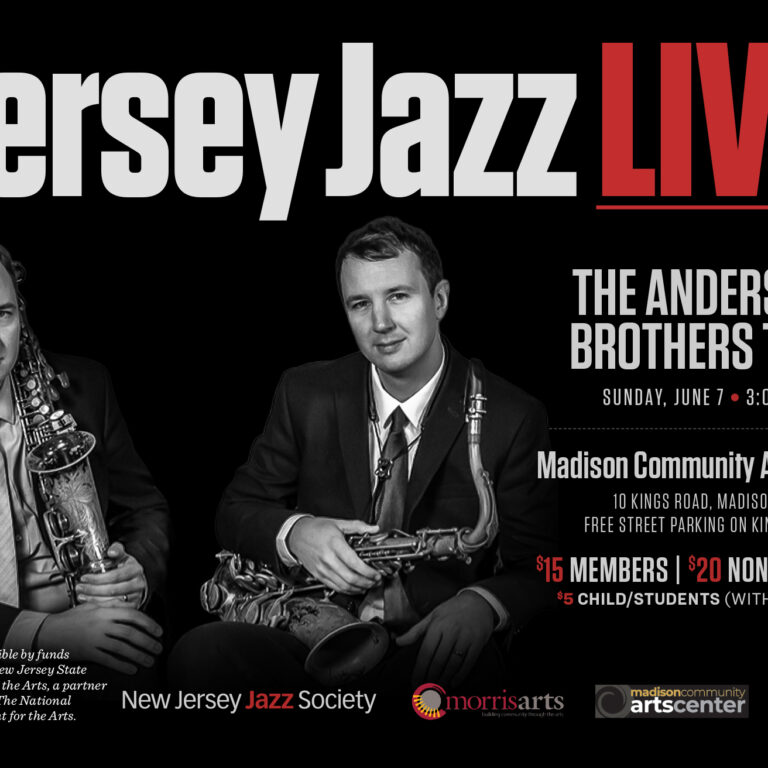
New Jersey’s live music calendar has long been defined by its ability to balance contemporary touring acts with preservation of America’s deeper musical traditions. From Newark jazz clubs and Jersey Shore concert halls to university stages and historic community theaters, the state continues to function as one of the Northeast’s most important homes for live performance across generations and genres. On Sunday, June 7, Madison will add another notable chapter to that tradition when The Anderson Brothers Trio brings its celebrated “Best of Berlin” program to the Madison Community Arts Center for an afternoon dedicated to one of the most influential songwriters in American history.
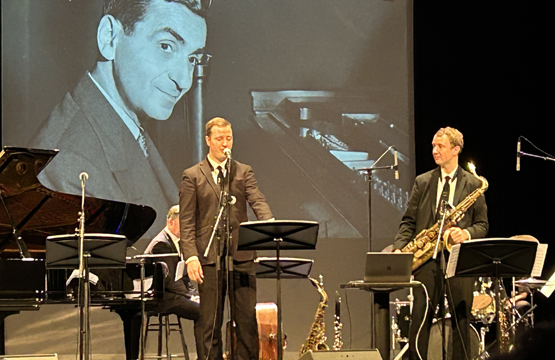
The 3:00 p.m. performance will feature acclaimed multireedists Peter and Will Anderson alongside renowned jazz pianist Ehud Asherie in a live celebration of Irving Berlin’s extraordinary contribution to the Great American Songbook. Framed as both a concert and a historical exploration, the event will blend live jazz interpretation with storytelling centered around Berlin’s life, career, and lasting impact on American music.
For New Jersey audiences, the performance represents more than a nostalgic tribute concert. It arrives at a moment when live jazz programming throughout the region continues expanding beyond traditional club settings and into multidisciplinary arts spaces that emphasize education, cultural preservation, and intergenerational access to performance.
That broader shift has become increasingly important throughout New Jersey’s music scene over the last several years. Community arts organizations, nonprofit performance spaces, and regional cultural centers are increasingly curating events that reconnect audiences with foundational American music while simultaneously introducing younger musicians to the traditions that shaped modern jazz, Broadway, film music, and popular songwriting itself.
The Anderson Brothers have become especially effective ambassadors for that approach.
Widely respected throughout jazz circles for their technical precision, versatility, and deep knowledge of early American swing traditions, Peter and Will Anderson have built national reputations through performances that merge virtuosic musicianship with historical context. Their work frequently revisits the music of artists such as Duke Ellington, Benny Goodman, Charlie Parker, and George Gershwin, but their Irving Berlin program carries particular cultural resonance because of Berlin’s unique role in shaping twentieth-century American identity through music.
Very few composers occupy the same historical territory as Irving Berlin.
His catalog did not simply produce popular songs. It helped define the emotional and cultural vocabulary of modern America itself. Songs such as “Cheek to Cheek,” “Blue Skies,” “Puttin’ on the Ritz,” “There’s No Business Like Show Business,” and “God Bless America” became embedded within multiple generations of American life, extending far beyond Broadway or Tin Pan Alley into film, radio, wartime patriotism, and popular culture.
Berlin’s story itself also remains one of the most extraordinary immigrant narratives in American artistic history.
Born in Imperial Russia before immigrating to the United States as a child, Berlin rose from poverty on New York’s Lower East Side to become one of the most commercially successful and culturally influential songwriters ever produced by the American entertainment industry. His work crossed class, regional, ethnic, and generational boundaries in ways few composers ever achieved.
That legacy gives performances like this unusual weight inside modern jazz programming.
The music survives not because it functions as museum material, but because the compositions themselves remain structurally brilliant, emotionally direct, and endlessly adaptable for live interpretation. Jazz musicians continue returning to the Great American Songbook precisely because the songwriting still allows room for reinvention, improvisation, rhythmic reinterpretation, and personal expression.
The Anderson Brothers Trio approaches that tradition with both technical sophistication and accessibility.
Their performances often emphasize warmth and audience connection rather than academic distance, making them particularly effective in community arts settings where audiences may range from dedicated jazz enthusiasts to casual listeners simply looking for a compelling live cultural experience. Reviews of the group frequently highlight their ability to balance disciplined musicianship with energetic stage presence, an approach that has helped them develop a loyal following throughout the Northeast and national jazz circuits.
The addition of pianist Ehud Asherie further elevates the musical pedigree of the Madison performance.
Asherie remains one of the most respected pianists working within traditional and swing-based jazz idioms today. Known for his command of stride piano traditions and improvisational fluency, he has collaborated with major figures throughout the jazz world while earning widespread recognition for his ability to bridge historical styles with contemporary performance energy.
Together, the trio creates a format especially suited for intimate performance environments like the Madison Community Arts Center, where audiences can experience both the technical interplay between musicians and the conversational atmosphere that often defines great live jazz performances.
The June 7 event will also feature an important educational and developmental component through its Rising Stars opening showcase.
Young musicians Sofia Carrasco on tenor saxophone and Victor Sotomayor on piano, both representing New Jersey City University, will open the afternoon’s program. Their inclusion reflects another increasingly important trend throughout New Jersey’s arts landscape: the intentional integration of emerging student artists alongside established professionals within the same performance spaces.
That mentorship pipeline has become critical to the long-term health of jazz and live instrumental music overall.
Unlike many commercial entertainment formats, jazz has historically survived through apprenticeship, live collaboration, and direct generational transmission between experienced performers and younger musicians. New Jersey institutions, universities, conservatories, and arts organizations continue playing a major role in sustaining that ecosystem by creating opportunities where young artists can perform before live audiences while sharing stages connected to established touring professionals.
Events like this help reinforce New Jersey’s position as more than simply a pass-through market between New York and Philadelphia.
The state increasingly functions as a cultural destination in its own right, particularly in live music. Smaller theaters, community arts centers, and nonprofit venues throughout New Jersey have become essential anchors for programming that larger commercial venues often overlook. Audiences seeking sophisticated but accessible live performance experiences increasingly turn toward spaces like the Madison Community Arts Center because they offer something more intimate and community-oriented than arena entertainment or corporate touring productions.
That intimacy feels particularly appropriate for a concert centered around the Great American Songbook.
These songs were originally written for live rooms, orchestras, theaters, dance halls, and vocal performance spaces where audience connection mattered as much as technical execution. Experiencing them inside a community arts venue rather than a massive commercial setting arguably restores some of the music’s original emotional environment.
The Madison Community Arts Center itself continues contributing significantly to that regional arts culture by hosting programming that spans visual art, music, performance, and educational initiatives. Events like The Anderson Brothers Trio concert help strengthen the role of smaller New Jersey arts institutions at a time when sustaining accessible cultural programming has become increasingly challenging nationwide.
The concert has also received additional support through sponsorship provided by board member Paul Flexner and his wife Barbara, reflecting the continued importance of local patronage and community investment within New Jersey’s nonprofit arts landscape.
That support matters now more than ever.
Across the country, arts organizations continue navigating rising operational costs, changing audience habits, and an increasingly competitive entertainment environment. Yet performances like this continue drawing audiences because they provide something digital entertainment cannot fully replicate: the experience of live musicians interpreting timeless music in real time inside a shared communal setting.
For Explore New Jersey readers following the evolving cultural landscape of the Garden State, The Anderson Brothers Trio’s June 7 performance in Madison represents another example of how New Jersey continues preserving, supporting, and reintroducing foundational American artistic traditions through local performance spaces that remain deeply connected to their communities.
At a moment when so much modern entertainment moves at accelerated speed, an afternoon devoted to Irving Berlin, live jazz musicianship, and the enduring power of the Great American Songbook feels not only culturally valuable, but increasingly necessary.
On June 7 in Madison, that tradition takes center stage once again.
A brutal stabbing and assault involving a 14-year-old boy at a public park in Linden is sending shockwaves through Union County and intensifying broader statewide fears surrounding youth violence, juvenile crime, public safety in community spaces, and the increasingly volatile conflicts unfolding among teenagers across New Jersey communities.
Authorities say two adults and one juvenile have now been arrested and charged in connection with the violent April attack at Wheeler Park, where responding officers discovered the teenage victim suffering from multiple stab wounds and serious injuries after what investigators describe as a coordinated assault involving multiple individuals.
The incident unfolded around 5:15 p.m. on April 18, when officers from the Linden Police Department and the Union County Police Department responded to reports of violence at the county park. When officers arrived, they found the 14-year-old victim wounded with multiple stab injuries and lacerations concentrated along the left side of his back.
Emergency responders transported the teenager to JFK University Medical Center in Edison, where he was treated for injuries authorities later described as non-life-threatening.
But despite the victim surviving the attack, the violence itself has deeply unsettled residents throughout Linden and neighboring communities.
According to investigators, three individuals from Linden were ultimately charged following a multiweek investigation into the assault. Authorities identified Jaquan Roberts as the individual accused of wielding the knife during the incident. Roberts now faces serious charges including second-degree aggravated assault.
Authorities also charged Kayla Oliveira, 18, with simple assault and endangering the welfare of a child. A third suspect, identified only as a juvenile because of age-related legal protections, faces charges including aggravated assault and simple assault.
The arrests, carried out in early May, represent the latest chapter in what has become a deeply troubling pattern of violent incidents involving juveniles and young adults across portions of New Jersey.
For many residents, the Wheeler Park stabbing feels especially disturbing because it occurred in a public recreational space traditionally associated with youth sports, neighborhood gatherings, families, and community activity rather than violent criminal conduct.
That erosion of perceived public safety in everyday community environments is becoming a major source of anxiety throughout many New Jersey municipalities.
Parks, shopping centers, schools, transportation hubs, and public gathering spaces increasingly sit at the center of growing public concern surrounding escalating youth conflict, social media-driven disputes, group assaults, weapons access, and rapidly intensifying confrontations among teenagers and young adults.
The Linden case reflects several of those dynamics simultaneously.
Authorities allege the attack involved multiple participants, including both adults and juveniles, highlighting the increasingly blurred boundaries between youth violence and adult criminal behavior in many modern assault cases. Law enforcement agencies throughout New Jersey continue warning that conflicts involving teenagers can escalate extraordinarily quickly, especially when group dynamics, public confrontation, online disputes, or weapons become involved.
The role of knives and edged weapons has become particularly concerning.
While national conversations around youth violence often focus heavily on firearms, many local police departments report rising concern surrounding knife assaults involving juveniles and young adults. Knives remain highly accessible, difficult to regulate, and capable of inflicting catastrophic injuries within seconds during emotionally charged confrontations.
Public parks and recreational spaces can become especially vulnerable environments for these incidents because they function as informal gathering points where supervision may fluctuate and interpersonal disputes can escalate rapidly.
Wheeler Park itself now joins a growing list of community spaces across the state where acts of violence have triggered broader debates surrounding policing visibility, youth engagement, conflict intervention, and neighborhood safety infrastructure.
The emotional impact of attacks involving minors is often especially severe.
Residents tend to view violence involving children and teenagers differently from adult criminal activity because it raises larger societal questions about family stability, mental health strain, school climate, social media influence, peer dynamics, economic instability, and whether communities are losing the ability to effectively intervene before conflicts become dangerous.
Those concerns are intensifying nationally.
Across the country, communities continue struggling with rising anxiety surrounding adolescent behavior, online conflict culture, and increasing emotional volatility among younger populations following years of social disruption, pandemic isolation, educational instability, and mounting psychological pressure tied to digital life.
Educators, law enforcement officials, psychologists, and community organizations increasingly warn that many teenagers are navigating environments saturated with stress, online exposure, conflict amplification, and emotional instability in ways previous generations did not experience at comparable intensity.
Social media frequently accelerates these dynamics dramatically.
Arguments that once may have dissipated privately can now escalate publicly across digital platforms where humiliation, provocation, retaliation, and peer pressure become amplified in real time. Conflicts can spread rapidly between schools, neighborhoods, and social groups before eventually erupting into physical violence offline.
Authorities have not publicly detailed what triggered the Wheeler Park assault, but the case nevertheless fits into a broader statewide atmosphere of concern surrounding youth conflict escalation.
The involvement of an adult suspect alongside juvenile participants further complicates public reaction.
When adults become connected to violence involving minors, communities often perceive the situation not simply as a teenage altercation, but as a deeper breakdown involving responsibility, supervision, and the influence older individuals may exert within younger social circles.
Charges involving endangering the welfare of a child also signal prosecutors may view aspects of the incident through a broader framework involving child safety and vulnerability rather than simple assault alone.
Union County prosecutors and investigators now face the difficult task of balancing accountability, juvenile justice considerations, public safety concerns, and the long-term consequences associated with prosecuting young offenders.
This remains one of the most difficult aspects of modern criminal justice systems involving juvenile violence.
Communities simultaneously demand accountability for serious crimes while also recognizing that adolescent offenders often operate within unstable social, emotional, and developmental conditions that complicate purely punitive responses. New Jersey, like many states, continues grappling with how to balance rehabilitation principles with growing public frustration surrounding repeat youth violence and serious assaults involving minors.
The Wheeler Park incident also arrives amid broader political conversations surrounding public safety throughout New Jersey.
Debates involving policing strategy, juvenile detention policy, school resource officers, mental health intervention, restorative justice, community violence prevention, and youth programming continue generating intense disagreement statewide. Incidents involving teenage victims and multiple assailants frequently intensify those debates because they expose competing public expectations surrounding prevention, enforcement, and accountability.
At the same time, community advocates continue warning against reducing youth violence solely to policing discussions alone.
Many organizations emphasize the importance of addressing root conditions including family instability, educational disruption, trauma exposure, housing insecurity, untreated mental health issues, social fragmentation, and lack of structured opportunities for younger populations. Others stress the importance of mentorship programs, conflict mediation resources, sports infrastructure, after-school programming, and community engagement initiatives designed to reduce isolation and escalation pathways.
Still, for residents of Linden, the immediate emotional reality remains starkly personal.
A 14-year-old boy was stabbed multiple times inside a public park in broad daylight.
That fact alone is enough to deeply unsettle any community.
Parents increasingly worry about where children gather after school. Residents question whether parks remain safe spaces. Families wonder how quickly ordinary teenage conflict can spiral into life-threatening violence. And local officials face mounting pressure to reassure communities already exhausted by rising anxiety surrounding public safety and youth behavior.
The investigation remains active, and additional details may still emerge regarding the circumstances leading up to the attack.
But even now, the Wheeler Park stabbing is already becoming part of a larger conversation unfolding across New Jersey — one centered around what happens when adolescent conflict, public space insecurity, emotional instability, and access to violence converge inside communities struggling to hold themselves together during an increasingly tense social era.
Because beneath the criminal charges and police reports lies a more difficult truth many communities are now being forced to confront:
The fear surrounding youth violence is no longer confined to distant headlines or isolated urban narratives.
It is reaching directly into neighborhood parks, suburban communities, and the everyday public spaces where families once felt safest.
A heartbreaking discovery along the Delaware River has brought a devastating end to a two-month search for a missing South Jersey farmworker, while simultaneously exposing deeper concerns surrounding migrant labor vulnerability, worker isolation, healthcare access, mental health support, and the often invisible realities facing many of the agricultural laborers who help sustain New Jersey’s farming economy.
Authorities have confirmed that the remains recovered near the shoreline at Fox Point State Park in Wilmington, Delaware belong to Lizandro Guizar Sartiaguin, a 27-year-old migrant blueberry field worker from Hammonton, New Jersey who disappeared in late February after leaving his residence and never returning.
The tragic discovery has sent waves of grief through South Jersey’s agricultural communities, particularly throughout Hammonton, where migrant labor remains deeply interwoven into the region’s blueberry industry and broader farming infrastructure. The case is now drawing growing attention not only because of the mystery surrounding Sartiaguin’s disappearance and death, but because it reflects larger humanitarian and social issues affecting vulnerable workers throughout New Jersey’s agricultural economy.
According to investigators, Sartiaguin was last seen alive on February 27, 2026, leaving his residence on Laurel Avenue in Hammonton around 1:00 in the afternoon. Family members and advocates say he left behind his personal belongings and abruptly lost all communication with relatives afterward, triggering mounting concern among those who knew him.
What began initially as a missing person case slowly evolved into a prolonged search effort marked by uncertainty, emotional exhaustion, and increasing fear among both family members and members of the local migrant worker community.
For weeks, loved ones reportedly struggled to understand what could have happened.
Sartiaguin had been working in South Jersey’s blueberry fields, part of the agricultural labor force that remains essential to one of New Jersey’s most iconic farming sectors. Known nationally for its blueberry production, Hammonton and surrounding Atlantic County agricultural regions rely heavily on seasonal and migrant labor to sustain harvesting operations and maintain productivity during critical growing periods.
These workers often live largely outside public visibility despite their central role in the state’s agricultural economy.
Many laborers travel significant distances from family members, work physically demanding schedules, navigate language barriers, and operate within economically precarious conditions while supporting relatives both domestically and abroad. Advocates say Sartiaguin regularly sent earnings back to support his wife and daughter in Mexico, reflecting a common reality for many migrant workers whose labor sustains families across international borders.
Family representatives and community advocates also revealed an additional layer of vulnerability tied to Sartiaguin’s medical history.
According to those close to him, he had previously suffered a severe head injury several years earlier that reportedly left him dealing with ongoing cognitive and memory-related difficulties. Despite these lingering challenges, he continued working steadily in agricultural labor, attempting to maintain financial support for his family while navigating long-term health consequences that may have complicated daily life.
That detail has added even greater emotional weight to the case.
Advocates working with migrant labor populations frequently warn that workers experiencing cognitive difficulties, untreated trauma, mental health struggles, or medical limitations often face heightened vulnerability due to isolation, limited healthcare access, unstable transportation, language barriers, and fear surrounding employment security or immigration scrutiny — even among individuals holding legal residency status.
Sartiaguin reportedly possessed legal permanent resident status, commonly known as a green card, underscoring another important reality often lost within broader immigration narratives: many migrant laborers contributing to the regional agricultural economy are legally authorized workers deeply embedded into the fabric of local communities and industries.
The discovery itself unfolded under grim circumstances.
On the evening of April 24, a visitor walking through Fox Point State Park reportedly encountered a heavily decomposed body near the shoreline along the Delaware River. The park sits directly across the river corridor from portions of Salem County, New Jersey, an area deeply connected through transportation, industrial, and environmental networks spanning the Delaware Valley region.
The condition of the remains complicated identification efforts initially.
The Delaware Division of Forensic Science eventually used forensic testing procedures to formally confirm the identity as Sartiaguin, bringing painful closure to months of uncertainty while simultaneously opening a new phase of investigation into how he died and how his body ultimately ended up along the Delaware shoreline.
At this stage, authorities say the precise cause and manner of death remain undetermined pending the completion of autopsy and toxicology analysis.
That uncertainty continues fueling questions surrounding the timeline of Sartiaguin’s disappearance and whether any external circumstances may have contributed to his death. Investigators with the Delaware State Police criminal investigations unit are continuing to examine the case while urging anyone with information connected to his movements or timeline to contact Detective Joseph Lucyk.
The fact that the case remains open-ended has intensified concern throughout both migrant advocacy circles and local South Jersey communities.
Cases involving missing migrant workers often become especially difficult to investigate due to fragmented social networks, limited digital records, unstable transportation patterns, fear of law enforcement among some labor populations, and the geographic mobility associated with seasonal agricultural employment. Workers may move between housing sites, farms, transportation corridors, or temporary labor arrangements without extensive public visibility.
This invisibility can complicate both searches and broader public awareness.
Advocates say many agricultural laborers operate within conditions where disappearance, injury, exploitation, or medical crises can remain unnoticed longer than they would for individuals embedded within more stable social or institutional systems. Migrant workers frequently lack consistent healthcare access, transportation independence, or support infrastructure capable of responding rapidly during emergencies.
The tragedy is also drawing renewed attention to the physical and emotional demands placed on agricultural workers throughout New Jersey.
The state’s farming economy depends heavily on labor-intensive harvesting systems requiring long hours in difficult weather conditions during peak seasons. Workers often endure intense heat, physical strain, unstable income patterns, and housing insecurity while remaining largely invisible to the consumers benefiting from the agricultural products they help produce.
Blueberry farming in particular represents one of South Jersey’s defining agricultural industries.
Hammonton has long carried the identity of the “Blueberry Capital of the World,” with generations of farm operations helping shape the region’s economy and cultural character. But beneath the industry’s economic success lies a labor system heavily dependent on migrant workers whose lives often remain disconnected from broader public visibility.
Sartiaguin’s death now forces uncomfortable reflection on that reality.
The case also arrives during a period when broader conversations surrounding labor protections, healthcare access, mental health support, and migrant worker rights are intensifying nationally. Advocates increasingly argue that agricultural workers remain among the most economically vulnerable labor populations in the country despite performing work critical to food production systems and regional economies.
Mental health and cognitive health support represent particularly overlooked dimensions of this issue.
Workers coping with prior injuries, trauma, isolation, or untreated medical conditions frequently face enormous difficulty accessing consistent care, especially in rural or seasonal labor environments where healthcare infrastructure may already be limited. Family advocates’ comments regarding Sartiaguin’s past head injury have therefore resonated deeply with organizations focused on worker protection and migrant wellbeing.
The Delaware River itself adds another haunting layer to the case.
Stretching through some of the Northeast’s most industrialized and interconnected corridors, the river functions simultaneously as transportation artery, environmental boundary, commercial route, and geographic connector between New Jersey, Delaware, and Pennsylvania. Cases involving unidentified remains discovered along its shoreline often become extraordinarily complex because of the region’s overlapping jurisdictions and heavily traveled waterways.
For Sartiaguin’s family, however, the broader political and structural conversations surrounding the case remain secondary to the devastating human loss itself.
A husband and father who traveled far from home to support loved ones through physically demanding agricultural labor disappeared for months before being discovered far from the fields where he worked and the community where he lived.
And now, even after the recovery of his remains, many of the most important questions surrounding his final days remain unanswered.
As investigators continue piecing together the circumstances surrounding his disappearance and death, the tragedy is becoming a painful reminder of how easily vulnerable workers can disappear into the margins of systems that depend upon their labor but often fail to fully see them.
Because behind New Jersey’s farms, harvest seasons, and agricultural success stories are thousands of workers whose lives remain fragile, isolated, and deeply exposed to hardship in ways most residents rarely witness directly.
And in the case of Lizandro Guizar Sartiaguin, that hidden vulnerability has now become impossible to ignore.
Every year in New Jersey high school sports, there comes a point in May when the regular season abruptly stops feeling routine and begins transforming into something far more consequential. The standings suddenly matter differently. County tournaments intensify. Rivalries sharpen. Power-point calculations become part of daily conversation. Coaches start managing innings with postseason strategy in mind. Entire seasons begin swinging on single at-bats, late defensive plays, and pitching decisions that will ultimately determine who survives into June.
Across New Jersey this week, that transition officially arrived.
With the NJSIAA state tournament qualifying cutoff now complete and postseason brackets set to be finalized on May 19, the final stretch of the regular season delivered exactly the kind of dramatic performances, major upsets, breakthrough moments, and historic individual achievements that continue making New Jersey one of the nation’s premier states for high school athletics.
At the center of the week’s biggest individual performance was Spotswood High School junior Gabrielle Hill, who delivered one of the most remarkable softball performances anywhere in the state this season while simultaneously cementing herself deeper into Chargers program history.
Hill’s performance against Iselin Kennedy was not simply dominant. It was historically complete.
In Spotswood’s commanding 15-2 victory on May 14, Hill finished an extraordinary 5-for-5 at the plate, scored four runs, drove in nine RBIs, and completed one of softball’s rarest offensive accomplishments by hitting for the cycle. She recorded two singles, a double, a home run, and finally a triple that simultaneously completed the cycle while marking the 100th hit of her varsity career.
The moment carried significance well beyond a single regular-season game.
By surpassing the 100-hit mark during the regular season of her junior year, Hill became just the sixth player in Spotswood softball history to accomplish the feat. More importantly, she reached the milestone with another full varsity season still remaining, placing her in position to potentially challenge some of the program’s most significant long-term offensive records.
The scale of the performance immediately elevated Hill into broader statewide recognition, earning her nomination consideration for the High School on SI National Girls Athlete of the Week.
What made the outing especially impressive was not simply the statistical volume, but the balance of the production itself. Players occasionally produce monster offensive games through one or two major swings. Hill impacted every phase of the lineup repeatedly throughout the afternoon, reaching base consistently while driving the middle of the order offensively in nearly every possible way.
For a junior player entering the postseason in peak form, the timing could not be better for Spotswood.
And throughout New Jersey, that type of momentum suddenly matters enormously.
Because while softball programs across the state continue preparing for postseason play, New Jersey baseball has simultaneously entered one of the most volatile stretches of the spring season — the narrow window where tournament seeding pressure, county championship runs, and state-title expectations all begin colliding at once.
That volatility produced several major statement games across the state over the last week.
One of the most important came in a highly anticipated tune-up matchup streamed statewide by NJ.com, where No. 7 Passaic Tech defeated No. 14 Ramapo 8-6 in a game carrying significant postseason implications for both programs ahead of NJSIAA bracket finalization.
The matchup functioned almost like a playoff rehearsal.
Both teams entered knowing the power-point cutoff had effectively turned every remaining high-level matchup into a direct evaluation opportunity for tournament seeding purposes. Passaic Tech ultimately separated itself through an explosive second inning fueled by timely hitting, including a pivotal extra-base hit from Yamil Herrera that helped create the offensive surge that carried the Bulldogs to victory.
The result reinforced Passaic Tech’s standing as one of the most dangerous programs entering the state tournament while simultaneously underscoring just how compressed the competitive margins have become throughout New Jersey baseball this spring.
And if the final week before postseason seeding proved anything, it is that rankings now offer very little protection once tournament baseball begins.
The Morris County Tournament delivered perhaps the clearest example.
Upcoming NJSIAA Tournament Schedule
With the regular season point collection officially closed, the New Jersey State Interscholastic Athletic Association (NJSIAA) tournament committee is finalizing the bracket seedings. The state tournament route is structured as follows:
Tournament Round
Non-Public Bracket Dates
Public Bracket Dates
First Round
May 26, 2026
May 27, 2026
Second Round
May 28, 2026
May 29, 2026
Third Round
June 2, 2026
June 3, 2026
Sectional Finals
June 4, 2026
June 5, 2026
State Finals (at Rutgers)
June 10, 2026
June 14, 2026
Mount Olive’s dramatic 8-7 victory over nationally respected Delbarton immediately became one of the defining results of the New Jersey high school baseball season. Entering the matchup, Delbarton had firmly established itself as the state’s No. 1-ranked program and one of the favorites to capture overall state championship honors.
Instead, Mount Olive produced the type of upset that reshapes an entire postseason bracket conversation.
Jake Longo’s clutch home run not only propelled Mount Olive to the victory, but ended a staggering 35-year county title drought for the program. In the process, the Marauders instantly transformed from respected contender into one of the most closely watched postseason teams anywhere in New Jersey.
The significance of county tournaments inside New Jersey high school sports often gets overlooked outside the state, but internally they remain enormously important cultural and competitive benchmarks. County titles carry decades of history, community pride, and regional identity. Programs measure generations of success through them.
Ending a drought lasting more than three decades instantly becomes part of school sports history.
The upsets did not stop there.
In Union County, fourth-seeded Johnson High School stunned perennial powerhouse Governor Livingston in an extra-inning semifinal thriller that may ultimately become one of the defining pitching performances of the county tournament season.
Brody Gulbin threw all eight innings while simultaneously delivering the game-winning RBI in Johnson’s 3-2 victory. The performance halted Governor Livingston’s attempt to secure a third consecutive county championship and reinforced one of the most consistent realities surrounding New Jersey tournament baseball every spring: experienced pitching still changes everything.
Especially in postseason environments.
Pitching depth, composure, and situational execution remain the fastest ways for underdogs to destabilize heavily favored teams once bracket play begins. Johnson’s victory reflected that formula almost perfectly.
Meanwhile, the Shore Conference Tournament produced its own major shockwave when 17th-seeded Freehold Township eliminated top-seeded Red Bank Catholic in a dramatic 13-10 extra-inning upset.
The game became an immediate reminder of why New Jersey’s Shore Conference remains one of the deepest and most unpredictable baseball environments anywhere in the Northeast. Freehold Township’s comeback was anchored by Nick Stabile, whose first varsity home run arrived at exactly the right moment to help fuel one of the tournament’s biggest surprises.
For Red Bank Catholic, the loss represented the type of abrupt postseason exit that increasingly defines modern New Jersey baseball, where the talent distribution across conferences has become so deep that virtually every playoff-caliber team now carries legitimate upset potential.
That overall parity may be the defining characteristic of New Jersey high school sports entering the 2026 postseason.
Unlike states dominated by a handful of traditional superpowers, New Jersey’s competitive structure routinely produces statewide tournament fields where elite programs coexist alongside dangerous lower-seeded teams fully capable of advancing deep into June.
That dynamic is about to intensify dramatically.
With the NJSIAA tournament committee finalizing official bracket seedings, programs across both public and non-public classifications are now entering the most pressure-filled portion of the season. Every pitch, lineup decision, bullpen move, and defensive mistake suddenly carries season-ending implications.
The structure ahead remains unforgiving.
Non-public tournament play opens May 26, while public-school brackets begin May 27. From there, programs must survive rapid-turnaround rounds leading into sectional finals during the first week of June before the state championship schedule culminates at Rutgers University’s Bainton Field on June 10 and June 14.
For athletes across the state, the opportunity to reach Rutgers remains one of the defining goals of every high school baseball season.
Bainton Field has increasingly become one of the symbolic homes of New Jersey high school baseball itself — a final stage where standout individual performances, legendary programs, breakout stars, and unforgettable championship moments all converge.
Softball programs are now entering similar territory.
Hill’s performance at Spotswood arrives at exactly the right moment because postseason softball in New Jersey historically rewards teams entering bracket play with offensive rhythm and lineup confidence already established. Teams rarely “find” their offense once tournament elimination games begin. Programs generally advance because their offensive identity is already functioning consistently before May ends.
Spotswood suddenly appears positioned to enter the postseason carrying precisely that momentum.
And statewide, momentum may matter more this season than ever.
Because across New Jersey high school sports right now, the margins separating championship contenders from early exits appear extraordinarily thin. The rankings remain fluid. The upsets continue growing larger. And the postseason atmosphere already feels fully underway before the official brackets have even been finalized.
For Explore New Jersey readers following the rapidly intensifying high school sports landscape across the Garden State, the opening weeks of the 2026 postseason are shaping up to deliver exactly what New Jersey athletics consistently produces every spring: elite competition, emerging stars, unforgettable moments, and the kind of community-driven sports environment that continues making high school athletics one of the most important cultural traditions anywhere in the state.
At a time when much of modern public life feels increasingly fragmented by politics, algorithms, economic anxiety, and nonstop digital noise, organizations rooted in live artistic experience continue serving a profoundly important role inside communities across New Jersey. They create gathering spaces. They preserve cultural traditions. They mentor young people. They provide access where access often does not exist. And in some cases, they completely alter the trajectory of a person’s life.
Few organizations in New Jersey embody that mission more completely than Jazz House Kids.
That reality was on full display on May 12, 2026, when Jazz House Kids Artistic Director and 11-time Grammy Award winner Christian McBride joined Founder and President Melissa Walker for the official launch of the 2026 Montclair Jazz Festival season, an evening that celebrated not only this year’s extraordinary lineup, but the larger cultural mission that has made Jazz House Kids one of the most respected arts education organizations anywhere in the region.
Held in front of supporters, artists, students, educators, and community leaders, the event reflected the growing national importance of an organization that has steadily transformed itself from a local educational initiative into a major cultural institution with influence extending far beyond Essex County.
The evening itself captured the atmosphere immediately.
Live student performances filled the room. Conversations unfolded around cocktails and hors d’oeuvres. Young musicians shared space with internationally recognized artists and longtime supporters. But underneath the social energy was something more significant: a clear demonstration of how arts education, mentorship, and community investment can work together to create long-term cultural impact.
That impact is now being recognized on a national level.
During the launch event, Melissa Walker announced that the 2026 Montclair Jazz Festival has officially been selected by the Smithsonian Institution as a collaborating festival for “Of the People: The Smithsonian Festival of Festivals,” part of the nationwide commemoration connected to the United States semiquincentennial.
The recognition represents a major milestone not only for Jazz House Kids, but for New Jersey’s broader arts community.
The Smithsonian partnership elevates the Montclair Jazz Festival into a national cultural conversation centered on democracy, identity, artistic expression, and public storytelling. Through the collaboration, participants are being encouraged to reflect on what democracy means in their own lives and communities during a period when questions surrounding civic identity, inclusion, and public dialogue have become increasingly urgent throughout the country.
That integration of arts education and civic engagement has become one of the defining strengths of organizations like Jazz House Kids.
The work extends well beyond performance training alone.
Students learn musicianship, certainly. But they also develop discipline, confidence, communication skills, collaboration habits, and a sense of creative identity that frequently shapes their lives long after individual performances end. Programs built around mentorship and artistic access often succeed because they provide young people with both structure and possibility simultaneously.
Jazz House Kids has spent years building exactly that kind of ecosystem.
Under the leadership of Christian McBride and Melissa Walker, the organization has consistently expanded its reach while maintaining a strong focus on educational accessibility and cultural preservation. The result is a model that feels deeply connected to both jazz tradition and modern community development.
That balance has helped make the Montclair Jazz Festival one of the most respected music events anywhere in New Jersey.
This year’s lineup reflects that status clearly.
The 2026 festival will feature an extraordinary collection of artists spanning multiple generations and styles within the broader jazz and contemporary music landscape. Dianne Reeves, one of the most celebrated vocalists in modern jazz history, joins the schedule alongside the Christian McBride Big Band with Bilal, Patrice Rushen, the Spanish Harlem Orchestra, and the Take Me to the River New Orleans All Stars featuring Cyril Neville.
Taken together, the lineup reflects not only musical excellence, but cultural breadth.
Jazz has always functioned as a living art form built through collaboration, improvisation, migration, and reinterpretation. The Montclair Jazz Festival continues embracing that reality by presenting artists who connect traditional jazz foundations to soul, funk, Latin music, New Orleans rhythms, contemporary vocal performance, and modern genre fusion.
The return of The Gotham Kings leading a New Orleans-style second line procession down Bloomfield Avenue reinforces that same philosophy.
The procession has become one of the festival’s defining visual and communal traditions because it transforms public space into participatory celebration. Audiences do not simply watch the music happen; they move through it together. The streets themselves become part of the performance environment.
That sense of collective experience has become increasingly valuable in modern arts culture.
Live music festivals now compete not only with other entertainment options, but with the broader fragmentation of public attention itself. The strongest festivals increasingly succeed because they create environments that feel immersive, local, and emotionally connected to their communities.
Montclair has become exceptionally effective at fostering that atmosphere.
The township’s growing reputation as one of New Jersey’s most culturally active communities has strengthened significantly over the last decade through its support of live music, film, visual arts, restaurants, independent businesses, and public arts programming. The Montclair Jazz Festival now operates as one of the clearest expressions of that identity.
But perhaps the most powerful aspect of the Jazz House Kids mission remains its focus on young artists themselves.
The event launch also highlighted the story of Newark native Christopher Taylor, whose path from local dance programs to the internationally renowned Alvin Ailey American Dance Theater serves as a powerful example of what sustained artistic support can accomplish.
Taylor’s journey reflects the exact type of outcome organizations like Jazz House Kids are designed to nurture.
His development was shaped not only by talent, but by access, mentorship, encouragement, and family support — particularly from a grandmother willing to invest in his artistic future early. Stories like his reinforce a reality often overlooked in broader arts discussions: talent alone is rarely enough. Opportunity infrastructure matters enormously.
Mentors matter.
Programs matter.
Communities willing to invest in young artists matter.
Without those structures, countless gifted young people simply never receive the chance to develop fully.
That is why arts organizations continue playing such an essential role across New Jersey.
They are not merely producing performances. They are building pipelines of confidence, expression, and long-term opportunity. In many cases, they are helping students imagine futures that previously felt inaccessible.
The economic and cultural implications of that work are substantial.
Arts organizations contribute to local business activity, tourism, nightlife, hospitality, education, and regional identity. But the deeper impact is often social rather than financial. They create spaces where people gather across generations, backgrounds, and experiences around something collaborative rather than divisive.
That dynamic feels increasingly important right now.
The arts remain one of the few public spaces where people routinely encounter empathy, complexity, vulnerability, and shared emotional experience without requiring ideological alignment beforehand. Music, dance, theater, and visual storytelling continue functioning as connective tissue inside communities that otherwise often feel disconnected from one another.
Jazz House Kids understands that responsibility clearly.
The organization’s success has never been built solely on performance quality, though the artistic standards remain exceptionally high. Its influence comes from the larger ecosystem it has created around mentorship, access, youth development, and cultural continuity.
The 2026 Montclair Jazz Festival now stands poised to reinforce that mission on an even larger stage.
For Explore New Jersey readers following the evolving cultural landscape of the Garden State, the continued rise of Jazz House Kids represents one of the most important arts stories unfolding anywhere in the region. What began as a local educational initiative has evolved into a nationally recognized institution helping shape how communities think about arts access, mentorship, civic dialogue, and cultural investment.
And in a moment when many institutions across the country continue struggling to create genuine human connection, organizations like Jazz House Kids are proving that music, mentorship, and community still have the power to change lives — one student, one performance, and one generation at a time.
World War II stories have been told countless times across film and television, yet the most compelling projects continue finding new ways to revisit the conflict not through spectacle alone, but through the impossible human decisions that shaped history itself. “PRESSURE,” an intense new historical drama centered on the final seventy-two hours before D-Day, arrives with exactly that kind of focus, placing audiences inside one of the most consequential command decisions ever made during wartime.
Now, New Jersey audiences have an opportunity to experience the film early through a special premiere screening scheduled for May 28, with free tickets being offered to the first one hundred attendees who claim access through the promotional release. Claim your tickets now!
The film itself centers on General Dwight D. Eisenhower and Captain James Stagg during the critical lead-up to the Allied invasion of Normandy, when deteriorating weather conditions threatened to derail the largest amphibious military operation in history. At the core of the story is the extraordinary tension surrounding a decision that would ultimately affect not only the invasion itself, but the future direction of the war and the fate of Europe.
That premise immediately separates “PRESSURE” from more conventional war films.
Rather than focusing primarily on battlefield combat, the film appears structured around command pressure, uncertainty, strategy, and psychological strain. The central conflict is not simply military action, but the unbearable responsibility carried by leaders forced to make decisions with incomplete information while millions of lives hang in the balance.
It is a story about timing, judgment, and consequence.
Those elements have increasingly become some of the most compelling aspects of modern historical filmmaking because audiences today tend to respond strongly to character-driven tension rather than purely large-scale action sequences. Films centered on leadership under impossible circumstances often resonate more deeply because they emphasize the emotional and moral complexity behind historical events that are frequently simplified in public memory.
The D-Day invasion remains one of the clearest examples of that complexity.
Popular history often presents June 6, 1944 as an inevitable turning point, but the reality facing Allied leadership in the days beforehand was anything but certain. Weather forecasts were unstable. Sea conditions threatened landing operations. Visibility concerns complicated airborne deployments. Delaying the invasion carried enormous strategic risk, but launching under catastrophic conditions could have resulted in one of the greatest military disasters in modern history.
That uncertainty is where “PRESSURE” appears to locate its dramatic center.
Captain James Stagg, the meteorological officer responsible for providing weather analysis to Eisenhower, becomes a particularly fascinating figure within that context because his forecasts directly influenced the timing of the invasion itself. Unlike battlefield commanders making tactical decisions in combat, Stagg’s role revolved around prediction, probability, and scientific interpretation under extraordinary political and military pressure.
The emotional weight attached to that responsibility creates enormous cinematic potential.
One recommendation. One interpretation of incoming weather systems. One wrong call. The consequences would have been global.
That level of contained tension often produces some of the strongest historical dramas because audiences understand the stakes immediately without requiring excessive exposition. The clock is already ticking before the film even begins.
For viewers interested in military history, leadership studies, political decision-making, or historical thrillers, “PRESSURE” arrives at a moment when there is renewed public appetite for serious large-scale historical storytelling. Recent years have seen audiences gravitate strongly toward projects that combine historical realism with tightly focused human narratives rather than broad revisionist spectacle.
That trend has helped elevate films and series that emphasize atmosphere, procedural realism, political tension, and emotional authenticity.
“PRESSURE” appears positioned directly within that tradition.
The setting alone carries enormous cinematic gravity. The final days before D-Day remain among the most scrutinized and mythologized periods of twentieth-century military history. Yet despite the scale of the operation itself, the emotional reality of those seventy-two hours was deeply intimate — a handful of exhausted leaders, maps, forecasts, intelligence reports, military logistics, and the knowledge that failure would reverberate across the world.
That combination of claustrophobic decision-making and massive historical consequence often produces the strongest wartime storytelling.
It also aligns particularly well with audiences seeking films that feel grounded rather than overly sensationalized.
The special premiere screening component adds another layer of excitement for film audiences throughout New Jersey. Advance screenings consistently generate strong interest because they allow viewers to experience highly anticipated releases within a more event-driven atmosphere. The limited-ticket structure also creates urgency, especially for films tied to major historical subject matter or prestige dramatic positioning.
Watching a film alongside an audience encountering the story for the first time creates a very different emotional experience, particularly with tension-driven historical dramas where silence, suspense, reaction, and atmosphere become part of the event itself.
That theatrical energy has become increasingly important as the film industry continues navigating the long-term effects of streaming-era viewing habits. Large-scale event screenings, limited premieres, retrospective programming, and exclusive theatrical experiences have emerged as key strategies for reconnecting audiences with the communal side of cinema.
Historical dramas especially benefit from that environment.
The scale of the subject matter, the emotional pacing, the tension of unfolding decisions, and the immersive atmosphere all tend to resonate more strongly inside a theater setting than through fragmented at-home viewing.
The timing of the premiere also arrives as World War II storytelling continues evolving for new generations. Modern filmmakers increasingly approach the era not simply through patriotic framing or battlefield heroics, but through institutional pressure, psychological burden, intelligence work, logistics, political conflict, and the deeply human uncertainty that existed underneath monumental historical events.
That shift has produced richer and more layered storytelling overall.
“PRESSURE” appears ready to continue that direction by focusing less on the invasion itself and more on the impossible decision-making process that made the invasion possible in the first place.
For Explore New Jersey readers following major film releases, historical dramas, and special screening events, the May 28 premiere of “PRESSURE” represents one of the more compelling film opportunities currently circulating within the region’s entertainment landscape. The combination of historical significance, psychological tension, wartime leadership drama, and limited free-ticket access positions the event as more than just another movie screening.
It becomes an opportunity to experience one of history’s most pivotal moments through a different lens — not from the beaches of Normandy, but from the war room where the decision to launch was finally made.
And in those final seventy-two hours before D-Day, the pressure facing Allied leadership may have been as dangerous as the invasion itself.
Every year in New Jersey, there are sporting events that generate headlines because of championships, television ratings, ticket sales, or celebrity attention. And then there are events that matter on a much deeper level because they represent something larger than sports itself. The 2026 Special Olympics New Jersey Summer Games, returning to The College of New Jersey from June 5 through June 7, belong firmly in that second category.
For one weekend, the TCNJ campus in Ewing will once again transform into one of the most inspiring athletic and community gatherings anywhere in the state as more than 2,000 athletes, coaches, volunteers, law enforcement officers, families, medical professionals, partners, and supporters come together for three days built around competition, achievement, inclusion, and human connection.
The Summer Games are not simply a statewide tournament.
They are one of the defining annual celebrations of community in New Jersey.
Across seven sports, athletes from throughout the Garden State will compete in an atmosphere that combines elite effort with extraordinary encouragement. Opening ceremonies, medal presentations, health screenings, fan support, volunteer programs, and team celebrations create an environment unlike almost any other sporting event in the region. The focus is competitive excellence, but the emotional center of the Games has always been something larger: visibility, dignity, opportunity, and the recognition that sports can create belonging in ways few other institutions can match.
For many athletes, the Summer Games represent the culmination of months — and often years — of preparation.
For families, it becomes a weekend of pride and celebration.
For coaches, it is the reward for countless hours spent mentoring, teaching, organizing, motivating, and building confidence both on and off the field of play.
And for New Jersey itself, the event continues reinforcing why Special Olympics remains one of the most respected and impactful sports organizations operating anywhere in the country.
The scale of the Summer Games has grown significantly over the years, evolving into a statewide showcase that extends well beyond athletics alone. In addition to competition, the weekend includes wellness initiatives, community programming, athlete support services, and health-focused screenings designed to provide resources that many participants might not otherwise receive regularly. That integrated model has become central to the Special Olympics mission nationally and particularly strong throughout New Jersey.
The atmosphere surrounding the Games reflects that broader purpose immediately.
There is intensity, certainly. Athletes compete to win. Coaches prepare seriously. Teams train with structure and discipline. But there is also an unmistakable sense of mutual support that changes the emotional environment entirely. Competitors cheer for one another. Volunteers develop lasting relationships with athletes and families. Law enforcement officers participate not as symbolic guests, but as active partners deeply embedded within the event itself.
That relationship between Special Olympics New Jersey and law enforcement has become one of the organization’s most visible and meaningful partnerships.
The presence of officers throughout the Summer Games reflects years of collaboration through fundraising, event support, logistics, community outreach, and athlete advocacy initiatives. Programs such as the Law Enforcement Torch Run have helped strengthen the connection between Special Olympics and communities across the state while generating visibility and support for athletes year-round.
The result is an event that feels remarkably unified despite its enormous scale.
What also makes the Summer Games especially powerful is how they challenge outdated perceptions surrounding disability, competition, and athletic achievement. Anyone attending the event quickly realizes that the level of preparation, focus, resilience, and emotional investment displayed by athletes mirrors what exists in every serious sports environment. The performances matter deeply to the competitors participating in them.
The victories are real.
So are the setbacks, nerves, pressure, excitement, and determination.
That authenticity is part of why the Summer Games continue resonating so strongly with returning families, volunteers, and coaches year after year.
For longtime coaches, the emotional impact of the Games often becomes intensely personal. Coaching in Special Olympics environments requires much more than designing practices or organizing lineups. It demands patience, emotional intelligence, adaptability, consistency, and a genuine investment in the development of athletes as people rather than simply competitors.
That investment changes lives on both sides of the relationship.
Many coaches describe Special Olympics as one of the most meaningful experiences of their lives precisely because the connection extends far beyond wins and losses. Confidence grows. Communication improves. Friendships develop. Families become part of larger support networks. Athletes gain opportunities to travel, compete, and participate in environments where they are fully recognized and celebrated.
Those moments accumulate over years.
The pride associated with coaching success inside Special Olympics carries a unique emotional weight because it reflects not only competitive accomplishment, but trust, mentorship, and collective effort. Winning medals matters. So does seeing athletes develop confidence, independence, and joy through sports participation.
That reality is deeply familiar to many throughout the New Jersey Special Olympics community, including coaches who have spent years helping athletes reach statewide and national competition levels. The experience of earning multiple medals while coaching Special Olympics teams represents far more than personal recognition. It reflects years of commitment to athletes, practices, tournaments, travel, preparation, setbacks, and breakthrough moments that often become unforgettable for everyone involved.
Those relationships frequently last decades.
Special Olympics New Jersey has become especially effective at building that kind of long-term community culture. The organization’s statewide infrastructure allows athletes to remain involved across multiple stages of life while creating consistent opportunities for competition, leadership, and social connection. Events like the Summer Games function as the public centerpiece of that work, but the larger mission operates year-round in schools, local programs, training facilities, and communities throughout the state.
The College of New Jersey continues serving as an ideal host site for the event because the campus environment allows the Games to operate with both scale and intimacy simultaneously. Athletic venues, housing areas, gathering spaces, medical support locations, and ceremony sites create a centralized atmosphere where athletes and families can fully immerse themselves in the experience over the course of the weekend.
That sense of immersion matters.
The Summer Games are not designed to feel transactional or temporary. They are meant to feel celebratory, memorable, and communal. Athletes are introduced in opening ceremonies with the same pride and visibility associated with major championship events. Medal presentations receive genuine attention and emotion. Entire teams arrive wearing coordinated uniforms representing communities from across New Jersey.
For many participants, the experience becomes one of the defining moments of the year.
And increasingly, events like this have taken on even greater significance within the broader sports landscape because they reinforce something often missing from modern athletics discourse: the reminder that sports at their best are fundamentally about people.
Not branding.
Not outrage cycles.
Not endless debate programming.
But effort, teamwork, opportunity, growth, and shared experience.
The Special Olympics Summer Games consistently bring those values back into focus.
As New Jersey prepares for the return of the 2026 Summer Games in June, the event once again stands as one of the most meaningful weekends on the state’s annual sports calendar. Thousands will gather at TCNJ not only to compete, but to celebrate what inclusive athletics can look like when communities fully commit to supporting it.
For Explore New Jersey readers, the Summer Games remain a powerful reminder that some of the most important sporting events in the state are not defined by television contracts or professional leagues. They are defined by the people participating, the families cheering in the stands, the coaches dedicating their time, and the athletes proving every year that determination, preparation, and heart remain the true foundation of competition.
And from June 5 through June 7, that spirit will once again take center stage in Ewing as Special Olympics New Jersey returns for another unforgettable Summer Games weekend.
The New York Red Bulls have spent years building an organizational identity around youth development, relentless pressure, athleticism, and the belief that elite young talent can emerge quickly when placed into meaningful first-team situations. On Wednesday night at Sports Illustrated Stadium, that philosophy produced one of the most important performances by a young player anywhere in Major League Soccer this season.
In a dramatic 3-2 victory over the Columbus Crew, 18-year-old forward Julian Hall delivered a historic hat trick that instantly elevated both his national profile and the growing momentum surrounding Red Bull New York’s 2026 campaign. At 18 years and 50 days old, Hall became the youngest player in MLS history to score a hat trick, accomplishing the feat against one of the league’s most structurally disciplined and consistently competitive clubs.
The performance was not simply a milestone moment for a promising teenager.
It was the kind of breakthrough game that changes the trajectory of how a player is viewed throughout the league.
Hall’s three-goal performance arrives at a critical point in the season for the Red Bulls, who now turn immediately toward one of the defining fixtures on the MLS calendar: the Hudson River Derby against New York City FC. The timing could not be more significant. A rivalry match already carrying major emotional and playoff implications now becomes the stage for one of the most rapidly emerging young stars in American soccer.
That development matters not only for Red Bull New York, but for MLS itself.
For years, the league has pushed aggressively to establish itself as both a developmental pipeline and a destination for elite young talent capable of eventually competing on the global stage. Hall represents exactly the type of player MLS organizations increasingly prioritize — technically advanced, tactically adaptable, fearless in transition, comfortable under pressure, and capable of producing against high-level competition before turning 20.
Wednesday’s performance against Columbus showcased all of those qualities.
The Red Bulls opened aggressively, setting the tempo early through direct attacking movement and vertical pressure. Hall’s first goal arrived in the seventh minute after Emil Forsberg delivered a perfectly weighted ball into space for Cade Cowell, whose driven service into the box found Hall in dangerous positioning. The finish itself was composed and instinctive, but what stood out most was Hall’s timing and movement off the ball.
He looked entirely comfortable operating inside high-pressure moments.
That confidence continued throughout the match.
After Columbus equalized, the Red Bulls regained control in the 40th minute through another transition sequence involving Cowell and Hall. Jahkeele Marshall-Rutty initiated the move down the right side before Cowell delivered another dangerous cross into the area. Hall again finished clinically, restoring the lead and further reinforcing the growing chemistry developing inside New York’s attacking structure.
By the second half, the atmosphere inside Sports Illustrated Stadium had shifted noticeably.
The crowd understood it was witnessing something significant.
Hall completed the hat trick in the 79th minute following a set-piece sequence that reflected both anticipation and composure beyond his age. Gustav Berggren’s redirected header created a loose-ball opportunity near the goalmouth, and Hall reacted first, stretching to place the deciding finish into the bottom corner.
The reaction afterward felt less like a routine regular-season victory and more like the formal arrival of a major young talent.
That perception is not driven solely by age-based novelty. Hall’s statistical production is already becoming difficult to ignore. His three goals against Columbus brought his season total to nine, placing him among the league’s leading scorers and reinforcing how rapidly he has evolved from developmental prospect into legitimate attacking centerpiece.
More importantly, his production is translating directly into results.
The Red Bulls continue showing increased attacking fluidity when Hall operates aggressively in transition and inside the final third. His pace changes defensive shape. His positioning creates spacing opportunities for wingers like Cade Cowell. His movement between lines forces defenders into difficult decisions. Even when he is not scoring, his activity alters the geometry of opposing backlines.
That broader impact helps explain why the organization appears increasingly comfortable placing larger responsibility on him despite his age.
Head coach Michael Bradley’s postgame comments reflected that confidence clearly. Rather than framing Hall as merely an exciting prospect, Bradley emphasized professionalism, preparation, and coachability — indicators typically associated with players already becoming foundational pieces within a club structure.
Those details matter because MLS history is filled with young players who flashed potential briefly before struggling with consistency, tactical growth, or the psychological demands that arrive once expectations change. The challenge for Hall now becomes sustaining this level of performance as opponents begin game-planning specifically around him.
That adjustment phase often separates exciting prospects from long-term stars.
The encouraging sign for New York is that Hall’s game already appears rooted in repeatable fundamentals rather than isolated moments of improvisation. His off-ball intelligence, positioning, and composure inside the box tend to translate more sustainably than purely highlight-driven skill sets.
The support structure around him also appears increasingly stable.
Cade Cowell delivered two assists against Columbus and continues developing into one of the league’s more dangerous transition wingers. Emil Forsberg’s experience and technical quality provide balance and control in midfield areas. Berggren’s physicality and distribution continue stabilizing the center of the pitch. Defensively, the Red Bulls remain aggressive in pressing sequences while still showing improved organization compared to earlier stretches of the season.
All of that creates a more manageable environment for a young striker continuing to evolve rapidly.
Now attention turns fully toward NYCFC.
The Hudson River Derby has become one of the league’s defining rivalries because it compresses geography, identity, history, and organizational contrast into a single fixture. Red Bull New York and New York City FC represent fundamentally different soccer models competing inside the same market. Every meeting carries emotional intensity far beyond ordinary regular-season matches.
This weekend’s matchup arrives with added significance because both clubs are fighting to establish momentum inside a highly competitive Eastern Conference landscape.
For the Red Bulls, the opportunity is substantial.
A victory over NYCFC would extend the momentum created by the Columbus result while further cementing Hall’s breakout emergence as one of the league’s central storylines entering the summer portion of the season. It would also reinforce the idea that New York’s long-term investment in youth development is beginning to produce elite first-team results again at precisely the right moment.
That developmental identity has always been central to the Red Bulls organization.
From Tyler Adams to Matt Miazga to countless academy contributors throughout the years, the club has consistently emphasized internal player progression as part of its competitive model. Hall now appears positioned to become the latest and potentially most explosive addition to that lineage.
The broader league is paying attention as well.
MLS increasingly understands that young domestic stars are essential both competitively and commercially. Players like Hall generate local excitement while simultaneously strengthening the league’s long-term international credibility. The emergence of elite young Americans performing in meaningful MLS matches remains one of the most important indicators of the league’s overall growth.
And few performances this season have resonated more loudly than what happened Wednesday night in Harrison.
For Explore New Jersey readers following the evolving landscape of professional soccer across the region, Julian Hall’s historic performance against Columbus may ultimately be remembered as more than a record-setting night. It may represent the moment a promising teenager officially became one of the faces of the next generation of Major League Soccer.
Now comes the next challenge.
A rivalry match. A national spotlight. A stadium expecting another statement performance.
And for the first time, Julian Hall enters that stage not simply as a prospect, but as one of the league’s most dangerous young forwards already changing the trajectory of the Red Bulls’ season.
A federal real estate fraud investigation involving a New Jersey social media influencer couple is rapidly becoming one of the most high-profile cautionary tales yet about the collision between internet celebrity culture, speculative real estate investing, aspirational wealth branding, and the growing vulnerability of online financial audiences searching for shortcuts to economic success in an increasingly unstable economy.
Federal authorities say Gregory Parker and Danielle Parker used their large online following and luxury lifestyle image to allegedly orchestrate a yearslong investment scheme tied to Cleveland-area real estate properties, while simultaneously projecting the image of self-made millionaire entrepreneurs across social media platforms.
Now the Federal Bureau of Investigation is actively seeking additional potential victims connected to the case, including individuals who invested money with the couple or attended real estate seminars promoted under branding tied to their online persona “bigbizzneesss.”
The expanding federal investigation reflects far more than an isolated fraud case.
It exposes the increasingly blurred line between financial education, influencer marketing, motivational entrepreneurship culture, and alleged investment manipulation in the digital economy — particularly inside the booming online real estate coaching industry that exploded nationally over the last decade.
According to federal prosecutors, the Parkers allegedly built a highly visible online identity centered around wealth, luxury, entrepreneurship, financial freedom, and real estate success. Through social media content, seminars, lifestyle branding, and public-facing business promotions, prosecutors say the couple cultivated an image of extraordinary financial achievement designed to attract aspiring investors and followers seeking access to real estate wealth strategies.
Authorities allege that image became central to the alleged fraud itself.
Federal investigators say the couple promoted investment opportunities tied to properties in Cleveland and East Cleveland between 2017 and 2023, collecting funds from individuals who were allegedly promised opportunities involving property acquisition, renovation, management, and long-term financial returns.
Instead, according to prosecutors, large portions of the money were allegedly diverted toward funding a lavish personal lifestyle showcased publicly across social media platforms.
The allegations paint a striking picture of modern digital-era financial culture.
Luxury vehicles, private jet travel, wealth symbolism, motivational rhetoric, and highly curated online lifestyles have increasingly become core marketing tools inside portions of the influencer entrepreneurship ecosystem. Prosecutors allege the Parkers leveraged exactly that aspirational branding strategy while portraying themselves as proof that financial independence and rapid wealth accumulation were accessible through real estate investment.
This strategy has become extraordinarily common throughout social media-driven business culture.
Across platforms like Instagram, TikTok, YouTube, and other digital networks, influencer entrepreneurs routinely market wealth-building courses, mentorship programs, investment partnerships, seminars, and lifestyle coaching services centered around real estate, cryptocurrency, trading, e-commerce, or personal branding. The line between legitimate business education and highly speculative financial marketing has become increasingly difficult for audiences to distinguish.
The Parker case now sits directly at the center of that growing national conversation.
Federal prosecutors allege the couple specifically used social proof and visibility to build credibility. Their Instagram identity reportedly projected an image of financial success through highly visible displays of luxury consumption and entrepreneurial achievement. That visibility allegedly helped attract investors who believed they were partnering with experienced and successful real estate operators.
The FBI’s public request for additional victims to come forward suggests investigators believe the scale of the alleged activity may extend beyond the individuals already identified publicly.
Federal agents are reportedly seeking information from anyone who attended seminars connected to branding such as “Rolling with the Parkers,” “Greg Parker Presents: Big Bizzneesss Minus the Business Suit!!!,” “Year of the Millionaire Tour,” and “The Road to Financial Freedom.”
The naming itself reflects the aspirational psychology often embedded inside influencer-driven financial marketing.
These types of events frequently combine motivational speaking, entrepreneurial branding, luxury imagery, networking culture, and promises of financial empowerment targeted toward audiences frustrated with traditional economic pathways. Many participants are individuals searching for alternatives to rising living costs, wage stagnation, economic instability, and shrinking perceptions of upward mobility.
That broader economic environment helps explain why influencer finance culture has grown so rapidly.
Across the United States — including heavily populated and high-cost states like New Jersey — younger generations increasingly face enormous financial pressure involving housing affordability, student debt, inflation, healthcare costs, and employment instability. Traditional wealth-building paths often appear increasingly inaccessible. As a result, audiences become more susceptible to entrepreneurial narratives promising accelerated financial freedom through alternative investment strategies.
Real estate occupies an especially powerful role inside that ecosystem.
For decades, real estate has been marketed as one of the most reliable pathways toward generational wealth, passive income, and financial independence. Social media intensified that mythology dramatically by allowing influencers to visually showcase properties, luxury lifestyles, renovation projects, and high-end consumption in ways that create emotional identification among followers.
The Parker case allegedly weaponized that aspirational environment.
Federal prosecutors claim the couple used investor funds not primarily for the property redevelopment activities being promoted, but instead for maintaining the luxurious public image that helped attract additional investors in the first place. Authorities specifically referenced luxury car leases and private jet travel allegedly funded using investor money.
This dynamic reflects one of the defining dangers of influencer-based investment culture.
In traditional finance environments, investors often rely on regulatory disclosures, institutional oversight, audited performance histories, and professional licensing structures. Social media ecosystems, by contrast, frequently operate through emotional persuasion, lifestyle branding, personal charisma, and perceived authenticity rather than transparent financial accountability.
The result can create highly vulnerable conditions for audiences already searching for economic opportunity.
The FBI’s decision to publicly solicit additional victim reports also signals how seriously federal authorities are now treating influencer-related financial fraud cases. Law enforcement agencies increasingly recognize that social media allows alleged fraudulent actors to scale visibility, trust-building, and victim recruitment at unprecedented speed.
Unlike traditional local fraud operations, influencer-driven schemes can attract participants nationally through algorithmic reach alone.
The geographic dimension of the case is also significant.
Although the Parkers are tied to New Jersey and previously lived in Philadelphia, the alleged investment activity centered heavily around Cleveland-area properties. This interstate structure reflects how modern speculative real estate schemes often operate across multiple jurisdictions simultaneously, allowing operators to exploit regional property markets while marketing opportunities to geographically distant investors.
Cleveland itself has become a frequent target for speculative out-of-state investment interest because relatively low property acquisition costs create the appearance of potentially high return margins compared to expensive East Coast markets like New Jersey and New York.
This pattern has fueled a broader wave of remote investment marketing throughout many lower-cost Midwestern cities.
Social media influencers frequently promote these markets as hidden opportunities where ordinary individuals can supposedly build wealth rapidly through property acquisition, rental portfolios, and redevelopment projects. But those investments often carry substantial operational complexity and risk that inexperienced investors may not fully understand.
The Parker case now threatens to deepen skepticism surrounding portions of the influencer real estate industry itself.
Legitimate real estate educators and investment professionals increasingly face reputational spillover from highly visible fraud allegations involving online personalities whose business models rely heavily on image projection and aspirational branding.
At the same time, the case reinforces broader societal concerns about performative wealth culture and the growing monetization of perceived success itself.
In many influencer ecosystems, visibility becomes self-validating. Luxury imagery attracts followers. Followers attract opportunities. Opportunities generate additional visibility. The appearance of success can itself become the primary marketing engine — regardless of whether the underlying business activity remains sustainable or legitimate.
This feedback loop creates enormous pressure to maintain the illusion of endless financial growth.
Federal prosecutors now allege that illusion may have been central to the Parker operation.
The case also highlights how modern fraud investigations increasingly involve digital evidence ecosystems far more extensive than traditional financial crimes. Social media content, online branding materials, seminar promotions, luxury lifestyle posts, digital payment systems, investor messaging, and influencer marketing campaigns all potentially become evidence trails inside federal investigations.
For New Jersey residents, the case resonates especially strongly because the state remains deeply tied to real estate speculation, entrepreneurial culture, and proximity to major financial centers where wealth signaling and investment branding often dominate public-facing business identity.
But beneath the luxury imagery and financial freedom rhetoric, federal investigators now allege something far darker may have been unfolding.
And as the FBI continues seeking additional victims, the case is becoming a powerful reminder of one of the defining realities of the social media economy:
In an era where influence itself has become a business model, appearances can generate enormous financial power — but they can also conceal extraordinary risk.
A sprawling federal fraud case centered around a commercial property transaction in Freehold, New Jersey is rapidly escalating into one of the region’s most explosive real estate and public corruption scandals in recent memory, after federal prosecutors accused a former New York Supreme Court justice and a Brooklyn real estate developer of orchestrating an alleged multimillion-dollar escrow fraud scheme that authorities say manipulated judicial credibility, exploited investor trust, and diverted millions of dollars tied to a supposedly distressed Monmouth County property deal.
Federal prosecutors with the United States Attorney’s Office for the Eastern District of New York have charged former Brooklyn Supreme Court Justice Edward Harold King and Brooklyn developer Sam Sprei with wire fraud conspiracy after investigators alleged the pair orchestrated a scheme involving approximately $6.5 million connected to what authorities describe as a fraudulent escrow arrangement tied to a commercial property in Freehold.
The allegations have sent shockwaves through legal, political, and real estate circles throughout both New Jersey and New York because the case combines several of the most sensitive pressure points inside modern commercial development simultaneously: judicial integrity, escrow trust manipulation, bankruptcy-linked property transactions, interstate real estate speculation, and allegations involving the misuse of legal authority to secure investor confidence.
At the center of the federal complaint is the accusation that King’s judicial position was leveraged as a core component of the scheme itself.
According to prosecutors, Sprei approached two real estate investors in late 2024 with what appeared to be a high-value opportunity involving a commercial property in Freehold allegedly tied to bankruptcy proceedings and an anticipated auction process. Prosecutors say investors were told substantial funds needed to be placed into escrow to demonstrate financial capacity and seriousness as bidders.
The escrow account, authorities allege, was presented as secure specifically because it would be controlled by King, whose status as a sitting judge allegedly became a central selling point in convincing the investors that their money would remain protected, refundable, and untouched pending the property process.
Federal investigators now claim that assurance was false.
According to the criminal complaint, once the investors transferred approximately $6.5 million into the escrow account, large portions of the funds were quickly moved out of the account and redirected into financial channels allegedly controlled by Sprei. Prosecutors allege the transfers violated the terms under which the funds had originally been deposited and were conducted without authorization from the investors themselves.
The mechanics of the alleged scheme reflect a form of financial manipulation prosecutors increasingly warn is becoming more sophisticated inside portions of the commercial real estate sector.
Modern real estate transactions — especially those involving distressed assets, bankruptcy proceedings, redevelopment opportunities, or competitive auction environments — often move rapidly and involve substantial sums placed into escrow under compressed timelines. Investors frequently rely heavily on attorneys, fiduciaries, title professionals, and judicial credibility when navigating complex transactions involving high-value properties.
That reliance on institutional trust is precisely what makes the allegations surrounding the Freehold case so politically and legally explosive.
Federal prosecutors allege that King did not merely function as a passive participant, but actively reinforced investor confidence by using the credibility associated with his judicial role. The complaint further alleges that when investors later became suspicious and demanded the return of their funds, additional misrepresentations were made involving supposed trustees, court-related transfer complications, and administrative obstacles allegedly preventing immediate repayment.
Authorities claim those explanations were fabricated.
The investors eventually discovered, according to prosecutors, that the actual auction process connected to the Freehold property required a deposit of only approximately $250,000 — a tiny fraction of the $6.5 million allegedly transferred into escrow.
By the time the investors fully recognized the alleged deception, federal authorities say only roughly $1.5 million had been returned, while the remaining funds were allegedly diverted and spent.
The case is drawing extraordinary attention not only because of the dollar amount involved, but because of the profile of the individuals accused.
Before his arrest, King had spent decades building a legal and judicial career within New York’s institutional framework. He previously served as counsel to the New York State Assembly and later worked as an administrative law judge connected to the city’s Parking Violations Bureau. He successfully won election to New York City Civil Court in Brooklyn before later being elevated to the state Supreme Court in 2024.
That trajectory made the allegations especially stunning inside legal circles.
Judges occupy uniquely powerful positions within the American legal system because the entire structure of commercial law, escrow protection, contractual enforcement, and fiduciary integrity depends heavily on public confidence in institutional neutrality and ethical conduct. Any allegation suggesting judicial status was used to facilitate financial deception therefore strikes directly at the credibility of legal systems themselves.
The scandal becomes even more damaging given the allegations surrounding King’s outside financial activity.
Federal prosecutors noted that King ultimately resigned from the bench following scrutiny tied to alleged side dealings and conduct potentially violating judicial ethics rules prohibiting full-time judges from engaging in outside fiduciary or legal business activities. The timing of that resignation now appears likely to receive intense additional scrutiny as investigators continue examining the broader financial relationships surrounding the case.
Sprei’s role is also attracting growing federal attention.
Prosecutors reportedly indicated during initial court proceedings that the Freehold-related allegations may represent only one component of a larger pattern of financial activity currently under federal investigation. Authorities referenced multiple schemes allegedly involving millions of dollars moving through accounts connected to Sprei, suggesting the Freehold matter may ultimately expand into a much broader inquiry involving commercial real estate transactions and investor activity.
That possibility is especially significant because commercial real estate fraud remains one of the most difficult forms of financial crime to detect quickly.
Unlike simpler consumer scams, sophisticated real estate fraud schemes often involve layers of legitimate documentation, corporate structures, escrow processes, banking channels, legal intermediaries, and rapidly moving transactional timelines that can initially appear entirely routine. The complexity of commercial property law itself frequently allows fraudulent actors to exploit investor assumptions regarding legitimacy, especially when institutional authority figures appear connected to transactions.
New Jersey’s booming redevelopment and commercial property environment creates particularly fertile conditions for this type of activity.
Over the last decade, communities throughout Monmouth County, Middlesex County, Hudson County, Essex County, and portions of South Jersey have experienced aggressive redevelopment activity involving distressed assets, mixed-use projects, logistics infrastructure, multifamily housing expansion, and speculative investment opportunities. Large pools of private capital continue flowing into the state seeking redevelopment returns tied to population density, transportation access, and proximity to New York City and Philadelphia.
That rapid investment activity has created enormous financial opportunity — but also heightened exposure to fraud risk.
The Freehold connection itself is especially notable because Monmouth County continues attracting significant investor attention as commercial corridors evolve and redevelopment pressures intensify throughout Central Jersey. Distressed or bankruptcy-linked properties can become particularly attractive targets for aggressive speculative investors seeking undervalued assets with redevelopment potential.
Federal investigators increasingly warn that sophisticated fraud actors often exploit precisely these types of fast-moving investment environments.
The broader legal implications of the case may become substantial.
Wire fraud conspiracy charges carry severe federal penalties because they involve misuse of interstate financial systems and electronic communications in furtherance of alleged criminal conduct. If convicted, both King and Sprei could face up to 20 years in federal prison.
Still, the allegations remain accusations at this stage, and both defendants remain entitled to the presumption of innocence while the case proceeds through federal court.
Yet regardless of the eventual outcome, the scandal is already raising larger questions about oversight, fiduciary accountability, escrow protection systems, judicial ethics enforcement, and the vulnerability of high-value real estate transactions to sophisticated manipulation.
For New Jersey’s commercial real estate world, the case serves as a stark reminder that institutional credibility itself can become one of the most valuable — and dangerous — currencies inside speculative property markets.
Because in modern development culture, where massive sums move rapidly between investors, attorneys, lenders, developers, and redevelopment entities, trust often becomes operational infrastructure itself.
And according to federal prosecutors, that trust is exactly what may have been weaponized inside the alleged Freehold scheme.
“How Many Comics Does It Take To Fix Everything?” Brings an Unfiltered Night of Stand-Up Comedy to White Eagle Hall in Jersey City
July 15
@
8:00 PM
–
11:30 PM
New Jersey’s comedy scene has entered a remarkably strong period over the last several years, fueled by a growing network of independent venues, nationally touring comedians, experimental showcases, podcast culture, and audiences increasingly looking for live entertainment that feels immediate, unpredictable, and human. On July 15, 2026, Jersey City’s White Eagle Hall will host an event built directly around that energy when “How Many Comics Does It Take To Fix Everything?” takes over the historic venue for a large-scale stand-up showcase centered on one deceptively simple premise: the world is chaotic, nobody seems capable of agreeing on anything, and comedians may be the only people still willing to say that part out loud.
The title itself captures the tone immediately.
“How Many Comics Does It Take To Fix Everything?” sounds intentionally absurd because the event understands the cultural moment it is stepping into. Audiences today are overwhelmed by nonstop political conflict, economic uncertainty, social media exhaustion, algorithm-driven outrage cycles, and a national entertainment landscape increasingly dominated by fragmentation and noise. In that environment, stand-up comedy has regained a level of importance that extends beyond simple entertainment value.
People are looking for release.
Not escapism in the traditional sense, but spaces where tension can be acknowledged openly rather than managed carefully. Comedy clubs, theaters, and live stand-up events have increasingly become some of the few remaining public environments where audiences collectively process frustration, confusion, anxiety, absurdity, and exhaustion together in real time.
That is part of what makes modern stand-up so culturally significant again.
The best comedians are rarely pretending to “fix” anything literally. What they often provide instead is perspective, tension release, honesty, and the permission to laugh at situations that otherwise feel overwhelming. Events like this succeed because audiences recognize that dynamic instinctively. The humor works precisely because the underlying frustrations feel familiar.
The promotional framing for the event leans directly into that atmosphere.
“Everything needs to be fixed. It’s crazy out there.”
That sentence alone reflects a style of comedy marketing increasingly resonating with younger audiences and longtime comedy fans alike — self-aware, observational, socially conscious without becoming overly rigid, and grounded in the shared feeling that modern life itself often feels slightly unmanageable.
White Eagle Hall is an especially fitting venue for a show built around that kind of communal energy.
Over the last several years, the Jersey City venue has established itself as one of New Jersey’s most versatile live entertainment spaces, regularly hosting concerts, comedy performances, cultural events, independent showcases, touring acts, and genre-crossing live productions. Unlike oversized arena environments or highly commercialized theater chains, White Eagle Hall maintains the kind of room atmosphere where live comedy can still feel personal and reactive.
That matters enormously for stand-up.
Comedy functions differently than most live entertainment because audience chemistry becomes part of the performance itself. Timing changes. Energy shifts. Crowd reactions alter pacing and momentum. The room becomes collaborative in ways unique to stand-up culture. Venues that preserve intimacy while still carrying substantial crowd energy tend to produce stronger live comedy experiences overall.
White Eagle Hall consistently operates inside that balance.
Its rise within New Jersey’s entertainment landscape also reflects broader changes happening throughout Jersey City itself. Once viewed primarily through the lens of proximity to Manhattan, Jersey City has increasingly established its own cultural identity independent of New York’s gravitational pull. The city’s live entertainment infrastructure has expanded dramatically, with music venues, independent arts programming, nightlife, restaurants, comedy events, and creative communities helping transform Jersey City into one of the state’s strongest year-round cultural destinations.
Comedy has become a major part of that evolution.
National touring comedians now regularly include Jersey City stops in ways that would have been less common a decade ago, while locally driven comedy showcases continue building strong audiences throughout Hudson County and across the broader North Jersey region.
“What makes this particular event interesting is that it appears intentionally designed less like a traditional headline stand-up tour and more like a collective comedy experience built around escalation, variety, and shared cultural frustration.”
The event description promises “as many comedians as possible” gathering to “put the screws into all the nuts in the world,” signaling a format likely built around rapid-fire performances, rotating perspectives, and high-energy crowd engagement rather than a slower single-headliner structure.
That ensemble format has become increasingly popular because it mirrors how audiences consume comedy now.
Modern comedy culture is no longer driven solely by late-night television appearances or hour-long specials. Social clips, podcasts, live touring circuits, festival showcases, and short-form stand-up segments have dramatically reshaped audience expectations. Viewers often discover comedians through clips before ever seeing full sets. Showcase-style events allow audiences to experience multiple comedic voices in a single evening while maintaining faster pacing and broader tonal variety.
For venues, it also creates a more unpredictable live environment, which is often exactly what comedy audiences want.
No two comics approach the room identically. One performer may lean political. Another observational. Another absurdist. Another deeply personal. Another aggressively improvisational. The momentum comes from contrast and escalation as each performer reacts not only to the crowd, but to the comedians who came before them.
That unpredictability is central to the appeal.
In an era where so much entertainment feels overproduced, focus-grouped, or algorithmically engineered, live stand-up retains a level of volatility audiences increasingly value. A joke can fail. A crowd interaction can unexpectedly transform the set. A spontaneous moment can become the highlight of the entire evening. The lack of polish is often part of the authenticity.
The timing of the event also arrives during a particularly strong moment for comedy overall.
Stand-up has re-emerged as one of the most commercially durable entertainment forms in America. Major comedians now sell out arenas, podcasts routinely generate larger audiences than traditional media platforms, and live comedy venues continue expanding despite broader instability throughout sections of the entertainment industry.
Part of that resurgence stems from accessibility.
Comedy requires very little infrastructure compared to large-scale concerts or theatrical productions. One microphone, one performer, and one engaged audience can create a memorable night. That simplicity has helped stand-up remain resilient even as entertainment consumption habits continue changing rapidly.
In New Jersey specifically, comedy culture has always occupied an unusually strong position within the broader entertainment landscape.
The state’s proximity to New York and Philadelphia helped create generations of audiences deeply familiar with stand-up traditions, while local clubs, theaters, casinos, bars, and touring circuits provided consistent performance spaces for both emerging and established comics. Many nationally recognized comedians developed material throughout New Jersey rooms long before reaching larger platforms.
That regional connection continues today.
Events like “How Many Comics Does It Take To Fix Everything?” reflect a modern version of that same ecosystem — local audiences gathering for live comedy not simply because of celebrity names, but because stand-up itself remains one of the few entertainment forms capable of responding instantly to the emotional atmosphere of the moment.
And right now, audiences clearly want that connection.
They want rooms filled with people laughing at the same frustrations. They want spontaneity instead of scripting. They want sharpness, tension, unpredictability, and relief all operating simultaneously inside the same space.
On July 15, White Eagle Hall will become exactly that kind of room.
For Explore New Jersey readers tracking the continuing growth of live entertainment, nightlife, and performance culture throughout the state, “How Many Comics Does It Take To Fix Everything?” represents another example of how New Jersey’s comedy scene continues evolving into one of the region’s most active and culturally relevant live entertainment spaces.
Not because anyone genuinely expects comedians to fix the world.
But because for a few hours inside a crowded room in Jersey City, they might at least make it feel manageable again.
Swervedriver Returns in 2026 to Celebrate 35 Years of Raise With a Career-Spanning Live Performance
August 28
@
8:00 PM
–
11:30 PM
There are certain records that never fully leave the underground, no matter how many years pass or how dramatically music culture changes around them. They survive through influence, through obsessive fan loyalty, through rediscovery by younger listeners, and through the simple reality that some albums continue sounding ahead of their time decades after release.
For Swervedriver, Raise remains one of those records.
Thirty-five years after the album first arrived during the explosive early-1990s alternative rock movement emerging from the United Kingdom, the band is returning to the stage in 2026 for a special anniversary performance celebrating the landmark release in full alongside material pulled from throughout its catalog. Presented by BrooklynVegan, the August 28 performance is shaping up as more than a routine nostalgia tour stop. For longtime followers of underground guitar music, it represents the return of one of alternative rock’s most influential and sonically distinctive bands at a moment when the sound they helped pioneer continues influencing modern music across multiple generations.
The significance of Raise has only grown with time.
When Swervedriver emerged from Oxford in the late 1980s, the British alternative scene was rapidly evolving into multiple competing movements simultaneously. Shoegaze was beginning to dominate sections of the UK press. Madchester rhythms were reshaping indie dance culture. Grunge was preparing to explode internationally. Meanwhile, Swervedriver occupied a space that never fit comfortably into any single category.
Their music carried the dense guitar textures and atmospheric layering associated with shoegaze, but unlike many of their contemporaries, Swervedriver also embraced velocity, distortion, classic rock structures, and an almost cinematic sense of movement. Their songs often felt less dreamy than dangerous — louder, faster, more aggressive, and deeply influenced by road imagery, motion, and American guitar culture.
That combination became central to the band’s identity.
Raise, released in 1991, captured that sound at exactly the right moment. The album fused massive guitar walls with melodic songwriting while maintaining a rawness that separated the band from many of the more ethereal acts emerging during the same period. Tracks like “Son of Mustang Ford,” “Rave Down,” and “Sandblasted” became underground staples, helping establish Swervedriver as one of the era’s defining cult bands even if mainstream commercial success never fully matched their critical influence.
Today, the album is widely viewed as one of the foundational records of alternative guitar music from the early 1990s.
Its legacy can be heard throughout decades of indie rock, post-rock, space rock, noise pop, and modern shoegaze revival scenes that followed. Younger bands continue borrowing from the album’s massive guitar tones, hypnotic momentum, and layered production approach. What once felt niche or overlooked has gradually become canonized within alternative music history.
That evolving appreciation explains why anniversary performances like this continue drawing such strong audiences.
For longtime fans, hearing Raise performed live in full offers an opportunity to reconnect with a record that helped define an era of underground music culture before streaming algorithms and social media transformed music discovery entirely. For younger audiences, these performances function almost like historical preservation — a chance to experience influential records directly from the artists who created them rather than solely through retrospective playlists and online recommendation culture.
Swervedriver’s continuing live reputation also plays a major role in sustaining interest.
Unlike some legacy alternative acts that transition into softer nostalgia circuits, Swervedriver has maintained much of the sonic force that originally defined the band. Their live performances remain heavily centered around volume, atmosphere, and the physical intensity of layered guitars operating at full scale inside club environments.
That dynamic matters enormously because Swervedriver’s music was always designed to be experienced physically as much as emotionally.
The band’s catalog thrives on movement. Songs surge forward with rhythmic propulsion while guitars bend, crash, shimmer, and expand around the melodies rather than simply accompanying them. The result creates a sound that feels immersive in live settings in ways many studio-focused shoegaze records do not always replicate successfully on stage.
The 35th anniversary framing also arrives during a broader cultural reappraisal of early-1990s alternative music.
Over the last decade, there has been substantial renewed interest in the guitar-driven underground scenes that existed adjacent to grunge’s mainstream explosion. Albums once considered cult favorites are now regularly discussed among the defining records of their generation. Shoegaze, in particular, has experienced one of the most dramatic critical reevaluations in modern music journalism, with younger audiences embracing the genre’s textures, emotional ambiguity, and layered production aesthetics in massive numbers.
Swervedriver occupies an especially interesting position within that revival because they never fit neatly into the stereotype often associated with classic shoegaze.
Their music always carried more velocity, grit, and classic rock aggression than many of their peers. There were elements of punk energy, desert rock atmosphere, psychedelic repetition, and American road-movie imagery embedded throughout their work. In retrospect, that refusal to stay confined within a single scene may be part of why the band’s music has aged so effectively.
It still sounds difficult to categorize.
That unpredictability helped sustain the band’s cult status even through long stretches of inactivity and lineup changes. While commercial peaks came and went throughout the alternative-rock marketplace, Swervedriver maintained a devoted audience that continued treating the band as one of underground guitar music’s essential acts.
The current touring landscape has only strengthened that position.
Modern concert audiences increasingly seek out performances tied to complete albums, particularly records carrying long-term cultural significance within specific music communities. Anniversary tours centered around influential releases now function as both celebration and archival performance, preserving albums that shaped entire corners of independent music history.
For fans attending the August 28 performance, the appeal extends beyond hearing Raise alone.
The inclusion of “extra nuggets from the back catalog,” as promoted for the show, significantly broadens the experience because Swervedriver’s catalog extends well beyond the album most commonly associated with the band. Releases like Mezcal Head, Ejector Seat Reservation, and later reunion-era material helped establish a body of work that consistently evolved without abandoning the core sonic identity that first built the band’s reputation.
That deeper catalog becomes especially important in live settings where longtime fans often maintain strong emotional connections to material spanning multiple eras of the group’s history.
The concert also reflects the continuing strength of alternative touring culture throughout the Northeast corridor, where audiences remain particularly supportive of legacy indie, post-punk, shoegaze, and underground guitar acts. The region’s dense concentration of music venues, media outlets, record stores, and longtime fan communities has allowed bands like Swervedriver to maintain substantial cultural relevance long after mainstream commercial trends shifted elsewhere.
For Explore New Jersey readers following the continuing evolution of alternative music culture, the Swervedriver anniversary performance stands as another reminder that some records do not merely survive the passage of time — they become more influential because of it.
Thirty-five years after Raise first arrived, the album continues resonating not simply as a nostalgia artifact, but as a blueprint for generations of guitar music that followed. And in 2026, Swervedriver is returning to the stage to remind audiences exactly why that sound still matters.
There are few traveling food experiences in America that generate the kind of immediate visual recognition and multi-generational excitement created by the Hello Kitty Cafe Truck. Long before the bright pink mobile pop-up even reaches its scheduled destination, social media begins filling with location updates, fan photos, merchandise previews, and countdown posts from collectors planning entire weekends around its arrival.
Across New Jersey, the phenomenon has become increasingly familiar.
Whether stationed outside Westfield Garden State Plaza in Paramus, parked at Bridgewater Commons, or drawing long lines at Cherry Hill Mall, the Hello Kitty Cafe Truck has evolved into something much larger than a novelty dessert stop. The traveling Sanrio experience now operates as a hybrid of food event, collectible retail launch, lifestyle activation, and nostalgia-driven entertainment attraction that continues pulling thousands of visitors throughout the state every year.
What makes the concept especially fascinating is how effectively it blends multiple industries into one compact traveling format.
At its core, the Hello Kitty Cafe Truck is technically a mobile retail and food operation. Yet the atmosphere surrounding each appearance feels much closer to a limited-time cultural event. Families arrive early. Teenagers coordinate group visits through TikTok and Instagram. Adult collectors travel across county lines searching for exclusive merchandise drops. Shopping centers use the visits to increase weekend traffic. Fans line up hours before opening not simply for baked goods, but for participation in a larger shared experience connected to one of the world’s most recognizable global brands.
That brand recognition matters enormously.
For decades, Hello Kitty has occupied a uniquely powerful space within international pop culture. Introduced by Sanrio in the 1970s, the character evolved from a simple Japanese design concept into one of the most commercially successful lifestyle properties ever created. Unlike trend-driven entertainment franchises that cycle in and out of popularity, Hello Kitty has maintained consistent cultural relevance across multiple generations by adapting continuously while preserving a recognizable visual identity rooted in simplicity, nostalgia, and collectibility.
The cafe truck extends that strategy directly into physical space.
Rather than relying solely on traditional storefront retail, Sanrio transformed the Hello Kitty Cafe Truck into a traveling destination capable of generating scarcity, urgency, and event-level attention wherever it appears. Because stops are temporary and products frequently sell out before closing time, each visit carries the energy of a limited engagement rather than an everyday shopping experience.
That structure has proven remarkably effective in New Jersey.
The state’s densely populated suburban retail corridors, major shopping centers, and strong family-oriented consumer culture make it an ideal market for experiential touring brands. Locations such as Paramus, Bridgewater, and Cherry Hill already function as regional shopping destinations capable of drawing visitors from multiple counties simultaneously. When the truck arrives, those centers quickly become temporary hubs for fans seeking both the food offerings and the exclusive merchandise unavailable through standard retail channels.
The visual presentation itself is a major part of the attraction.
The bright pink truck is intentionally designed to function as a social-media centerpiece as much as a retail operation. Visitors photograph the vehicle constantly, creating a steady stream of user-generated marketing across Instagram, TikTok, Facebook, and YouTube. In many ways, the truck’s success reflects the modern shift toward experience-driven retail, where the event surrounding a purchase becomes almost as important as the purchase itself.
Still, the food component remains central to the appeal.
The truck’s menu focuses heavily on themed sweets and grab-and-go dessert items designed around Sanrio’s recognizable visual branding. Character macarons, decorated cookies, mini cakes, custom shortbread, and collectible dessert boxes dominate the rotating offerings. The presentation is deliberately polished and highly photogenic, reinforcing the brand’s emphasis on aesthetic consistency and collectible culture.
Importantly, the operation avoids overcomplication.
There is no indoor seating, no extended restaurant model, and no attempt to compete with traditional cafes. The truck functions entirely as a streamlined walk-up experience designed around mobility, efficiency, and high-volume consumer traffic. Guests typically purchase items quickly before moving back into surrounding shopping centers or outdoor public spaces.
That simplicity is part of the reason the concept travels so effectively.
The merchandise side of the business may be even more important financially than the food itself.
Limited-edition hoodies, tote bags, thermal bottles, plush collectibles, keychains, apparel, and seasonal accessories consistently drive major demand during New Jersey appearances. Because many items are produced specifically for the touring operation, fans often treat visits as collectible shopping opportunities rather than ordinary retail trips.
Scarcity drives much of the excitement.
Regular attendees understand that inventory frequently sells out well before the advertised closing time, particularly during heavily attended weekend appearances in larger markets like Paramus and Cherry Hill. That reality has created an entire subculture of fans who monitor tour schedules closely and arrive early specifically to secure merchandise before supplies disappear.
The strategy mirrors broader retail trends currently shaping food and lifestyle branding nationally.
Modern consumers increasingly gravitate toward limited-time activations, traveling experiences, and exclusive merchandise drops that create a sense of immediacy and participation. The Hello Kitty Cafe Truck taps directly into that environment while maintaining broad accessibility for families, younger consumers, collectors, and longtime Sanrio fans simultaneously.
New Jersey’s role within the tour schedule also reflects the state’s growing importance within the larger experiential retail economy.
Major suburban shopping centers across New Jersey have increasingly embraced event-based programming to drive foot traffic in an era where malls and retail properties continue adapting to changing consumer behavior. Pop-up activations, food festivals, seasonal experiences, influencer-driven retail concepts, and traveling branded installations have become increasingly central to maintaining destination appeal.
The Hello Kitty Cafe Truck fits naturally within that environment because it functions simultaneously as entertainment, retail, food service, and social media marketing.
The recurring appearances at Westfield Garden State Plaza are particularly notable because Paramus remains one of the Northeast’s most influential retail corridors. The area consistently attracts high-volume regional traffic from throughout New Jersey and neighboring New York markets, making it an ideal stop for nationally touring consumer brands seeking visibility and concentrated audience engagement.
Bridgewater Commons and Cherry Hill Mall provide similar strategic advantages.
Both properties serve as dominant regional shopping anchors capable of attracting large weekend audiences, particularly among families and younger consumers. The truck’s placement near highly trafficked entrances further reinforces its role not simply as a food vendor, but as an attraction integrated directly into the larger retail experience.
What ultimately separates the Hello Kitty Cafe Truck from many other touring food concepts is its ability to maintain emotional familiarity while continuously refreshing the experience through merchandise rotation, updated desserts, and evolving collectible offerings.
The event feels recognizable each time it returns, but never entirely identical.
That balance between consistency and novelty has helped sustain demand nationwide while allowing each New Jersey stop to feel like a meaningful event rather than a routine promotional appearance.
For Explore New Jersey readers tracking the evolution of modern food culture, retail entertainment, and experiential branding, the continuing popularity of the Hello Kitty Cafe Truck reflects much more than fandom alone. It highlights how food, nostalgia, social media, retail, and live event culture increasingly intersect inside today’s consumer landscape.
And throughout New Jersey’s busiest shopping destinations, few touring attractions currently blend those worlds more successfully than the bright pink truck continuing to draw lines long before the doors officially open.
In an economy increasingly addicted to speed, disruption, viral visibility, and overnight success stories, New Jersey’s most enduring companies are quietly proving that longevity itself may be one of the rarest and most valuable business achievements left in modern America.
At a time when startups are celebrated for explosive growth, industries reinvent themselves every few years, and corporate attention spans shrink by the quarter, a growing spotlight is now being placed on the businesses that survived not merely one economic cycle, but generations of upheaval, reinvention, crisis, and transformation while continuing to shape the identity of the Garden State itself.
The latest recognition surrounding New Jersey’s legacy business community reflects something deeper than nostalgia.
It is an acknowledgment that many of the state’s oldest and most resilient companies continue functioning as foundational pillars beneath New Jersey’s economy even as technological disruption, demographic change, political volatility, and global uncertainty repeatedly reshape the modern business landscape.
These companies survived industrial decline, financial collapses, recessions, wars, inflationary periods, supply chain crises, labor transformations, pandemics, digital disruption, and changing consumer behavior not because they resisted change, but because they learned how to evolve without abandoning the core principles that made them successful in the first place.
That distinction matters enormously.
The mythology of modern business culture often glorifies youth, speed, and constant reinvention. Venture-backed startups dominate headlines. Social media rewards novelty. Investors chase disruption. Entire industries now operate under the assumption that older business models inevitably become obsolete.
Yet New Jersey’s legacy companies tell a very different story.
Many of the state’s most enduring businesses remain successful precisely because they balanced adaptation with stability — preserving institutional discipline, customer trust, operational knowledge, and community relationships while gradually modernizing around changing economic realities.
In other words, they matured without becoming stagnant.
This is part of what makes New Jersey’s business environment uniquely fascinating.
The state’s economy has always been built on layers of continuity beneath waves of transformation. Pharmaceutical giants coexist beside multigenerational family businesses. Industrial infrastructure stands beside biotech campuses. Port logistics systems operate alongside neighborhood storefronts that survived decades of suburban expansion and corporate consolidation.
The result is an economic ecosystem where longevity itself becomes a competitive advantage.
Many of New Jersey’s most respected companies earned public trust through decades — sometimes more than a century — of consistent operation inside communities that changed dramatically around them. Their names became embedded into local identity not through branding campaigns alone, but through accumulated reliability over generations of workers, customers, suppliers, and families.
This kind of endurance is increasingly rare in the modern economy.
The average lifespan of businesses across many industries continues shrinking as technological acceleration, global competition, and market volatility intensify. Entire sectors now rise and collapse faster than previous generations could have imagined. Companies that once appeared untouchable disappear almost overnight under pressure from digital transformation or shifting consumer behavior.
Against that backdrop, legacy businesses represent something increasingly valuable: institutional memory.
These organizations carry operational knowledge accumulated over decades of adaptation. They understand how to survive recessions because they already survived several. They recognize market cycles because they endured them repeatedly. They know how to adjust staffing, supply chains, pricing structures, and customer relationships because experience taught them resilience long before resilience became a corporate buzzword.
That accumulated wisdom often becomes most visible during periods of instability.
Throughout economic downturns, public health crises, inflationary surges, and supply chain disruptions, many long-established New Jersey businesses demonstrated a capacity for measured adaptation that younger organizations sometimes struggle to replicate. They responded carefully rather than impulsively. They relied on institutional discipline rather than panic. They adjusted incrementally while preserving long-term operational continuity.
The COVID-19 pandemic exposed this difference dramatically.
While countless businesses collapsed under the weight of sudden disruption, many legacy firms survived by drawing upon decades of operational experience navigating uncertainty. Some pivoted technologically. Others restructured service models. Many relied heavily on longstanding customer loyalty and community relationships built over generations.
That loyalty is one of the least discussed but most powerful assets legacy businesses possess.
In an era dominated by algorithm-driven commerce and increasingly transactional consumer relationships, companies with deep community roots often maintain emotional credibility difficult for newer brands to replicate. Customers trust them because they remember parents, grandparents, or entire neighborhoods relying on those businesses long before digital advertising existed.
This trust becomes especially powerful in New Jersey, where local identity still carries extraordinary importance.
The state’s economy has always been deeply regional and community-oriented despite its proximity to major global financial centers. Family-owned operations, regional manufacturers, neighborhood service companies, logistics firms, construction organizations, healthcare institutions, retailers, food producers, and specialized industrial businesses all helped shape New Jersey’s commercial culture over generations.
Many of these businesses became intertwined with the state’s social fabric itself.
They sponsored local sports teams, employed generations of workers, supported community organizations, survived urban decline, adapted to suburban expansion, rebuilt after storms, and remained present through political and economic shifts that transformed entire regions around them.
This embeddedness is part of why legacy businesses continue holding such symbolic importance.
They represent continuity in a society increasingly dominated by impermanence.
But longevity alone is never enough.
Many companies survive temporarily while slowly declining operationally, creatively, or culturally. The businesses drawing recognition today endured because they maintained something far more difficult: relevance.
That requires constant recalibration.
The strongest legacy companies learned how to modernize without losing institutional identity. They adopted technology while preserving service quality. They expanded digitally without abandoning human relationships. They modernized operations without severing community roots. They adjusted leadership structures while preserving long-term organizational culture.
This balance between continuity and adaptation may be one of the most difficult leadership challenges in business itself.
Younger companies often move quickly because they lack institutional weight. Older companies often struggle because institutional weight becomes rigidity. The rare organizations that survive across generations usually discover how to retain organizational discipline while remaining psychologically flexible enough to evolve continuously.
New Jersey’s economy contains many examples of this phenomenon.
Some are household names instantly recognizable across the state. Others operate more quietly beneath public visibility while serving as critical infrastructure inside manufacturing, transportation, logistics, finance, healthcare, construction, education, food distribution, or specialized industrial sectors.
Not all of them are glamorous.
Many of the most enduring businesses succeeded through operational consistency rather than cultural hype. They focused less on visibility and more on execution. Less on reinvention theater and more on incremental competence. Less on trend-chasing and more on sustaining relationships.
This philosophy increasingly stands in contrast to much of modern corporate culture.
The startup economy often rewards speed over durability. Social media amplifies visibility over stability. Investors prioritize aggressive growth trajectories even when long-term sustainability remains uncertain. Businesses are encouraged to scale rapidly, pivot constantly, and optimize relentlessly.
Legacy businesses operate according to a different rhythm.
They think in decades rather than quarters. They prioritize continuity over spectacle. They understand that reputation compounds slowly but can disappear instantly. They recognize that survival itself is a form of success many newer companies underestimate until conditions deteriorate.
This realism may explain why so many enduring New Jersey businesses continue outperforming expectations despite constant predictions that older business models cannot survive modern disruption.
Experience creates pattern recognition.
Companies that endured multiple economic eras understand something younger organizations often learn only through crisis: markets always change, but disciplined adaptation matters more than ideological commitment to any single business strategy.
The broader recognition of New Jersey’s legacy business community also arrives during a period of growing public fatigue with instability itself.
Consumers increasingly crave reliability. Employees increasingly value institutional stability. Communities increasingly fear economic fragmentation. In that environment, businesses capable of demonstrating continuity and long-term commitment gain renewed cultural and economic importance.
This is particularly true in New Jersey, where affordability pressures, infrastructure challenges, political volatility, housing instability, and economic uncertainty continue reshaping how residents think about long-term security.
Legacy companies often function as stabilizing anchors within that environment.
They provide multigenerational employment pathways, maintain local investment, preserve institutional knowledge, and reinforce regional economic identity during periods when many industries feel increasingly transient and detached from community life.
The celebration of these companies is therefore not merely about age.
It is about endurance with purpose.
It is about organizations that survived not because they avoided difficulty, but because they learned how to absorb difficulty without losing operational coherence. It is about businesses that kept evolving while maintaining credibility. It is about companies that understood survival itself requires humility, discipline, patience, and the willingness to adapt repeatedly over time.
And perhaps most importantly, it is a reminder that despite America’s obsession with disruption, there are still some things experience does better than youth ever can.
Because while youthful success may attract headlines, sustained success across generations builds something far more difficult to achieve:
A new piece of legislation moving through the New Jersey State Legislature is rapidly igniting one of the state’s most emotionally charged education and constitutional debates in years, as lawmakers, educators, parents, civil liberties advocates, and political activists clash over what patriotism, civic education, and constitutional freedom should look like inside modern public schools.
At the center of the growing controversy is New Jersey Assembly Bill A5123, legislation co-sponsored by Greg Myhre and Robert Auth that would require daily oral recitations from the Declaration of Independence in public schools across the state for students in grades 3 through 12.
Under the proposal, teachers or school principals would lead the recitation each morning before the start of the school day, creating a statewide mandate centered around civic instruction, patriotic engagement, and historical awareness. Supporters of the bill argue that the measure represents an important effort to reconnect younger generations with the foundational principles of American democracy, constitutional governance, and civic responsibility during a period of growing political polarization and declining public trust in institutions.
Critics, however, warn that the proposal raises difficult questions involving political symbolism in schools, ideological influence inside classrooms, constitutional interpretation, educational priorities, and the increasingly contentious role patriotism now plays in American public life.
The debate unfolding around A5123 is about far more than a daily recitation.
It reflects a much larger national struggle over how American identity, history, constitutional values, and civic culture should be taught in schools at a time when education itself has become one of the most politically explosive battlegrounds in the country.
The legislation specifically applies to students in grades 3 through 12 and would require schools to conduct a daily oral reading from the Declaration of Independence before instructional activities begin each morning. The bill also includes a $10,000 state appropriation intended to support implementation costs.
Importantly, the legislation attempts to address anticipated constitutional concerns by explicitly stating that no student or individual would be required to participate in the recitation itself. The bill’s language emphasizes that participation cannot infringe upon constitutional rights, an inclusion clearly designed to avoid forced-speech challenges and align more closely with longstanding legal standards surrounding the Pledge of Allegiance and voluntary patriotic exercises in schools.
That constitutional caveat may ultimately become one of the most important components of the legislation.
The United States Supreme Court has repeatedly affirmed protections against compelled political or ideological speech in educational settings, most famously through landmark rulings involving mandatory patriotic participation. By preserving opt-out protections, sponsors of A5123 appear to be attempting to frame the proposal not as compelled nationalism, but as structured civic instruction rooted in historical literacy and constitutional education.
Supporters argue that distinction matters enormously.
Backers of the legislation increasingly describe the bill as part of a broader effort to strengthen civic understanding among younger Americans at a time when many educators, lawmakers, and policy analysts express concern about declining historical knowledge, political disengagement, and widespread misunderstanding of constitutional principles among students nationwide.
For supporters, the Declaration of Independence represents more than a historical document.
It embodies core ideas surrounding liberty, self-governance, natural rights, individual freedom, and democratic accountability that continue shaping American political culture more than two centuries after the nation’s founding. They argue that regular exposure to those principles could help reinforce civic awareness and encourage students to engage more deeply with democratic institutions and constitutional values.
Many conservatives supporting the legislation also frame it as a response to broader cultural and educational shifts they believe have weakened patriotic education within public schools.
Across the country, debates surrounding curriculum standards, American history instruction, race, civic identity, and constitutional interpretation have become intensely politicized. Arguments over how schools teach the nation’s founding, slavery, civil rights, systemic inequality, immigration history, and democratic ideals now dominate school board meetings, legislative sessions, gubernatorial campaigns, and national political discourse.
New Jersey has not been immune to those battles.
Education policy throughout the state increasingly functions as a proxy war for larger ideological conflicts involving identity, governance, freedom of expression, parental influence, and the role of public institutions in shaping civic culture. A5123 now enters directly into that volatile political atmosphere.
Supporters portray the bill as an effort to unify students around shared constitutional principles rather than partisan ideology. They argue that introducing students to the language and philosophy of the Declaration of Independence encourages critical engagement with the nation’s founding ideals and strengthens understanding of American democratic development.
But opponents remain deeply skeptical.
Critics argue that mandatory daily recitations — even with opt-out provisions — risk politicizing classroom environments and creating unnecessary ideological tension inside public schools already navigating enormous cultural and operational pressures. Some educators question whether symbolic patriotic exercises meaningfully improve civic understanding compared to expanded history instruction, debate programs, constitutional literacy initiatives, or experiential civic engagement opportunities.
Others worry the proposal reflects a broader trend toward legislating symbolic political messaging into educational environments rather than addressing systemic issues affecting public schools directly.
That criticism arrives during a period when New Jersey schools are already confronting enormous financial and structural strain.
Districts throughout the state continue dealing with budget instability, staffing shortages, declining enrollment in some regions, rising transportation costs, infrastructure concerns, mental health pressures, and escalating political scrutiny surrounding curriculum and governance decisions. Against that backdrop, some critics argue lawmakers should prioritize operational educational challenges rather than symbolic cultural legislation.
Still, the bill’s supporters appear highly aware of the broader cultural resonance surrounding patriotic education.
The Declaration of Independence occupies a uniquely powerful position within American civic mythology because it combines revolutionary history, philosophical ideals, and political identity into a single foundational text. Its language regarding liberty, equality, rights, and government legitimacy continues influencing nearly every major political debate in the United States.
This symbolic power is part of why the legislation is attracting so much attention.
The proposal also arrives during a period of deep national anxiety surrounding democratic institutions themselves. Public trust in Congress, elections, media organizations, educational systems, courts, and political leadership remains historically strained across much of the country. In that environment, civic education proposals increasingly become emotionally loaded because they intersect directly with fears surrounding polarization, misinformation, social fragmentation, and institutional decline.
Supporters of A5123 often frame the legislation through precisely this lens.
They argue that younger generations require stronger grounding in constitutional principles and American founding philosophy at a time when democratic systems face unprecedented social and political strain. Daily recitations, they argue, could help reinforce awareness of the ideas underpinning representative government itself.
Opponents counter that genuine civic education requires critical thinking and contextual understanding rather than ritual repetition alone.
This disagreement reflects one of the deepest divides in modern American education policy: whether civic identity is best strengthened through shared symbolic traditions or through open-ended critical analysis and institutional examination.
New Jersey’s political environment makes this debate even more complicated.
The state contains highly diverse ideological regions ranging from deeply progressive urban centers to strongly conservative suburban and rural communities. Educational priorities often vary dramatically across those geographic and demographic lines. Legislation involving patriotism, constitutional instruction, or symbolic civic exercises therefore tends to generate intense reactions because it intersects with broader cultural identities already under political pressure.
The bill’s relatively modest funding allocation of $10,000 has also become part of the conversation.
Some critics question whether the appropriation is largely symbolic given the scale of statewide implementation, while supporters argue the measure itself requires minimal operational infrastructure and is intended primarily as a civic initiative rather than a major educational expenditure.
The legal dimensions remain equally important.
Even with opt-out protections included, civil liberties organizations are likely to scrutinize how any eventual implementation would function operationally within schools. Questions involving participation pressure, classroom environment, student rights, religious freedom, and local district discretion could all emerge if the bill advances further legislatively.
Historically, courts have generally permitted patriotic exercises in schools so long as participation remains voluntary and students are not penalized for refusal. Whether A5123 remains within those constitutional boundaries may ultimately depend on how districts implement the law in practice.
Beyond the immediate legal and political arguments, however, the legislation ultimately reflects something much larger unfolding across American society.
The fight over A5123 is fundamentally a fight over national identity itself — over how Americans teach citizenship, define patriotism, interpret constitutional freedom, and transmit civic values to future generations in an era of profound political fragmentation.
For some New Jersey residents, the bill represents a necessary reaffirmation of democratic principles and historical continuity.
For others, it represents an attempt to legislate symbolic nationalism into educational spaces already burdened by ideological conflict.
But regardless of perspective, the intensity of the reaction surrounding the proposal reveals one undeniable reality: civic education is no longer viewed merely as an academic subject.
It has become one of the central political and cultural battlegrounds shaping the future of American public life itself.
New Jersey has never lacked political personalities, powerful local traditions, or larger-than-life stories passed between generations in diners, union halls, neighborhood bars, campaign headquarters, and city parades. What the state has often lacked, however, is a format willing to preserve those stories with honesty, humor, and historical perspective before they disappear into political mythology.
That is part of what makes “Politics, Pubs, Parades, + the Parish” such an interesting addition to New Jersey’s growing independent media and interview landscape.
Hosted by Stacy McCormack, the series continues carving out its own identity by focusing less on cable-news theatrics and more on lived political experience — the kind built over decades inside municipal government, legislative negotiations, neighborhood campaigns, and the deeply personal relationships that have long shaped New Jersey public life.
In its latest edition, the series turns its attention to one of the most respected political figures of the modern State House era: former Senate Majority Leader Bernie Kenny of Hoboken.
For longtime observers of New Jersey politics, Kenny represents a generation of lawmakers who operated before politics became entirely consumed by performative media cycles, social media branding, and nationalized outrage campaigns. His career, which included service in the General Assembly from 1987 through 1993 and in the New Jersey State Senate from 1993 through 2008, coincided with one of the most transformative stretches in modern state political history.
As senate majority leader from 2002 through 2008, Kenny occupied one of the most influential positions in Trenton during a period marked by major fiscal debates, infrastructure discussions, economic development battles, school funding conversations, and the continuing evolution of Hudson County’s political influence within statewide Democratic politics.
What makes the interview especially compelling is that it avoids the trap many political retrospectives fall into: reducing decades of public service into shallow nostalgia or partisan talking points.
Instead, the conversation appears grounded in something increasingly rare within modern political media — reflection.
Kenny speaks less about personal legacy and more about approach. Less about headlines and more about governing philosophy. Throughout the interview, several themes emerge repeatedly, including discipline, humility, patience, and the importance of producing measurable results rather than pursuing political attention.
Modern politics often rewards visibility over effectiveness. Public officials are increasingly judged by viral moments, cable television appearances, and ideological performance rather than legislative competence or coalition building. Kenny’s perspective reflects an older political framework in which relationships, negotiation, and long-term credibility were often considered more valuable than short-term political theater.
His advice throughout the interview reportedly centers on maintaining focus on results instead of recognition, treating people respectfully regardless of political disagreement, and resisting the temptation to grandstand simply for public attention.
In today’s environment, those observations land differently than they might have twenty years ago.
New Jersey politics has always carried a reputation for intensity, machine power, regional rivalries, and hard-edged negotiation. Yet beneath that reputation, the state has also historically produced highly effective legislators capable of navigating extraordinarily complicated governmental structures while balancing competing local, county, and statewide interests.
Kenny was widely viewed as one of those figures.
His rise through Hudson County politics into statewide leadership reflected not only political instincts but also an ability to build trust across different factions of government. During his years in leadership, New Jersey continued experiencing substantial economic and demographic shifts, particularly throughout urban redevelopment zones and rapidly changing commuter regions connected to New York City.
Hoboken itself became one of the clearest symbols of that transformation.
Over the course of Kenny’s political career, Hoboken evolved dramatically from a working-class industrial city into one of the most economically dynamic and rapidly developing municipalities in the state. That transformation created enormous pressure surrounding housing, transportation, development, taxation, education, and infrastructure — issues that would eventually shape broader conversations throughout New Jersey’s urban and suburban corridors.
The interview reportedly touches on how political leadership during those years often required balancing development with community preservation while navigating increasingly aggressive political climates.
That historical context gives the conversation additional weight because New Jersey today continues wrestling with many of the same structural questions: affordability, transportation modernization, municipal identity, redevelopment pressure, and the widening disconnect between local governance and national political discourse.
“Politics, Pubs, Parades, + the Parish” appears especially effective because it frames those conversations through storytelling rather than confrontation.
The title itself reflects something deeply recognizable within New Jersey culture. Politics here has never existed solely inside legislative chambers or formal press conferences. It lives inside neighborhood traditions, parish communities, local bars, labor networks, family gatherings, and decades-long personal relationships that shape civic life at every level.
That cultural framework is central to understanding the state itself.
New Jersey’s political identity has always been intensely local. County dynamics matter. Municipal loyalties matter. Ethnic neighborhoods matter. Relationships matter. Long before social media turned politics into constant national spectacle, much of New Jersey governance operated through face-to-face conversation, local trust, and institutional familiarity built over time.
Kenny’s generation of lawmakers understood that environment instinctively.
What also makes this interview significant is its timing.
Across the country, there has been renewed interest in preserving institutional memory from veteran political figures whose careers predate the hyper-polarized media ecosystem now dominating American public life. Audiences increasingly appear interested not only in ideological debates, but in understanding how governance actually functioned before modern politics became permanently fused with entertainment culture.
In that sense, “Politics, Pubs, Parades, + the Parish” is functioning as more than a simple interview series.
It is becoming an oral history archive of New Jersey civic culture.
For younger viewers unfamiliar with Kenny’s legislative influence, the interview also serves as an introduction to a political era that helped shape many of the state’s modern governmental structures and Democratic leadership networks. For older audiences, it provides something equally valuable: perspective from someone who spent decades inside the realities of governing rather than merely commenting from outside the process.
The entertainment value comes not from manufactured controversy, but from authenticity.
Stories gathered over long political careers tend to reveal how much public life is shaped by personality, trust, compromise, setbacks, and institutional relationships that rarely appear in headlines. Those stories often become more interesting with time because they provide insight into how decisions were actually made behind the scenes rather than how they were publicly framed.
That appears to be exactly what McCormack’s series is attempting to capture.
At a time when political media increasingly prioritizes outrage and instant reaction, “Politics, Pubs, Parades, + the Parish” succeeds by slowing the conversation down and allowing experience to speak for itself. The result feels less like a conventional interview show and more like an evolving portrait of New Jersey political culture told directly by the people who helped shape it.
For Explore New Jersey readers following the intersection of media, politics, culture, and state history, the Bernie Kenny edition stands as one of the stronger examples yet of how local storytelling can preserve institutional memory while remaining genuinely engaging for modern audiences.
And in a state where politics has always been deeply intertwined with personality, neighborhood identity, and public relationships, those stories may ultimately become some of the most important records New Jersey leaves behind.
A growing legal confrontation involving Seton Hall University, allegations connected to former cardinal Theodore McCarrick, and a disputed internal report tied to clergy abuse handling is rapidly evolving into one of the most consequential institutional transparency battles currently unfolding in New Jersey’s higher education and religious landscape.
At the center of the dispute is Seton Hall’s effort to prevent the release of a report connected to the university’s handling of abuse-related matters involving McCarrick, with the school arguing that attorney-client privilege protects the document from disclosure despite a legal order seeking its release. Plaintiffs involved in the broader litigation are pushing back aggressively, arguing that the report’s alleged distribution beyond internal legal channels — including claims it was shared with the Vatican — undermines the university’s privilege argument and raises broader questions surrounding institutional accountability, disclosure obligations, and the long shadow of the Catholic Church abuse crisis.
The case is drawing increasing statewide and national attention because it sits at the intersection of several emotionally explosive issues simultaneously: clergy abuse allegations, institutional secrecy, legal privilege doctrine, higher education governance, survivor rights, religious authority, and public trust in powerful organizations.
For New Jersey, the controversy carries especially significant weight.
Seton Hall is not merely another private university. It remains one of the state’s most historically influential Catholic institutions, deeply tied to religious leadership, academic culture, legal education, political networks, and the broader identity of Catholic higher education in the Northeast. Any legal battle involving allegations of withheld information tied to abuse-related matters therefore extends far beyond ordinary civil litigation.
The dispute surrounding the report now threatens to reopen painful questions many institutions have spent years attempting to navigate following decades of revelations involving abuse, cover-ups, administrative failures, and systemic secrecy inside portions of the Catholic Church hierarchy.
McCarrick himself remains one of the most infamous figures connected to the broader clergy abuse scandal.
Once among the most powerful Catholic leaders in the United States, the former cardinal’s downfall sent shockwaves throughout the global Church and dramatically intensified public scrutiny surrounding institutional accountability, episcopal oversight, and the extent to which religious leadership structures may have failed to address allegations over extended periods of time.
The legal fight now unfolding involving Seton Hall reflects how unresolved many of those institutional questions remain.
At the core of the university’s argument is attorney-client privilege, one of the most foundational doctrines within the American legal system. Privilege protections exist to ensure confidential communications between attorneys and clients remain protected from disclosure, allowing organizations and individuals to seek legal advice candidly without fear that those discussions will later become public evidence.
Seton Hall’s legal position reportedly argues that the report falls within those protections and therefore should remain shielded from disclosure despite court pressure.
But plaintiffs challenging the university’s position argue that privilege protections may no longer apply if the document was distributed beyond confidential legal channels. Their claim that the report was shared with Vatican officials has become especially significant because attorney-client privilege can be weakened or waived if protected communications are broadly disseminated outside privileged relationships.
That legal distinction may become pivotal.
The outcome could shape not only this specific dispute, but broader standards involving institutional investigations, internal reports, religious organizations, and disclosure obligations in future abuse-related litigation.
The broader implications are enormous because modern institutions increasingly rely on internal investigations conducted by outside counsel during moments of crisis. Universities, corporations, religious organizations, nonprofits, government entities, and healthcare systems routinely commission legal reviews during scandals or allegations specifically to assess liability exposure, institutional response, and risk management.
Questions surrounding when those reports remain protected — and when disclosure may become legally required — are now becoming central battles in high-profile litigation across the country.
In this case, however, the emotional and moral dimensions dramatically intensify the stakes.
Abuse survivors and advocacy groups have spent decades arguing that institutional secrecy and legal maneuvering historically prevented public accountability and delayed justice in clergy abuse cases. Many survivors continue expressing deep skepticism toward claims of confidentiality involving reports connected to institutional handling of abuse allegations.
For critics of Seton Hall’s position, the legal battle is not simply about privilege doctrine.
It is about whether powerful institutions continue prioritizing internal protection over transparency surrounding matters involving alleged abuse and institutional oversight failures. The plaintiffs’ argument effectively reframes the issue as one involving public accountability rather than procedural confidentiality alone.
The university, meanwhile, faces an extraordinarily difficult balancing act.
On one hand, institutions routinely defend privilege protections because weakening them can create major legal and operational consequences extending far beyond any individual case. Universities, hospitals, corporations, and religious organizations all depend heavily on confidential legal review processes when confronting sensitive matters involving liability, governance, and internal investigations.
On the other hand, public trust surrounding institutional secrecy in abuse-related matters remains profoundly damaged.
That tension is now defining much of the legal and public relations struggle surrounding the case.
The involvement of the Vatican allegation adds another highly sensitive dimension because it potentially broadens the dispute beyond domestic institutional governance into questions involving global Church communication structures and ecclesiastical oversight relationships. If plaintiffs successfully demonstrate broader dissemination of the report, it could complicate privilege arguments significantly while intensifying pressure for disclosure.
The legal fight also arrives during a period when institutions nationwide continue confronting heightened public demands for transparency.
Universities in particular now operate under extraordinary scrutiny involving governance decisions, internal investigations, sexual misconduct allegations, administrative accountability, donor influence, and crisis management practices. Public confidence in institutional self-policing has weakened substantially over the past decade across multiple sectors of society.
For Catholic institutions, these pressures are magnified by the lasting damage created through decades of abuse revelations and accusations of systemic concealment.
Even years after the largest phases of the clergy abuse scandal first exploded publicly, legal disputes involving withheld documents, institutional investigations, or transparency battles continue generating intense public attention because many people believe full accountability has never been completely achieved.
Seton Hall therefore finds itself operating within an environment where legal strategy, moral perception, and institutional reputation are deeply intertwined.
The university’s handling of the dispute may ultimately shape not only courtroom outcomes, but broader public perception surrounding how modern Catholic institutions approach accountability and disclosure in the post-McCarrick era.
The educational implications are also significant.
Universities today increasingly function not simply as academic institutions, but as cultural and moral actors whose governance decisions are scrutinized through ethical, political, and social lenses. Students, faculty, alumni, donors, and the public increasingly evaluate institutions according to perceived transparency, accountability, and responsiveness during moments of controversy.
This evolution has transformed how higher education crises unfold publicly.
Internal legal disputes that once may have remained largely confined to court filings now rapidly become broader public debates involving institutional values, survivor advocacy, media scrutiny, and reputational legitimacy.
New Jersey itself occupies a particularly important place within these conversations because of the state’s deep Catholic institutional history and the significant role Catholic education continues playing throughout the region. Seton Hall’s prominence within both higher education and Catholic leadership circles ensures the case carries influence extending well beyond South Orange.
The broader legal community is also watching carefully.
Attorney-client privilege remains one of the most fiercely defended principles within American jurisprudence, and any high-profile case testing the boundaries of privilege waiver inevitably draws substantial attention from legal scholars, litigators, compliance experts, and institutional counsel nationwide.
At the same time, survivor advocacy movements continue pushing courts and institutions toward greater disclosure standards in abuse-related matters, arguing that secrecy historically enabled patterns of institutional protection at the expense of vulnerable individuals.
These competing forces now collide directly inside the Seton Hall litigation.
The emotional weight surrounding the McCarrick connection ensures the case cannot be viewed merely as a technical procedural dispute. McCarrick’s name itself remains deeply associated with larger questions involving institutional failure, ecclesiastical power structures, and whether organizations entrusted with moral authority adequately protected victims or confronted misconduct transparently.
That historical context fundamentally shapes public interpretation of the current legal battle.
Regardless of how the court ultimately rules, the dispute is already reinforcing broader societal questions about transparency, institutional credibility, and the limits of confidentiality when allegations involving abuse and organizational oversight enter the legal system.
For New Jersey residents, alumni, Catholic communities, and survivors alike, the case represents another chapter in a long and painful reckoning that continues reshaping how powerful institutions are viewed throughout American society.
Because the battle now unfolding is ultimately about far more than a single report.
It is about whether institutions confronting their most difficult histories can still rely on traditional systems of confidentiality and internal control in an era where public trust increasingly depends on openness, accountability, and the willingness to confront uncomfortable truths directly.
That last article got me thinking that, after reading a lot about the Flyers’ plans over the last week or so, I can pretty much dissect where they are today. They enter the 2026 offseason facing the same question confronting nearly every NHL team attempting to move from playoff hopeful to legitimate contender: where do they find a true No. 1 center?
I also do not think they are that far away. If you think in terms of three lines that can consistently drive play every game, the Flyers still do not quite have three complete lines capable of dominating shifts offensively and defensively. But they are close. With one or two major tweaks, this roster could look very different very quickly.
What I am most curious about is identifying the organization’s biggest need and determining exactly what assets would be required to realistically execute that type of deal.
Around the league, that conversation has become increasingly tied to Philadelphia as front-office executives, analysts, and insiders continue connecting the Flyers to several high-profile names expected to circulate through offseason trade discussions. The timing is significant.
Across the NHL, teams are entering an unusually volatile summer shaped by rising salary-cap flexibility, shifting competitive windows, and mounting pressure on organizations that have stalled somewhere between rebuilding and contending. That environment has fueled growing speculation surrounding multiple top-line centers, including St. Louis Blues playmaker Robert Thomas, Vancouver Canucks star Elias Pettersson, and younger high-upside talents such as Seattle’s Matty Beniers and Shane Wright.
Even Auston Matthews has surfaced in speculative league chatter tied to Toronto’s ongoing postseason frustrations, though league executives widely view that scenario as highly unlikely unless the Maple Leafs decide on a complete organizational reset.
For Philadelphia, however, the broader objective is straightforward. The Flyers need greater offensive control down the middle of the ice.
While the organization has improved its prospect pipeline and added young talent across several positions, the roster still lacks the type of elite center capable of consistently driving possession, elevating winger production, handling top defensive assignments, and stabilizing offensive structure against the NHL’s best teams. That reality became increasingly apparent throughout the second half of the season and again during the playoffs, where Philadelphia struggled to generate sustained offensive pressure in critical situations.
The modern NHL continues to revolve around elite center play. Teams competing deep into the postseason typically feature centers capable of contributing in every phase of the game — transition offense, defensive-zone coverage, special teams, puck retrieval, faceoff situations, and late-game possession management. The Flyers have solid depth pieces and emerging young forwards, but league evaluators largely agree the organization still lacks the foundational pivot that defines championship-caliber rosters.
That is why Robert Thomas continues drawing substantial attention in league circles. Among available or potentially available players, Thomas is viewed by many executives as one of the most complete and realistic top-line centers who could conceivably become attainable this offseason. At 26 years old, the St. Louis center combines high-level playmaking, defensive reliability, transition speed, and playoff experience while carrying one of the league’s more attractive long-term contracts at a fixed $8.125 million cap hit through the 2030-31 season.
His value extends beyond scoring totals. Thomas has developed into one of the NHL’s more efficient puck-distribution centers, consistently driving offensive-zone possession while maintaining strong defensive metrics. He plays significant minutes in all situations, remains highly effective at five-on-five, and fits the profile of the type of center teams aggressively pursue when trying to accelerate competitive timelines.
League attention intensified after reports surfaced that St. Louis could again explore significant roster restructuring following another inconsistent season. The Blues have already entered a transitional phase over the last two years, moving several veterans while attempting to retool around younger assets. Around the NHL, there is growing belief that St. Louis may be willing to consider substantial offers for core players if it accelerates the organization’s long-term reset.
Philadelphia would likely face heavy competition if Thomas becomes formally available. Multiple teams are expected to pursue center upgrades this summer, and acquiring a player of Thomas’ caliber would almost certainly require a significant package involving premium prospects, draft capital, and NHL-ready contributors. Still, the Flyers possess one of the deeper prospect systems in the Eastern Conference and have enough organizational flexibility to enter those conversations aggressively if management decides the timing is right.
Beyond Thomas, the Flyers continue to be connected to broader league speculation involving Elias Pettersson. Pettersson’s situation in Vancouver remains one of the NHL’s most closely monitored storylines despite his long-term extension. While the Canucks publicly continue supporting their franchise center, questions surrounding consistency, team direction, and roster construction have fueled persistent speculation about whether Vancouver could eventually entertain blockbuster restructuring scenarios.
When fully engaged, Pettersson remains one of hockey’s most dynamic offensive players. His combination of puck skill, vision, and transition creativity makes him capable of changing games offensively in ways very few centers can replicate. However, the financial commitment attached to his contract and the enormous acquisition cost required to secure him would make any potential deal extraordinarily complex.
For Philadelphia, pursuing Pettersson would represent an entirely different level of organizational gamble compared to targeting someone like Thomas. The Flyers would not only need to surrender major assets, but they would also be betting heavily on Pettersson regaining the elite consistency that once placed him among the NHL’s premier young centers. Teams considering that type of move must weigh both talent and long-term roster flexibility carefully, particularly under the NHL’s evolving salary-cap structure.
The more realistic secondary market may ultimately involve younger centers whose ceilings remain extremely high but whose development paths have become less predictable. Seattle’s Matty Beniers and Shane Wright continue generating league-wide interest for precisely that reason.
Beniers entered the NHL viewed as a future franchise centerpiece after a highly successful early stretch with the Kraken. Although his offensive progression slowed during recent seasons, many executives still believe his skating ability, defensive awareness, and hockey intelligence project exceptionally well long term. Some around the league speculate Seattle could eventually consider leveraging its center depth to pursue scoring help elsewhere on the roster.
Wright remains one of hockey’s most fascinating developmental cases. The former exceptional-status prospect continues carrying enormous upside despite not yet fully establishing himself as a permanent top-line NHL center. Teams across the league still value his size, offensive instincts, and overall talent profile highly, particularly because centers with legitimate first-line potential rarely become accessible before fully breaking out.
For Philadelphia, targeting younger players like Beniers or Wright would align more directly with the organization’s current timeline. Rather than sacrificing massive assets for fully established stars, the Flyers could attempt to pair younger elite-potential talent with the organization’s developing core while preserving long-term flexibility. That route carries more uncertainty but could ultimately create a longer and more sustainable competitive window if developed properly.
Meanwhile, speculation surrounding Auston Matthews continues existing largely at the level of league-wide fascination rather than realistic trade expectation. Still, the fact that Matthews’ name has even entered broader offseason discussion illustrates how much pressure exists in Toronto following another disappointing playoff outcome. Matthews remains one of the NHL’s defining players and among the league’s most complete offensive forces, combining elite scoring ability with strong defensive play and physical presence.
Any team attempting to acquire him would likely face one of the largest trade demands in modern NHL history. For now, league executives continue viewing Toronto moving Matthews as improbable. But the continued speculation reflects the increasingly unstable environment surrounding several major-market franchises entering critical offseason periods.
Philadelphia’s front office understands the stakes clearly. The organization has spent several years rebuilding prospect depth, restructuring portions of the roster, and attempting to establish a more sustainable long-term foundation. However, there is also recognition that rebuilding phases cannot remain indefinite. Eventually, teams must identify the moment to aggressively pursue the pieces capable of accelerating contention.
This summer may represent that point for the Flyers. The Eastern Conference continues growing deeper and faster, with organizations like New Jersey, Carolina, Florida, and the Rangers maintaining strong competitive cores. To realistically compete within that landscape, Philadelphia likely needs another elite centerpiece capable of transforming both offensive production and matchup flexibility.
That is why the center market matters so heavily right now. Whether the Flyers ultimately pursue Robert Thomas, monitor Elias Pettersson’s situation, explore younger upside options like Beniers or Wright, or surprise the league entirely with another target, the organization appears increasingly aware that the next phase of the rebuild will likely be defined by what happens down the middle of the ice.
And across the NHL, rival executives are watching closely to see just how aggressive Philadelphia is prepared to become.
New Jersey’s literary and live-event culture continues to expand far beyond traditional author readings and quiet bookstore appearances. Across the state, independent bookstores are increasingly transforming into active cultural venues where business leaders, entertainers, media personalities, motivational speakers, and bestselling authors converge with audiences seeking something more personal, interactive, and immediate than what digital media alone can provide.
That evolution will be on full display this weekend when Dr. Forbes Riley arrives at Bookends for a live signing event centered around her newest book, Pitch Secrets A to Z, bringing one of the most recognizable names in modern communication coaching and entrepreneurial branding directly into the heart of New Jersey’s thriving literary scene.
Scheduled for Sunday, May 17 at 1:00 PM, the appearance combines a live signing, audience interaction, and photo opportunities with a figure who has spent decades building a reputation as one of the most visible personalities in the worlds of sales training, direct-response television, personal branding, and high-performance communication strategy.
For New Jersey audiences, the event represents far more than a standard book promotion stop.
It reflects the growing role bookstores now play as live community spaces where business culture, media culture, publishing, entrepreneurship, and public speaking increasingly overlap.
Bookends has long occupied a unique place within New Jersey’s literary landscape because the store consistently bridges mainstream publishing, celebrity culture, independent bookselling, and live audience engagement in ways few regional bookstores have managed successfully for this length of time. Over the years, the venue has hosted major actors, television personalities, athletes, journalists, bestselling novelists, and public figures, helping establish New Jersey as a legitimate destination within the national author-event circuit rather than simply a secondary market outside New York City.
That reputation makes it a fitting setting for Forbes Riley, whose career has been built around visibility, presentation, persuasion, and audience connection.
Riley’s public profile spans multiple industries simultaneously. To some audiences, she is recognized as a bestselling author and communication strategist. Others know her from years of television appearances, infomercial marketing, business coaching, or entrepreneurial branding ventures. Throughout her career, she has built an identity centered around helping people communicate ideas more effectively while turning confidence, messaging, and personal presentation into marketable business tools.
Her newest book, Pitch Secrets A to Z, expands directly on those themes.
The book focuses heavily on the mechanics and psychology of pitching ideas successfully in modern professional environments, whether those pitches involve business ventures, creative projects, sales presentations, personal branding opportunities, investment conversations, media appearances, or entrepreneurial launches. Riley’s central argument revolves around the idea that communication itself has become one of the most valuable economic skills in contemporary culture, particularly in an era dominated by short attention spans, digital competition, and increasingly crowded professional spaces.
That message resonates strongly right now because modern professional life increasingly rewards people capable of presenting themselves clearly, persuasively, and memorably across multiple platforms simultaneously.
The rise of social media, podcasting, creator culture, streaming platforms, startup entrepreneurship, and personal branding economies has fundamentally changed how people market ideas, products, and even themselves. Public speaking and communication skills that once existed primarily inside corporate boardrooms or broadcast television environments now influence nearly every professional field, from small business ownership and media production to nonprofit advocacy, entertainment, politics, consulting, education, and digital marketing.
Riley’s career trajectory mirrors many of those broader cultural shifts.
Over the years, she became especially well known for turning televised product demonstrations and infomercial-style selling into highly visible branding opportunities, eventually building a reputation as one of the most recognizable personalities within the direct-response television world. Her work reportedly contributed to billions in product sales throughout her career, helping establish the “Queen of Pitch” identity that now anchors much of her public brand.
Importantly, however, Riley’s appeal extends beyond traditional sales culture.
Part of what continues making her appearances commercially successful is her ability to frame communication not simply as selling products, but as selling ideas, confidence, identity, expertise, and personal opportunity. That broader framing has allowed her audience to expand into entrepreneurial coaching, motivational speaking, leadership development, and media training.
For bookstores like Bookends, events like this also reflect how dramatically literary culture itself has evolved.
Author events today increasingly function as hybrid experiences blending publishing, live entertainment, networking, audience participation, and social media engagement. Readers no longer attend solely to purchase books. They attend to experience access, personality, conversation, and connection in ways digital platforms cannot fully replicate.
Independent bookstores across New Jersey have adapted to that shift exceptionally well over the last several years.
Rather than competing directly against online retail convenience alone, many of the state’s strongest bookstores have leaned more heavily into curation, community programming, author appearances, cultural events, and experiential engagement. In doing so, they have transformed themselves into gathering spaces that feel increasingly valuable at a moment when authentic public interaction often feels fragmented by digital life.
Bookends remains one of the clearest examples of that evolution.
The store’s ability to consistently attract nationally recognized figures reflects both its reputation and the strength of New Jersey’s broader cultural audience. Readers throughout the region continue demonstrating strong demand for live literary events that combine entertainment, education, personality, and public conversation.
That demand has become especially visible within nonfiction publishing categories tied to business, leadership, self-development, communication, and entrepreneurship.
Books in those spaces increasingly operate almost like extensions of live coaching, podcast culture, and motivational media ecosystems. Audiences are not simply buying written material. They are buying frameworks, perspectives, access, and inspiration tied directly to recognizable personalities.
Forbes Riley fits naturally within that environment because her brand has always operated across multiple media formats simultaneously. Television, live speaking, publishing, branding, and audience performance have all functioned together throughout her career rather than existing separately.
That multimedia identity is part of why her Bookends appearance carries broader relevance beyond traditional publishing circles.
For New Jersey professionals, entrepreneurs, creators, and aspiring business owners, events like this increasingly function as networking environments and idea-driven experiences as much as literary gatherings. Attendees are often looking not only for entertainment, but for insight into communication strategy, self-presentation, career development, and audience engagement.
At the same time, the event also reinforces New Jersey’s continuing strength as a regional hub for publishing, arts programming, and intellectual culture.
Despite longstanding assumptions that major literary and media events belong exclusively to Manhattan, New Jersey continues building its own highly active ecosystem of bookstores, theatres, libraries, arts centers, universities, and live-event venues capable of attracting nationally recognized figures regularly. Communities throughout Bergen County, Monmouth County, Essex County, Mercer County, and beyond increasingly support sophisticated cultural programming that rivals larger metropolitan markets.
That growth matters because it strengthens the state’s broader identity as more than simply a commuter extension of New York or Philadelphia.
New Jersey’s cultural infrastructure continues becoming more self-sustaining, more ambitious, and more nationally relevant across publishing, live arts, music, film, business events, and literary programming alike.
The upcoming appearance by Forbes Riley at Bookends fits directly into that larger evolution.
It is simultaneously a book signing, a live business conversation, a media event, a networking opportunity, and a reflection of how modern bookstores continue redefining themselves within contemporary culture.
For Explore New Jersey readers following the state’s expanding literary and cultural landscape, the event stands as another reminder that some of the region’s most interesting public conversations are increasingly happening inside independent bookstores willing to evolve alongside their audiences.
And in an era where communication itself has become one of the most valuable currencies in professional life, few subjects feel more timely than a live conversation centered around the art of the pitch itself.
New Jersey’s public education system is approaching one of the most consequential financial and structural turning points in modern state history as widening disparities in school funding, declining enrollment trends, rising operational costs, and mounting political tension force communities across the Garden State to confront increasingly painful questions about fairness, sustainability, and the future of public education itself.
At the center of the growing debate is a startling financial reality: more than 7 percent of New Jersey’s entire state budget now flows into just 10 school districts, even as smaller districts throughout the state brace for staffing reductions, program cuts, consolidation pressures, and the possibility of permanent school closures ahead of the 2026-2027 academic year.
The imbalance is reigniting fierce statewide arguments over educational equity, taxpayer burden, demographic shifts, urban funding formulas, suburban instability, and whether New Jersey’s education finance system — long regarded as one of the nation’s most complex — is beginning to fracture under the weight of modern economic and political pressures.
The issue is no longer abstract.
In communities across New Jersey, school boards are already preparing contingency plans tied to declining enrollment, shrinking state aid adjustments, rising transportation expenses, pension obligations, healthcare costs, infrastructure maintenance, and escalating operational overhead. Some districts are discussing grade reconfiguration. Others are considering building closures entirely. Still others are evaluating staff reductions, extracurricular program cuts, or long-term consolidation scenarios that would have been politically unthinkable only a decade ago.
Meanwhile, the state’s largest districts continue absorbing enormous portions of state education spending as policymakers attempt to balance constitutional obligations surrounding educational equity with growing fiscal strain affecting taxpayers statewide.
The result is a deeply polarized education environment where nearly every community feels financially squeezed regardless of how much aid they receive.
For decades, New Jersey’s education funding model has been shaped heavily by court rulings, equity mandates, and constitutional requirements designed to ensure students in historically underfunded districts receive adequate educational opportunities regardless of local property wealth. Those principles fundamentally reshaped how state aid flows across New Jersey, especially benefiting large urban districts with substantial concentrations of economically disadvantaged students.
But the modern financial landscape is becoming dramatically more complicated.
Enrollment patterns are changing rapidly. Birth rates are declining. Housing affordability pressures are reshaping where families live. Pandemic-era learning disruptions continue impacting educational systems operationally and financially. Teacher shortages persist across multiple disciplines. Special education costs continue rising. Infrastructure modernization demands are accelerating. And taxpayers across suburban and working-class communities alike are increasingly demanding greater transparency regarding where education dollars actually go.
This combination of pressures is now exposing deep fault lines inside the state’s educational funding framework.
The concentration of massive state spending within a relatively small number of districts has become one of the most politically explosive aspects of the debate. Supporters of the current funding model argue that high-need districts require substantial investment because students facing poverty, housing instability, language barriers, food insecurity, healthcare inequities, and community violence often need significantly more educational support infrastructure to achieve equitable outcomes.
Critics, however, increasingly argue that the funding system has become structurally imbalanced and financially unsustainable, especially for suburban and smaller districts now confronting operational crises despite taxpayers already carrying some of the highest property tax burdens in the nation.
This tension is becoming especially visible in communities facing potential closures.
For many New Jersey towns, public schools function as far more than educational institutions alone. They are civic anchors, neighborhood stabilizers, property value drivers, local identity centers, athletic hubs, and multigenerational community institutions deeply woven into municipal life itself. The possibility of permanent closures therefore carries enormous emotional and political weight.
Parents fear overcrowding, longer transportation routes, diminished educational quality, and reduced extracurricular opportunities. Local officials worry about declining property values and weakened municipal identity. Educators fear staffing instability and resource depletion. Students face uncertainty surrounding community continuity and academic support systems.
The crisis also reflects broader demographic transformations unfolding throughout New Jersey.
Some regions are experiencing population decline or aging demographics that reduce student enrollment naturally over time. Others continue absorbing population growth, immigration expansion, or housing density increases that place enormous strain on already stretched educational infrastructure. These uneven population shifts are making statewide funding formulas increasingly difficult to balance politically.
At the same time, operational costs continue climbing across nearly every category of school administration.
Transportation expenses have surged due to fuel prices and driver shortages. School construction and maintenance costs remain extraordinarily high. Technology integration requirements continue expanding. Mental health support demands have increased substantially following years of social disruption and student stress. Security infrastructure spending continues rising. Healthcare and pension obligations remain major long-term budget pressures.
Districts throughout the state increasingly report that even relatively stable aid levels no longer stretch nearly as far as they once did.
This is particularly devastating for smaller districts with limited economies of scale.
Large districts often possess broader administrative infrastructure and greater capacity to absorb operational fluctuations. Smaller districts, by contrast, frequently operate with tighter margins and less flexibility. A single budget reduction or enrollment decline can dramatically destabilize staffing structures, course offerings, transportation systems, and building operations.
The phrase “fairness” now dominates much of the public conversation surrounding New Jersey education funding.
But fairness itself has become politically contested.
For some advocates, fairness means ensuring high-need districts continue receiving robust state investment regardless of political backlash. For others, fairness means reducing the disproportionate financial burden placed on suburban taxpayers whose districts are simultaneously losing state aid while still maintaining high educational expectations.
There are also growing questions surrounding whether existing funding formulas adequately account for modern educational realities.
The structure of public education itself has changed dramatically over the last twenty years. Schools are increasingly expected to function not only as academic institutions, but as providers of mental health services, meal programs, counseling infrastructure, technology access, social stabilization, career readiness, healthcare coordination, and crisis intervention. These expanding responsibilities place extraordinary pressure on district budgets regardless of geographic location.
Political leaders in Trenton now face an increasingly difficult balancing act.
Any major shift in state education funding risks immediate backlash from communities fearing financial loss or educational destabilization. Urban advocates warn against retreating from decades of equity progress. Suburban officials argue that middle-class taxpayers are approaching financial exhaustion. Rural districts continue confronting geographic and transportation challenges unique to their regions.
There is no politically painless solution.
Meanwhile, the broader economic climate continues intensifying pressure on families statewide.
New Jersey residents already face some of the highest property taxes in the country, combined with elevated housing costs, transportation expenses, healthcare inflation, and general affordability concerns. School funding debates therefore increasingly intersect with wider anxieties surrounding economic sustainability and quality of life throughout the state.
The political implications are enormous.
Education has always occupied a uniquely emotional position within New Jersey politics because schools remain deeply tied to property values, municipal identity, and family decision-making. Voters who may disagree on national ideological issues often become intensely engaged when local school funding, staffing, or closures enter public discussion.
As a result, education finance may become one of the defining political battlegrounds shaping New Jersey’s next decade.
The conversation is already evolving beyond simple funding numbers into larger questions involving governance structure, regionalization, consolidation, educational efficiency, accountability, and whether the state’s current school district map itself remains financially sustainable in the modern era.
Some policy experts argue New Jersey maintains too many fragmented districts relative to its geographic size, creating administrative duplication and inefficiency. Others warn that forced consolidation risks eroding local control and weakening community engagement in public education.
Both arguments carry significant political risk.
What makes the current moment especially volatile is that nearly every stakeholder feels simultaneously vulnerable.
Urban districts fear losing critical support systems. Suburban communities fear escalating tax pressure. Smaller districts fear extinction. Parents fear instability. Teachers fear burnout and uncertainty. Students fear disruption. Taxpayers fear permanent financial escalation without corresponding improvement in outcomes.
And underlying all of it is a growing recognition that New Jersey’s educational future may be entering a period of structural transformation far more dramatic than many residents previously imagined.
Because the debate unfolding now is not merely about budgets or line items.
It is about what kind of public education system New Jersey wants to preserve — and whether the state can still afford to sustain the model it built over the last generation without fundamentally reshaping how educational opportunity, taxpayer responsibility, and community survival are balanced moving forward.
As districts continue preparing for the 2026-2027 academic year, one reality is becoming impossible to ignore: the financial and political pressures now converging across New Jersey schools are no longer temporary.
They are becoming the defining educational challenge of the state’s next era.
The battle for New Jersey’s 12th Congressional District is rapidly evolving into far more than a conventional Democratic primary. What is unfolding across Middlesex County, Milltown, East Brunswick, and the broader suburban corridor stretching through Central New Jersey increasingly resembles a larger struggle over political identity, generational energy, grassroots mobilization, and whether local Democratic voters still believe Washington truly represents them at all.
At the center of that fight stands Brad Cohen, whose congressional campaign has become heavily focused on youth engagement, local political frustration, healthcare access, democratic institutions, and the argument that Middlesex County itself has been politically overlooked despite functioning as one of New Jersey’s most powerful and populous regions.
With June 2 rapidly approaching, Cohen’s campaign is operating with increasing urgency as volunteers, local Democratic organizers, and younger activists fan out through neighborhoods, business districts, parking lots, and community gathering spaces attempting to energize voters inside one of the most fragmented and ideologically layered congressional battlegrounds in the state.
The setting itself tells much of the story.
Outside an ice cream stand in the middle of Middlesex County, volunteers cluster beneath “Brad Cohen for Congress” signs while the rhythms of ordinary New Jersey life continue moving around them — pizza shops, comic book stores, aging municipal buildings, family-run storefronts, donut counters, veterans memorials, vinyl record shops, funeral homes with generations of local history attached to their names, and the sprawling commercial shadow cast by Route 1 retail infrastructure.
This is not the polished political theater of Washington.
It is intensely local, unmistakably New Jersey, and deeply tied to the identity crisis now unfolding inside Democratic politics itself.
Cohen’s message to younger voters has centered heavily on what he describes as a national democratic emergency tied to the continuing influence of Donald Trump and broader concerns surrounding institutional instability, healthcare access failures, and congressional dysfunction. His campaign increasingly frames the CD-12 race not simply as a local contest, but as part of a larger national fight over democratic norms, constitutional governance, and political accountability.
That framing has become increasingly common among Democratic candidates nationwide, but Cohen’s approach carries a uniquely Middlesex County tone rooted less in abstract ideological language and more in neighborhood-level frustration.
His argument resonates around a central political reality that many local Democrats continue emphasizing: Middlesex County remains one of the largest and most politically influential counties in New Jersey, yet it does not currently have a member of Congress residing directly within the county itself.
For Cohen and his supporters, that absence has become symbolic.
It represents what many voters increasingly feel is a disconnect between local communities and the broader political infrastructure representing them in Washington. In a state where county identity still plays an unusually powerful role in political organization, representation, and coalition-building, the idea that Middlesex lacks its own congressional resident has become an emotionally resonant issue inside the Democratic primary.
The argument extends beyond geography alone.
Supporters increasingly portray Cohen as a candidate rooted directly in the lived realities of suburban New Jersey communities navigating rising housing costs, healthcare pressures, transportation congestion, public school funding debates, property tax frustration, and growing political exhaustion with national dysfunction.
That localized framing matters enormously because the CD-12 race itself is unfolding inside one of the most politically complex districts in New Jersey.
The district combines suburban municipalities, university influence, commuter communities, established Democratic strongholds, progressive activist networks, working-class neighborhoods, and politically moderate pockets that do not always align neatly ideologically. Any candidate attempting to consolidate support across that environment must simultaneously appeal to progressive energy, institutional Democratic voters, labor-aligned communities, suburban moderates, and younger activists increasingly demanding more confrontational political leadership.
Cohen’s campaign appears designed specifically around activating those overlapping frustrations.
His appearances and organizing events often resemble community mobilization efforts more than traditional political rallies. Parking lots, neighborhood businesses, low-key public gathering spaces, and casual local settings increasingly function as campaign stages where political messaging is blended directly into the rhythms of everyday suburban life.
This strategy reflects a broader transformation occurring throughout Democratic politics.
Voters — especially younger voters — are increasingly skeptical of highly scripted political performances detached from local reality. Candidates capable of embedding themselves directly into community environments often generate stronger emotional engagement than those relying solely on formal institutional events or conventional media operations.
Middlesex County itself becomes almost a character within this campaign narrative.
The county occupies a uniquely important position in New Jersey politics. Densely populated, economically diverse, geographically strategic, and heavily tied to transportation and educational infrastructure, Middlesex has long functioned as one of the state’s most influential Democratic organizing centers. Yet many residents increasingly feel politically fragmented by district boundaries and disconnected from national representation structures.
Cohen’s campaign is attempting to harness that sentiment aggressively.
By emphasizing local identity and county representation, he positions himself not merely as a congressional candidate, but as a corrective to what supporters perceive as a representation gap inside one of New Jersey’s most politically active regions.
At the same time, the campaign’s rhetoric surrounding democracy and institutional crisis reflects the broader emotional atmosphere now shaping Democratic voter behavior nationally.
Many Democratic voters continue operating under a sense of urgency tied to concerns over democratic norms, federal judicial influence, election systems, voting rights, reproductive healthcare access, immigration policy, and executive power expansion. Cohen’s framing of Trump as a destabilizing force resonates within that broader emotional ecosystem, particularly among younger progressive voters already highly engaged in issues surrounding institutional accountability and political reform.
Healthcare remains another major pillar of Cohen’s messaging.
Throughout New Jersey, healthcare affordability and access continue generating significant voter anxiety. Insurance costs, prescription pricing, mental health services, provider shortages, and healthcare system complexity remain deeply personal concerns across suburban and working-class communities alike. Cohen’s campaign repeatedly links congressional inaction to these ongoing systemic failures, arguing that federal dysfunction directly impacts residents’ everyday quality of life.
That argument gains additional traction within a district where many voters remain highly educated, civically engaged, and politically attentive.
The campaign atmosphere itself increasingly resembles a collision between traditional New Jersey Democratic organization and newer grassroots energy models. Cohen benefits from backing connected to the Middlesex County Democratic Organization while simultaneously attempting to energize younger and more issue-driven voters who often distrust institutional political structures altogether.
Balancing those forces is one of the defining strategic challenges in modern Democratic politics.
Candidates today must often navigate two competing realities simultaneously: the enduring importance of county organizations, endorsements, donor networks, and party infrastructure on one side, and the growing demand for authenticity, grassroots credibility, and outsider energy on the other.
Cohen’s campaign appears acutely aware of this tension.
The imagery surrounding his campaign stops reinforces that balancing act constantly. Local storefronts, blue-collar aesthetics, pocket parks, aging civic architecture, and informal gathering spaces all become visual symbols of rootedness and community connection — a deliberate contrast to the increasingly abstract and polarized nature of national political discourse.
This hyper-local atmosphere may ultimately become one of the most important elements of the race itself.
Across the country, voters continue expressing exhaustion with performative national politics detached from local reality. Campaigns capable of reconnecting federal elections to neighborhood identity, community infrastructure, and lived economic experience often generate stronger engagement, especially during lower-turnout primaries where motivation matters enormously.
The youth focus is equally strategic.
Younger Democratic voters remain one of the party’s most ideologically progressive constituencies, but turnout consistency remains a major challenge in non-presidential cycles and congressional primaries. Cohen’s campaign clearly understands that activating younger voters through democracy-centered messaging, anti-Trump rhetoric, healthcare concerns, and local representation arguments could substantially alter turnout dynamics inside a fragmented primary environment.
At the same time, the campaign also reflects a larger shift happening across suburban America itself.
Places like Milltown and East Brunswick increasingly represent the front lines of modern political realignment. These are communities where old industrial identity intersects with higher education growth, immigrant population expansion, rising housing costs, digital work culture, and generational political change. Traditional suburban political assumptions no longer fully apply.
The result is a more emotionally volatile and ideologically fluid electorate than many political analysts previously expected.
That volatility is part of why races like the CD-12 Democratic primary are drawing increasing statewide attention. Observers understand that these contests often function as early indicators of broader political trends shaping the Democratic Party’s future direction.
Will voters prioritize institutional stability or insurgent energy? Local identity or national ideology? Pragmatic governance or moral confrontation? Grassroots organizing or traditional political infrastructure?
These questions now sit directly beneath the surface of the Cohen campaign.
And as volunteers continue gathering outside ice cream stands, along parking lots, through downtown corridors, and across the layered suburban landscape of Middlesex County, the race increasingly feels less like a standard congressional primary and more like a referendum on what Democratic politics in New Jersey is becoming.
Because in communities like these — surrounded by diners, bagel shops, Route 1 traffic, vinyl records, family storefronts, veterans memorials, and neighborhoods trying to preserve their identity inside an increasingly unstable political era — the future of New Jersey politics is no longer being debated only in Trenton or Washington.
It is being argued block by block, conversation by conversation, and voter by voter across the streets of Middlesex County itself.
The NHL offseason has barely begun, yet two franchises inside the Metropolitan Division have already positioned themselves at the center of the league’s most aggressive speculation, organizational restructuring, and blockbuster trade conversations. The New Jersey Devils and Philadelphia Flyers are approaching the summer of 2026 from different competitive positions, but both organizations appear united by one unmistakable reality: neither franchise is interested in standing still.
Across the league, executives, analysts, and fans are closely watching what could become one of the most consequential offseasons either team has experienced in years. For New Jersey, the conversation centers around a rapidly evolving front office determined to maximize a championship-caliber core led by Jack Hughes, Nico Hischier, Luke Hughes, and Jesper Bratt. In Philadelphia, the focus has shifted toward a rebuild that may no longer be willing to operate patiently after another postseason disappointment exposed lingering roster weaknesses and intensified pressure to accelerate the organization’s timeline.
What makes the situation especially compelling is that many of the same names are now connecting both franchises to some of hockey’s biggest offseason storylines. Quinn Hughes. Matvei Michkov. Auston Matthews. Timo Meier. Franchise-level centers. Core-player evaluations. Organizational philosophy changes. All of it is unfolding simultaneously as the Devils and Flyers attempt to reshape their futures inside one of hockey’s most competitive divisions.
For the Devils, the tone surrounding the organization changed dramatically the moment Sunny Mehta was hired as general manager. Around the NHL, the move was immediately interpreted as a signal that New Jersey intends to operate with urgency rather than caution. Mehta’s early decisions have only reinforced that perception. One of his first major moves was bringing Braden Birch away from the Florida Panthers organization to serve as assistant general manager, adding another respected executive from one of hockey’s most stable and analytically progressive franchises.
At the same time, longtime front-office figures Dan MacKinnon and Chuck Fletcher were not retained as the Devils continued reshaping the structure of their hockey operations department. The combination of those changes has fueled growing league-wide belief that New Jersey is entering a far more aggressive phase of roster construction than in previous seasons.
That shift is one of the primary reasons speculation surrounding Quinn Hughes has exploded throughout the hockey world.
The possibility of uniting Quinn Hughes with brothers Jack and Luke in New Jersey has existed for years as one of hockey’s favorite hypothetical scenarios, but recent developments around Vancouver’s long-term direction and Hughes’ future contract considerations have intensified the conversation considerably. Multiple league observers now openly view the Devils as the organization most capable of realistically pursuing such a move if Hughes were ever to seriously consider forcing a change in scenery.
From a hockey standpoint, the fit is almost impossible to ignore. Quinn Hughes remains one of the NHL’s premier transition defensemen, capable of controlling pace, generating offense from the blue line, and transforming the identity of an entire defensive structure. Pairing him alongside Luke Hughes would immediately give New Jersey one of the league’s most dynamic puck-moving defensive groups while elevating an already dangerous offensive system built around speed, creativity, and controlled possession.
Beyond hockey strategy, however, the emotional and cultural dimensions of the scenario are equally powerful. Professional sports rarely present opportunities for three elite siblings to compete together during their primes on a legitimate contender. For the Devils, such a move would not simply strengthen the roster. It would redefine the identity of the franchise itself and instantly become one of the NHL’s defining storylines.
Importantly, though, New Jersey has reportedly made one thing clear internally: Luke Hughes is not available.
Reports indicating that Minnesota Wild general manager Bill Guerin explored the possibility of acquiring Luke Hughes earlier this season only reinforced how highly the Devils value the young defenseman. League insiders suggested the inquiry was partially connected to broader Quinn Hughes dynamics, but New Jersey reportedly showed little willingness to engage meaningfully in those discussions.
That response revealed something important about how the new Devils front office intends to operate. While the organization appears prepared to pursue transformational talent aggressively, it does not appear interested in dismantling the foundational pieces already in place to do it.
At the same time, however, the Devils are clearly evaluating every aspect of the roster following another season that failed to fully meet expectations. Timo Meier’s name surfacing repeatedly in league chatter reflects the reality that internal performance reviews are intensifying under the new leadership structure. Meier remains a physically dominant winger capable of changing games when operating at his highest level, but inconsistency throughout stretches of the season and postseason has reportedly placed additional focus on his long-term role within the organization’s evolving vision.
Whether that scrutiny ultimately translates into actual trade discussions remains unclear, but the conversation itself demonstrates how seriously New Jersey appears to be approaching this offseason. The Devils are no longer operating like a franchise simply hoping internal development eventually produces contention. The expectation now is to contend immediately, and that mentality changes how every roster decision is evaluated.
Even speculation involving Auston Matthews, while highly theoretical, reflects how dramatically perception surrounding the Devils has shifted. Rumors connecting Matthews’ long-term future in Toronto to potential destinations have sparked widespread online discussion involving New Jersey because the Devils are increasingly viewed as an organization capable of entering superstar-level conversations rather than merely observing them from the outside.
Meanwhile, the Philadelphia Flyers are confronting a very different type of organizational crossroads.
Where the Devils are attempting to maximize an emerging championship window, the Flyers appear increasingly determined to shorten the timeline of their rebuild altogether. Another playoff exit reinforced what many around the league already suspected: Philadelphia still lacks the elite top-line center depth necessary to truly compete with the Eastern Conference’s strongest contenders.
That urgency appears to be reshaping the organization’s approach in dramatic ways.
The most shocking rumor connected to the Flyers this offseason involves Matvei Michkov, one of the most naturally gifted young offensive players the franchise has possessed in years. Reports suggesting Philadelphia may no longer consider Michkov entirely untouchable have sent shockwaves throughout league circles because of what it potentially signals about the organization’s evolving priorities.
Michkov remains enormously talented and still projects as a cornerstone-caliber player. However, after an uneven sophomore season and another playoff disappointment, league chatter now suggests the Flyers may at least be willing to listen if presented with massive offers capable of immediately altering the trajectory of the roster.
Even entertaining that possibility reflects a major philosophical shift.
Rather than remaining committed to a slower, developmental rebuild built entirely around patience, Philadelphia increasingly appears willing to explore aggressive moves that could accelerate contention much sooner than expected. The organization’s reported desire to pursue a true franchise No. 1 center reinforces that mindset. Around the NHL, executives increasingly believe the Flyers are prepared to use significant assets if the right elite player becomes available.
That same urgency explains why Philadelphia has also surfaced as a possible Quinn Hughes destination. While the Devils offer family ties and long-term familiarity, the Flyers can point toward Rick Tocchet, whose relationship with Hughes remains highly respected throughout the hockey world after their successful time together in Vancouver.
Philadelphia’s emergence in those conversations reflects an organization that appears far more aggressive than many expected entering the offseason.
Additional reports indicating that two established Flyers roster players have already been placed on the active trade market only strengthen the belief that major roster movement is coming. Danny Brière and the Flyers front office seem increasingly aware that remaining trapped between rebuilding and contending no longer serves the organization strategically or competitively.
For both franchises, this offseason now carries implications extending far beyond routine roster maintenance.
The Devils are attempting to determine whether they are one major acquisition away from entering the NHL’s true contender tier permanently. The Flyers are attempting to decide how aggressively they are willing to reshape their roster in pursuit of accelerating relevance inside a brutally competitive Eastern Conference.
At the same time, several Devils players are already representing their countries on the international stage at the 2026 IIHF World Championship in Switzerland, giving New Jersey fans an early glimpse of how much elite talent remains embedded throughout the organization’s core. Nico Hischier has taken on a leadership role for Team Switzerland as alternate captain, while Dawson Mercer and Curtis Brown joined Team Canada’s roster. Paul Cotter is skating for Team USA as the tournament continues unfolding alongside the NHL postseason.
That international visibility only reinforces how much expectation now surrounds the Devils entering next season.
For the Flyers, the expectation is different but equally intense. Philadelphia’s fan base has endured years of transition, instability, and incomplete rebuilding cycles. Patience inside the market is becoming increasingly limited, and the organization appears to recognize that reality.
What makes this offseason especially fascinating is that both teams seem positioned to influence each other’s futures directly. Any major move involving Quinn Hughes, franchise-level centers, or high-end trade assets could dramatically shift the balance of power within the Metropolitan Division almost immediately.
And across the NHL, executives are watching carefully because the Devils and Flyers no longer appear interested in incremental adjustments.
Both organizations are signaling something much larger.
The New Jersey Devils believe their championship window is open now. The Philadelphia Flyers appear determined to force theirs open sooner than expected. And as the offseason continues building momentum, the possibility of franchise-altering decisions feels increasingly real for both sides of one of hockey’s most intense divisional rivalries.
New Jersey’s Relocation Boom Continues as Choice Van Line Gains National Attention for Long-Distance Moving Reliability and Customer Service Consistency. New Jersey’s evolving housing market, shifting workforce geography, and continued migration trends are reshaping the moving industry across the Northeast, and one company increasingly drawing attention amid the ongoing relocation surge is Choice Van Line. As more residents and businesses navigate interstate transitions, cross-country relocations, downsizing decisions, remote work moves, and large-scale household transfers, customer reviews surrounding Choice Van Line are becoming part of a larger national conversation about trust, pricing transparency, logistical coordination, and the growing demand for reliable long-distance moving infrastructure.
The rise in visibility surrounding the company reflects more than standard online review momentum. It highlights how dramatically consumer expectations inside the moving industry have changed in recent years, particularly as relocation itself becomes increasingly tied to broader economic pressures involving housing affordability, remote work flexibility, urban migration shifts, retirement transitions, and post-pandemic lifestyle restructuring.
For many New Jersey residents, moving is no longer simply a local logistical task. It has become a high-stakes financial and emotional operation requiring precision coordination across multiple states, complex schedules, fluctuating real estate timelines, storage challenges, transportation logistics, and significant household investment.
That reality has fundamentally transformed how consumers evaluate moving companies.
Where price alone may once have dominated decision-making, customers now place increasing emphasis on communication reliability, delivery consistency, inventory protection, scheduling accuracy, responsive support systems, and overall operational transparency. In an industry long criticized for hidden fees, unclear contracts, delayed deliveries, and inconsistent service quality, companies capable of building strong customer trust are gaining substantial visibility.
Choice Van Line’s growing review profile appears closely connected to those changing expectations.
Consumer feedback increasingly highlights themes involving professional interstate coordination, organized scheduling, cross-country reliability, and clearer pricing communication — all areas that have become critically important as relocation patterns accelerate nationwide. Customers moving between densely populated metropolitan regions, suburban corridors, and rapidly expanding Sun Belt destinations are demanding far more operational accountability from moving providers than in previous decades.
New Jersey sits directly at the center of that shifting relocation economy.
The state’s strategic geographic position between New York City and Philadelphia, combined with rising housing costs and expanding hybrid work flexibility, has turned New Jersey into one of the country’s most active transitional housing and relocation markets. Some residents are relocating outward toward lower-cost states or suburban environments, while others continue moving into New Jersey’s transportation-connected urban centers and waterfront communities seeking access to the Northeast corridor without the full cost structure associated with Manhattan.
This constant movement is generating enormous demand for interstate moving services.
Long-distance moving itself has become significantly more operationally complicated over the past several years. Supply chain instability, fuel cost fluctuations, labor shortages, regulatory compliance requirements, insurance pressures, rising transportation expenses, and increasingly compressed scheduling windows have all intensified pressure on moving companies nationwide.
At the same time, consumers are moving larger amounts of technology equipment, remote work infrastructure, high-value electronics, specialized furniture, and customized home office setups than ever before. The modern household relocation is often far more complex than simply transporting boxes from one address to another.
For families leaving New Jersey or arriving in the state, the stakes are often particularly high because of the region’s dense real estate market and highly competitive timing pressures.
Closing schedules frequently overlap with lease deadlines, school district transitions, job relocations, and commuting requirements. Delays or miscommunication during interstate moves can create cascading financial and logistical problems very quickly. As a result, reliability has become one of the most important differentiators in the moving industry itself.
This is where customer reviews now carry extraordinary influence.
Unlike previous eras where consumers relied primarily on referrals or local advertising, today’s relocation decisions are heavily shaped by online reputation ecosystems. Customers increasingly analyze moving companies through detailed reviews focusing on punctuality, professionalism, communication quality, item protection, responsiveness, and transparency throughout the relocation process.
For moving companies, digital trust has effectively become part of operational infrastructure.
Choice Van Line’s increased visibility reflects how important those perception dynamics have become. Positive customer feedback tied to consistent communication and professional interstate handling can significantly strengthen brand positioning in a highly competitive market where consumer anxiety surrounding fraud, hidden charges, or damaged belongings remains elevated.
The moving industry historically struggled with trust perception problems for decades.
Consumers routinely encountered reports involving price manipulation, hostage-load disputes, missed delivery windows, damaged property, or poorly coordinated subcontractor operations. As a result, companies capable of demonstrating operational consistency and transparent customer communication increasingly stand out within the marketplace.
This broader shift is happening simultaneously with a major transformation in American migration behavior.
Remote and hybrid work models continue influencing where people choose to live, particularly throughout the Northeast. Many professionals no longer need to remain physically tethered to central business districts five days a week, opening new flexibility around housing decisions, tax considerations, lifestyle priorities, and regional mobility.
New Jersey has experienced both sides of this equation.
Some residents continue relocating toward lower-cost southern states seeking reduced taxes, larger properties, or warmer climates. Others are moving into New Jersey from New York City and surrounding urban centers seeking expanded living space while maintaining access to Northeast employment and transportation networks.
This constant population movement has turned long-distance relocation into a major economic category rather than an occasional consumer service.
Businesses themselves are also driving relocation demand. Corporate restructuring, remote workforce redistribution, healthcare expansion, logistics growth, technology sector mobility, and regional office adjustments are all generating interstate moving activity involving both employees and operational infrastructure.
The growing emphasis on transparent pricing within customer reviews is especially significant in the current economic climate.
Inflationary pressure remains a major concern for households across the country, and moving costs themselves have risen substantially due to fuel prices, labor expenses, insurance costs, and transportation demand. Consumers therefore increasingly prioritize upfront pricing clarity and predictable cost structures when evaluating providers.
Unexpected fees or vague estimates can rapidly destroy trust in an already stressful environment.
Companies capable of maintaining stronger communication around scheduling, inventory estimates, transport timelines, and billing expectations are gaining substantial competitive advantages because consumers increasingly value predictability as much as affordability.
The national scale of interstate moving operations also introduces major logistical complexity that many consumers do not fully appreciate until they experience a cross-country move firsthand.
Coordinating long-haul transportation involves route planning, regulatory compliance across multiple jurisdictions, equipment availability, labor coordination, weather disruptions, storage contingencies, and delivery synchronization across thousands of miles. The operational sophistication required for successful nationwide relocation services has increased dramatically over the last decade.
That complexity is part of why customer support systems have become increasingly important inside the moving industry.
Consumers no longer simply expect a truck and a delivery window. They expect ongoing updates, responsive communication, scheduling transparency, digital coordination tools, and proactive problem-solving throughout the relocation process itself.
This expectation shift mirrors broader changes occurring across nearly every service industry.
Consumers accustomed to real-time tracking, instant communication, and digital responsiveness from retail, transportation, and hospitality sectors increasingly expect similar standards from moving companies as well. Businesses failing to adapt operationally to those expectations often struggle to maintain strong public reputation momentum.
Choice Van Line’s expanding online visibility suggests the company is benefiting from these broader industry dynamics at a time when relocation demand remains elevated nationwide.
The timing is particularly relevant for New Jersey because housing mobility continues shaping much of the state’s broader economic identity. Real estate shifts, urban redevelopment, remote work adaptation, suburban expansion, shore migration trends, and regional affordability pressures are all contributing to unusually active movement patterns throughout the state and surrounding region.
Even weather and climate considerations are beginning to influence long-term relocation behavior more heavily than in previous generations.
Flood concerns, insurance costs, coastal vulnerability, seasonal volatility, transportation infrastructure resilience, and environmental quality are all becoming increasingly important variables in where families choose to settle permanently. As relocation decisions become more strategic and financially consequential, the operational role of long-distance moving companies becomes correspondingly more important.
The moving industry itself is therefore evolving into a more sophisticated infrastructure sector deeply connected to housing economics, workforce mobility, consumer confidence, and broader demographic shifts.
Companies that successfully adapt to those changing expectations may find themselves operating within one of the most quietly essential service industries in the modern economy.
Because despite all the technological transformation reshaping daily life, relocation remains one of the most physically disruptive and emotionally significant transitions people experience.
And in a state like New Jersey — where mobility, reinvention, opportunity, and geographic movement have always been deeply tied to economic identity — the demand for reliable relocation support is only becoming more important as the next phase of American migration continues unfolding.
America’s Interstate Relocation Economy Is Accelerating as Howards Van Lines Builds Consumer Trust Through Long-Distance Moving Reliability
The American moving industry is undergoing one of the most important transformations in its modern history, and companies capable of earning long-term consumer trust are rapidly separating themselves inside an increasingly competitive national relocation market. As interstate migration patterns continue reshaping where families live, work, retire, invest, and rebuild their lives, Howards Van Lines is emerging as one of the moving brands gaining growing online visibility through customer feedback centered around nationwide relocation coordination, transparent pricing practices, and professional cross-country moving support.
The increasing momentum surrounding the company reflects much more than ordinary review activity. It points toward a much broader economic and demographic shift currently unfolding across New Jersey and the United States, where long-distance relocation has become deeply connected to housing affordability, remote work evolution, economic mobility, retirement migration, corporate restructuring, and changing lifestyle priorities.
For many households today, moving is no longer a routine transaction.
It has become one of the largest and most stressful logistical operations a family may experience over the course of a decade. Interstate moves now involve overlapping financial deadlines, fluctuating real estate markets, employment transitions, school system changes, storage coordination, transportation scheduling, digital connectivity concerns, and major emotional upheaval occurring simultaneously. In that environment, reliability and communication are no longer secondary conveniences — they are essential operational expectations.
This is where consumer reviews increasingly shape the modern moving industry.
Customers today scrutinize moving companies through a far more sophisticated lens than previous generations. Instead of evaluating providers solely by pricing or availability, consumers are now heavily focused on transparency, coordination quality, scheduling accuracy, customer responsiveness, inventory protection, delivery consistency, and overall trustworthiness throughout the relocation process.
The growing online visibility surrounding Howards Van Lines appears directly tied to those evolving consumer priorities.
Feedback surrounding the company increasingly emphasizes operational reliability during interstate relocations, professional moving coordination, and clearer pricing structures — all critical concerns within an industry that has historically struggled with consumer skepticism tied to hidden fees, delivery delays, damaged property, and inconsistent service standards.
That shift in public perception matters enormously because the relocation economy itself is expanding rapidly.
New Jersey remains one of the most important states inside that evolving migration landscape. Positioned between two major metropolitan economies and connected through one of the country’s most active transportation infrastructures, New Jersey continuously experiences heavy residential turnover involving both inbound and outbound interstate movement.
Some residents continue relocating southward and westward seeking lower taxes, expanded housing space, retirement flexibility, or reduced living expenses. Others are moving into New Jersey from neighboring urban centers, attracted by transportation access, suburban flexibility, educational infrastructure, and proximity to major employment corridors throughout the Northeast.
This constant movement is creating sustained demand for professional long-distance moving services capable of managing highly complex relocations across multiple states.
The timing is especially important because the relocation process itself has become significantly more complicated in recent years.
Inflationary pressures, fuel volatility, insurance costs, labor shortages, transportation demand, and supply chain instability have all increased operational strain throughout the moving industry. Simultaneously, consumers are transporting more technology, remote work equipment, electronics, home office infrastructure, and specialized household inventory than ever before.
A modern interstate relocation often resembles a coordinated logistical operation rather than a simple household transfer.
That complexity has fundamentally altered how consumers define moving quality.
Customers now expect real-time communication, organized scheduling systems, responsive support teams, accurate inventory management, and greater transparency regarding delivery windows and pricing structures. The moving experience is increasingly being judged according to standards shaped by broader digital service industries where tracking visibility, responsiveness, and operational clarity have become normalized expectations.
Moving companies failing to adapt to those expectations often struggle to maintain strong public reputations.
This is why online customer feedback has become such a critical competitive asset within the relocation sector. In an industry built almost entirely around trust, digital reputation increasingly functions as a form of operational currency itself.
Consumers preparing for interstate moves routinely spend extensive time researching company reviews, comparing service experiences, analyzing communication patterns, and evaluating reports tied to pricing consistency and delivery reliability before making decisions involving thousands of dollars and nearly all of their personal belongings.
Howards Van Lines’ growing review visibility appears to reflect success in navigating those heightened expectations.
The emphasis on transparent pricing in particular has become enormously important in the current economic climate.
Across the country, consumers remain highly sensitive to unexpected costs and financial uncertainty. Interstate relocation expenses have risen substantially due to transportation inflation, labor pricing, insurance increases, and logistical complexity. As a result, moving customers increasingly prioritize companies capable of delivering predictable estimates and minimizing surprise charges during already stressful transitions.
Transparency has therefore become a major differentiator inside the moving industry.
Businesses that communicate clearly regarding timelines, delivery expectations, inventory handling, and financial terms are increasingly outperforming competitors still relying on vague estimates or inconsistent scheduling systems.
The relocation economy itself is also becoming more emotionally significant because mobility patterns are now closely tied to larger societal transformations.
Remote and hybrid work models continue redefining where Americans choose to live. Families no longer evaluate housing exclusively around daily commuting distance to centralized office locations. Instead, decisions increasingly revolve around lifestyle quality, affordability, climate preference, school systems, healthcare access, taxation, outdoor recreation, and long-term financial sustainability.
New Jersey exists directly at the crossroads of those shifting priorities.
For some residents, the state remains an ideal balance between suburban living, transportation access, economic opportunity, and proximity to major urban centers. For others, escalating housing costs, taxation pressures, and lifestyle recalibration are motivating relocation elsewhere.
This constant migration flow has transformed long-distance moving from a relatively niche industry into a central component of the broader American economic transition.
Businesses themselves are driving additional demand.
Corporate relocations, regional office restructuring, logistics expansion, healthcare system growth, technology workforce redistribution, and evolving operational footprints are all contributing to elevated interstate mobility across the country. Companies increasingly require moving providers capable of coordinating not only household relocations, but broader operational flexibility tied to changing workforce geography.
The growing prominence of moving company reviews therefore reflects something larger happening across the economy itself.
Consumers are increasingly prioritizing service consistency and operational trust in industries involving high-stakes personal transitions. Whether purchasing homes, securing healthcare, financing relocations, or transporting household belongings, customers now expect more visibility and accountability throughout every stage of the process.
This expectation shift has permanently altered the moving industry.
Interstate moving companies are no longer evaluated solely as transportation providers. Increasingly, they are judged as full-service relocation coordinators responsible for reducing uncertainty during periods of major personal disruption.
That emotional dimension cannot be overstated.
Moving often coincides with some of life’s most consequential moments — career changes, family expansion, retirement transitions, divorce, caregiving responsibilities, financial restructuring, educational opportunities, military transfers, or entirely new lifestyle chapters. Customers therefore place enormous value on companies capable of reducing stress and maintaining communication during periods of instability.
Professionalism has become deeply connected to emotional reassurance as much as physical logistics.
The expansion of online review ecosystems has amplified these dynamics further. A single positive or negative customer experience now carries far greater visibility than in previous eras. Companies operating within the moving industry are increasingly aware that reputation management, customer responsiveness, and operational consistency directly influence long-term competitiveness.
For consumers, this increased transparency creates stronger leverage when selecting providers.
For moving companies, however, it creates relentless pressure to maintain service quality across highly unpredictable operational environments involving weather disruptions, transportation delays, regional labor conditions, traffic congestion, fuel volatility, and fluctuating scheduling demands.
New Jersey’s weather and infrastructure patterns make these challenges especially relevant.
Seasonal storms, summer congestion, coastal flooding concerns, winter weather disruptions, and dense transportation corridors all complicate interstate logistics throughout the region. Companies capable of maintaining consistency despite those operational variables often stand out more prominently in customer feedback.
The broader migration landscape shows little sign of slowing.
Housing affordability concerns continue driving movement patterns nationwide. Climate considerations are increasingly influencing relocation decisions. Remote work flexibility remains deeply embedded in portions of the workforce. Retirees continue relocating strategically based on taxation and cost-of-living factors. Younger professionals are reevaluating urban density priorities and regional lifestyle tradeoffs.
All of these shifts are fueling sustained long-distance relocation demand.
As a result, the companies capable of successfully managing nationwide moves with reliability, communication clarity, and operational discipline are likely to occupy increasingly important positions within the broader American service economy.
Howards Van Lines’ growing consumer visibility reflects that larger transition unfolding in real time.
Because in an era where Americans are moving more strategically, more frequently, and often across far greater distances than before, interstate relocation has evolved into something much bigger than transportation alone.
It has become part of how people reshape their futures, redefine their priorities, and reposition themselves inside a rapidly changing national economy.
And in that environment, trust matters more than ever.
Cultural preservation organizations often face a difficult challenge in the modern media environment. Attention spans have shortened, digital content moves at extraordinary speed, and meaningful historical storytelling frequently gets buried beneath viral trends, political noise, and fragmented online discourse. Yet throughout New Jersey, a growing number of arts, heritage, and educational organizations are finding new ways to preserve cultural history while adapting to modern audiences increasingly consuming information in condensed digital formats.
The organization’s newest edition focuses on one of the most consequential scientific minds of the twentieth century: physicist Enrico Fermi, widely recognized as “The Architect of the Atomic Age.”
Produced by the Northvale, New Jersey-based Italian American One Voice Coalition, the latest installment continues the organization’s broader effort to celebrate Italian American achievement while combating stereotypes, historical erasure, and cultural oversimplification through concise, accessible educational storytelling.
Importantly, the project is not designed as political commentary or military advocacy despite the intensity surrounding Fermi’s historical association with nuclear science and the Manhattan Project.
Instead, the video functions primarily as a cultural history spotlight examining the enormous scientific influence of an Italian-born physicist whose work fundamentally reshaped modern civilization.
In doing so, the video reflects the larger mission of the Italian American One Voice Coalition itself.
The IAOVC has steadily become one of the most visible Italian American advocacy organizations operating in the United States, particularly regarding issues tied to representation, historical education, cultural preservation, and anti-bias initiatives. Headquartered in Bergen County, the organization has increasingly expanded its digital media footprint through projects designed to make Italian American history more visible and accessible to broader audiences.
That format has become increasingly valuable in today’s media landscape.
Educational organizations throughout New Jersey and nationally are recognizing that historical literacy increasingly depends on meeting audiences where they already consume information — on social platforms, streaming feeds, mobile devices, and short-form digital video channels. Long-form documentaries and academic publications remain important, but shorter educational formats now play a critical role in introducing younger audiences to historical figures they might otherwise never encounter.
The Fermi episode demonstrates exactly how powerful that approach can be.
Enrico Fermi’s contributions to modern science remain almost impossible to overstate. Born in Italy in 1901, Fermi became one of the foundational figures in nuclear physics and theoretical science during a period when modern physics itself was undergoing revolutionary transformation. His work ultimately led to the development of the world’s first self-sustaining nuclear reactor, Chicago Pile-1, achieved in 1942 beneath the University of Chicago’s football stadium.
That breakthrough fundamentally altered the trajectory of modern science, energy research, warfare, engineering, and global geopolitics.
Fermi’s research also became deeply connected to the Manhattan Project during World War II, the massive American-led scientific initiative responsible for developing the first atomic bomb. While that aspect of his career remains historically controversial because of the devastating implications of nuclear weaponry, Fermi’s scientific importance extends far beyond military history alone.
His work laid foundational groundwork for modern nuclear energy, particle physics, reactor science, radiation medicine, and countless scientific disciplines that continue shaping modern society today.
The IAOVC’s decision to feature Fermi reflects a broader effort to showcase Italian American influence in fields often overlooked in mainstream cultural discussions.
Italian American representation in media has historically leaned heavily toward entertainment stereotypes or narrow cultural archetypes that frequently ignore the enormous contributions Italian Americans have made across science, medicine, education, engineering, literature, and public service. Organizations like the IAOVC have increasingly worked to broaden public understanding of that history by spotlighting figures whose achievements transcend simplistic cultural narratives.
Fermi represents one of the strongest possible examples of that effort.
The story behind his immigration to the United States also adds important historical depth to the episode itself. After winning the Nobel Prize in Physics in 1938, Fermi chose not to return permanently to Fascist Italy because of Mussolini’s anti-Semitic racial laws targeting Jewish citizens, including his wife Laura Capon Fermi. Instead, he emigrated to America, where his scientific career would permanently alter world history.
That personal dimension adds enormous emotional and historical significance to his legacy.
Fermi was not simply a scientist working in isolation. He was also a refugee intellectual fleeing authoritarianism during one of the darkest periods of modern European history. His journey reflects broader themes surrounding immigration, political persecution, scientific freedom, and the role immigrant scholars played in shaping twentieth-century American advancement.
For New Jersey audiences, the project also carries strong regional relevance.
The Italian American One Voice Coalition itself remains deeply rooted in New Jersey’s Italian American community, particularly throughout Bergen County and North Jersey where Italian American cultural organizations, advocacy groups, religious institutions, and heritage societies continue playing major civic roles. The organization’s leadership, including IAOVC President Andre DiMino and longtime media figure Frank Cipolla, has become increasingly active in promoting educational initiatives tied to Italian American history and representation.
Cipolla’s involvement as producer adds additional credibility and polish to the series.
A longtime New Jersey media veteran familiar to audiences throughout the region, Cipolla brings professional storytelling experience and broadcast sensibility to the project, helping elevate the videos beyond simple informational clips into more polished educational media presentations.
That production quality matters because heritage-focused educational content increasingly competes inside a highly crowded digital environment dominated by algorithm-driven entertainment content and rapid-fire news cycles.
The Fermi installment also arrives during a broader cultural moment in which public interest in scientific history, technological ethics, and twentieth-century geopolitical history continues intensifying. Discussions surrounding artificial intelligence, nuclear energy, scientific responsibility, and technological advancement frequently lead audiences back toward historical figures whose discoveries reshaped civilization in earlier eras.
Fermi’s legacy sits directly at the center of those conversations.
At the same time, the IAOVC’s approach deliberately keeps the emphasis rooted in cultural education rather than political polarization or historical sensationalism. The series functions less as ideological commentary and more as a celebration of achievement, resilience, innovation, and historical contribution.
That educational tone helps make the content accessible to a much broader audience.
And through projects like the Enrico Fermi episode, New Jersey-based organizations are proving that even one minute of thoughtful storytelling can still spark curiosity, preserve history, and reconnect audiences with the individuals whose ideas helped shape the modern world.
There are certain recipes that quietly earn permanent status in a kitchen not because they are flashy or complicated, but because they solve a problem people deal with constantly. Slow cooker scrambled eggs fall directly into that category.
For anyone who has ever tried to manage a crowded holiday morning, a family brunch, overnight guests, youth sports schedules, or the chaotic rush of getting children ready for school while simultaneously attempting to cook breakfast for multiple people, the appeal becomes immediately obvious. Instead of standing over a stove scrambling batch after batch of eggs while everything else gets cold, the slow cooker handles nearly the entire process on its own.
The result is a breakfast dish that feels surprisingly practical for modern life while still delivering the soft, creamy texture people expect from properly made scrambled eggs.
Across New Jersey kitchens, especially during spring entertaining season and the approach of Memorial Day weekend gatherings, recipes built around simplicity, flexibility, and crowd-friendly preparation continue gaining momentum. Slow cooker breakfasts have become especially popular because they allow hosts to focus less on active cooking and more on the experience surrounding the meal itself.
That shift reflects a broader evolution happening throughout home cooking culture.
People still want meals that feel homemade and comforting, but they increasingly prioritize recipes that reduce stress, simplify preparation, and create flexibility during busy mornings. Slow cooker scrambled eggs succeed because they accomplish all of those goals without sacrificing flavor or texture.
At first glance, the recipe sounds almost too simple to justify attention. Eggs, milk, butter, salt, pepper, and optional herbs hardly read like groundbreaking culinary innovation. But the technique changes the experience entirely.
Instead of high-heat scrambling that requires constant movement and precise timing, the slow cooker creates a gentler cooking environment that allows the eggs to set gradually. The texture stays soft and tender rather than dry or rubbery, particularly when the eggs are left mostly undisturbed during cooking.
That low-maintenance approach is exactly why the recipe has become increasingly attractive for brunches, family breakfasts, church gatherings, graduation weekends, shore house mornings, and holiday entertaining throughout New Jersey.
The recipe itself remains refreshingly straightforward. Slow cooker scrambled eggs that turn out fluffy and creamy, perfect for feeding a crowd without standing at the stove. The Slow Cooker Scrambled Eggs is a Jersey Girl Cooks recipe.
Prep Time 10 minutes mins Cook Time 1 hour hr 30minutes mins Course: Breakfast Cuisine: American Servings: 8 Calories: 169kcal
Ingredients
12 Large Eggs
2 Cups Whole Milk
3 Tablespoons Salted Butter melted
½ Teaspoon Salt
¼ Teaspoon Pepper
optional chopped parsley, chives or green onions for garnish
Instructions
Crack eggs into a medium size mixing bowl. Add the salt and pepper. Beat until the yolks are broken and then add the milk. mix until no yellow/orange or clear strings are present in the mixture.
Pour the melted butter into the crockpot and spread evenly.
Pour the egg mixture into the crockpot.
Cover and cook on high for 1.5 hours. Immediately break up with a large spoon. Do not overmix as the eggs will get mushy. Garnish with chopped parsley or chives if desired.
To store, place in an airtight container, in the fridge, for up to 4 days.
This cooking time results in soft or creamy style scrambled eggs. If you prefer your scrambled eggs a little firmer, add 15-20 minutes to the cooking time, and remove ½ cup of the milk.
Resist the urge to overmix them while cooking as they turn out more evenly, in my experience, when left to cook.
Large eggs form the base, with whole milk added to create a richer, creamier consistency. Melted butter coats the bottom of the slow cooker both for flavor and to prevent sticking, while salt and freshly ground pepper keep the seasoning balanced and simple. Optional additions like chopped parsley, chives, or green onions add freshness and color without overwhelming the eggs themselves.
The preparation process takes only a few minutes. The eggs are whisked thoroughly with the milk and seasoning until fully combined, then poured directly into the buttered slow cooker. After roughly ninety minutes on high heat, the eggs are gently broken apart with a spoon or spatula and served immediately.
That simplicity is part of the appeal.
There is no complicated technique. No advanced timing. No nonstop stirring over a hot pan while simultaneously preparing toast, coffee, fruit, pancakes, potatoes, bacon, or sausage.
And unlike many breakfast recipes that deteriorate quickly after cooking, these eggs reportedly hold their texture surprisingly well even when reheated later. That makes them especially useful for meal prep, leftover breakfasts, or larger family households where everything is not eaten at once.
The versatility of the recipe also helps explain why it fits naturally into the kind of approachable, comfort-oriented food culture that continues defining so much of New Jersey home cooking.
The eggs can remain classic and minimal or become a foundation for dozens of different variations depending on the occasion. Cheese can be folded in for richness. Bacon, sausage, or diced ham instantly shift the dish toward traditional diner-style breakfast territory. Sautéed spinach, onions, mushrooms, or peppers create a more vegetable-forward brunch version that feels equally appropriate alongside roasted potatoes or fresh fruit.
Fresh herbs like dill, thyme, or basil can subtly change the flavor profile without making the dish feel overly elaborate.
That adaptability matters because breakfast culture itself has changed significantly over the last decade.
Breakfast is no longer viewed exclusively as a rushed weekday necessity. Increasingly, it functions as a slower social meal tied to weekends, gatherings, holidays, and home entertaining. Across New Jersey, brunch culture continues expanding not only in restaurants and cafés but inside homes where people want food that feels comforting and generous without requiring restaurant-level effort.
Slow cooker recipes fit naturally into that environment because they allow hosts to prepare food without becoming trapped in the kitchen.
That balance between convenience and comfort increasingly defines many of the recipes resonating most strongly with families right now. People want food that feels warm, recognizable, and satisfying, but they also want recipes capable of fitting realistically into busy schedules.
The texture achieved through slow cooking may be the most surprising element for first-time cooks trying the recipe.
Many people associate slow cookers with heavy stews, pulled meats, soups, or braised dishes rather than delicate breakfast foods. But eggs cooked slowly at controlled temperatures develop a remarkably soft consistency when prepared correctly. The milk helps maintain moisture while the low agitation prevents the eggs from tightening too aggressively during cooking.
The key, according to many home cooks embracing the method, is restraint.
Overmixing can quickly turn the eggs dense or mushy. Constant stirring interrupts the gradual setting process that creates the softer texture in the first place. Letting the eggs cook relatively undisturbed produces a much more even and appealing final result.
That relaxed approach almost feels symbolic of why recipes like this continue spreading so widely.
Modern cooking culture often swings between two extremes — ultra-complicated food designed primarily for social media presentation or hyper-processed convenience meals built entirely around speed. Slow cooker scrambled eggs occupy a middle ground that feels far more sustainable for everyday life.
They are homemade without being exhausting.
Comforting without feeling overly heavy.
Practical without feeling lazy.
And in many ways, that balance mirrors the kinds of recipes increasingly shaping home cooking conversations across New Jersey and beyond.
The serving possibilities further expand the recipe’s usefulness.
The eggs pair naturally with breakfast classics like pancakes, muffins, toast, bacon, breakfast sausage, and home fries. They also work surprisingly well alongside more brunch-oriented additions like fresh fruit, pastries, breakfast casseroles, roasted vegetables, or even chicken tenders and savory sandwiches for larger gatherings.
For shore weekends, family reunions, graduation parties, or holiday mornings, the ability to prepare eggs for multiple people without constant stove management becomes especially valuable.
That convenience only becomes more important during warmer months when households often fill with guests, visitors, and unpredictable schedules. Summer entertaining tends to favor recipes that can feed groups without requiring restaurant-style kitchen coordination, and slow cooker breakfasts fit perfectly into that environment.
Even the leftovers become useful.
The eggs can be folded into breakfast wraps, added to sandwiches, mixed into pasta dishes, layered into quesadillas, or reheated alongside potatoes for a second breakfast the following morning. Unlike some egg recipes that become watery or rubbery after refrigeration, slow cooker scrambled eggs tend to retain their structure surprisingly well when reheated gently.
That practicality is ultimately why recipes like this continue finding an audience.
Not because they are trendy.
Not because they are overly stylized.
But because they make real mornings easier while still delivering something that feels homemade, warm, and satisfying.
And in kitchens across New Jersey, that combination may matter more now than ever.
One of New Jersey’s most iconic artists is about to become part of a major moment in television history.
Bruce Springsteen is officially scheduled to perform on the Wednesday, May 20 episode of “The Late Show with Stephen Colbert,” the second-to-last broadcast before CBS permanently ends the long-running late-night franchise on Thursday, May 21. The appearance places Springsteen at the center of what is expected to become one of the most closely watched and emotionally charged weeks in modern late-night television.
For audiences in New Jersey, the booking carries an added layer of significance. Few performers have maintained a stronger relationship with both New York television culture and national political conversation over the last several decades than Springsteen, whose appearances alongside Colbert often blended music, humor, storytelling, and reflections on American identity in ways that felt larger than standard promotional performances.
Now, as CBS prepares to close the curtain on one of network television’s defining late-night programs, Springsteen’s appearance arrives as both a musical event and a symbolic moment tied directly to the end of an era.
“The Late Show with Stephen Colbert” has occupied a unique place within American television since Colbert succeeded David Letterman in 2015. While initially viewed as a risky transition away from Colbert’s satirical Comedy Central persona, the program quickly evolved into one of the most influential and politically engaged late-night shows of its generation, particularly during periods of national political turbulence and cultural division.
Over the last decade, Colbert transformed the show into a hybrid of traditional celebrity interviews, sharp political commentary, live music performances, theatrical comedy pieces, and emotionally driven conversations that often reached beyond the limits of conventional network television.
Springsteen became one of the defining recurring figures inside that world.
Their on-screen chemistry consistently stood apart from typical late-night guest appearances. Conversations between the two often moved naturally between music, working-class identity, family history, politics, religion, aging, and American culture itself. At times, the interviews resembled long-form public conversations more than promotional television segments.
That connection made Springsteen’s selection for the show’s final week feel almost inevitable.
CBS has confirmed that the May 20 episode will serve as the penultimate installment of “The Late Show,” arriving just one night before the final broadcast officially closes the franchise on May 21. While details surrounding the finale itself remain intentionally secretive, the network has already outlined a carefully constructed final week schedule designed to celebrate the show’s legacy while allowing Colbert to revisit many of the personalities and themes that helped define his run.
The week begins Monday, May 18, with a special episode titled “The Worst of The Late Show with Stephen Colbert.” Despite the title, producers have emphasized that the program will not function as a traditional clip show. Instead, the episode is expected to revisit overlooked moments, behind-the-scenes material, and unconventional segments that became part of the show’s identity over the years.
Tuesday’s broadcast leans heavily into both entertainment and personal history. Steven Spielberg is scheduled to appear alongside Jon Stewart, whose relationship with Colbert dates back to their groundbreaking years together on “The Daily Show.” The episode will also feature a musical performance by David Byrne, joined by Colbert himself in what is expected to be one of the week’s more unusual collaborative moments.
Then comes Wednesday night.
Springsteen’s appearance immediately elevates the second-to-last show into one of the defining television events of the week. In addition to the musical performance, Colbert will reportedly reverse his long-running “Colbert Questionert” segment and answer the famous rapid-fire questionnaire himself for the first time, aided by unannounced guests.
The combination of personal reflection, surprise appearances, and a Springsteen performance creates the kind of emotionally loaded broadcast that late-night television once specialized in before streaming fragmentation dramatically altered the industry.
That broader industry transformation sits at the center of why this week matters far beyond one television program.
CBS’s decision to end “The Late Show” reflects continuing financial and structural pressures reshaping network television across the entertainment landscape. Traditional late-night programming, once one of the most stable formats in broadcasting, has faced growing challenges from streaming platforms, podcast culture, YouTube interviews, TikTok clips, shrinking advertising revenue, and changing viewer habits that increasingly prioritize on-demand content over nightly appointment television.
The economics that once sustained massive network late-night operations have changed dramatically.
For decades, shows like “The Tonight Show,” “Late Night,” “Late Show,” and “Late Late Show” functioned not only as entertainment platforms but as central cultural institutions where audiences encountered musicians, actors, politicians, comedians, authors, and major public figures in a shared national space. Those appearances often shaped careers, influenced public perception, and created moments that entered broader American pop culture.
That kind of centralized cultural influence has become far more fragmented in the streaming era.
The end of Colbert’s show therefore represents more than a cancellation. It marks another major contraction in the traditional network television ecosystem that dominated American entertainment for generations.
Springsteen’s involvement in the final week feels particularly fitting because his career has long paralleled many of the same themes that shaped Colbert’s program — American reinvention, cultural transition, nostalgia, political reflection, and questions about national identity during periods of instability and change.
As one of New Jersey’s most enduring cultural figures, Springsteen has consistently maintained a rare ability to move fluidly between music iconography and broader public conversation. His appearances on “The Late Show” often carried a sense of authenticity and ease that separated them from more heavily managed celebrity television appearances.
That authenticity helped make previous interviews between Springsteen and Colbert resonate so strongly with audiences.
Whether discussing Broadway performances, songwriting, working-class family history, religion, mental health, or the changing nature of American life, their exchanges frequently reached emotional territory uncommon within modern late-night formats. The conversations felt grounded rather than performative, which is part of why this final appearance already carries substantial anticipation heading into next week.
For New Jersey audiences specifically, Springsteen’s involvement also reinforces the continuing national visibility of one of the state’s defining artistic voices. Even after decades of international success, Springsteen remains deeply connected to New Jersey’s cultural identity, and his appearances during nationally significant media moments continue drawing attention back toward the state’s influence on music, entertainment, and American storytelling.
As CBS prepares to end “The Late Show,” there is also growing curiosity surrounding what the final broadcast itself will include. Network executives and producers have deliberately withheld details about the Thursday finale, fueling speculation about surprise guests, retrospective tributes, and possible reunions tied to Colbert’s broader television career.
But before the final goodbye arrives, one of the last major musical moments of the franchise will belong to Bruce Springsteen.
And for viewers across New Jersey, that feels entirely appropriate.
For decades, Springsteen’s music has documented transitions in American life — endings, reinventions, departures, uncertainty, resilience, and reflection. Now, as one of television’s defining late-night institutions reaches its own closing chapter, the voice helping soundtrack that moment once again belongs to New Jersey’s most enduring rock-and-roll storyteller.
New Jersey is stepping into one of the most dramatic weather transitions of the spring season as a powerful warm-up surges across the Garden State, sending temperatures soaring into full summer territory before an aggressive midweek cold front abruptly flips conditions back toward cool, cloudy, and unsettled weather just days later. What began as a refreshing stretch of mild May air is rapidly evolving into a full-scale preview of summer, complete with building humidity, widespread inland heat, thunderstorm potential, sharp coastal contrasts, and a temperature rollercoaster that perfectly captures the volatility of late-spring weather patterns across the Northeast.
Saturday marks the beginning of the transition, and the difference is already impossible to ignore.
The Week Ahead: A Taste of Summer
Day
Sky Condition
Temperature
Chance of Rain
Sat, May 16
Sunny
80°F / 54°F
0% (Day) / 30% (Night)
Sun, May 17
Partly sunny
88°F / 64°F
0%
Mon, May 18
Partly sunny
93°F / 67°F
5%
Tue, May 19
Scattered thunderstorms
94°F / 71°F
35%
Wed, May 20
Scattered thunderstorms
93°F / 64°F
35%
Thu, May 21
Cloudy
64°F / 57°F
25%
Fri, May 22
Cloudy
57°F / 51°F
20%
After several cooler days dominated by comfortable air masses and lower humidity, New Jersey is now warming rapidly under bright sunshine, strengthening southwest flow, and expanding upper-level ridge development stretching across much of the eastern United States. Temperatures today are climbing toward 80 degrees statewide, with some inland locations already beginning to push beyond seasonal averages. Humidity remains manageable for now, hovering comfortably near 35 percent, allowing the warmth to feel pleasant rather than oppressive despite the strengthening sun angle and increasingly summer-like atmosphere.
The combination of blue skies, abundant sunshine, and moderate southwest winds around 12 miles per hour is creating one of the most inviting weather setups New Jersey has experienced so far this year. Parks, boardwalks, waterfront districts, outdoor dining areas, hiking trails, downtown shopping corridors, and recreational spaces throughout the state are expected to see substantial activity as residents take advantage of the warm and dry conditions.
Still, meteorologists are warning that the strengthening May sun should not be underestimated.
The UV Index is elevated, reflecting the increasingly intense solar radiation typical of late spring as the Northeast moves closer toward peak summer sun angles. Anyone spending prolonged time outdoors this weekend is being urged to use sunscreen, remain hydrated, and prepare for rapidly increasing exposure conditions even though humidity levels remain relatively comfortable for the moment.
Tonight remains largely quiet across the region, though a few isolated showers or brief sprinkles could drift through portions of the state after midnight as slightly more humid air begins advancing northward. Most communities will remain dry, however, with overnight lows settling into the mid-50s across much of New Jersey under a mix of clouds and lingering mild air.
What happens after that is where the real atmospheric transformation begins.
By Sunday and especially Monday, New Jersey will move directly into one of its first true heat surges of the season as expanding upper-level ridging and strengthening southwesterly flow transport significantly warmer air into the region. Forecasters expect temperatures to climb aggressively throughout inland portions of the state, with many communities reaching well into the upper 80s and low 90s by early next week.
For many residents, it will feel less like May and far more like mid-July.
Monday in particular is shaping up to be the peak of the heat event, with widespread inland temperatures expected near 93 degrees under partly sunny skies and rising humidity. Heat indices could push even higher in urban and densely developed areas where concrete, asphalt, and infrastructure retain warmth more efficiently. Cities throughout North Jersey, Central Jersey, and portions of the Delaware Valley corridor may experience notably warmer overnight lows as well, reducing nighttime cooling and adding to the summer-like feel.
Yet despite the statewide warmth, New Jersey’s coastline once again demonstrates why the state possesses one of the most fascinating weather contrasts in the country.
While inland communities roast under developing heat, coastal sections near the Atlantic Ocean will remain significantly cooler because of persistent ocean temperatures still trapped in the 50s. Sea breezes developing during the afternoon hours are expected to keep shore communities substantially more comfortable, with some beaches potentially remaining in the 70s while inland areas surge toward 90 degrees only a short drive away.
This dramatic coastal contrast is one of the defining characteristics of late-spring weather in New Jersey.
The Atlantic Ocean acts as a natural temperature regulator, delaying the onset of sustained summer heat near the shoreline even as inland regions rapidly warm under strengthening sun angles and continental air masses. As a result, shore communities often experience entirely different weather realities compared to interior counties during transitional months like May and early June.
That contrast will become increasingly visible throughout the upcoming week.
Sunday’s forecast already reflects the beginning of that divergence. Inland temperatures are expected to climb solidly into the 80s while coastal communities fluctuate more heavily depending on localized sea breeze development. Humidity levels will begin increasing noticeably statewide, though forecasters emphasize conditions should remain tolerable through the first half of the week before instability begins intensifying ahead of an approaching cold front.
The atmospheric setup driving this warm spell is tied to broader upper-air dynamics unfolding across much of the continental United States.
Meteorologists analyzing 250mb and 500mb atmospheric patterns note a predominantly zonal flow structure across the country, punctuated by periodic ridge peaks that are allowing warmer air masses to build northward into the eastern United States. These elevated ridge structures are effectively pumping heat into the Mid-Atlantic and Northeast while suppressing widespread storm development temporarily.
As heights continue building aloft, New Jersey enters a prolonged warm sector that remains locked in place through at least Wednesday.
But the atmosphere rarely remains stable for long during transitional seasons.
As heat and humidity increase, instability will also begin building rapidly by Tuesday afternoon. Scattered thunderstorms are expected to develop as the atmosphere becomes increasingly energized ahead of an advancing frontal system. Some storms could produce locally heavy downpours, gusty winds, and dangerous lightning, particularly during the late afternoon and evening hours when daytime heating peaks.
Wednesday appears similarly active, with another round of scattered thunderstorms possible ahead of the approaching cold front itself.
The combination of elevated temperatures, moisture-rich air, and frontal forcing creates an environment favorable for rapidly developing convective activity. While widespread severe weather is not currently guaranteed, forecasters are closely monitoring the evolving setup because late-spring heat surges often produce volatile storm environments across the Northeast.
The true shock to the system, however, arrives after the front moves through.
By Thursday, New Jersey’s brief taste of summer abruptly collapses.
Temperatures are expected to plunge nearly 30 degrees in some areas as cooler Canadian air floods back into the region behind the departing front. Thursday highs may struggle to escape the low-to-mid 60s across much of the state, while Friday could remain trapped in the upper 50s under heavily clouded skies and lingering damp conditions.
The shift will feel jarring after multiple days of widespread 80s and 90s.
Cloud cover, occasional showers, and sharply lower humidity will replace the tropical feel almost overnight, reminding residents just how unstable spring weather patterns can become in the Mid-Atlantic region. Yet meteorologists stress that this cooldown is not necessarily bad news, especially with Memorial Day Weekend now beginning to emerge on the extended forecast horizon.
Current projections suggest the cooler air mass stabilizes into a much more seasonable and comfortable pattern heading toward the holiday weekend.
Rather than oppressive heat or widespread washout conditions, Memorial Day Weekend currently appears likely to feature temperatures generally ranging from the low-to-mid 70s across much of the state — conditions many residents would consider nearly ideal for outdoor activities, travel, shore tourism, backyard gatherings, and early-season summer recreation.
While isolated spring showers can never be ruled out entirely during late May, forecasters currently see no major synoptic storm systems threatening the holiday period. Instead, the atmosphere may settle into a more balanced regime featuring mixed sun and clouds, moderate humidity, and temperatures closely aligned with long-term seasonal averages.
That outlook would represent a significant improvement after the rollercoaster conditions dominating the upcoming week.
The broader pattern unfolding across New Jersey also reflects increasingly noticeable seasonal volatility that many meteorologists say has become more common in recent years. Large temperature swings, rapid transitions between heat and cool air masses, stronger spring instability, extended pollen seasons, and increasingly erratic weather patterns are all becoming defining characteristics of Northeast climate behavior during transitional months.
Residents are already experiencing some of those effects directly.
The same warm surge now bringing near-90-degree temperatures is also helping fuel elevated pollen levels across much of the region. Allergy sufferers throughout New Jersey continue dealing with aggressive seasonal conditions tied to prolonged growing seasons, fluctuating temperatures, and repeated shifts between dry warmth and moisture-rich air masses.
At the same time, farmers and agricultural operators remain highly sensitive to the evolving weather pattern after portions of the state recently endured damaging freeze conditions that threatened crops and disrupted early-season agricultural activity. The coming heat may accelerate growth cycles rapidly, but additional weather instability later in the month remains a concern for producers monitoring vulnerable planting conditions.
For now, however, New Jersey is entering one of the most energetic and dynamic stretches of weather seen so far this spring.
From bright sunshine and dry warmth this weekend to full summer heat early next week, followed by thunderstorms and an abrupt return to cool air before Memorial Day, the atmosphere is preparing to deliver nearly every type of late-spring weather pattern imaginable within a matter of days.
And for residents across the Garden State, it serves as another reminder that in New Jersey, weather rarely stays predictable for long.
A sprawling human trafficking and narcotics investigation stretching across South Jersey has exposed what authorities describe as a deeply organized criminal enterprise involving exploitation, prostitution, drug distribution, coercion, and manipulation, sending shockwaves through communities in Camden County and reigniting urgent statewide conversations about trafficking networks, survivor protection, addiction, organized crime, and the hidden realities operating beneath everyday life in New Jersey.
According to New Jersey Attorney General Jennifer Davenport, investigators identified at least 15 survivors during a year-and-a-half-long investigation that culminated in charges against 13 individuals, including men connected to Pennsauken, Camden, and Haddon Heights. Authorities allege the organization operated through a coordinated system of exploitation involving narcotics distribution, prostitution activity, psychological control, and the systematic targeting of vulnerable women.
The scale and duration of the investigation reflect how aggressively New Jersey law enforcement agencies are now prioritizing human trafficking enforcement as criminal organizations increasingly blend narcotics operations, exploitation schemes, and organized coercion into interconnected underground economies operating across urban, suburban, and digital environments simultaneously.
While the allegations remain subject to judicial proceedings, the details emerging from the case paint a disturbing portrait of how trafficking operations can embed themselves inside local communities while remaining largely invisible to the public for extended periods.
For many residents across South Jersey, the investigation has become a stark reminder that human trafficking is not a distant international issue confined to border regions or major metropolitan centers alone. It exists within neighborhoods, apartment complexes, transportation corridors, motel networks, online platforms, and social environments operating throughout New Jersey itself.
Authorities allege that the criminal organization manipulated women through combinations of intimidation, dependency, financial control, narcotics involvement, and exploitation strategies designed to maintain psychological and operational control over victims. Investigators say the operation intertwined prostitution activity with broader narcotics distribution systems, a pattern law enforcement officials increasingly identify as common within modern trafficking enterprises.
The overlap between addiction and trafficking has become one of the most urgent concerns for anti-trafficking investigators nationwide.
Experts increasingly warn that traffickers frequently exploit substance dependency as both a recruitment mechanism and a method of coercive control. Victims struggling with addiction, housing instability, financial desperation, trauma histories, or social isolation are often particularly vulnerable to manipulation by organized criminal networks promising protection, income, emotional support, or survival assistance before transitioning into exploitative control structures.
This dynamic has transformed human trafficking investigations into far more complicated operations than traditional prostitution enforcement cases from previous decades.
Modern trafficking investigations frequently require coordination between narcotics units, organized crime divisions, cyber investigators, victim services agencies, mental health professionals, prosecutors, financial investigators, and survivor advocacy organizations. Law enforcement agencies increasingly recognize that trafficking networks operate less like isolated street-level operations and more like adaptive criminal ecosystems capable of exploiting social instability, addiction crises, economic vulnerability, and digital anonymity simultaneously.
The South Jersey case reflects that evolution directly.
Investigators reportedly spent roughly eighteen months building the case, highlighting the enormous complexity involved in dismantling organizations accused of operating through layered relationships, narcotics distribution patterns, financial transactions, and survivor manipulation tactics. Cases involving trafficking allegations often require extended surveillance, digital evidence collection, witness cooperation, financial tracing, and careful victim-centered investigative strategies designed to avoid retraumatizing survivors while securing prosecutorial evidence.
The identification of at least 15 survivors also underscores another critical reality increasingly shaping trafficking enforcement nationwide: many victims do not initially identify themselves as victims at all.
Trauma bonding, dependency, fear of retaliation, addiction pressures, immigration concerns, housing insecurity, emotional manipulation, and distrust of authorities can all make survivor cooperation extraordinarily difficult. Trafficking organizations often intentionally isolate victims psychologically and socially while reinforcing dependency relationships that blur the line between coercion and perceived survival necessity.
As a result, anti-trafficking investigations increasingly prioritize long-term survivor support systems alongside criminal prosecution itself.
Across New Jersey, law enforcement agencies and advocacy groups have expanded efforts focused on trauma-informed response strategies designed to provide survivors with healthcare access, housing support, counseling services, legal assistance, addiction treatment resources, employment pathways, and long-term recovery infrastructure rather than treating exploitation cases strictly through punitive criminal frameworks alone.
This shift reflects growing recognition that trafficking is fundamentally both a criminal justice issue and a public health crisis.
New Jersey’s geographic position continues making the state particularly vulnerable to trafficking activity. Its dense transportation infrastructure, proximity to major metropolitan markets, extensive highway systems, shipping corridors, transient lodging environments, and large population centers create conditions that traffickers can exploit operationally. Law enforcement officials have repeatedly warned that traffickers frequently move victims across municipal and county lines specifically to reduce detection and complicate investigative efforts.
Camden County and surrounding South Jersey regions occupy especially strategic positions within those transportation networks, linking Philadelphia, Atlantic City, North Jersey, and broader East Coast corridors through highly active highway systems and commuter infrastructure.
At the same time, broader socioeconomic instability continues increasing vulnerability among at-risk populations.
Housing affordability pressures, addiction crises, untreated trauma, economic insecurity, mental health strain, and social fragmentation have all intensified across portions of New Jersey in recent years. Criminal organizations often exploit precisely these forms of instability when targeting vulnerable individuals.
The narcotics component of the investigation further reinforces how deeply interconnected organized criminal activity has become throughout many regions of the country. Drug distribution operations increasingly overlap with trafficking networks, weapons activity, money laundering systems, digital exploitation, and organized violence in ways that complicate traditional law enforcement approaches.
Authorities nationwide have repeatedly warned that trafficking enterprises are becoming more decentralized, technologically adaptive, and psychologically sophisticated. Social media platforms, encrypted messaging systems, online advertising environments, and digital financial tools have all transformed how criminal organizations recruit, communicate, advertise, and conceal exploitation activity.
This technological evolution has dramatically altered the trafficking landscape over the past decade.
Traffickers no longer rely solely on visible street-level operations. Increasingly, exploitation networks function through layered digital ecosystems that can rapidly shift locations, identities, communication methods, and operational structures while remaining difficult to track through conventional policing alone.
The South Jersey investigation reflects the growing importance of long-term intelligence-driven enforcement models capable of dismantling entire organizational structures rather than simply arresting isolated individuals.
Attorney General Davenport’s emphasis on survivor identification also signals the increasingly victim-centered approach many prosecutors are now attempting to implement in trafficking cases. Historically, exploitation victims were often criminalized themselves through prostitution-related charges or narcotics enforcement systems. Modern anti-trafficking frameworks increasingly attempt to distinguish between coercive criminal control and victimization rooted in exploitation and manipulation.
This shift has not eliminated controversy surrounding enforcement practices, but it has substantially altered how prosecutors and investigators publicly frame trafficking operations.
Community reaction throughout Camden County and surrounding municipalities has been intense, particularly given the proximity of the alleged activity to residential neighborhoods and local communities. Cases involving trafficking allegations often generate especially strong emotional responses because they force residents to confront the reality that organized exploitation can operate close to schools, businesses, transportation hubs, and everyday public spaces without widespread visibility.
That invisibility remains one of the defining characteristics of modern trafficking itself.
Contrary to popular misconceptions, trafficking operations frequently rely not on dramatic kidnappings or overt force alone, but on psychological control, financial dependency, addiction manipulation, emotional coercion, and systemic vulnerability. Victims may appear publicly functional while privately trapped inside deeply exploitative systems that are extraordinarily difficult to escape.
This complexity is part of why anti-trafficking enforcement has become such a major focus for state and federal authorities across the country.
New Jersey has expanded anti-trafficking initiatives significantly in recent years, increasing interagency coordination, survivor services funding, public awareness campaigns, and specialized investigative training. Yet law enforcement officials continue warning that trafficking remains substantially underreported because many victims never come forward or remain hidden within broader social and economic instability.
The South Jersey case now stands as one of the latest reminders of how pervasive and adaptive these criminal systems can become.
It also highlights the enormous investigative burden placed on modern law enforcement agencies attempting to combat organized exploitation while simultaneously navigating narcotics crises, cybercrime expansion, violent crime concerns, and broader resource constraints.
For communities throughout New Jersey, the case reinforces the growing importance of public awareness, survivor support infrastructure, addiction treatment access, housing stability initiatives, and coordinated anti-trafficking prevention efforts capable of addressing the underlying vulnerabilities traffickers routinely exploit.
Because while criminal prosecutions remain essential, authorities increasingly acknowledge that long-term trafficking prevention ultimately depends on far more than arrests alone.
It depends on whether communities can reduce the conditions that allow exploitation networks to thrive in the first place.
And as investigations like this continue exposing the hidden intersections between narcotics, organized crime, trauma, addiction, and exploitation operating inside New Jersey communities, the broader fight against trafficking is increasingly becoming not just a law enforcement priority, but a defining social challenge for the state itself.
New Jersey politics is entering one of its most volatile and transformational periods in recent memory as immigration policy battles, legislative budget disputes, federal corruption investigations, economic instability, agricultural emergencies, and a fiercely contested congressional primary collide simultaneously across the state. What might once have been isolated political storylines have now merged into a much larger narrative about power, ideology, accountability, governance, and the future direction of Democratic leadership in New Jersey heading into the second half of 2026.
At the center of this rapidly intensifying political environment stands Mikie Sherrill, whose administration continues navigating mounting pressure over immigration restrictions, budget negotiations, infrastructure priorities, and statewide political expectations during a period of enormous institutional strain. Simultaneously, the political aftershocks surrounding the dismissal of a major racketeering case involving George Norcross continue reverberating throughout the state’s Democratic establishment, reigniting long-running debates over political influence, prosecutorial power, and the enduring role of machine politics inside New Jersey governance.
Overlaying those already combustible issues is an increasingly high-profile Democratic primary battle in the 12th Congressional District, where endorsements, ideological divisions, foreign policy disputes, and generational political change are rapidly transforming the race into one of the most closely watched contests in the state.
The latest major development came as Sadaf Jaffer officially endorsed Adam Hamawy in the Democratic primary for New Jersey’s 12th Congressional District, adding significant progressive credibility and symbolic momentum to Hamawy’s campaign as the race intensifies.
Jaffer’s endorsement immediately carried substantial political weight because of both her profile and what she represents within New Jersey Democratic politics. As a former mayor of Montgomery and former assemblywoman, Jaffer has become associated with a newer generation of progressive leadership focused heavily on social justice, immigrant rights, international humanitarian concerns, democratic reform, and inclusive coalition politics. Her support for Hamawy signals a broader alignment between progressive activist networks and candidates increasingly positioning themselves outside traditional establishment structures.
In endorsing Hamawy, Jaffer framed the race as a continuation of the moral and ideological legacy associated with retiring Congresswoman Bonnie Watson Coleman, one of New Jersey’s most influential progressive voices in Congress. Jaffer praised Watson Coleman’s long-standing advocacy for economically marginalized communities, disenfranchised populations, and individuals affected by conflict and humanitarian crises abroad.
Her description of Hamawy as “a healer” during a politically and socially difficult period immediately reinforced one of the campaign’s central narratives — the idea that voters are increasingly searching for leaders grounded not simply in political machinery, but in lived public service experience connected directly to human care and moral consistency.
That phrase, “moral consistency,” may ultimately become one of the defining themes of the CD-12 race itself.
Across New Jersey and much of the country, Democratic primary voters are increasingly evaluating candidates not solely through conventional ideological labels, but through perceived authenticity, ethical coherence, and willingness to maintain consistent public positions during politically divisive moments. Questions involving war, humanitarian crises, economic inequality, immigration policy, democratic reform, and institutional accountability are all now deeply intertwined within Democratic coalition politics.
Hamawy’s campaign has attempted to position itself directly within that evolving political landscape.
A physician, military veteran, and emergency responder, Hamawy has increasingly attracted support from progressive activists, reform-oriented Democrats, and voters frustrated with institutional political structures they view as overly cautious, transactional, or disconnected from grassroots concerns. Supporters frame him as a candidate capable of bridging healthcare expertise, humanitarian perspective, and public service ethics in ways that resonate with a rapidly changing Democratic electorate.
But the race is unfolding amid extraordinary political turbulence statewide.
Governor Sherrill’s evolving immigration policies have become a major flashpoint throughout New Jersey political discourse. Immigration remains one of the most emotionally charged and politically divisive issues in both state and national politics, and the governor’s restrictions and enforcement positioning have triggered intense reactions from advocacy organizations, municipal leaders, progressive activists, and moderate Democrats alike.
New Jersey’s unique demographic and political structure makes immigration debates especially complex. The state remains one of the country’s most culturally diverse regions, with large immigrant populations playing critical roles across healthcare, logistics, hospitality, education, construction, technology, transportation, and small business sectors. Immigration policy therefore impacts not only border enforcement narratives, but labor markets, housing pressures, education systems, public health infrastructure, and broader economic growth dynamics throughout the state.
The political balancing act for Sherrill’s administration has become increasingly delicate.
On one side, public safety concerns, federal enforcement realities, and broader voter anxiety surrounding immigration continue pressuring Democratic leadership toward stronger enforcement rhetoric. On the other, progressive activists and immigrant rights organizations remain deeply skeptical of policies perceived as expanding enforcement authority or increasing fear within immigrant communities.
That broader tension now exists alongside escalating legislative friction over budget negotiations in Trenton.
New Jersey lawmakers continue confronting difficult fiscal decisions involving infrastructure modernization, school funding, transportation investment, healthcare expansion, environmental resilience, public employee obligations, and economic development initiatives at a time when inflationary pressures and long-term financial uncertainty continue straining public resources.
Budget disputes have increasingly exposed deeper ideological fractures inside the Democratic Party itself. Progressive lawmakers continue pushing for expanded social investment and affordability relief, while moderates and fiscal conservatives warn about sustainability concerns tied to long-term spending growth and economic competitiveness.
The debate is not simply about numbers on a spreadsheet. It is fundamentally about what kind of state New Jersey intends to become over the next decade.
Questions surrounding affordability have become particularly urgent. Residents across the state continue facing rising property taxes, escalating housing costs, transportation expenses, healthcare inflation, and economic instability that increasingly affect both working-class and middle-income households. Legislative budget priorities are therefore receiving far greater public scrutiny than in previous years.
Simultaneously, the dismissal of the racketeering case involving George Norcross continues reshaping the broader political atmosphere.
For decades, Norcross has remained one of the most influential and controversial figures in New Jersey Democratic politics, particularly throughout South Jersey. The collapse of the case reignited long-running debates surrounding political power structures, prosecutorial authority, institutional influence, and whether traditional political machines still dominate key portions of New Jersey governance despite years of reform rhetoric.
To supporters of the prosecution, the dismissal represented a setback for accountability efforts targeting entrenched political influence networks. To critics of the case, it reinforced concerns about prosecutorial overreach and politically motivated investigations.
Regardless of perspective, the outcome intensified public attention surrounding how power actually functions inside New Jersey politics — a question becoming increasingly central to voter frustration statewide.
The Newark school system investigation involving a reported $500 million deal has added yet another layer of instability to the political environment. Questions involving procurement oversight, contract transparency, financial stewardship, and institutional accountability continue generating public concern as education funding remains one of the most politically sensitive issues in the state.
Education itself has become deeply politicized across New Jersey in recent years, with debates over funding equity, curriculum standards, infrastructure investment, staffing shortages, public-private partnerships, and administrative oversight all generating sustained political friction.
Adding further pressure to the statewide climate are severe agricultural impacts tied to a damaging spring freeze that has disrupted portions of New Jersey’s farming sector. The freeze has intensified concerns surrounding food supply stability, agricultural resilience, insurance pressures, and the growing economic impact of climate-related volatility across the region.
Agriculture may not dominate daily political headlines in the way immigration or congressional primaries do, but the sector remains deeply important to New Jersey’s economic and environmental identity. Severe crop damage, rising weather unpredictability, and climate-related disruptions increasingly influence everything from local business stability to food pricing and land-use policy.
Taken together, these developments reveal a state operating under immense institutional and political pressure simultaneously.
New Jersey is no longer navigating isolated policy disputes. It is confronting overlapping structural challenges involving governance, economic sustainability, political legitimacy, demographic change, climate instability, healthcare demands, infrastructure modernization, and ideological realignment all at once.
That complexity is precisely why races like the CD-12 Democratic primary are attracting so much attention. Voters increasingly understand that congressional contests now function not merely as federal elections, but as broader symbolic battles over the future identity of Democratic politics itself.
Candidates like Hamawy are emerging inside an environment where voters are demanding more than traditional political résumés. They are searching for authenticity, moral clarity, professional competence, and a perceived willingness to confront institutional dysfunction directly.
Endorsements like Jaffer’s reinforce the growing momentum behind that type of political messaging.
At the same time, establishment leadership remains deeply influential throughout New Jersey’s political structure. Institutional alliances, county organizations, fundraising networks, legislative relationships, and longstanding political coalitions still exert enormous power over elections and governance outcomes.
This collision between insurgent reform energy and institutional Democratic infrastructure is now defining much of New Jersey politics in 2026.
And as immigration disputes, budget battles, corruption investigations, climate emergencies, and ideological primary fights continue escalating simultaneously, the state increasingly resembles a compressed version of the broader national political crisis unfolding across America itself.
What happens next in New Jersey may therefore carry implications far beyond state lines.
Because the political forces now colliding across the Garden State are the very same forces reshaping the future direction of the Democratic Party — and perhaps the country — in real time.