
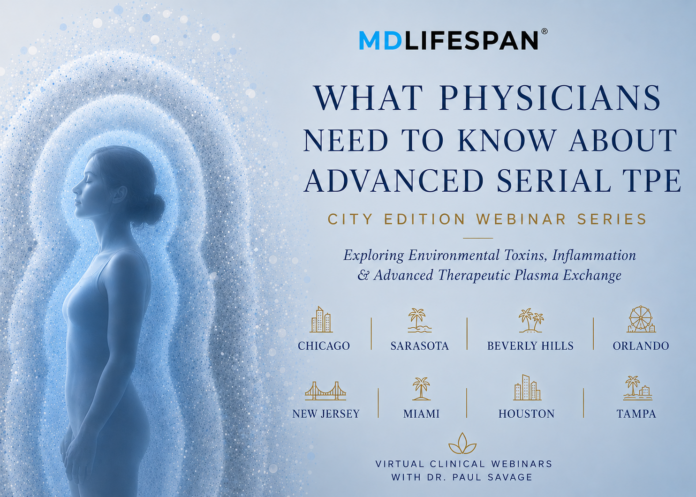

Healthcare continues to evolve at an extraordinary pace, with physicians increasingly looking beyond symptom management and toward deeper biological mechanisms that may contribute to chronic illness, inflammation, and complex disease processes. Across New Jersey and the broader Tri-State region, medical professionals are paying closer attention to emerging research examining environmental toxins, systemic inflammation, immune dysregulation, and advanced therapeutic interventions designed to address these underlying factors.
That growing interest is expected to take center stage during an upcoming virtual clinical discussion hosted by MDLifespan and Town & Country Compounding Pharmacy, bringing together physicians, healthcare providers, and medical professionals for an in-depth exploration of some of the most talked-about topics in modern integrative and regenerative medicine.
The live event arrives at a time when healthcare providers throughout New Jersey are facing increasingly complex patient cases involving chronic inflammatory conditions, autoimmune disorders, environmental exposures, metabolic dysfunction, and persistent health challenges that often require multidisciplinary approaches and innovative treatment strategies.
For many physicians, understanding the relationship between inflammation and long-term health outcomes has become one of the most important areas of clinical focus. Research over the past decade has continued to strengthen connections between chronic inflammation and a wide range of conditions affecting cardiovascular health, neurological function, metabolic wellness, immune response, and overall quality of life.
As a result, physicians are increasingly seeking opportunities to expand their knowledge beyond traditional treatment models and engage with emerging therapeutic concepts that may offer new possibilities for patient care.
The upcoming discussion aims to provide exactly that type of educational environment, creating a forum where healthcare professionals can evaluate evolving scientific perspectives while examining practical clinical applications.
One of the central themes expected to drive conversation is the growing understanding of how environmental toxins may influence human health. Modern patients encounter a wide range of chemical exposures throughout daily life, including industrial pollutants, airborne contaminants, agricultural chemicals, heavy metals, microplastics, and countless synthetic compounds present in modern environments.
While the human body possesses remarkable detoxification mechanisms, healthcare professionals continue to investigate how cumulative exposure over time may affect immune function, inflammatory pathways, hormonal balance, and cellular health.
For physicians treating patients with unexplained symptoms, chronic fatigue, autoimmune concerns, neurological issues, or persistent inflammatory conditions, these questions have become increasingly relevant.
The discussion is expected to explore how emerging research is helping clinicians better understand the potential role environmental exposures may play in complex health presentations.
Equally important is the topic of inflammation itself.
While acute inflammation serves as a critical protective response that helps the body heal from injury and fight infection, chronic inflammation presents a very different challenge. Persistent inflammatory activity has been associated with a broad spectrum of health concerns, many of which represent some of the leading causes of illness throughout the United States.
Healthcare providers across New Jersey continue to encounter patients seeking answers regarding chronic inflammatory symptoms that can affect multiple body systems simultaneously.
As medicine becomes more personalized and data-driven, physicians are increasingly focused on identifying the root causes that may contribute to these inflammatory processes rather than simply treating individual symptoms as they appear.
This shift toward precision medicine and systems-based healthcare has created growing interest in advanced therapies capable of addressing broader biological mechanisms.
Among the most intriguing subjects expected to be explored during the event is Advanced Therapeutic Plasma Exchange, often referred to as TPE.
Therapeutic Plasma Exchange is a medical procedure that involves removing a patient’s plasma and replacing it with alternative fluids in an effort to eliminate certain circulating substances from the bloodstream. Historically, the procedure has been utilized in specific clinical settings involving autoimmune diseases, neurological disorders, hematologic conditions, and other complex medical situations.
In recent years, however, expanding scientific inquiry has generated increased interest regarding broader applications and potential future roles within precision medicine and chronic disease management.
Healthcare professionals attending the discussion will have an opportunity to explore current perspectives surrounding the procedure, including ongoing conversations regarding inflammation, immune modulation, toxin removal, and emerging treatment models.
As physicians continue searching for evidence-based approaches that may improve patient outcomes, advanced therapies such as plasma exchange have become an area of significant professional interest.
The conversation also reflects a larger transformation occurring throughout healthcare.
Patients today are more informed, more engaged, and often more proactive regarding their health than ever before. They frequently arrive at medical appointments having researched conditions, treatment options, environmental influences, and lifestyle interventions. Physicians increasingly find themselves navigating conversations that extend beyond conventional treatment pathways and into broader discussions involving wellness optimization, preventive medicine, longevity, and personalized care.
Educational events such as this one provide healthcare professionals with an opportunity to critically evaluate emerging ideas while remaining grounded in scientific inquiry and clinical evidence.
For New Jersey’s medical community, that type of continuing education is becoming increasingly valuable.
The Garden State is home to one of the nation’s most sophisticated healthcare ecosystems, anchored by world-class hospitals, academic medical centers, pharmaceutical innovation, biotechnology leadership, and a diverse network of healthcare practitioners. From Newark and Jersey City to Princeton, Morristown, New Brunswick, and communities throughout South Jersey, physicians continue to play a critical role in advancing medical knowledge while delivering patient-centered care.
The upcoming virtual discussion reflects that spirit of innovation.
By bringing together physicians from New Jersey, New York, and surrounding regions, the event creates an opportunity for collaboration and professional dialogue across multiple disciplines. Participants will be able to engage with current thinking surrounding inflammation science, environmental medicine, therapeutic innovation, and evolving clinical practices that may shape future healthcare delivery.
The virtual format also ensures accessibility for busy healthcare professionals who may not otherwise have the opportunity to attend in-person conferences or educational programs.
As medicine continues to move toward more integrated approaches that connect environmental factors, immune health, inflammation, metabolism, and personalized treatment strategies, conversations like these are becoming increasingly important.
The future of healthcare will likely depend not only on breakthrough technologies and pharmaceutical advancements but also on a deeper understanding of how interconnected biological systems influence overall health and disease.
For physicians throughout New Jersey, staying informed about these developments is essential.
The discussion hosted by MDLifespan and Town & Country Compounding Pharmacy represents more than a continuing education opportunity. It reflects a growing movement within healthcare toward exploring new scientific frontiers, challenging conventional assumptions, and seeking innovative ways to improve patient outcomes.
Whether participants approach the conversation from the perspective of primary care, functional medicine, internal medicine, cardiology, neurology, immunology, or preventive health, the event promises to provide valuable insight into some of the most important and rapidly evolving topics in modern medicine.
As the healthcare landscape continues to evolve, New Jersey physicians remain at the forefront of those conversations, helping shape the future of patient care while exploring the science that may define the next generation of medical innovation.
















