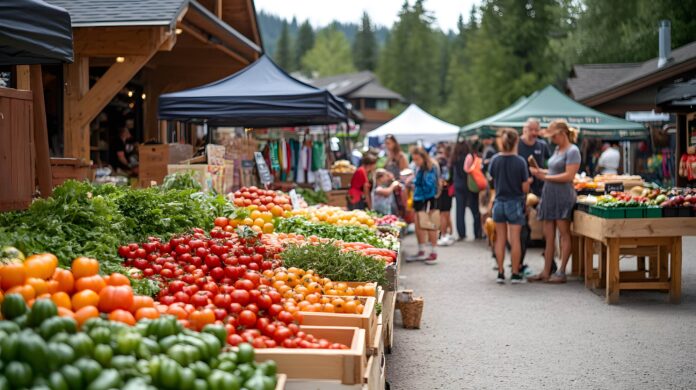

As April unfolds across New Jersey, a familiar and highly anticipated transition is underway—one that signals not just a change in weather, but a shift in lifestyle, community engagement, and local commerce. Farmers’ market season has officially arrived, marking the beginning of a statewide movement that will carry through late fall and redefine weekends, weekdays, and neighborhood gathering spaces from April through November.
April Openings / Early Season
- Summit Farmers Market – Sundays (launches mid-April)
- Historic Downtown Jersey City Farmers Market – Mondays & Thursdays at Grove St PATH Plaza
- Burlington County Agricultural Center Farmers Market – Pre-season April; full launch in May
- Bell Works FRESH Market – Wednesdays + select spring Saturdays
- Haddon Heights Farmers Market – Late April start
May Kickoff Markets (Peak Season Launch)
- Collingswood Farmers Market – Saturdays (one of NJ’s largest)
- Ramsey Farmers Market – Sundays (year-round, expands in May)
- Asbury Fresh Market – Sundays (downtown + boardwalk events)
- Marlboro Farmers Market – Late May regular season
- Westfield Farmers Market – Tuesdays (downtown)
- Morristown Farmers Market – Sundays (Morristown Green)
- Red Bank Farmers Market – Sundays (spring–fall)
- Metuchen Farmers Market – Saturdays (downtown)
- Highland Park Farmers Market – Fridays
Year-Round / Indoor Markets (Always Active)
- Trenton Farmers Market – Thurs–Sun indoor staple
- Columbus Farmers Market – Large indoor/outdoor complex
- Greater Bridgeton Amish Market – Thurs–Sat
- Cowtown Farmers Market – Tues & Sat flea/farm market
- Montclair Farmers Market – Saturdays year-round (Walnut St Station)
- Stangl Factory Farmers Market – Saturdays indoor
Additional Notable Markets Across NJ
(Added for broader coverage and depth)
- Princeton Farmers Market – Hinds Plaza (seasonal + winter sessions)
- Englewood Farmers Market – Fridays
- Maplewood Farmers Market – Mondays (very popular North Jersey stop)
- South Orange Farmers Market – Wednesdays
- Ridgewood Farmers Market – Sundays
- Paramus Farmers Market – Seasonal (often Bergen Community College area)
- Hoboken Farmers Market (Greenmarket) – Multiple days/locations (seasonal rotations)
- Jersey City Riverview Farmers Market – Sundays (Riverview Park)
- Ocean City Farmers Market – Wednesdays (summer staple)
- Stone Harbor Farmers Market – Tuesdays (shore season)
- Cape May Farmers Market – Seasonal (summer/fall)
- Atlantic City Farmers Market – Historic indoor market
- Vineland Farmers Market – Year-round (South Jersey staple)
- Denville Farmers Market – Sundays
- Sparta Farmers Market – Seasonal Sundays
- Chatham Farmers Market – Saturdays
- Livingston Farmers Market – Seasonal (Sundays)
Key Takeaways
- Peak density: May–October (full statewide activation)
- Shoulder season: mid-April + November
- Year-round coverage: Anchored by indoor + hybrid markets
- Total ecosystem: ~130+ markets statewide when fully active
Across the Garden State, more than 100 outdoor markets are preparing to reopen, expand, or transition from pre-season operations into full weekly schedules. While a network of indoor and year-round markets continues to serve communities throughout the winter and early spring, the arrival of outdoor market season represents something distinct—an alignment with the rhythms of local agriculture, a return to open-air commerce, and a renewed focus on regional food systems that have become central to New Jersey’s identity.
What makes this moment particularly significant is the scale and structure of the transition. Unlike other seasonal industries, New Jersey’s farmers’ markets operate on a staggered rollout, beginning with early openings and preview events in mid-to-late April before expanding into a full statewide schedule by early May. This phased approach allows vendors, farmers, and organizers to build momentum while responding directly to the availability of early-season crops and products.
Several of the state’s most prominent markets are already stepping into their 2026 schedules, offering a preview of what will soon become a weekly routine for thousands of residents. In Jersey City, the Historic Downtown Farmers’ Market is returning to the Grove Street PATH Plaza, reestablishing itself as one of the region’s most accessible urban markets. Operating on Mondays and Thursdays, it serves as a vital connection point between local producers and a densely populated community that increasingly prioritizes fresh, locally sourced food.
In Summit, one of the state’s largest and most established markets is preparing to launch its full season, drawing visitors to Park & Shop Lot #1 with a wide selection of produce, baked goods, and specialty items. Its Sunday morning schedule reflects the broader trend of markets becoming anchor events within their communities, shaping how residents structure their weekends and engage with local commerce.
Further south, markets in Haddon Heights and Moorestown are building toward their own seasonal openings, with the Burlington County Agricultural Center playing a particularly important role in bridging the gap between pre-season and full operation. Its early spring events serve as both a preview and a testing ground, allowing vendors to reestablish their presence while introducing new products ahead of the official May launch.
The transition into May represents the true inflection point for New Jersey’s farmers’ market ecosystem. This is when the majority of outdoor markets move into full operation, creating a statewide network of weekly events that span urban centers, suburban communities, and rural areas. In Collingswood, the return of its highly regarded market along Atlantic Avenue signals the beginning of a sustained run that attracts both local residents and visitors from across the region. Similarly, markets in Asbury Park, Ramsey, and Marlboro expand the geographic reach of the season, ensuring that nearly every part of the state has access to fresh, locally produced goods.
At the same time, year-round indoor markets continue to provide continuity and stability within the system. Locations such as the Trenton Farmers Market, Columbus Farmers Market, and Cowtown Farmers Market remain active regardless of season, offering a consistent supply of produce, prepared foods, and specialty items. These markets serve as foundational elements within New Jersey’s agricultural economy, supporting vendors and consumers even as the outdoor season fluctuates.
What distinguishes New Jersey’s farmers’ market landscape is not simply its size, but its integration into the broader agricultural framework of the state. The Garden State’s long-standing commitment to farming, supported by a diverse range of crops and producers, creates a supply chain that is both resilient and adaptable. Markets function as the public-facing component of this system, translating agricultural output into direct consumer engagement while reinforcing the value of local production.
This connection is increasingly important as consumer preferences continue to shift toward transparency, sustainability, and quality. Farmers’ markets offer a level of access and accountability that is difficult to replicate in traditional retail environments. Shoppers are able to interact directly with growers, understand the origins of their food, and make informed decisions based on freshness and seasonality. This dynamic not only supports local farmers but also fosters a deeper understanding of the agricultural process.
The cultural impact of these markets extends beyond food. They have become gathering spaces that reflect the character and diversity of their communities, incorporating elements such as live music, artisan vendors, and educational programming. In many cases, they serve as informal town centers, where social interaction and economic activity intersect in a way that strengthens community identity.
For those looking to explore the full scope of New Jersey’s agricultural offerings, the evolving landscape of farms, markets, and seasonal events can be accessed through the Explore New Jersey agriculture hub, where ongoing coverage highlights the developments shaping the state’s farming and food sectors. From large-scale agricultural centers to small, community-driven markets, the range of options reflects a system that is both expansive and deeply interconnected.
As the 2026 season gains momentum, New Jersey’s farmers’ markets stand as more than a seasonal attraction—they represent a critical link between land, community, and economy. They are spaces where local agriculture is not only supported but celebrated, where the act of shopping becomes an experience, and where the rhythms of the growing season are translated into daily life.
With markets opening across the state and schedules expanding week by week, the return of farmers’ market season signals a renewed opportunity to engage with New Jersey at its most authentic level. It is a season defined by freshness, accessibility, and connection—one that continues to grow in both scale and significance with each passing year.