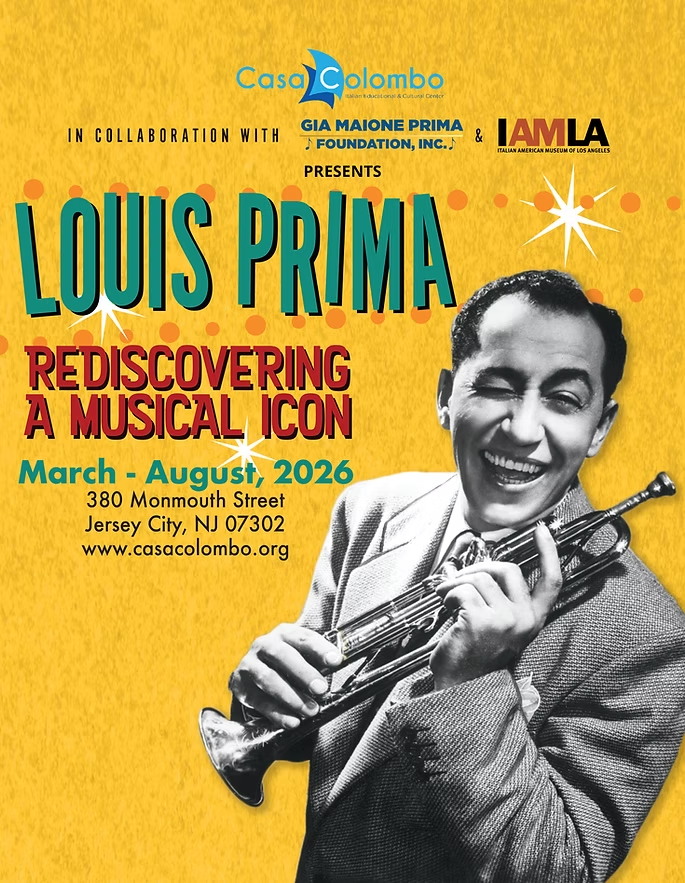

Jersey City is once again asserting itself as a cultural destination with the arrival of a major exhibition that bridges music history, identity, and entertainment legacy in a way that resonates far beyond its walls. “Louis Prima: Rediscovering a Musical Icon,” now on view at the Italian Educational & Cultural Center at Casa Colombo, offers a rare and immersive look at one of the most influential and charismatic figures in American music. Running through August 15, 2026, the exhibition represents both a celebration and a reassessment of Prima’s enduring impact, positioning New Jersey at the center of a broader cultural conversation.
For audiences across the state and region, the exhibition is more than a retrospective. It is an opportunity to reconnect with an artist whose contributions shaped jazz, popular music, and live entertainment in ways that continue to influence performers today. As part of the evolving landscape highlighted through Explore New Jersey’s ongoing coverage of arts and culture, this exhibition reinforces the state’s role as a host for nationally significant cultural programming.
Originally debuted at the Italian American Museum of Los Angeles in 2022, the exhibition’s journey to the East Coast brings with it a renewed sense of relevance. Jersey City, with its rich immigrant history and dynamic arts scene, provides an ideal setting for a deeper exploration of Prima’s life and legacy. Located at Casa Colombo on Monmouth Street, the Italian Educational & Cultural Center serves as both a historical anchor and a contemporary cultural hub, making it a fitting home for an exhibition that blends heritage with modern appreciation.
Louis Prima’s career defies simple categorization. A Grammy-winning musician, bandleader, and entertainer, he is best known for iconic recordings such as “Sing, Sing, Sing” and “Jump, Jive an’ Wail,” songs that continue to define eras of American music. Yet his influence extends well beyond these hits. Prima was a performer who understood the power of stage presence, humor, and personality, helping to shape the blueprint for modern live entertainment. His work in Las Vegas, in particular, helped redefine what audiences expected from a headliner, blending music with theatrical energy in a way that remains standard practice today.
The exhibition itself is carefully curated to reflect this multifaceted legacy. Produced in collaboration with the Gia Maione Prima Foundation, it brings together an extraordinary collection of artifacts that provide both historical context and personal insight. Visitors are greeted with items that feel immediate and tangible, including Prima’s personal trumpet, hand-written sheet music, and custom stage attire that capture the essence of his performance style. These objects do more than document a career; they convey the energy and individuality that defined his presence.
Among the most significant pieces on display is Prima’s 1959 Grammy Award for “That Old Black Magic,” one of the earliest Grammy Awards ever presented. Its inclusion underscores not only his commercial success but also his recognition at a time when the recording industry itself was formalizing how it honored artistic achievement. This moment in music history becomes more vivid when seen through the lens of Prima’s career, which consistently pushed boundaries while remaining accessible to a broad audience.
The exhibition also highlights Prima’s unexpected yet lasting impact on popular culture through his role as the voice of King Louie in Disney’s “The Jungle Book.” Rare animation cels featured in the display connect his musical identity to a global audience that may first have encountered his voice through film rather than radio or stage. This crossover into animation illustrates the breadth of his appeal and the adaptability that kept his work relevant across generations.
Equally compelling are the personal elements woven throughout the exhibition. Correspondence, including a humorous letter from Frank Sinatra, provides a glimpse into the relationships and personality that shaped Prima’s world. These details humanize an artist often remembered for his larger-than-life performances, offering a more nuanced understanding of the man behind the music.
Beyond individual artifacts, the exhibition places a strong emphasis on Prima’s cultural significance, particularly his role in bringing Italian-American identity into the mainstream of American entertainment. At a time when cultural representation was often limited or stereotyped, Prima’s success helped redefine how Italian-American artists were perceived, blending heritage with universal appeal. His ability to embrace his roots while connecting with diverse audiences contributed to a broader shift in how cultural identity could be expressed within popular media.
The setting at Casa Colombo enhances this narrative. As an institution dedicated to preserving and promoting Italian-American heritage, it provides context that deepens the exhibition’s impact. Visitors are not simply observing history; they are engaging with it in a space that reflects the community and traditions that shaped Prima’s journey.
Accessibility is another defining feature of the exhibition. With generally free admission and a schedule that includes weekday and Saturday hours, along with additional availability by appointment, the exhibition is designed to reach a wide audience. This approach aligns with a broader trend within New Jersey’s cultural institutions, where accessibility and community engagement are prioritized alongside curatorial excellence.
For Jersey City, the exhibition adds to a growing reputation as a destination for meaningful cultural experiences. The city’s proximity to New York, combined with its own distinct identity, creates an environment where exhibitions of this caliber can attract both local residents and regional visitors. Events like this not only enrich the cultural landscape but also contribute to the economic and social vitality of the area.
As “Louis Prima: Rediscovering a Musical Icon” continues its run through the summer, it stands as a testament to the enduring power of music and the importance of revisiting the figures who helped shape it. In bringing this exhibition to New Jersey, Casa Colombo has created a space where history, culture, and performance intersect in a way that feels both timeless and immediate.
For those exploring the state’s arts and culture offerings, this exhibition represents a rare opportunity to engage with a legacy that continues to resonate across generations. It is not simply about remembering Louis Prima. It is about understanding why his voice, his style, and his influence still matter today.