

As New Jersey’s political landscape begins shifting toward another critical election cycle, party organizations across the state are quietly making decisions that could shape local campaigns, candidate recruitment efforts, voter engagement strategies, and policy priorities for years to come. While statewide races often dominate headlines, much of the actual work that determines the strength of a political party happens far from television cameras, inside county conventions, committee meetings, and local organizing efforts where grassroots volunteers and elected committee members establish the leadership teams responsible for guiding their organizations forward.
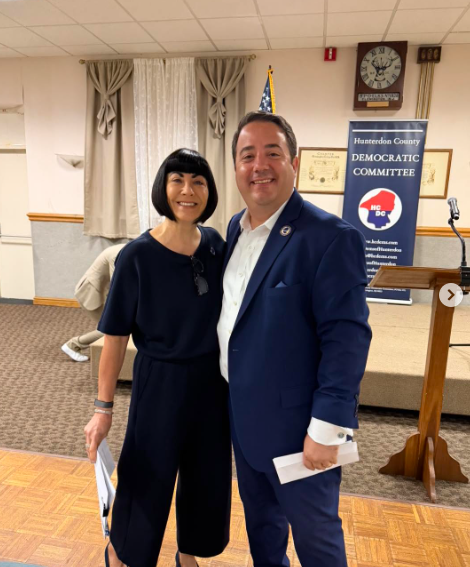
That reality was on display in Hunterdon County this weekend as members of the Hunterdon County Democratic Committee gathered for their annual organization meeting and overwhelmingly reaffirmed their confidence in existing leadership by reelecting Michael K. Drulis as chairman of the county party organization.
Running unopposed, Drulis secured another term leading the organization at a time when Hunterdon County continues to represent one of the more closely watched political regions in New Jersey. Once considered reliably Republican territory, Hunterdon has undergone significant political evolution during the past decade, reflecting demographic changes, shifting voter priorities, and broader political realignments occurring throughout suburban communities across the state.
The reelection of Drulis signals continuity rather than upheaval. It also reflects the committee’s apparent belief that stability, organization, and long-term planning remain essential as local Democrats seek to build upon recent gains while preparing for future electoral contests.
The June 20 convention produced a complete slate of officers and executive committee members who will now oversee party operations throughout the coming term. Alongside Drulis, committee members elected Michele Liebtag of Frenchtown Borough to continue serving as vice chairwoman. Hope Kaufman of Tewksbury Township was elected secretary, while John Kashwick of the Town of Clinton was selected to serve as treasurer.
Together, the leadership team represents a geographic cross-section of Hunterdon County communities and legislative districts, reflecting the increasingly diverse coalition that has emerged within the county’s Democratic organization.
The newly elected executive committee likewise demonstrates a broad representation of municipalities throughout the county. Kent Davis of Raritan Township, Dante DiPirro of East Amwell Township, Stephen Leftly of Lebanon Township, Dominick Puzio of Raritan Township, Rene Rao of Readington Township, John Weber of Lambertville, and Kiely Williams-Cox of Clinton Township will help guide strategic planning, organizational development, community outreach, and election preparations moving forward.
While leadership elections often receive limited public attention, their significance should not be underestimated. County committees serve as the operational backbone of political parties throughout New Jersey. They recruit candidates for local office, organize voter registration drives, coordinate campaign volunteers, support municipal committees, raise funds, communicate with voters, and build the infrastructure necessary to compete effectively in elections ranging from school boards and borough councils to legislative and congressional contests.
In counties like Hunterdon, where political competition has intensified in recent years, organizational effectiveness can often make the difference between electoral success and failure.
Hunterdon County occupies a unique position within New Jersey politics. Long associated with the state’s agricultural heritage, rolling farmland, historic villages, and rural character, the county has increasingly become a political battleground where traditional voting patterns are no longer guaranteed. Communities throughout the region have experienced population growth, changing demographics, and evolving economic priorities that have altered the political conversation.
Issues surrounding property taxes, farmland preservation, infrastructure investment, economic development, environmental protection, education funding, housing affordability, and quality-of-life concerns continue to shape voter priorities throughout the county.
At the same time, Hunterdon’s proximity to major employment centers in Central Jersey, the Lehigh Valley, and portions of the New York metropolitan region has contributed to changing residential patterns and new political dynamics. Communities that once voted consistently one way are becoming more competitive, while party organizations on both sides continue investing heavily in voter outreach and grassroots engagement.
For county political leaders, that changing landscape creates both opportunities and challenges.
The task facing the Hunterdon County Democratic Committee extends beyond simply preparing for election day. Modern political organizations are increasingly expected to function as year-round institutions that remain visible and engaged within their communities. Successful organizations must build relationships with residents, support local causes, identify emerging community concerns, recruit future leaders, and maintain a consistent presence between election cycles.
That work often occurs quietly, away from campaign rallies and political advertising. It involves hundreds of volunteers attending local meetings, organizing community events, supporting municipal committees, and maintaining connections with residents throughout the county’s diverse municipalities.
The reelection of Drulis and the broader leadership team suggests committee members believe the organization is positioned to continue that work under familiar leadership.
It also comes during a period when New Jersey politics remains unusually active. State budget negotiations continue dominating discussions in Trenton. Legislative priorities remain under debate. Municipal governments throughout the state are navigating questions surrounding development, infrastructure, transportation, public safety, and economic growth. National political issues continue influencing local conversations in communities large and small.
Against that backdrop, county party organizations remain one of the most important links between voters and the broader political system.
For Hunterdon Democrats, the message emerging from this year’s organization meeting appears straightforward: maintain continuity, strengthen local engagement, expand organizational capacity, and prepare for the political opportunities and challenges that lie ahead.
Whether discussing local government races, legislative contests, county initiatives, or broader statewide campaigns, the decisions made at county conventions often establish the foundation upon which future political efforts are built.
As the newly elected officers and executive committee members begin their work, they inherit an organization operating within one of New Jersey’s most dynamic political environments. The coming years will undoubtedly bring new debates, new campaigns, and new challenges. For now, however, Hunterdon County Democrats have chosen stability, experience, and continuity as they look toward the future.
The June 20 convention may not have featured dramatic contested races or organizational upheaval, but it nevertheless marked an important moment in the continuing evolution of one of New Jersey’s most closely watched county political organizations. With leadership now firmly in place, attention shifts from internal elections to the broader mission ahead: building voter engagement, strengthening local communities, and preparing for the next chapter in Hunterdon County’s political story.
















