New Jersey Symphony Presents Opening Weekend: Beethoven’s “Emperor” & Schubert’s “Great”
New Jersey Symphony Launches a Monumental New Season with Beethoven’s “Emperor” and Schubert’s “Great” at State Theatre New Jersey
October 25 @ 20:00 – 23:30
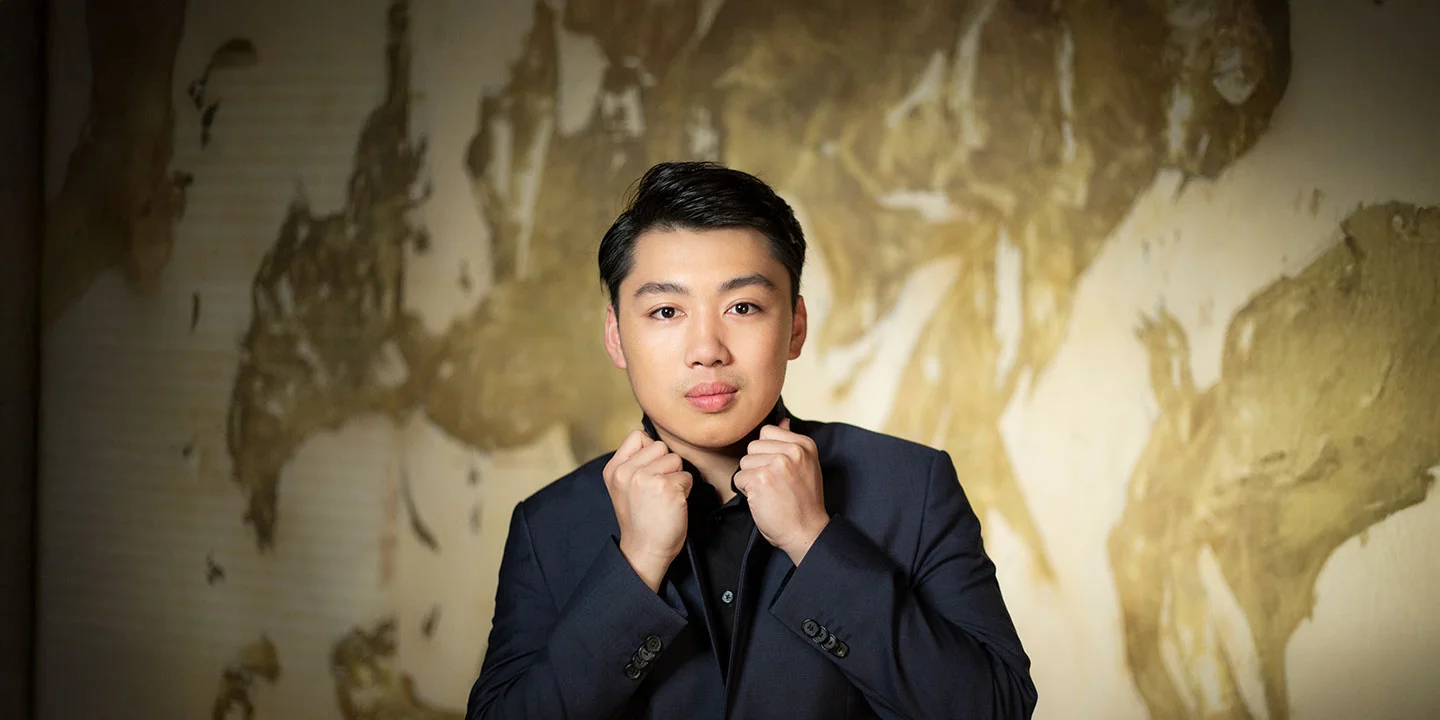
On Sunday, October 25, 2026, at 2:00 p.m., the New Jersey Symphony opens its new season with a program that immediately signals both artistic ambition and cultural significance. Taking place at the historic State Theatre New Jersey, this opening weekend performance brings together two of the most expansive and emotionally resonant works in the orchestral repertoire—Beethoven’s Piano Concerto No. 5, widely known as the “Emperor,” and Schubert’s Symphony No. 9 in C Major, often referred to as “The Great.” Together, these works form a program that is not only musically commanding but deeply symbolic of the orchestra’s continued evolution and commitment to excellence.
Under the direction of Music Director Xian Zhang, the New Jersey Symphony continues to refine its identity as one of the most dynamic orchestras in the region. Zhang’s leadership has consistently emphasized both precision and expressive depth, qualities that are essential for a program of this magnitude. Her longstanding relationship with pianist George Li adds an additional layer of continuity and anticipation to the performance. Introduced to New Jersey audiences a decade ago, Li has since developed into a globally recognized artist whose technical mastery and interpretive insight have earned him a devoted following. His return for this opening program represents not only a reunion but a reaffirmation of the orchestra’s commitment to presenting artists who evolve alongside its audience.
Beethoven’s “Emperor” Concerto stands as one of the most celebrated works in the piano repertoire, a composition that redefined the relationship between soloist and orchestra. From its commanding opening gestures to its lyrical central movement and triumphant finale, the concerto embodies a sense of scale and confidence that continues to resonate across centuries. In performance, it demands both virtuosity and restraint, requiring the soloist to navigate intricate passages while maintaining a cohesive dialogue with the orchestra. Li’s approach to this work is expected to highlight both its technical brilliance and its emotional architecture, bringing clarity and nuance to a piece that has become synonymous with grandeur.
The second half of the program shifts into the expansive world of Franz Schubert’s Symphony No. 9, a work whose history is as compelling as its sound. Known as “The Great,” the symphony was never performed during Schubert’s lifetime, remaining hidden until its rediscovery years later. Today, it is recognized as one of the defining achievements of the Romantic era, a composition that bridges classical form with an emerging sense of emotional and structural freedom. Its sweeping melodies, extended development, and cumulative intensity create an experience that is both immersive and transformative.
In presenting these two works together, the New Jersey Symphony constructs a program that explores not only the evolution of orchestral music but the broader narrative of artistic ambition. Beethoven’s concerto represents a moment of innovation and assertion within the Classical period, while Schubert’s symphony points toward the expansive possibilities of Romantic expression. The pairing creates a dialogue between composers who, though separated by style and circumstance, share a commitment to pushing the boundaries of their art.
The State Theatre New Jersey provides an ideal setting for this opening performance. As one of the state’s most prominent cultural venues, it offers both the scale and the acoustical refinement necessary to support works of this magnitude. The hall’s design allows for a full orchestral sound that retains clarity and balance, ensuring that every section contributes distinctly to the overall texture. For audiences, this translates into a listening experience that is both powerful and detailed, where the interplay between soloist and ensemble can be fully appreciated.
This opening weekend concert also reflects the broader trajectory of New Jersey’s live music ecosystem, where classical programming continues to play a central role in shaping the state’s cultural identity. The New Jersey Symphony’s commitment to presenting major works within accessible and thoughtfully curated programs reinforces its position as a cornerstone institution within the region. At the same time, the availability of subscriptions for the new season signals an ongoing investment in audience engagement, inviting both longtime supporters and new listeners to participate in a full season of performances that build upon this opening statement.
For those seeking to explore the wider landscape of live music across the state, the range of performances and venues can be further discovered through the Explore New Jersey music hub, where ongoing coverage highlights the depth and diversity of New Jersey’s musical offerings. From orchestral performances and chamber concerts to contemporary and genre-spanning events, the state continues to expand its reach as a destination for high-caliber live music.
As October 25 approaches, this opening weekend program stands as a defining moment for the New Jersey Symphony’s new season. It is a performance that brings together history, artistry, and community in a way that underscores the enduring relevance of classical music. Through the combined forces of Xian Zhang, George Li, and the orchestra, audiences will experience works that have shaped the course of musical history, presented with a level of insight and intensity that reflects the very best of live performance in New Jersey today.