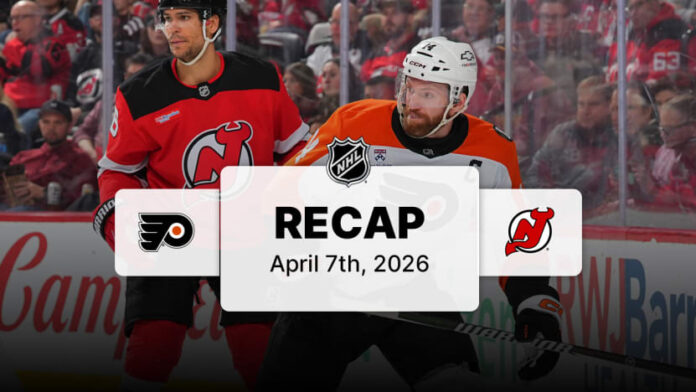

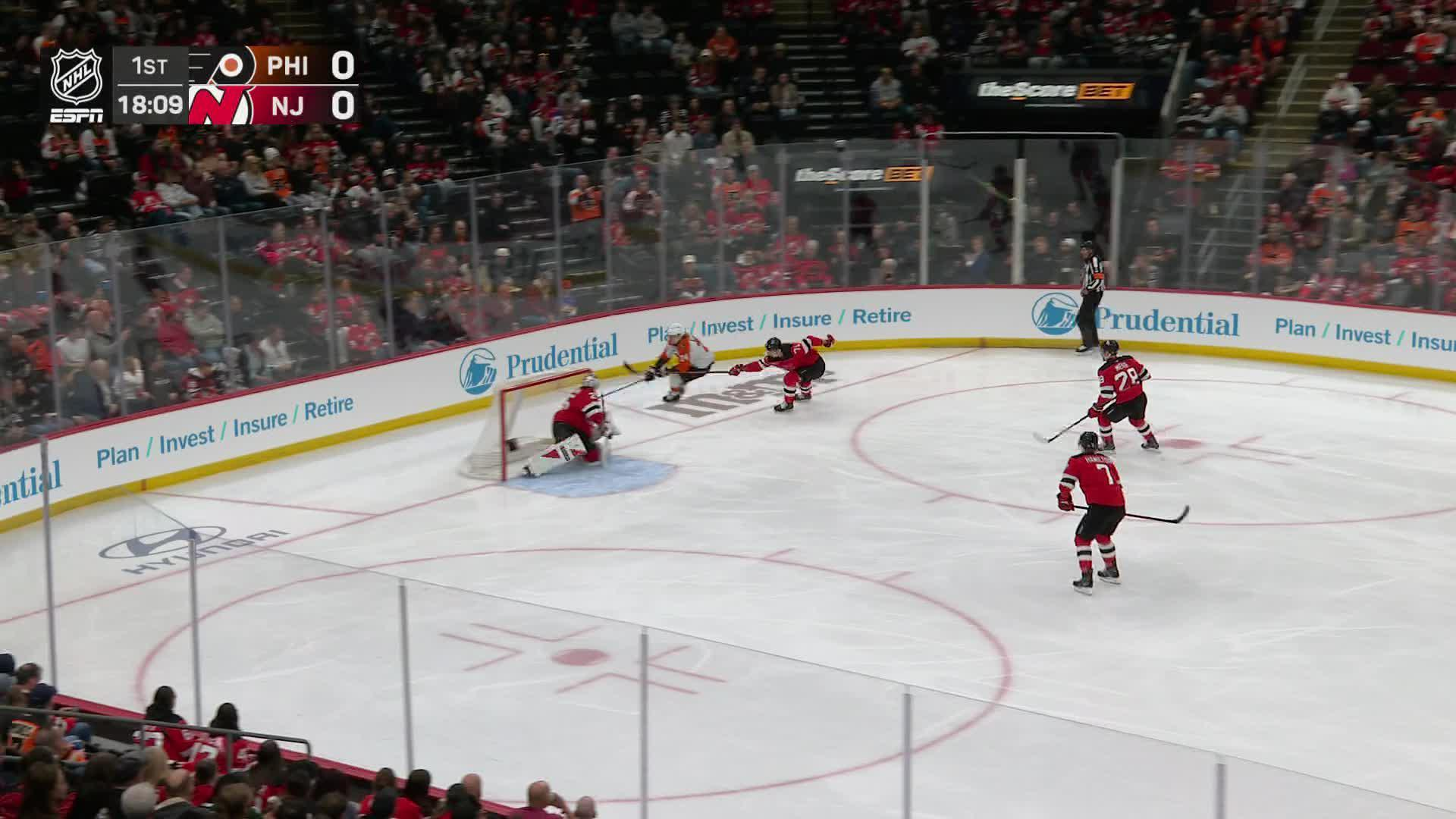
What unfolded Tuesday night at Prudential Center was more than just a loss—it was a defining moment that crystallized the trajectory of two Metropolitan Division franchises heading in sharply different directions. In a game that carried lingering postseason implications and emotional weight for a fanbase desperate for answers, the New Jersey Devils were overpowered, outpaced, and ultimately overwhelmed in a 5–1 defeat to the Philadelphia Flyers, a result that officially closed the door on their 2025–26 playoff hopes and ushered in a new phase of uncertainty for the organization.
For those tracking the pulse of the state’s hockey landscape through the New Jersey Devils and NHL coverage, this was not simply another late-season setback. It was a culmination of trends that had been building throughout the year—defensive inconsistency, injury disruptions, and an inability to establish dominance on home ice—all converging in one decisive outcome that now forces a full organizational reset.
From the opening shift, the Flyers dictated tempo and tone with authority. The game’s defining sequence came almost immediately, as Trevor Zegras delivered a stunning early blitz, scoring twice within the first 3:38 of play, including a power-play finish that exposed New Jersey’s early defensive disorganization. The rapid-fire goals not only stunned the building but effectively set the framework for the entire contest. Philadelphia never relinquished control, playing with a level of structure and confidence that reflected a team fully engaged in a playoff push.
Zegras’ performance was emblematic of a Flyers roster finding its rhythm at the most critical point of the season. His two-goal effort, which pushed him to a career-high 25 on the year, was complemented by Tyson Foerster’s equally impactful night, as he also found the net twice. Rookie standout Matvei Michkov added further dimension with a pair of assists, showcasing the kind of high-end playmaking that has become increasingly central to Philadelphia’s identity. Behind them, goaltender Dan Vladar delivered a composed and efficient performance, turning aside 23 shots to secure his 27th win and reinforce the Flyers’ defensive stability.
For New Jersey, the lone offensive response came from Cody Glass, whose first-period goal briefly suggested the possibility of a counterpunch. However, that moment proved fleeting. The Devils struggled to generate sustained pressure, and as the game progressed, the gap in execution and confidence between the two teams became increasingly evident. By the third period, the outcome felt inevitable, with Philadelphia closing out a comprehensive victory that completed a season-series sweep over their longtime rivals.
The implications of the result extended well beyond the final scoreline. With the loss, the Devils were officially eliminated from Stanley Cup Playoff contention, marking yet another missed opportunity in what has become a troubling pattern for the franchise. Despite entering the season with legitimate expectations and a roster capable of competing at a high level, New Jersey now finds itself outside the postseason for the 11th time in the last 14 years—a statistic that underscores the urgency of the moment.
For the Flyers, the victory further solidified their position in the playoff race. Now sitting with 92 points and riding a surge that includes three consecutive wins and six victories in their last eight games, Philadelphia has established itself as a legitimate contender within the division. The contrast between the two organizations could not be more pronounced: one accelerating toward the postseason with clarity and momentum, the other confronting fundamental questions about leadership, roster construction, and long-term direction.
Those questions intensified dramatically just 24 hours before puck drop, when the Devils made the significant decision to part ways with General Manager Tom Fitzgerald after seven seasons at the helm. The timing of the move—coming on the eve of a critical late-season matchup—added another layer of complexity to an already turbulent situation. While the decision reflects a clear acknowledgment that the current trajectory is unacceptable, it also introduces a period of transition that will shape every major decision moving forward.
As the Devils pivot toward the offseason, attention is already shifting to key roster storylines that will define the next phase of the franchise. Among the most pressing is the future of Arseny Gritsyuk, whose promising rookie campaign was abruptly halted by a season-ending injury requiring surgery. Prior to that setback, Gritsyuk had established himself as a dynamic contributor, demonstrating both scoring ability and play-driving impact that suggested long-term potential at the NHL level.
However, his situation now presents a complex evaluation for the organization. With his entry-level contract concluded and restricted free agency looming, the Devils must determine how to balance his evident upside with emerging durability concerns. Gritsyuk’s season included multiple injury-related absences, and while none individually define him as injury-prone, the cumulative pattern introduces an element of risk that cannot be ignored in contract negotiations.
Performance trends further complicate the picture. Gritsyuk began his rookie season with strong production, registering seven goals and 16 points in his first 31 games. Following a brief absence in December, his output declined noticeably before rebounding later in the season, particularly during a productive stretch alongside Lenni Hameenaho and Cody Glass. That line’s effectiveness—and its subsequent regression following Gritsyuk’s injury—suggests that he may have been a driving force behind its success, reinforcing the argument that his ceiling remains high.
At the same time, the Devils must consider the broader context of their roster, which already includes several key players with notable injury histories. From Jack Hughes to Dougie Hamilton and beyond, the organization has repeatedly navigated availability challenges that have impacted continuity and performance. Adding another long-term commitment with potential durability concerns is a decision that requires careful calibration.
This is where strategic contract structuring becomes central. A short-term bridge deal, spanning two to three years, presents a balanced approach—allowing the Devils to retain Gritsyuk while providing additional time to evaluate his consistency and health. Such a structure would also align with the team’s evolving salary cap outlook, preserving flexibility as the organization works to reshape its competitive window.
Beyond individual decisions, the broader mandate for New Jersey is clear: establish stability, define identity, and restore competitive credibility. The combination of on-ice struggles, front office turnover, and missed postseason opportunities has created a moment that demands decisive, forward-looking leadership. The next general manager will inherit both challenges and opportunities, with a core group of talented players still capable of forming the foundation of a contender—provided the right structure and support are put in place.
For fans at Prudential Center and across the state, Tuesday night was not just a disappointing result—it was a turning point. It marked the end of a season that began with promise and concluded with hard truths, and it signaled the beginning of a critical offseason that will shape the future of hockey in New Jersey.