
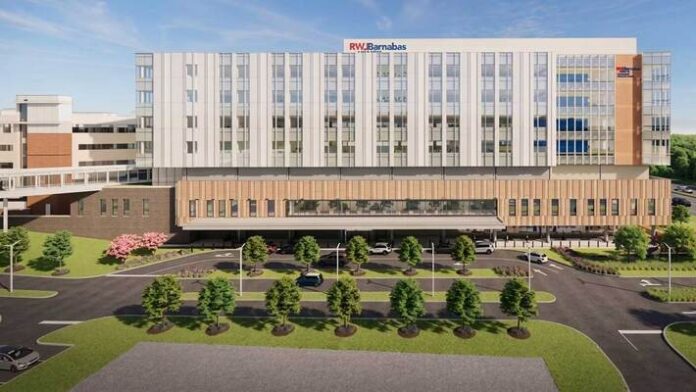

New Jersey’s health care landscape is undergoing a meaningful transformation—one that reflects both the evolving economics of prescription access and a renewed commitment to expanding physical care capacity across the state. Two developments, each significant on its own, together signal a broader shift in how patients engage with the system: the decision by the Bristol Myers Squibb–Pfizer Alliance to bring Eliquis directly to consumers through Mark Cuban Cost Plus Drug Company, and the approval of a major expansion at RWJBarnabas Health’s Community Medical Center in Toms River.
Together, these moves reflect a dual-track evolution: one focused on affordability and transparency in medication access, the other on strengthening the infrastructure required to deliver care at scale in one of the nation’s most densely populated states.
The introduction of Eliquis—known generically as apixaban—onto the Cost Plus Drugs platform represents a notable moment in the ongoing reconfiguration of pharmaceutical distribution. As one of the most widely prescribed oral anticoagulants in the United States, Eliquis plays a central role in the treatment and prevention of serious cardiovascular conditions, particularly in patients diagnosed with atrial fibrillation not caused by a heart valve disorder. It is also widely used in the treatment of deep vein thrombosis and pulmonary embolism, and in reducing the risk of recurrence for both conditions.
By making this medication available directly to patients through a transparent pricing model, the Alliance is effectively removing layers of traditional pharmaceutical pricing complexity. Beginning April 27, eligible patients with a prescription will be able to obtain a 30-day supply for $345, a price point that reflects a more streamlined cost structure compared to many traditional distribution channels. This move is not simply about price—it is about predictability, access, and control in a system where those elements have often been fragmented.
The broader implications are substantial. For a medication that has demonstrated the ability to generate an estimated $3 billion in health care cost savings per 100,000 patients treated—largely through the prevention of hospitalizations and extended rehabilitation—expanded access can translate directly into improved patient outcomes and reduced systemic strain. When patients are able to maintain consistent access to essential therapies, the downstream impact is measurable not only in individual health metrics but across the broader health care economy.
This collaboration also builds on earlier efforts by the Alliance to create direct-to-patient pathways, including the Eliquis 360 Support program accessible through BMS Patient Connect. The addition of Cost Plus Drugs introduces a new layer of accessibility, particularly for cash-paying patients who may not benefit from traditional insurance structures. It represents a pragmatic response to a persistent challenge: how to ensure that widely prescribed, clinically essential medications remain within reach for the populations that depend on them.
At the same time, New Jersey is investing heavily in the physical expansion of its health care infrastructure, underscoring a parallel priority—capacity. The approval of a 444,000-square-foot, six-story addition at Community Medical Center in Toms River marks a significant milestone in a long-term, four-phase development plan designed to modernize and expand the facility’s capabilities.
Operating on its current 41.5-acre campus along Route 37 since the early 1960s, the hospital has long served as a critical anchor for health care delivery in Ocean County and beyond. The newly approved addition, which will be constructed on a three-acre parcel adjacent to the existing facility, represents the second phase of a comprehensive expansion strategy first outlined and approved in 2022.
The scale of the project reflects both current demand and future projections. Plans for the expansion include the addition of outpatient clinics, enhanced surgical services, new patient rooms, and updated communal spaces such as a cafeteria. These components are not incidental—they are essential to accommodating a growing patient population while simultaneously advancing the standard of care.
From an operational standpoint, the integration of expanded outpatient services is particularly significant. As health care delivery continues to shift toward outpatient and ambulatory care models, facilities that can effectively balance inpatient and outpatient capacity are better positioned to meet both clinical and economic demands. The addition will allow Community Medical Center to do precisely that, creating a more flexible and responsive care environment.
The project is being designed by HDR Inc., with engineering services provided by Langan Engineering and Environmental Services, both firms bringing specialized expertise to a development of this magnitude. The inclusion of these partners underscores the complexity of modern hospital construction, where architectural design, engineering precision, and regulatory compliance must align seamlessly.
This expansion also follows the completion of the first phase of the master facility plan, which included the development of a new parking garage—an often-overlooked but critical component of patient access and operational efficiency. Each phase builds upon the last, creating a cohesive vision for a campus that is both modernized and scalable.
Taken together, these two developments—one in pharmaceutical access, the other in infrastructure—illustrate a broader narrative unfolding across New Jersey’s health and wellness sector. It is a narrative defined by adaptation, where long-standing systems are being reexamined and, in many cases, reengineered to better serve patients in a rapidly changing environment.
For patients, the implications are tangible. Greater transparency in drug pricing reduces uncertainty and financial stress. Expanded hospital capacity improves access to care, reduces wait times, and enhances the overall patient experience. For providers and health systems, these changes create new opportunities to deliver care more efficiently while maintaining high clinical standards.
For the state as a whole, this moment represents a convergence of innovation and investment—an acknowledgment that the future of health care will be shaped not only by clinical breakthroughs but by the systems that deliver them. In that context, New Jersey is positioning itself not just to respond to current challenges, but to lead in defining what accessible, scalable, and patient-centered care looks like moving forward.
Readers looking to explore more developments shaping the state’s evolving health landscape can access additional coverage through the Explore New Jersey health and wellness section, where ongoing reporting continues to track the initiatives, investments, and innovations redefining care across the region.
















