
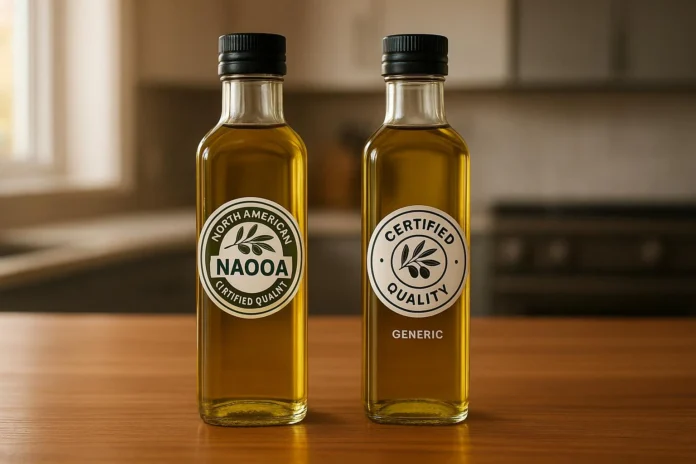

Quality is no longer a marketing phrase in the olive oil industry—it is becoming a measurable, enforceable standard. In a move that will reverberate across grocery aisles, specialty markets, restaurants, and home kitchens throughout New Jersey, the North American Olive Oil Association (NAOOA) has announced significant enhancements to its “NAOOA Certified” seal program. The certification, currently appearing on brands representing approximately 49% of U.S. branded olive oil sales, is undergoing strengthened protocols designed to exceed international benchmarks and reinforce consumer confidence at an unprecedented level.
For a state like New Jersey—where culinary standards are high, restaurant culture is deeply embedded, and specialty food retail continues to expand—this development is more than an industry update. It is a shift that directly impacts chefs, retailers, distributors, and consumers who prioritize authenticity and integrity in the products they purchase.
A Seal That Matters in Nearly Half of U.S. Olive Oil Sales
The NAOOA Certified seal has already achieved remarkable market penetration. Appearing on nearly half of all branded olive oil sales in the United States, it serves as one of the most visible indicators of quality assurance available to consumers. That reach makes any enhancement to its standards particularly consequential.
By implementing tougher testing requirements and compliance measures, NAOOA is effectively raising the baseline expectation for what certified olive oil must demonstrate. In a category historically challenged by mislabeling concerns, variable quality control, and international supply chain complexity, this decision signals a decisive effort to prioritize transparency and chemical integrity.
For New Jersey’s robust food ecosystem—spanning artisanal grocers, independent restaurants, and national retail chains—the heightened rigor provides reassurance that certified products meet stricter chemical and sensory analysis thresholds.
Exceeding International Standards
Olive oil is governed globally by organizations that set chemical and organoleptic parameters defining extra virgin and other classifications. NAOOA’s program enhancements are designed to exceed these existing benchmarks, not merely meet them. This is a crucial distinction.
Enhanced quality measures may include expanded chemical profiling, tighter limits on oxidation markers, and more comprehensive sensory evaluation. Such scrutiny ensures that oils bearing the certification align with freshness, purity, and authenticity standards that withstand both laboratory testing and professional tasting panels.
For New Jersey’s culinary professionals—particularly those operating in high-volume kitchens where olive oil is foundational—this level of assurance mitigates risk. Ingredient integrity is central to both flavor execution and brand reputation. Stronger certification reduces ambiguity.
Consumer Confidence in a Competitive Food Market
Explore New Jersey has consistently highlighted the state’s dynamic food and beverage culture—from fine dining establishments and neighborhood trattorias to farm markets and specialty boutiques. Olive oil occupies a central place in this culinary fabric. It is not merely a finishing drizzle; it is a base ingredient, a flavor enhancer, and in many Mediterranean-influenced kitchens, a defining signature.
As consumer awareness grows, shoppers increasingly scrutinize labels. They seek clarity on origin, production methods, and authenticity. NAOOA’s strengthened certification program responds directly to that demand. By reinforcing trust in labeled products, the association is addressing a marketplace that no longer accepts ambiguity.
In practical terms, the tougher standards could influence purchasing decisions across New Jersey’s retail sector. Specialty food stores and boutique markets often curate inventory based on perceived quality leadership. A reinforced NAOOA Certified seal offers an evidence-based differentiator in a crowded category.
Implications for Restaurants and Culinary Entrepreneurs
New Jersey’s restaurant industry is both diverse and competitive. Olive oil is a critical component across cuisines—from Italian and Spanish to Middle Eastern and contemporary American fusion. When quality fluctuates, dishes suffer.
Enhanced certification measures provide restaurateurs with a stronger foundation when selecting suppliers. Knowing that nearly half of the national branded market is subject to heightened oversight means chefs can rely more confidently on consistent product performance.
For emerging culinary entrepreneurs—particularly those launching specialty food concepts or boutique grocery ventures—the strengthened seal also functions as a marketing asset. Consumers who recognize and trust the certification are more likely to engage with products displaying it.
Industry Accountability and Market Evolution
The olive oil sector has faced scrutiny over the years, particularly around misrepresentation of grade and freshness. NAOOA’s decision to fortify its certification program demonstrates proactive industry leadership. Rather than reacting to criticism, the association is advancing quality protocols ahead of regulatory compulsion.
This move also signals maturation within the U.S. olive oil market. As domestic production grows and international imports remain essential, standardized verification becomes indispensable. For New Jersey retailers sourcing globally diverse inventory, enhanced certification simplifies quality vetting.
Strengthening the Food & Beverage Ecosystem in New Jersey
New Jersey’s proximity to major distribution hubs and its diverse population create a unique culinary marketplace. Consumers range from heritage Mediterranean families with deep olive oil literacy to health-conscious shoppers seeking heart-healthy cooking fats. Across these demographics, quality assurance matters.
NAOOA’s enhanced standards intersect directly with wellness trends as well. Olive oil—particularly extra virgin—has long been associated with cardiovascular benefits and anti-inflammatory properties when authentic and unadulterated. Stronger certification indirectly supports public health messaging by helping ensure product purity.
Retail buyers, culinary directors, and food service distributors operating in New Jersey will likely monitor how these program enhancements are implemented and audited. Transparency around compliance processes will further reinforce trust.
Why This Announcement Is Significant Now
The timing of NAOOA’s announcement reflects a broader cultural shift toward ingredient integrity. Across the food and beverage landscape, consumers are demanding traceability and validation—from organic certifications to sustainability seals. Olive oil, as a staple ingredient, must align with those expectations.
For Explore New Jersey readers—particularly those following developments in our Food & Beverage coverage—this announcement underscores how national trade associations influence local culinary experiences. What begins as a standards update at the industry level ultimately shapes what appears on restaurant tables, grocery shelves, and family dinner plates across the state.
Elevating the Standard for the Future
By implementing enhancements designed to exceed international benchmarks, NAOOA is setting a new bar for olive oil certification in the United States. For New Jersey’s dynamic food economy, the ripple effects are tangible: stronger consumer confidence, clearer differentiation for retailers, and enhanced reliability for chefs.
In a marketplace where nearly half of U.S. branded olive oil sales carry the NAOOA Certified seal, these tougher measures represent not incremental change but structural reinforcement. Quality becomes not a promise, but a verifiable standard.
Explore New Jersey will continue to monitor how evolving certification programs and food quality initiatives shape the Garden State’s culinary landscape. As standards rise, so too does the collective expectation that the products defining our kitchens meet the highest levels of authenticity and excellence.
















