
When the world’s most famous fictional fashion editor returns to the screen this spring, New Jersey will have played a discreet but meaningful role in bringing her story back to life.
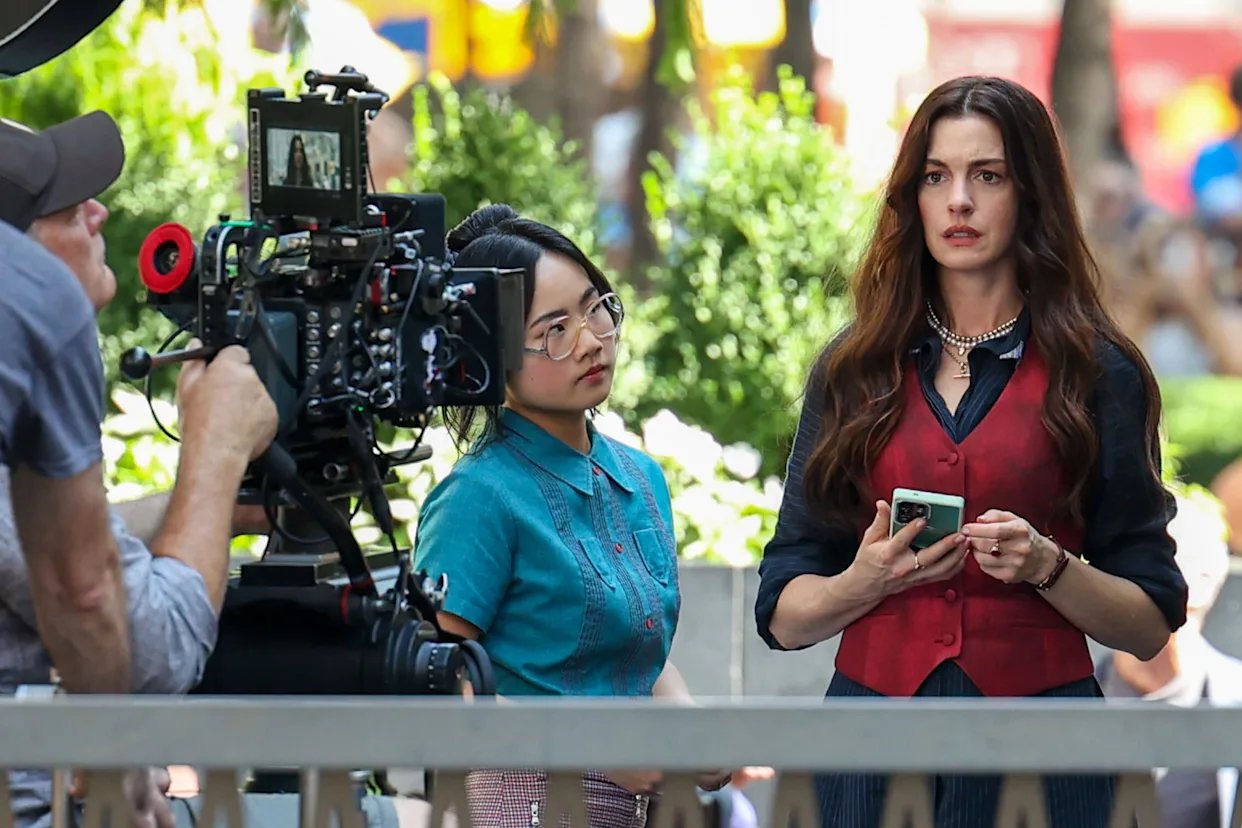
The highly anticipated sequel, The Devil Wears Prada 2, may unfold primarily in the glittering corridors of New York City and the luxury capitals of northern Italy, but one of its most pivotal production moments was staged much closer to home. For one tightly coordinated day last fall, Newark became part of Hollywood’s production map, transforming one of the state’s busiest transportation hubs into a working film set for a franchise that still defines modern fashion cinema.
For a state that continues to grow its reputation as a serious filming destination, the production is another high-profile reminder that New Jersey’s screen presence is no longer limited to background locations or regional projects. It is increasingly part of major studio storytelling, a trend that continues to be tracked across Explore New Jersey’s coverage of film and television in the state.
The production team behind The Devil Wears Prada 2 arrived in Newark in September 2025 to film a key airport sequence at Newark Liberty International Airport. While the scene itself remains tightly under wraps, it has been described internally as a critical moment in the film’s storyline, tying directly into the jet-setting, globe-hopping world that has always defined Miranda Priestly’s orbit.
For a single day, terminals, gate areas and surrounding access points were carefully reworked to accommodate cameras, lighting rigs and a fast-moving crew operating within the highly regulated environment of a major international airport. The shoot required precision timing and cooperation between local authorities, airport operations and production managers, underscoring how far New Jersey’s infrastructure has evolved to support large-scale film work.
Adding to the local connection, casting teams specifically sought New Jersey residents to appear in the airport sequence. Extras were recruited to portray both first-class and economy passengers, allowing residents to take part in a production that will be seen by millions of viewers worldwide when the film opens next year.
Beyond the terminals themselves, nearby streets were temporarily transformed to support exterior shots and production logistics. According to state officials, the entire Newark portion of the shoot was completed in one highly concentrated day, a logistical achievement that further demonstrated the state’s ability to host high-profile productions efficiently without extended disruption to surrounding neighborhoods.
New Jersey’s presence may be brief on screen, but its connection to the film runs far deeper than a single filming location.
The Devil Wears Prada 2 reunites one of the most recognizable ensembles in modern movie history, bringing back the original quartet that powered the 2006 cultural phenomenon. Meryl Streep returns as the formidable Miranda Priestly. Anne Hathaway steps back into the role of Andy Sachs. Emily Blunt reprises her sharp-tongued, hyper-driven Emily Charlton. Stanley Tucci once again brings elegance and wit to Nigel Kipling, the creative heart of Runway magazine.
For New Jersey audiences, that reunion carries a uniquely local resonance.
Hathaway, who grew up in Millburn, and Streep, whose New Jersey roots include Bernardsville, Basking Ridge and Summit, are two of the state’s most celebrated acting exports. The sequel also marks a home-state reunion behind the camera. Screenwriter and producer Aline Brosh McKenna, who grew up in Demarest and Montvale, returns to write the next chapter in a story she helped define nearly two decades ago. Director David Frankel, who guided the original film to both critical and commercial success, is also back at the helm.
This convergence of New Jersey talent at every creative level gives the sequel an unusually strong Garden State fingerprint for a global studio production.
The story itself reflects how dramatically both fashion and media have changed since audiences last followed Andy Sachs through the halls of Runway. In the sequel, Miranda Priestly is no longer ruling an industry untouched by digital disruption. The new narrative places her at the center of a media landscape reshaped by declining print circulation, shifting consumer habits and fierce competition from luxury conglomerates and digital platforms.
Emily Charlton, once Miranda’s overworked and underappreciated assistant, now occupies a powerful executive role within a major luxury group. Her professional ascent brings her into direct conflict with her former boss, setting up a corporate and creative rivalry that mirrors the real-world power shifts taking place across fashion publishing and brand leadership.
Andy Sachs, who famously walked away from the fashion world at the end of the original film, reenters Miranda’s orbit in a new capacity as the features editor of Runway magazine. Her return reframes the tension that once defined their relationship. No longer an uncertain outsider struggling to survive in a demanding industry, Andy arrives with professional authority and hard-earned confidence, challenging Miranda in ways that were impossible two decades earlier.
The newly released full trailer, which debuted during the Grammy Awards broadcast, leans heavily into that emotional history. Early moments center on Andy attempting to reintroduce herself to Miranda, only to be met with the same cool detachment that once defined their dynamic. The trailer’s tagline, delivered with Miranda’s trademark restraint, captures the central tension of the sequel: ambition never fades, but power can shift hands.
The response has been immediate and massive. The trailer quickly surged into the multi-million-view range online, building on a teaser that first surfaced in late 2025 and reigniting global interest in a franchise that has never truly disappeared from pop culture conversation.
Stanley Tucci’s Nigel provides one of the film’s narrative anchors, offering perspective on how Runway evolved in Andy’s absence and how the publication now stands as more than a magazine. His voiceover frames Runway as a global cultural institution rather than a traditional print outlet, a subtle acknowledgment of how media brands must now exist across platforms, partnerships and international markets.
Emily Blunt’s Emily Charlton emerges as one of the sequel’s most dramatically transformed figures. No longer tethered to Miranda’s schedule or emotional volatility, Emily commands authority within the luxury world she once merely served. In the trailer, her interactions with Andy carry both humor and unresolved tension, reflecting how ambition reshapes relationships over time.
The film’s expanded cast deepens its generational and international reach. Kenneth Branagh joins the ensemble as Miranda’s husband, introducing a new layer to the famously private editor’s personal life. Simone Ashley, Lucy Liu, Justin Theroux and B.J. Novak bring additional star power, while younger voices such as Caleb Hearon, Conrad Ricamora and Pauline Chalamet reflect the evolving cultural landscape of fashion and media.
Another notable New Jersey connection arrives through Helen J. Shen, a rising star from Basking Ridge and a Ridge High School alum whose recent Broadway success has already drawn national attention. Her inclusion reinforces the sequel’s remarkable concentration of New Jersey-linked performers.
Fans of the original film will also recognize returning supporting characters, including Andy’s best friend Lily and the formidable publishing executive Irv, grounding the sequel firmly in its established universe.
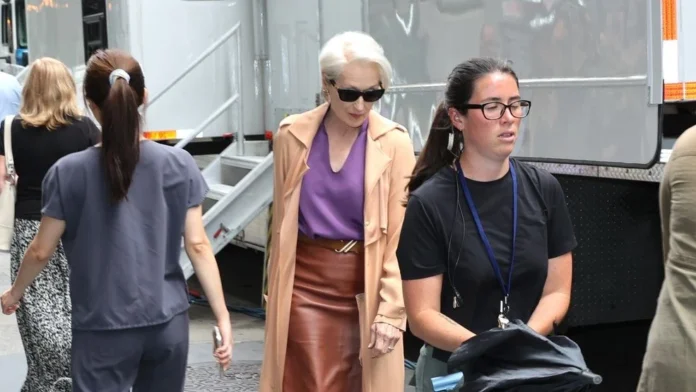
Production for The Devil Wears Prada 2 unfolded across multiple international locations. In New York City, filming spanned Manhattan neighborhoods including Chelsea, Midtown and the Upper East Side, with highly publicized street shoots drawing crowds eager to catch glimpses of Hathaway and Streep in character. Those outdoor sequences became fashion showcases of their own, offering early visual hints of costume design, evolving character styles and narrative shifts.
Across the Atlantic, the production traveled to Milan and Lake Como, continuing the franchise’s tradition of pairing fashion storytelling with iconic European backdrops. In the original film, Paris Fashion Week symbolized both aspiration and professional compromise for Andy Sachs. The sequel’s Italian locations suggest a similarly elevated visual language tied to luxury branding, international markets and creative power.
Yet for all its international polish, the film’s New Jersey chapter stands out for its realism. Airports represent transition, decision and movement, and Newark Liberty International Airport serves as one of the most recognizable gateways between New Jersey, New York and the rest of the world. The choice to stage a crucial scene there quietly embeds the state into the emotional geography of the film.
The sequel also draws inspiration from a literary universe that predates the first movie. The original screenplay adapted a bestselling novel written by a former fashion publishing assistant whose real-world experiences shaped the biting realism that made the story resonate. Subsequent novels expanded the world of Runway and its characters, particularly focusing on Emily’s post-Runway career, a narrative thread that now appears to influence the direction of the sequel.
The commercial legacy of The Devil Wears Prada remains formidable. The original film generated hundreds of millions of dollars worldwide and became a cultural reference point for workplace ambition, creative industries and the mythos of fashion authority. Nearly twenty years later, its dialogue, scenes and characters still circulate widely across social media, fashion commentary and film retrospectives.
For New Jersey, the arrival of its sequel carries significance beyond celebrity headlines.
Every major studio production that chooses to film even a portion of its story within the state contributes to local employment, small business engagement and the broader perception of New Jersey as a versatile production partner. Casting local residents as on-screen performers, hiring regional crews and coordinating with state agencies reflects a growing production ecosystem that continues to mature.
As The Devil Wears Prada 2 prepares for its theatrical release on May 1, 2026, New Jersey audiences will be watching not only for the return of beloved characters, cutting dialogue and couture-level costuming, but also for a fleeting, meaningful moment when Newark becomes part of a cinematic world defined by power, reinvention and ambition.
In a story built around global fashion empires and elite creative circles, New Jersey’s role may be understated, but its contribution is unmistakably woven into the film’s journey. For a state whose talent helped write, direct and star in the sequel—and whose streets and terminals helped bring it to life—the return of Miranda Priestly is also, in its own way, a homecoming.