
SOMERSET, NJ — A decisive political victory and a strategic workforce investment are converging in Somerset County, underscoring a pivotal moment not only for New Jersey’s 12th Congressional District race but for the broader economic and infrastructure trajectory of Central Jersey.
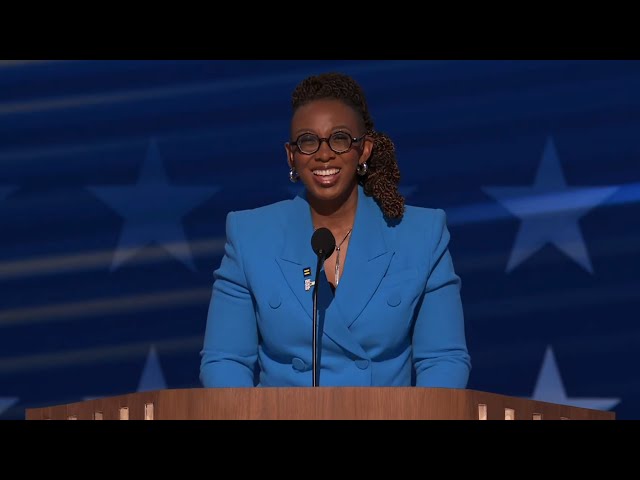
Somerset County Commissioner Director Shanel Robinson delivered a commanding performance at the Somerset Democratic Convention, capturing overwhelming support in her home base and reinforcing her position as a leading contender in one of the state’s most closely watched congressional primaries. At the same time, a major lease renewal by the New Jersey Independent Electrical Contractors Association (NJIEC) signals continued confidence in Somerset as a central hub for workforce development and skilled trades training—two forces that are increasingly shaping the region’s future.
Together, these developments highlight a region that is not only politically energized but also economically strategic, with Somerset County emerging as a focal point for leadership, labor development, and long-term growth.
Robinson’s convention win was not just decisive—it was dominant. Facing a crowded field of 16 candidates vying for the Democratic nomination in a seat soon to be vacated by longtime U.S. Representative Bonnie Watson Coleman, Robinson secured 100 votes, representing 95 percent of ballots cast. The margin sends a clear signal about her strength within Somerset County and her ability to consolidate support in a competitive primary environment.
Her performance reflects years of building a countywide presence rooted in public service, administrative leadership, and local engagement. As Commissioner Director, Robinson has cultivated a reputation as a steady and pragmatic leader, one capable of navigating both policy and community priorities. That foundation translated into a landslide convention result, giving her a significant boost in momentum as the campaign shifts toward broader voter outreach across the 12th District.
While county conventions do not determine election outcomes, they serve as critical indicators of organizational strength, local influence, and the ability to mobilize key stakeholders. Robinson’s showing in Somerset aligns with a broader pattern emerging across the district: Assemblywoman Verlina Reynolds Jackson secured support in Mercer County, East Brunswick Mayor Brad Cohen carried Middlesex, and Plainfield Mayor Adrian Mapp earned the Union County Democratic endorsement.
Mapp, acknowledging the limits of convention politics, emphasized the importance of grassroots engagement moving forward, noting that the true battleground lies within communities across the district. That sentiment underscores the next phase of the race, where retail politics, voter turnout, and messaging will ultimately determine the nominee.
Yet, Robinson’s commanding performance in Somerset cannot be understated. It demonstrates not only loyalty within her home county but also the operational strength of her campaign infrastructure—a critical asset in a multi-candidate primary where fragmentation can define outcomes.
Beyond the political arena, Somerset County is simultaneously reinforcing its position as a cornerstone of workforce development in New Jersey, driven by continued investment in skilled trades education and apprenticeship programs.
The New Jersey Independent Electrical Contractors Association has officially renewed its lease at 20 Worlds Fair Drive, maintaining its 5,000-square-foot training and operational facility within a larger flex-industrial complex. The renewal reflects both stability and growth, signaling that Somerset remains a strategic location for statewide workforce initiatives.
The NJIEC facility is far more than office space—it functions as a critical training ground for the next generation of electricians and electrical contractors. Through a comprehensive four-year apprenticeship program, the organization blends classroom instruction with hands-on field experience, preparing participants for careers that are increasingly essential to New Jersey’s infrastructure, construction, and energy sectors.
With more than 4,000 member companies and over 14,000 apprentices trained annually, NJIEC plays a vital role in addressing workforce gaps while elevating standards across the electrical industry. Its programs are recognized at the federal level, with the U.S. Department of Labor designating the organization as an Apprenticeship Ambassador—a distinction that highlights its leadership in expanding access to career pathways through registered apprenticeship models.
The decision to maintain and extend its presence in Somerset speaks volumes about the county’s accessibility, infrastructure, and strategic positioning within the state. Located in the heart of Central Jersey, the Worlds Fair Drive facility provides convenient access for students and trainees traveling from multiple counties, reinforcing Somerset’s role as a regional nexus for education and workforce mobility.
This alignment between political leadership and workforce investment is not coincidental—it reflects a broader transformation taking place across Central Jersey. As infrastructure demands grow, energy systems evolve, and construction projects expand, the need for a highly trained, adaptable workforce has become increasingly urgent. Organizations like NJIEC are stepping into that space, creating pipelines that connect education directly to employment, while supporting economic resilience across the region.
At the same time, political leaders emerging from counties like Somerset are being shaped by these same dynamics. The intersection of policy, labor, and economic development is becoming central to campaign narratives, particularly in districts where suburban growth, infrastructure modernization, and workforce readiness are key voter concerns.
Robinson’s rise within this environment positions her at the crossroads of these conversations. Her leadership experience at the county level—combined with the tangible economic developments unfolding within her jurisdiction—provides a framework for addressing the challenges facing the 12th District. From workforce training to infrastructure investment and community development, the issues shaping Somerset today are increasingly reflective of broader statewide and national priorities.
Across Central Jersey, communities continue to evolve, driven by a blend of public leadership and private investment. The region’s ongoing transformation is evident in its expanding business footprint, growing educational infrastructure, and the steady influx of initiatives aimed at strengthening economic competitiveness.
For readers looking to explore more about what’s happening across the region—from business developments to community initiatives and regional growth—visit the Central Jersey section on Explore New Jersey, where ongoing coverage highlights the evolving landscape shaping counties like Somerset, Middlesex, Mercer, and Union.
As the congressional race intensifies and economic development continues to accelerate, Somerset County stands at a unique intersection of influence and opportunity. The outcomes of today’s convention and the commitments made by organizations like NJIEC are not isolated events—they are part of a larger narrative defining the future of Central Jersey.
What happens next will unfold not only at the ballot box, but in classrooms, training centers, and communities where the next generation of leaders and skilled professionals are already taking shape.