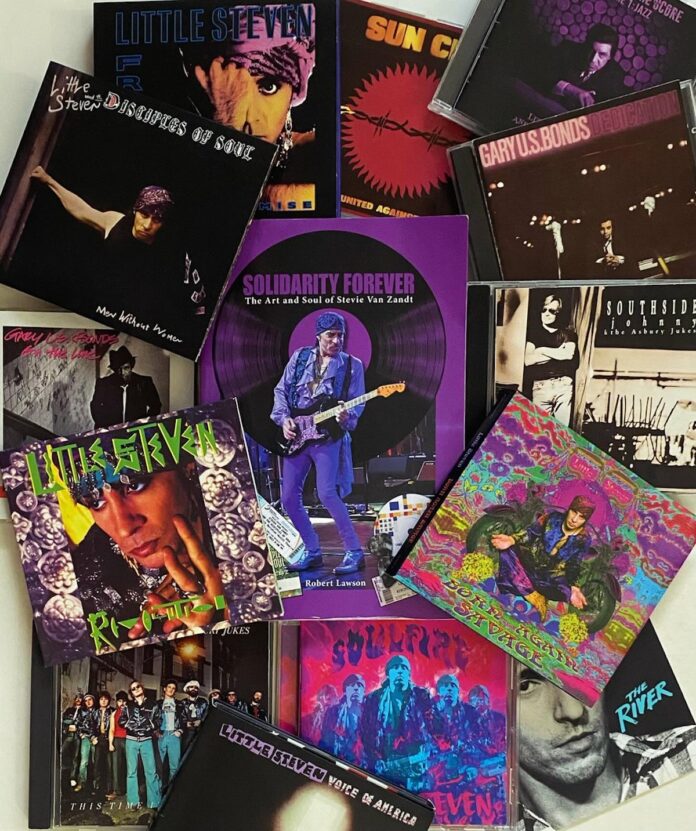

Stevie Van Zandt has long occupied a singular place in American music and culture, balancing life as a guitarist, producer, activist, and cultural advocate with a career that stretches across six decades. A new book, Solidarity Forever: The Art and Soul of Stevie Van Zandt, offers one of the most detailed examinations yet of that expansive legacy, capturing not only what Van Zandt has done, but how and why it mattered.
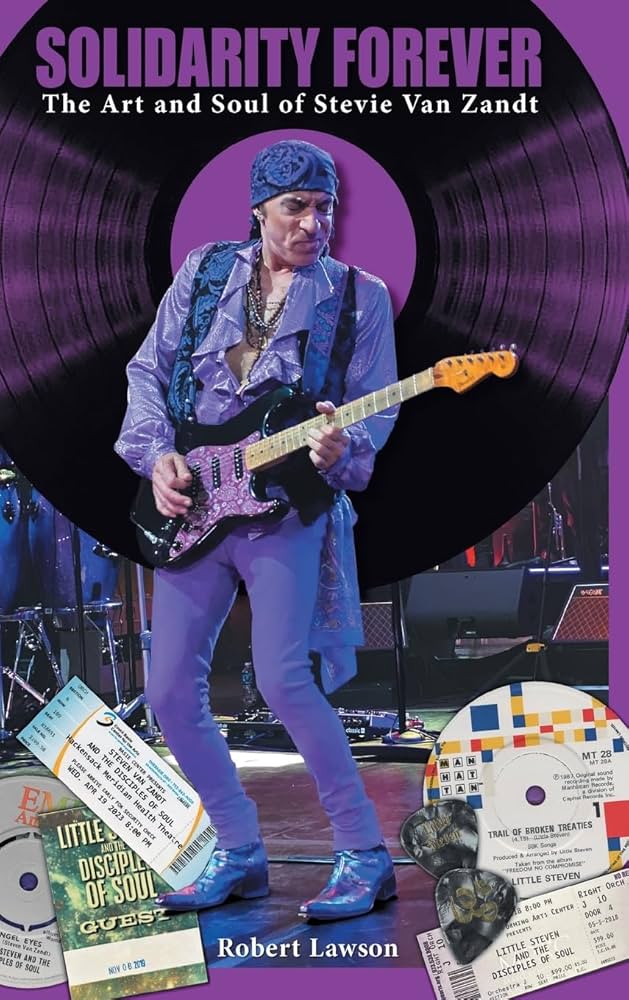
Written by author and music historian Robert Lawson, the book traces Van Zandt’s journey from the early Jersey Shore scene to global stages, political movements, and influential recording studios. Rather than retelling familiar stories in broad strokes, Lawson drills into the mechanics of Van Zandt’s career, documenting the creative decisions, collaborations, and moments that shaped his impact on music and activism.
Readers are taken through Van Zandt’s formative years with the Asbury Jukes, his essential role in Bruce Springsteen’s E Street Band, and the evolution of his own Disciples of Soul project. The book also devotes significant attention to Van Zandt’s work beyond traditional performance, particularly his leadership in the anti-apartheid movement through the landmark “Sun City” project, which fused music and political action at a global scale.
What sets Solidarity Forever apart is its meticulous level of detail. Lawson catalogs recordings, live performances, production credits, and even obscure bootlegs, creating a resource that appeals to both casual fans and devoted collectors. The scope of documentation reflects Van Zandt’s reputation as a perfectionist and architect of sound, particularly in his work shaping the horn-driven, soul-infused identity of bands like Southside Johnny & the Asbury Jukes.
Central to the book’s depth are more than 40 new interviews conducted with musicians, collaborators, and close associates spanning every era of Van Zandt’s career. These voices provide texture and perspective that go beyond a single point of view, revealing how Van Zandt functioned as a bandmate, bandleader, producer, and mentor. Interviews with figures such as Gary U.S. Bonds and Arthur Baker illuminate his behind-the-scenes influence, while reflections from band members offer insight into rehearsal rooms, recording sessions, and life on the road.
Van Zandt himself also appears throughout the book, offering fresh commentary on his own history. In one notable moment, he reacts to rare archival material uncovered during Lawson’s research, underscoring how much of his early work existed outside the spotlight. These moments reinforce the book’s role not as a replacement for Van Zandt’s memoir, but as a companion that fills in the technical and historical gaps.
Critics and readers alike have responded strongly to the book’s thorough approach. Many have praised it as an essential complement to Unrequited Infatuations, Van Zandt’s own memoir, noting that while the autobiography captures memory and emotion, Solidarity Forever provides structure, chronology, and verification. The result is a fuller picture of an artist whose influence is often felt more than seen.
The book’s release also arrives at a moment when interest in music history, cultural movements, and the intersection of art and activism continues to grow. Van Zandt’s career, rooted deeply in New Jersey but resonating worldwide, reflects how regional scenes can shape global culture. That broader context makes the book particularly relevant for readers interested in how entertainment, politics, and identity intersect over time.
Coverage of influential cultural figures like Van Zandt fits squarely within Explore New Jersey’s ongoing focus on arts and entertainment, spotlighting stories that connect the state’s creative legacy to national and international impact. For fans of music history and those curious about the inner workings of a long, multifaceted career, Solidarity Forever stands as both a reference work and a narrative journey.
By assembling decades of music, activism, and collaboration into a single, carefully constructed volume, Robert Lawson has created a portrait of Stevie Van Zandt that feels both expansive and precise. The book reinforces the idea that Van Zandt’s legacy is not defined by any one role, but by a lifelong commitment to craft, conviction, and creative solidarity.