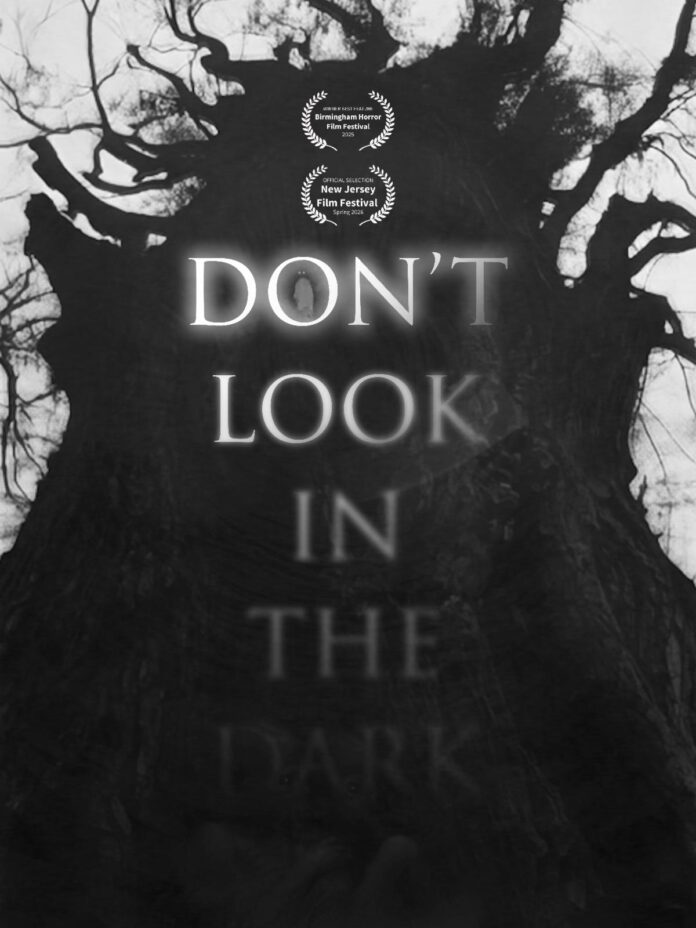

There are rare moments when a film screening feels less like an event and more like a shared experience—when a darkened theater becomes part of the story unfolding on screen. That atmosphere is coming to New Brunswick when the New Jersey Film Festival presents the Garden State premiere of Don’t Look in the Dark, a new found-footage psychological horror feature making its Rutgers debut on January 31, 2026.
Part of New Jersey’s growing reputation as a destination for high-caliber independent cinema and curated genre programming within the state’s vibrant film festival scene, this screening introduces audiences to the directorial debut of Samuel Freeman, a filmmaker already drawing national attention for his unsettling and unconventional approach to horror storytelling.
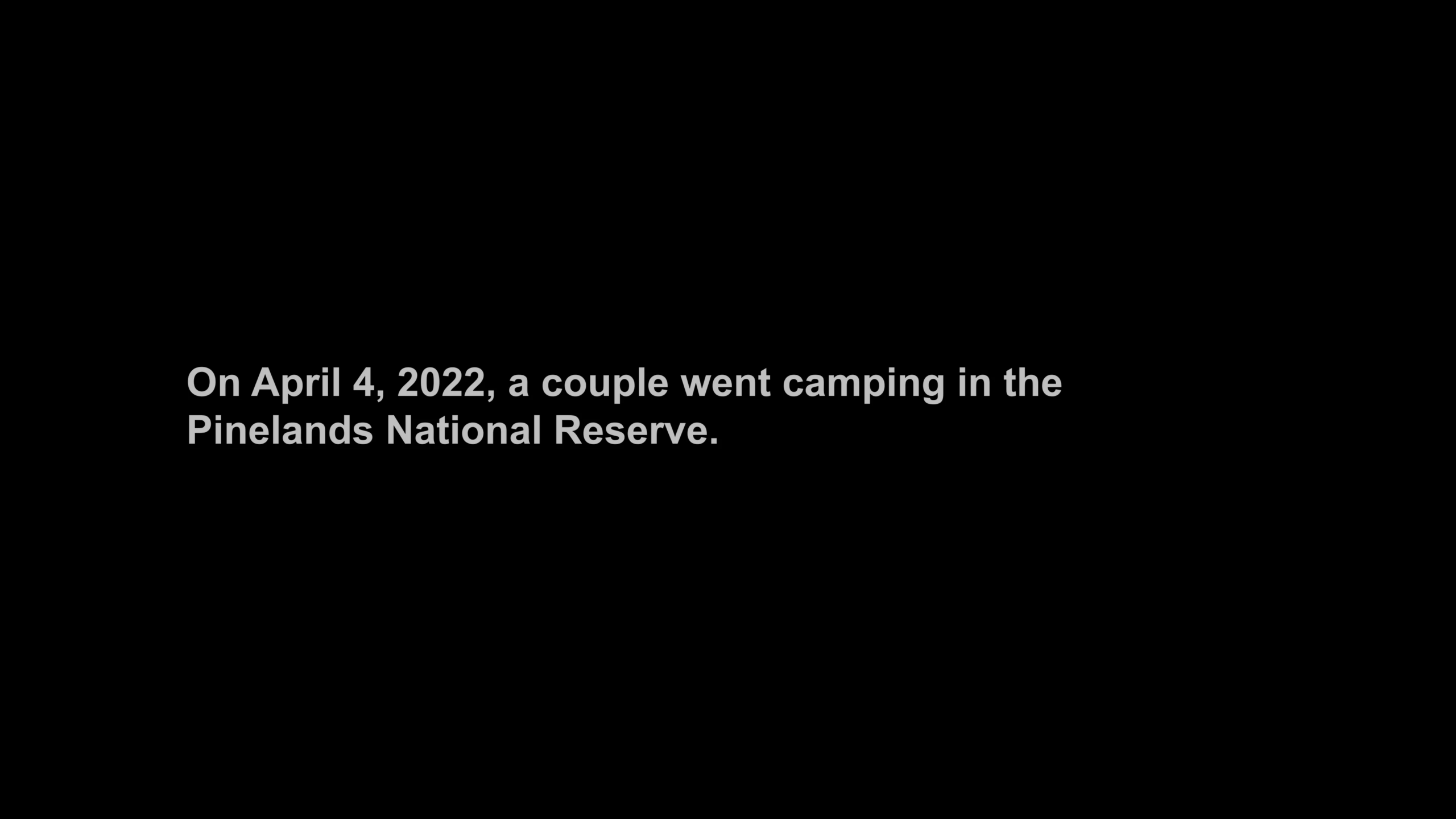
Set deep within the Pinelands National Reserve, Don’t Look in the Dark follows Golan and Maya, a couple who escape the noise of everyday life for what should be a quiet, reflective camping trip. Their journey is meant to honor Maya’s late father and prepare for the birth of their child. What begins as a peaceful retreat quickly takes on a far more disturbing tone when their phones start recording on their own. Fragmented clips, distorted audio, and unexplained visuals begin to surface, suggesting that something in the woods is not only present—but actively observing them.
As night falls, Maya becomes convinced she sees a young child lingering near a fallen tree line. Her instincts drive the couple further into the forest, where the boundaries between perception, paranoia, and reality begin to dissolve. The film’s deliberately fractured footage pulls the audience into that same uncertainty, forcing viewers to question what they are truly seeing, what may be concealed within the darkness, and whether the act of watching itself has consequences.
Freeman’s approach to found footage has already earned critical attention. The film captured the Best Feature award at the Birmingham Horror Film Festival & Convention, positioning it as one of the most talked-about underground horror releases of the past year. Rather than relying on jump scares alone, Don’t Look in the Dark leans heavily into atmosphere, sound design, and the psychology of fear, creating a viewing experience that feels different from seat to seat and screening to screening.
Freeman has described the project as an attempt to reshape what a theatrical horror experience can be. Each audience, he suggests, sees something slightly different. Each screening reveals new details. It is designed to leave viewers unsettled, questioning what they may have missed long after the credits roll.
The New Jersey Film Festival screening will take place at 7:00 p.m. on January 31, 2026, in Voorhees Hall Room 105 at Rutgers University, located at 71 Hamilton Street in New Brunswick. The evening also presents a rare opportunity for direct engagement with the creative team. Freeman will be in attendance, along with cast members Dennis Puglisi and Rebi Paganini, offering audiences insight into the production, the story’s inspirations, and the layered symbolism woven into the film.
With a running time of 71 minutes, Don’t Look in the Dark delivers a tightly constructed, slow-burn descent into psychological horror that feels especially fitting for a late-winter screening in the heart of New Jersey. For fans of atmospheric thrillers, experimental cinema, and stories rooted in the eerie mystique of the Pine Barrens, this Rutgers screening promises to be one of the most memorable film events of the season.
Overall, this is where New Jersey’s wildest landscape meets modern horror. Inside the Pine Barrens Setting of “Don’t Look in the Dark”. Deep in southern New Jersey lies one of the most mysterious and visually arresting regions in the state, a place where winding cedar water streams, stunted pine forests, and centuries of folklore converge. Known formally as the Pinelands National Reserve and more commonly as the Pine Barrens, this vast protected wilderness is stepping into the cinematic spotlight as the primary setting for the upcoming found-footage horror feature Don’t Look in the Dark, scheduled for release in 2026.
Spanning roughly 1.1 million acres and stretching across seven counties, the Pinelands account for nearly a quarter of New Jersey’s total landmass. Beneath its sandy soil rests the Kirkwood-Cohansey aquifer, an immense underground water system that holds trillions of gallons of fresh water and feeds the region’s famously tea-colored streams. The reserve’s unusual acidity supports rare plant life, pygmy forests, and species found almost nowhere else in the state, making it both an ecological treasure and a landscape that naturally lends itself to eerie, cinematic storytelling.
The setting’s reputation is further shaped by centuries of folklore, including the enduring legend of the Jersey Devil, as well as historic sites such as Batsto Village, once a thriving center of iron and glass production. These layers of history, isolation, and natural beauty give the Pine Barrens a personality all its own, one that has long fascinated hikers, historians, and now, filmmakers.
Don’t Look in the Dark places this distinctive environment at the heart of its narrative. The film centers on Golan and Maya, a couple who head into the reserve for a quiet camping trip intended to honor Maya’s late father and prepare for the arrival of their child. Their peaceful retreat takes a disturbing turn when their phones begin recording without their knowledge. What starts as scattered clips and distorted audio gradually becomes something far more unsettling as Maya becomes convinced she sees a young child lingering near a fallen tree line.
Drawn deeper into the woods, the couple finds their sense of reality beginning to fracture. The film uses broken visuals, intermittent sound, and shadow-filled frames to immerse the audience in the same uncertainty experienced by its characters. Beyond traditional scares, the story leans into themes of grief, maternal instinct, and the unsettling idea that the simple act of watching may itself be dangerous. Marketed as a theatrical experience where no two screenings feel exactly the same, the film positions each viewing as part of the narrative, making the audience an active participant in the mystery.
The decision to anchor the story in the Pinelands underscores a broader trend within New Jersey’s growing independent cinema movement and its expanding film festival culture. The state’s diverse geography, historic towns, and protected wilderness areas are increasingly becoming backdrops for filmmakers seeking atmosphere, authenticity, and a sense of place that cannot be replicated on a soundstage.
As Don’t Look in the Dark prepares to introduce a new generation of viewers to the Pine Barrens through a darker lens, it also invites renewed interest in one of New Jersey’s most remarkable natural regions. Long after the credits roll, the film is likely to leave audiences with more than a lingering chill—it offers a reminder that some landscapes carry stories in their soil, shadows in their trees, and mysteries that seem to watch right back.