Explore New Jersey

Home Blog Page 516

1,800+ Construction Pros Attend Kuiken Brothers’ 2024 Product Expo

kuiken brothers

General Business

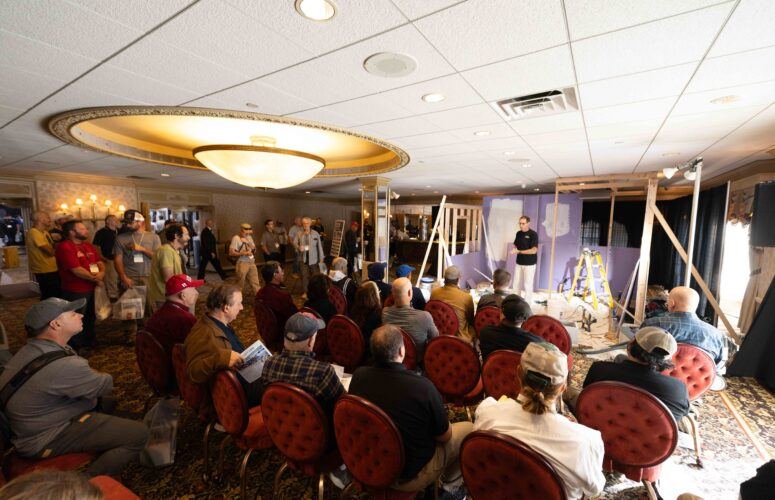
Kuiken Brothers, a leading supplier of residential and commercial building materials, celebrated its 2024 LIVE Product Expo. Held recently in Whippany, the event attracted more than 1,800 builders, remodelers, architects, and designers from across the region.

The full-day expo showcased the latest advancements in building materials and construction solutions, featuring a wide array of products from renowned industry partners. Attendees explored innovative building materials, tools, and techniques designed to elevate both efficiency and craftsmanship in their projects.

Throughout the event, Kuiken Brothers provided numerous learning opportunities tailored to professionals at every level. Highlights included live product demonstrations, hands-on training sessions, and an engaging series of seminars led by industry experts. Participants gained insights into advanced building systems, sustainable materials, and cutting-edge technologies shaping the future of construction.

“Bringing together such a large group of industry professionals for our LIVE Product Expo was a tremendous success,” said Douglas Kuiken, president, Kuiken Brothers. “The turnout reaffirms our mission to serve as a trusted partner in the building community, connecting experts and empowering them with the knowledge and resources needed to take their projects to new heights.” The event underscored Kuiken Brothers’ commitment to supporting the industry through education and access to quality products. Manufacturer partners, architects, and builders left the Expo with practical insights and enhanced knowledge to better serve their clients.

To access more business news, visit NJB News Now.

Related Articles:

[ad_2]

Source link

Emergency Shelter | Burlington County, NJ

Emergency Shelter

Burlington County Emergency Shelter

A Temporary Facility That Assists Those Experiencing Emergent Housing Needs to Transition into Permanent Housing

Location:
795 Woodlane Road, Westampton, NJ 08060
Behind the Human Services Building

Building: 2 Stories –  33,792 Square Feet

Guest Occupancy:
•   60 Beds – for individual men and women

Construction:
•   Not begun yet – but it will be soon
•   16 – 20 months

Management:
•   County will seek a provider for day-to day-operations
•   Specific details will be developed after a provider is selected

Hours of Operations:
•   24 hours a day
•   No one is required to leave during the day
•   Shelter clients will have access to the common room and dining room during the day
•   Workshop and meeting rooms will be utilized during the day by clients

Intake/Arrival:
  •   Clients will be evaluated to assess their needs
•   Clients will be assigned a case manager who will guide the clients through assistance programs and services

Medical Needs:
•   Medical triage will be on-site

Services and Resources:
•   Social workers and service providers on-site
•   Board of Social Services and the Human Services offices are across the parking lot
•   No need for transportation to services

Security:
•   24 hours a day, 7 days a week
•   Security station and monitoring room will be on-site

Office/Program Spaces:
  •   Welcome Center & Intake
•   Medical Triage Room
•   Interview Rooms
•   Offices
•   Lecture Room
•   Media Center
•   Lounge / Common Room
•   Security Station & Monitoring Room
•   Quiet Room

Dining:
•   1,300 sq. ft. Dining Room
•   Full-service Kitchen

First Floor
  •   Private Showers for Intake
•   Public Restrooms
•   Private Restrooms for Staff
•   Meeting Space/Service Rooms

Second Floor
•   Men’s and Women’s Dormitories with Private Showers
•   Two Private Restrooms with Showers
•   Laundry Rooms

Emergency Shelter Designation for Burlington County
  •   Will partner with the Red Cross  to utilize the Emergency Shelter during crisis situations (floods, Hurricanes, etc.)

Partnerships with Service Providers:
•  Mental Health Services
•  Substance Use Disorder Programs
•  Disabilities programs and services
•  Organizations that specialize in dealing with Domestic Violence

[ad_2]

Source link

Grant Resource Center | New Jersey League of Municipalities

[ad_1]

Emerging Contaminants in Small or Disadvantaged Communities Grant (EC-SDC)

Application Information

Due: Rolling Basis

Microsoft 365 Technology Grant – Local Public Libraries Eligible for Funding

Application Information

Due: Rolling Basis

Lead Remediation and Abatement Grant

Contact Information: xin.li@dca.nj.gov

Application Information

Due: November 30, 2024

Sustainable Jersey – Free Climate Vulnerability Assessment Technical Assistance

Application Information

Due: December 20, 2024

Volunteer Emergency Service Organization Loan 2025

Contact Information: lucille.ventres@dca.nj.gov

Application Information

Due: June 30, 2025

[ad_2]

Source link

Devils’ Physicality Continues to Lead the Way – The Hockey Writers – New Jersey Devils

[ad_1]

The New Jersey Devils have kicked off the 2024-25 season as a bit of a mixed bag. One week, they fall to the San Jose Sharks, and the next, they defeat the Stanley Cup Champions two games in a row. On Saturday, they were shut out 4-0 by the Tampa Bay Lightning, then defeated the Carolina Hurricanes 4-2 on Thursday. The Devils remain in a playoff spot and continue to seek consistency as the season progresses.

Throughout their first 22 games, one aspect of the Devils’ play has shined: physicality. Last season, the closest the Devils came to being scrappy was an all-out line brawl at Madison Square Garden, resulting in eight game misconducts. Otherwise, the team was constantly beaten down and pushed around. However, it is clear those days are long gone. The new Devils’ identity involves being aggressive and physical, and they have been holding their own in both hits and fights.

Physicality Makes Way for Momentum

When Tom Fitzgerald went big game hunting during the off-season, one of his main priorities was adding grit to the Devils’ bench. After losing Brendan Smith to free agency, the team needed another physical, depth defenseman. Brenden Dillon stepped up to fill this role, and his immediate impact is undeniable. 

As a tried and true veteran, he is helping lead the way during his 16th season in the NHL. Dillon’s physicality provides momentum that the Devils severely lacked last season. For example, Dillon left it all on the ice with a fight against Jonah Gadjovich last Tuesday, after the Panthers tied the game on a power play. This heavyweight tilt paved the way for three unanswered Devils’ goals, rallying the team to a 4-1 victory.

Brenden Dillon New Jersey Devils
Brenden Dillon, New Jersey Devils (Jess Starr/The Hockey Writers)

As a result, it makes the team much harder to play against. The Devils are not afraid to use force to win puck battles and stand their ground. In fact, Dillon is tied for second in NHL fighting majors alongside his fellow teammate, Kurtis MacDermid. Dillon also leads the Devils with 40 blocked shots in 22 games. 

A New Era of Devils Grit

At the beginning of the season, Sheldon Keefe stressed that all areas of physicality are “vital to embrace to have any level of success.” With a quarter of the season already over, the Devils have three players in the NHL’s top 20 for hits: Paul Cotter, Stefan Noesen, and Dillon. According to MoneyPuck, the team ranks sixth in the NHL for hits given. To put this into perspective, the team ranked 26th in the league in hits for the 2023-24 season. 

Physicality isn’t just an improvement from last year, it’s the start of a new identity for the Devils. They are defending their teammates, winning battles against the boards, and limiting their opponent’s scoring chances. This new, tougher mentality could be an important factor that determines if the team will qualify for the postseason. In the 2023 Stanley Cup Playoffs, part of the reason why the Devils couldn’t advance to the next round was because they lacked physicality. Now, this newfound quality could make them a worthy opponent should they make the playoffs.

Catering to Physicality

Another reason why physicality is important is that it helps share the burden with the Devils’ top six forwards. Instead of relying solely on offensive manpower, the team has at least one gritty player on the ice during every shift. Not only that, but the players who cater to the physical aspects of the game can also score goals. 

Related: 4 Things the Devils Need to Keep the Momentum Rolling

Cotter is the perfect example of this mindset. He is tied for third on the team with seven goals, but he also ranks ninth in the NHL in hits. Cotter provides a lethal combination of speed, defensive tactics, scoring, and checking opponents into the boards. He has also made his standpoint on physicality clear. It’s not just about being harder to play against, it’s about doing what’s best for the team. Earlier this month, Cotter said, “If you mess with one of our guys, we’re all bringing it.” 

And this way of thinking has begun to translate to the rest of the team. Johnathan Kovacevic has also expressed interest in being more aggressive this season. This week, he stayed on the ice long after practice ended, getting fighting tips from MacDermid. The Devils’ roster embraces physicality if it helps ensure the team’s success.

Devils Toughness Moving Forward

Overall, the Devils’ increase in physicality is a welcome difference from last season. This fierce style of play provides the team with momentum that has helped elevate their competition level. As long as the Devils continue to balance out strength with offensive skill, physicality could continue to be a valuable tool in the Devils’ arsenal. 

Substack The Hockey Writers New Jersey Devils Banner


[ad_2]

Source link

What Just Happened? Concluding Atlantic City Postscript

[ad_1]

In Atlantic City, the horror of another Donald Trump presidency turned fast not merely to acquiescence but to the miniaturized imitation of Trump in a setting not only garishly conducive to the exercise but in fact the profane equivalent of a holy birth site. After all, Trump got his start here in the casino trade, an adventure ramrodded by the rubber stamps of NJ politicians not quite persistently affronted by his persistent ascendency. Amid concocted opulence, not too many cocktails transform a drunken middle-aged bureaucrat roaming the halls of Caesar’s Palace, into the second coming of Caligula’s tormented little cousin.

On the barstools and in the reflective dens on the other side of those stools, insiders tried to make sense of what happened this year at the League of Municipalities. Did anyone among those gambling for the office of NJ governor somehow emerge from the crammed interactions with an upper hand?

It was harder this year perhaps to determine but the game had somewhat subtly changed. In the past twenty years, fewer than ten men – Democrats – chose the state’s chief executive, and it went something like this: find the richest guy in sight from Goldman Sachs who could clear the field, speak with grim understanding of the state’s financial troubles, and yet exhibit caring progressive credentials, and ensure, by virtue of everyone getting behind him, that the overlords’ organizations didn’t have to work too hard. It was either that or throw a woman under the bus who threatened to expose the extent of the party’s submission before a certain former U.S. Attorney.

But that was before 2024, and First Lady Tammy Murphy’s decision to run for the U.S. Senate seat left behind by a corruption-eviscerated Bob Menendez. Murphy had a simple strategy: follow the game plan perfected by her husband, which should be even easier, given the stronger suctioning between sitting governor and those chairs cocooned by – among other interests – Trenton lobbying. They depended on the country’s constitutionally strongest governor, and in exchange – tacitly – they would surely have to ascent to the obvious choice of Tammy Murphy to rush to the aid of New Jersey’s bruised – once again – integrity. But we know what happened then, and without going into too much detail right now, the legal challenge to the ballot structure by U.S. Rep. Andy Kim, which favored organization-backed candidates and left everyone else in voter booth Siberia, resulted in a judge ditching what amounted to the very system that produced those boss-backed candidates, not only for U.S. Senate then, but – apparently – Governor – right now, or at least ahead of 2025, the next statewide election.

So, it was difficult to assess exactly who prevailed this week among those jockeying Democrats seeking the governorship (we’ll examine the Republicans in a minute, but the Kim challenge to Murphy most immediately significantly impacted the process). By this time in 2017 when Phil Murphy first ran for governor, he had essentially already won, even before the election, because he had all the critical bosses with him. But this time, even as they strutted from casino to casino trying to project power and energy, the contestants had to be careful, for in a post Andy Kim-Tammy Murphy world, no one wanted to stand overtly with the bosses and end up like Tammy.

For every undecided insider caught in a tortured flamingo pose on the casino floor sooner than choose a dedicated direction toward a single candidate, the contenders themselves had to do a lot of zigzagging to avoid the appearance of solely representing “the (dreaded!) establishment.” For if the past furnished county bosses who “made” a governor, in a post-Tammy Murphy world, those tiny Trumps with the training wheels still on could just as easily prove the undoing of a gubernatorial candidate. Don’t stand too close to the guys who tried to force-feed Tammy went the unspoken logic, even as insiders drunkenly persisted – perhaps out of habit – to play the how many chairs you got parlor game. That pastime probably meant U.S. Rep. Mikie Sherrill had the edge, on the strength of Essex, Passaic, and Middlesex all apparently behind her, three big counties where the heft of organizational power remains pretty robust and strong (especially in Essex) party pluralities.

But Sherrill had the complication of two other contenders (Ras Baraka and Sean Spiller) coming out of Essex, and the troubling appearance of Passaic going for Trump in the last election over Kamala Harris, thereby projecting a less than ferocious presence in the county party solar system.

Sherrill’s chief rival, U.S. Rep. Josh Gottheimer, had his home county of Bergen, apparently in earnest (although in the new environment the staunch public support of his come county chair didn’t perhaps simply mean totality), but his supposed commanding presence in Hudson (on the strength of support by vote-getting behemoth Senator Brian P. Stack) looked less than convincing in drill-down conversations with other players. Remember, Hudson remains pretty divided, staring with that old classic rivalry between Stack and North Bergen Mayor Nick Sacco, not to mention a developing mayoral contest in Jersey City, which has everyone going in different directions, and the fact that the sitting mayor, Steven Fulop, is himself an anti-establishment candidate for governor. But Gottheimer had political savvy, work ethic, and received praise amid bar hoppers for a rollout that included a coherent “I get shit done” message.

Those others seeking the throne – among them Baraka, Spiller, and former Senate President Steve Sweeney – appeared content for the most part to play their tinker, tailor, soldier roles, or something along those lines, in any event each specifically prescribed to an overriding group: in this case, respectively, educator, urbanite, Building Trades worker.

On the GOP side, long a damaged brand in New Jersey statewide, going back to when Bill Clinton turned it into a blue state, with the exception of Republican Chris Christie’s back-to-back wins, one sensed substantial prevailing optimism about 2025. Everybody’s favorite candidate, state Senator Jon Bramnick – who exhibited leadership in consistently criticized Trump, mostly for mocking people – appeared to have the most difficult path to the governorship in a Republican Primary, given the Trump-trajectory of his party. Radio personality Bill Spadea set the establishment’s teeth on edge. Trying to merge those worlds by being simultaneously establishment-friendly, and capable of competently navigating the Wildwood boardwalk during a Trump rally, former Assemblyman Jack Ciattarelli seemed intent on playing frontrunner. In the words of one insider, “The energy I get from Jack is, ‘I’m the governor.’” His allies refused to get overconfident by the 2021 statewide outcome, when Ciattarelli came within three points of upsetting Phil Murphy, and by the 2024 prez contest – just a five-point loss by Trump in a state with almost a million more registered Democrats. They assessed a flat Democratic Party electorate, which could change, they noted – and spoke to prioritizing protecting those areas where Trump showed GOP gains: young males, Hispanics, trades workers, and among other urban populations. If he could get past Spadea – the all-cylinders-firing MAGA candidate – in the GOP Primary, Ciattarelli trended today as the favorite to succeed Murphy, or so said more than a few veterans of NJ’s political wars. Trump was so volatile, though – the mudslide of Matt Gaetz already prompting jeers in the bars – the situation could change dramatically even prior to his swearing-in ceremony. A lot had changed, certainly, it had to be said, from Reagan’s supposed shining city on a hill, to the strange transformations born nationally out of a vulgar marsh town.

But if the New Jersey bosses lacked teeth in the reemergent Trump era, a condition brought about in part by a combination of grassroots energy in their own party to pay back those accumulated missteps by electeds, for corruption, nepotism, and services undelivered, and fed-up vibes in and among everyone, including Republicans and independents, and everyone’s transferred complacency, the one armed bandit-glowing Atlantic City insulation of a seaside fantasy the president-elect helped cough up, which once, right down the boardwalk from Trump Plaza, in fact, set the scene for newly crowned heavyweight champion Mike Tyson, who as a nearly 60-year-old man last week unsuccessfully tried to rekindle glory against a blinged-out Youtuber, for the moment – but only just this moment – made it once again almost okay, almost fashionable, for even the bosses to pretend.


(Visited 1 times, 1 visits today)

[ad_2]

Source link

Morris County Invites Residents to Shape Local Safety Action Plan – Morris County, NJ

[ad_1]

Published on November 22, 2024

Make Our Streets Safer

LSAP.png

Residents are urged to help Morris County in its development of a Local Safety Action Plan (LSAP), which will support safer and smoother travel for all roadway users by identifying practical improvements to reduce fatal and serious injury crashes on county and municipal roadways.

The initiative has been endorsed by the nonprofit Avenues in Motion, one of the state’s eight transportation management associations. Assigned to Morris, Warren and Sussex counties, as well as suburban Essex, Passaic and Union counties, Avenues in Motion implements strategies and programs to address traffic congestion, safety, economic development, air quality, and livability issues.

“More than 60 percent of all fatal and serious injury crashes in New Jersey happen on local roads, which is why Avenues in Motion prioritizes safe transportation and supports the development of this LSAP,” the organization said in a prepared statement. “Avenues in Motion applauds Morris County’s launch of a countywide Local Safety Action Plan. The LSAP will support safer and smoother travel for all roadway users by identifying practical improvements to reduce fatal and serious injury crashes on county and municipal roadways.”

According to the Federal Highway Administration, LSAPs are a proven and effective strategy to reduce crashes, and this LSAP will open the door for Morris County to receive more funding opportunities to implement safety upgrades, such as the $5 billion federal initiative Safe Streets and Roads for All, which helps fund projects that improve roadway safety and accessibility.

Morris County residents have the opportunity to directly influence the LSAP by participating in a brief survey and web mapping activity on the project’s website. Community input is an integral component to the development of a comprehensive plan that reflects the community’s needs, enhancing overall safety. Avenues in Motion encourages community members to share their experiences and highlight areas where they see opportunities for safer streets.

“Morris County is committed to ensuring the safety of everyone who travels our roads and the Local Safety Action Plan is a critical step toward achieving this goal. We encourage all residents to participate in the survey and web mapping activity to share their perspectives on where improvements are needed. Your input will help guide creating a safer, more efficient transportation network that prevents crashes and saves lives,” said Stephen H. Shaw, Deputy Director of the Morris County Board of County Commissioners and Secretary of the NJTPA Board.

The LSAP is funded by the North Jersey Transportation Planning Authority, the federally authorized metropolitan planning organization for 13 counties in northern and central New Jersey. Visit the project’s website at Morris.SafetyPlansNJ.com to stay informed.

###

[ad_2]

Source link

Sustainable and Cost-Efficient: Implementing a Dig-Once Policy in Trenton

[ad_1]

August 30th, 2024 by Samirah Hussain

Lead service line replacement in Newark, New Jersey. Photo by the City of Newark.


Funding, funding, funding–the chorus frequently heard at the inception of almost every community improvement project. Financing remains one of the largest obstacles to infrastructure improvements. The increased frequency and severity of climate disasters and subsequent repair efforts have only exacerbated the issue. The solutions, however, lie in new and innovative approaches to infrastructure development—one such strategy being the dig-once policy.

A dig-once policy is a strategy to coordinate major community infrastructure projects to reduce negative environmental effects, construction disruptions, and costs. Some policies may focus on installing new, modernized infrastructure, such as telecommunications, during the excavation phase of major roadway or water projects. Others may focus on coordinating priorities of state agencies, such as the New Jersey Department of Transportation (NJDOT) and the New Jersey Department of Environmental Protection (NJDEP), to align investments into major infrastructure improvement projects for mutual benefit. In the case of Trenton, New Jersey, the dig-once policy could serve as an example of a sustainable and cost-efficient method to install green infrastructure alongside the city’s lead service line replacement program.

Trenton: A Case Study

Background

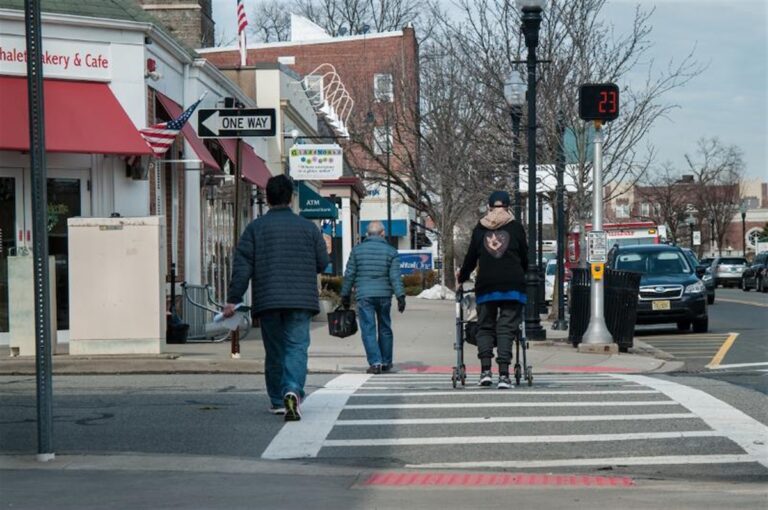
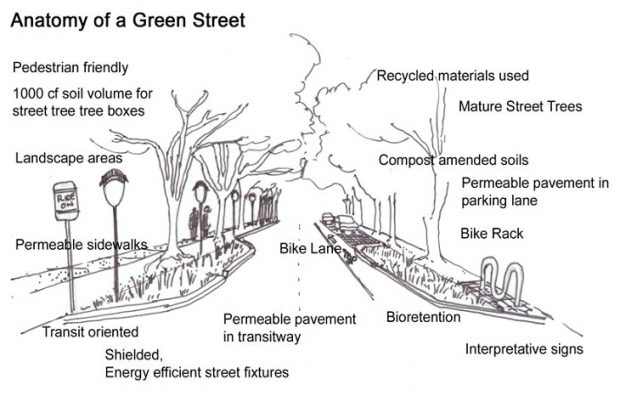
In 2022, the City of Trenton passed an ordinance to establish a Complete and Green Streets policy, which aims to create accessible and safe roads for bicyclists, public transit users, pedestrians, and drivers while incorporating green infrastructure to manage stormwater runoff, reduce air pollution, and more. Since then, the city implemented a wide variety of community engagement, construction, and research projects largely funded by state and federal grants to accomplish the goals in their adopted policy. At the same time, Trenton Water Works, a publicly owned drinking water system, is undertaking a lead service line replacement program in compliance with state legislation mandating the removal of all lead service lines statewide by 2031.

Courtesy of the Environmental Protection Agency (EPA)


In both areas, Trenton has excelled. New Jersey Future’s Managing Green Infrastructure program conducted research to log Complete and Green Streets resolutions or ordinances passed in the Delaware River Basin, as well as Complete and Green Streets projects municipalities took on as a result. Based on this research, the city is one of the leading municipalities in the Delaware River Basin for Complete and Green Streets green infrastructure projects. Since 2017, Trenton Water Works reported that it has already replaced almost 30% of its lead service lines and is currently developing a plan to replace its remaining service lines by 2031.

Despite this success, more work can be done. Trenton Water Works reports it has replaced approximately 10,000 lead service lines already, and estimates there may be up to 20,000 still remaining. Complete streets, tree-lined roads, and rain gardens have been constructed in certain areas throughout Trenton. “Our Streets: A Bike Plan for All” is a community engagement and urban planning project carried out by the Delaware Valley Regional Planning Commission and City of Trenton, has the goal of establishing complete streets all across Trenton. As of August 2024, the project is still developing its final report, highlighting that the work is nowhere near finished.

Implementing The Policy

Trenton is uniquely positioned to build on its success by implementing a dig-once policy while completing lead service line replacement and installing complete and green streets. Lead service line replacement requires digging up roads, lawns, and green spaces at multiple points in the removal process. Complete and Green Streets projects require repainting roads, installing safety equipment, planting trees and rain gardens, and extending roads. Implementing a dig-once policy would mean contractors for both projects align construction and contractors work collaboratively in the same locations. For example, as contractors dig up asphalt for lead service line replacement, infrastructure for green streets can be installed in the same areas. When the road is repaired and repaved, a complete streets design can be implemented. Having to “dig once” for two different projects saves on construction costs, limits construction disruptions and road closures, and reduces excessive environmental disruptions. 

As the state’s capital, Trenton has both the visibility to garner public support for such projects and the duty to act as a role model for other municipalities. With climate-related disasters reaching an all-time high, investing in climate-resilient infrastructure is more pressing than ever.

The difficulty lies in achieving such a high level of coordination between organizations doing unrelated work but aiming for similar improvements to water quality and public safety: Trenton Water Works, the New Jersey Department of Transportation, and the City of Trenton. Technical assistance providers, like New Jersey Future,  take the initiative to facilitate the required connections. Moreover, both lead service line replacement and Complete and Green Streets projects require oversight and involvement from overlapping intermediary organizations, like the NJDEP and the NJDOT. These state agencies can utilize their oversight to facilitate coordination between lead service line replacement and Complete and Green Streets projects. With state agencies and municipalities operating on limited budgets, fully funded by taxpayer dollars, coordinated planning on overlapping infrastructure initiatives is in the public’s best interest to save costs.

Closing

Collaboration has the power to make the dig-once policy a reality, saving time, money, and the environment all at once. In the vast majority of townships, the need for infrastructure improvements often exceeds the amount of funding available. Many projects, as is the case in Trenton, are funded with state and federal grants that are limited in quantity and require a township to dedicate additional resources just to apply. A lack of funding, however, does not cause community needs to disappear. Complete and Green Streets are necessary to create healthier, safer, and more comfortable communities resilient to worsening climate disasters. Lead service line replacement is vital to address the life-threatening effects of lead in our community’s drinking water. The dig-once policy offers a strategy to address Trenton’s community needs while saving money and resources. We must rely on innovative solutions to pave a path toward progress—and our state’s capital has the opportunity to lead the way.

Tags: complete and green streets, Complete Streets, funding, funding green streets, green infrastructure, pedestrian accessibility, Transit


[ad_2]

Source link

2024 Holiday Gift Guide: Jersey-Themed Books for Everyone on Your List

[ad_1]

Mail icon

get the best of where we live

  • Newsletters


[ad_2]

Source link

At Eddy Awards, a celebration of state’s innovation ecosystem – and the Jersey grit that comes with it

[ad_1]

The moment was so New Jersey, so we-were-Silicon-Valley-before-there-was-a-Silicon-Valley, so fitting of the theme of Thursday night’s 45th annual Edison Patent Awards sponsored by the R&D Council of New Jersey: Jersey Innovates, the World Takes.

Princeton University was being recognized with the Computer Technology award for a patent involving in-memory computing – an invention that brings together two key aspects of the process that previously had been separated (“where we store data that we’re going to be processing on from where we actually process the data,” they explained).

Don’t fully understand? Know this: It’s an invention that will be key in AI programming.

Princeton professor Naveen Verma accepting the Edison Patent Award.- Tom Bergeron

It’s an invention that Princeton professor Naveen Verma told the crowd at Bell Works in Holmdel that shows why New Jersey’s place in the innovation ecosystem is just as strong as it was in the days of Thomas Edison — and will continue to shine moving forward.

After thanking his colleagues and students at Princeton, Verma gave thanks to the spirit of the state.

He’s not a native by any stretch (he did his undergrade work in British Colombia), but Verma said he has seen in his 15 years at Princeton the power of the region — one he said can top the West Coast.

“There really is a transformation happening (here), especially as the challenges and problems that we face in society have become harder and harder,” he said. “(There is) a spirit to be able to take those on because they’re hard problems. I think it’s characterizing something that’s happening on the entire East Coast. And that’s great for us in New Jersey, to be able to work with our colleagues in states that surround us.

“But when you mix that spirit together with something that is really uniquely New Jersey, a level of grit, then I think you get really interesting invention. And so, it’s inspiring to be here with you. It’s inspiring to be here in New Jersey — to have all of that that come together.”

Verma summed up the essence of the most laudatory night in STEM in New Jersey all year.

Yes, there was talk about the state’s fabulous history, Edison and Einstein, transistors and the light bulb — and, of course, Bell Labs. But more importantly it was about the here and now, as the audience heard about all the latest breakthroughs, inventions that ran from fluoride to fusion, mechanical science to computer science, animals to AI.

The R&D Council honored 66 inventors who combined to work on 14 key patents. It also honored five key individuals who do so much to support the STEM ecosystem, including:

Visionary Award: Chris Paladino, the president of DEVCO, the chief developer of the HELIX in New Brunswick – for his assistance in building centers of innovation throughout the state;

Emerging Tech Award: Dr. Olivier Loudig, of Hackensack Meridian Health’s Center for Discovery and Innovation – for his groundbreaking work in cancer research;

Educator of Year Award: Tony Lowan, provost of Rowan University, for helping school become a model for STEM research and programs;

Catalyst Award: Judith Sheft, executive director of the N.J. Commission of Science, Innovation and Technology for its working in supporting the startup innovation community.

The top award of the night went to Brian Kernighan, who received the Science and Technology Medal.

Brian Kernighan received the Science and Technology Medal at the 45th annual Edison Patent Awards.

Kernighan, a professor at Princeton since 2000 after a distinguished three-decade career at Bell Labs, is a co-creator of several programming languages, including AWK and AMPL. He holds five patents but may be best known for co-authoring the C programming language with Dennis Ritchie, a foundational text that has taught generations of programmers the art of coding in C, which has become a cornerstone of modern software development.

By any metric, he is a living legend in computer science – yet he remains someone who was able to humbly suggest he had a case of ‘imposter syndrome’ to be receiving such a prestigious honor.

Kernighan quickly turned the moment to the innovation ecosystem that is the state.

“I’ve been enormously lucky in my career, spending it in two absolutely wonderful places, at Bell Labs … and Princeton,” he said.

“Those are very different institutions, but they share a number of things. And I think the thing that they share that is in some ways most important, is at each one, there’s just an astonishing group of interesting, talented, bright, innovative, creative people who are technically unbelievably capable, but at the same time, are just wonderful human beings – people who will help you, support you, contribute to what you’re doing and help make you a success.

“So, I’m honored by the award tonight, but it really is because of the company I’ve kept for the last 55 or 60 years at these two amazing institutions. So, it’s hard to express my gratitude adequately to all of the people who have helped me along the way.”

All of whom are helping make New Jersey what it is today.

A look at the patent honorees: The following companies, universities and organizations were honored (listed alphabetically):

  • BASF
  • Bristol Myers Squibb
  • Colgate-Palmolive
  • DEVCO
  • ExxonMobil
  • HMH-Center for Discovery and Innovation
  • Merck
  • N.J. Commission on Science, Innovation and Technology
  • Nokia Bell Labs
  • Princeton University
  • Princeton Plasma Physics Laboratory
  • Qualcomm
  • Rowan University
  • Rutgers University
  • Siemens
  • U.S. Army


[ad_2]

Source link

Opinion – Vote No On Atlantic City’s Ballot Question For Non-Partisan Elections

[ad_1]

This article was written by Michael Suleiman, chairman of the Atlantic County Democratic Committee.

To this day, the Voting Rights Act of 1965 stands as one of the most significant legislative achievements in American history. After a century of Jim Crow, and decades of Southern Democrats blocking civil rights legislation in the Senate, people of color finally had equal access to the ballot. Unfortunately, the Supreme Court’s ill-thought-out Shelby decision significantly weakened the Act, giving states like Georgia and Wisconsin the ability to purge voter rolls and enact abominable voter suppression laws.

The weaponization of voter suppression for political gain isn’t limited to historical figures such as Senator Richard Russell nor current governors like Governor Brian Kemp. It is alive and well in Atlantic City, where yet again a small group of council officials is, in my view, attempting to mislead the voters of Atlantic City.

Let’s be honest about what this small group wants to do: they want to suppress turnout in a minority-majority town like Atlantic City because they have been incredibly unsuccessful in winning elections. It’s yet another attempt by the political enemies of Mayor Marty Small to oust him and members of City Council. If elections are moved to May, where turnout would be no greater than 12% max1, then the ballot harvesting operation of Craig Callaway and his cronies is much more likely to succeed. This is precisely what happened in the late 1990s, when Callaway led another form of government change in an attempt to oust another popular mayor, Jim Whelan.

The inability or unwillingness of this group to be honest with the citizens of Atlantic City has cost them their credibility with voters. The head of the petition committee declared in The Press of Atlantic City that Callaway had no involvement in the referendum when in fact he circulated the petition and garnered many of the signatures. Leaders of the Atlantic County Republican Party denied any involvement in the “yes” campaign when in fact Assemblyman Don Guardian signed the petition and the Republican County Chair has been actively strategizing with members of the petition committee2. Why the absence of transparency?

Not once have the proponents acknowledged that May elections would cost Atlantic City residents at least $50,0003, with some estimates as high as $100,000. The sheer cost of designing and printing ballots, renting polling locations, added police personnel, salary of poll workers and elections staff, and other ancillary costs will undoubtedly raise taxes. This is precisely why Jersey City, which happens to be another heavily-Democratic municipality, moved its municipal elections to November, which saved taxpayer dollars and significantly improved voter turnout. It’s precisely why nearly every Board of Education in the state moved its elections to November, saving the state millions of dollars a year.

I do not live in Atlantic City, and the “yes” vote campaigners, I’m sure, will accuse me of being an “outsider” who has “undue influence” over Atlantic City. My expertise and authority on Atlantic City matters doesn’t come from the fact that I’m County Democratic Chairman, nor from my experience working on Atlantic City bills and public policy in the State Legislature, nor from my graduate education in public administration; rather, my perspective comes from the democratically-elected Atlantic City Democratic Committee.

There are 21 voting precincts across all six wards in Atlantic City, each of which elect a man and a woman. These 42 dedicated, hard-working men and women serve as the eyes and ears for literally every neighborhood in Atlantic City. It’s an incredibly diverse group of African-American, Hispanic, South Asian, Asian, and Caucasian individuals. I know all of them personally, and many I consider personal friends. They have their finger on the pulse of what’s going on in their communities, and what I’ve learned from these 42 individuals, and what I’ve learned from hundreds of average citizens I’ve spoken to throughout Atlantic City, is that they’re concerned about kitchen table issues: affordability, healthcare, clean and safe streets. Residents are far more concerned about paying their rent or mortgage, putting their kids through college, and getting bad guys off the streets. The silly topic of when elections are held never once entered their head until a month or two ago.

The voters of Atlantic City are smart. They saw through this charade two years ago when they overwhelmingly rejected a similar referendum. I urge the residents of Atlantic City to solidify control of their city and once again vote “No” on this farce.

Footnotes:

  1. Turnout for the recent Greater Egg Harbor School Board election was approximately 12% and the last municipal elections in Essex County, which the proponents cite, was 12%.
  2. I have had multiple conversations with operatives and elected officials in the past few months who have told me that the Republican County Chair and/or his operatives have reached out to them to support the referendum.
  3. There are 21 voting precincts in Atlantic City, each requiring six poll workers (three Democrat, three Republican). They are now paid $300 for the day, so for Election Day itself the cost alone for poll workers, not including couriers, team leaders, etc., is $37,800. Add overtime cost for police, the compensation offered to locations that are polling places, the aforementioned couriers and team leads, the printing and mailing of mail-in ballots (which you need to offer), and costs to the County Board of Elections and you’re easily over $50,000.

This article reflects the opinions of the author and not necessarily the views of Route 40. To submit an opinion article to Route 40, please email usand read our guidelines on opinion content.


[ad_2]

Source link