Explore New Jersey

Home Blog Page 508

Insider NJ’s Morning Intelligence Briefing: 11/27/2024

[ad_1]

Below is Insider NJ’s Morning Intelligence Briefing:


QUOTE OF THE DAY: The reasons for that is that the Democratic leadership in the state party have largely been complacent for a long time and haven’t focused on building any infrastructure and because the state party has viewed New Jersey as reliably blue.” – Jersey City Mayor Fulop


TOP STORY: Sumter Confident of Positive Resolution to LD-35 Collision Course

 

Insider NJ's Morning Intelligence Briefing


The Morning Intelligence Briefing will be off tomorrow and Friday, and will return on Monday. We wish all of our readers a Happy Thanksgiving and holiday weekend.


Download and read Insider NJ’s 2024 Insider 100: Power publication.


More than 2M New Jerseyans will travel 50 miles or more this Thanksgiving, according to the Press of Atlantic City.


An attorney for Nadine Menendez is seeking a trial delay over a January 6th case conflict, according to NJ Monitor.


The state ranks 49th for fluoride-treated water, according to NJ Spotlight.


A plan to force residents to bring in their birdfeeders is ruffling feathers, according to NJ.com.


The Wharton State Forest vehicle roadmap was finalized but motorists say its too restrictive, according to the Press of Atlantic City.


Senator-elect Kim discusses his Philly roots, Trump’s Cabinet, and next steps for Democrats, according to the Philadelphia Inquirer.


Garden State Equality commended Republican Mike DuHaime for speaking out against the House GOP’s bathroom access restrictions.


Moxie Strategies expanded its team and geography.


ICYMI: Gottheimer launched campaign for Governor; Sherrill launched candidacy for Governor; Democrats lost strength; voters aren’t familiar w/ guv candidates; Murphy addressed the loss of Democratic strength

 

Insider NJ's Morning Intelligence Briefing


The GOP smells blood in the gubernatorial race, according to the Hill.


In LD35, Assemblywoman Sumter is confident of a positive resolution to the collision course for the Senate seat.


In LD36, Republican Musto launched an Assembly bid, according to NJ Globe.


In LD39, Pallotta is eying an Assembly candidacy in the GOP primary.


Bill Spadea slammed Jack Ciattarelli for not mirroring Trump’s immigration views, according to NJ Globe.


Rep. Gottheimer launched his first digital ad for his gubernatorial campaign. Gottheimer gave $37k to the HCDO ahead of the party’s potential switch to Sherrill, according to Hudson County View.


‘Door-to-Door Democracy’ endorsed Rep. Sherrill for Governor.


Former Senator Durr hasn’t raised any money for his gubernatorial bid, according to Politico NJ.


ICYMI: Fulop’s palpitating moves; insiders tried to make sense of the presidential election; Auth playing long game; guv candidates converged at League, Sherrill made the rounds, Sweeney flexed political muscle; Bergen shifted more red; more Assembly candidates joined Fulop slate; Sweeney allies see path to victory; guv race taking shape; Baraka allies energized; firefighter unions split over guv race; Dems ready to find themselves; Hispanic Democratic dissatisfaction has grown; Bramnick faces difficult path; Ciattarelli sees advantages; Duarte looking ahead to 2025


 

Insider NJ's Morning Intelligence Briefing


Insider NJ's Morning Intelligence Briefing

Insider NJ's Morning Intelligence Briefing


In Hoboken, Hudson Executive Guy and Chair Romano called on the commissioners to approve public safety upgrades funding for the city.


In Atlantic City, the ‘hard work is paying off‘ in the Chelsea neighborhood, according to the Press of Atlantic City.


In Edison, the council banned the American flag and other ‘props’ at meetings, according to MyCentralJersey.


In Hasbrouck Heights, GOP officials endorsed Ciattarelli for Governor, according to NJ Globe.


In Lakewood, the town hasn’t responded to a minister seeking a permit to help the poor, according to the Asbury Park Press.


In Little Falls, officials are taking action to comply with new flooding guidelines, according to TAPinto.


In Maplewood, Democrats pulled their support of the mayoral candidate after she refused to endorse Rep. Sherrill for Governor, according to NJ Globe.


In Morris Plains, residents continue to push back against a proposed McDonald’s, according to NJ Hills.


In Nutley, the town has a new trash collection scheme, according to TAPinto.


In Ocean City, residents spoke out against Bible study on school time, according to the Press of Atlantic City. There was a packed turnout for a public glimpse of Wonderland hotel plans, according to the Press of Atlantic City.


ICYMI: In Morristown, familiar name resurfacing; in Marlboro, sign-stealing an issue; in Howell, GOP won election; in Marlboro, voters elected split BOE ticket; in Hoboken, Councilwoman Giattino passed away; in Howell, little unity w/in GOP; in Marlboro, tensions rising in the BOE race



AROUND THE WEB:


ICE explores expanding NJ immigrant detention facilities, potentially adding 600 beds

Jeff Gammage, The Philadelphia Inquirer


  • ICE is exploring proposals to expand its capacity to detain immigrants in New Jersey, potentially adding 600 beds in at least two facilities, according to information provided through a lawsuit filed by the ACLU.


After 30-hour trip on the Hudson, the first arch for NJ Transit’s rail bridge is in place

James M. O’Neill, NorthJersey.com


  • The first of three giant arches that will support a new railroad bridge over the Hackensack River has been moved into place at the construction site, and NJ Transit and Amtrak officials gave the media a tour of the arch Tuesday. The arches will help support the new Portal North Bridge spanning the Hackensack between Kearny and Secaucus, replacing the 114-year old Portal Bridge, a swing bridge that often gets stuck, causing frustrating delays for Amtrak and NJ Transit riders.


What will that surgery cost? Group says NJ hospitals aren’t posting prices correctly

Scott Fallon, NorthJersey.com


  • The push in recent years to require hospitals to post their prices online had a simple but profound goal: Patients could shop around for the first time, forcing competition among health care providers and ultimately lowering costs or at least keeping them stable.


Gov. Murphy’s congestion pricing vendetta harms New Jerseyans | Opinion

Charles Komanoff


  • A week after New York Gov. Kathy Hochul exhumed the nation’s first congestion pricing program, opposition to the toll plan from the suburbs continues unabated. A lawsuit in federal court by Phil Murphy, one of nine court cases seeking to block the program, is considered opponents’ best shot at holding up the tolls before president-elect Donald Trump takes office in January.


Mass deportation will have a greater impact than backers bargained for | Quigley

Joan Quigley, For The Jersey Journal


  • How you ever done something or ordered something that seemed like a good idea at the time but turned to be not at all what you expected? Recently l ordered a beautiful summer dress to wear to a special event. When it arrived I was shocked to find it had no back. The online photo showed a high-necked front but didn’t reveal it dipped to the waist in back.


See what Monmouth’s Mall demolition looks like – November 2024

Matt Brandt, NJ1015


  • It’s been a while since we’ve thought about the Monmouth Mall. The reason for that, however, is pretty obvious. The property is being completely transformed. It is, however, a smart move. As time goes by, shopping habits change, and so does the type of shopping experience we prefer. But it goes even deeper than that. How and where people hang out also changes over time. Today, in particular, people tend to prefer open-air environments as opposed to being enclosed. And that’s one of the reasons why the Monmouth Mall is undergoing the changes it is.

(Visited 546,866 times, 21 visits today)

[ad_2]

Source link
The Morris County Prosecutor’s Office Celebrates its Bicentennial – Morris County, NJ

[ad_1]

Published on October 31, 2024

County Commissioners Honor Office for 200 Years of Service

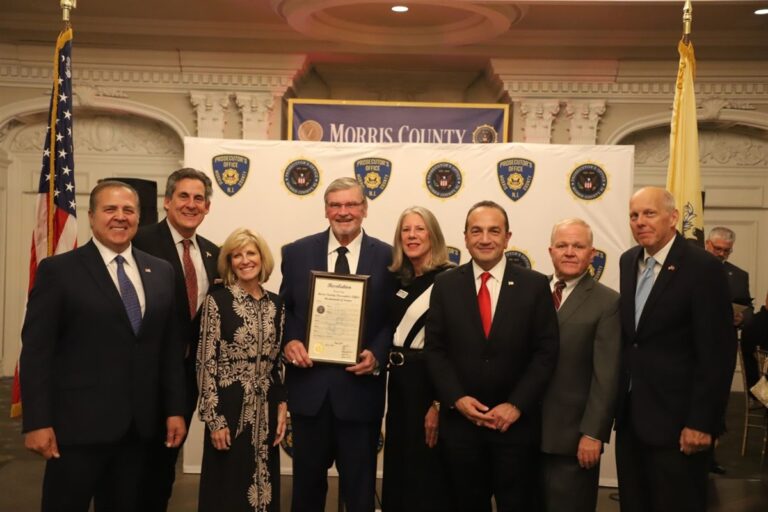
2024 MCPO Bicentennial Gala The Morris County Board of County Commissioners honored the Morris County Prosecutor’s Office (MCPO) during a bicentennial dinner gala last night at the Park Savoy Estate in Florham Park, marking the office’s 200 years of dedicated service to law and public safety.

Commissioner Douglas Cabana, joined by the full Board of County Commissioners, presented a framed resolution of honor to Prosecutor Robert J. Carroll and his leadership team in recognition of the MCPO’s bicentennial.

“Since 1824 the Prosecutor’s Office has been entrusted with promoting a safe and secure environment for Morris County, and I think we can all agree that they have done an exemplary job,” said Commissioner Cabana, the board’s liaison to the law enforcement in Morris County. “Morris County stands today as one of the safest counties in the state, if not the country. The strength of the institution we honor tonight lies, of course, in its people.”

Representatives from the offices of U.S. Rep. Tom Kean and U.S. Rep. Mikie Sherrill, Sheriff James Gannon and Atlantic County Prosecutor William E. Reynolds also presented honors and praised Prosecutor Carroll and the MCPO for their work. Among those in attendance was retired Appellate Court Judge Donald Collester, who became Morris County’s first full-time prosecutor in 1971 and served until 1977 before becoming a Superior Court judge.

Seated with him during the gala were retired Superior Court JudgesStephen Smith and Thomas Critchley, who continues to serve on recall dutyThe event was attended by other sitting judges as well as current and past members of the prosecutor’s office, including former Morris County Prosecutors Fredric Knapp and Robert Bianchi.

View Photos from the MCPO Bicentennial Dinner Gala

The MCPO was established on December 11, 1823, when the New Jersey General Assembly passed legislation requiring prosecutors to be attorneys appointed for five-year terms — a practice that continues today. George K. Drake, the first “Prosecutor of the Pleas,” took office on December 20, 1824.

Prosecutor Carroll was appointed to his five-year term by Governor Phil Murphy in 2020.

“As the chief law enforcement agency serving a region that predates the founding of our nation, the Morris County Prosecutor’s Office aims to build upon the foundation and commitment to justice demonstrated by the men and women who have served before us,” said Prosecutor Carroll. “Our dedication to lawfulness is the cornerstone of our office’s mission – committing resources in partnership with the law enforcement community, our County Government and Sheriff’s Office and most importantly, the citizens of Morris County, all working together to promote a safe and secure environment.”

Since its founding, the MCPO has evolved to address the changing needs of county residents. Under the guidance of Prosecutor CarrollFirst Assistant Prosecutor Maggie Calderwood and Chief of Detectives Robert McNally, the office has upheld a legacy of excellence in investigating major criminal enterprises and addressing critical issues impacting the community.

From bringing closure to the decades-old “Baby Mary” cold case to tackling the opioid crisis, the MCPO has taken on some of the county’s most pressing challenges. Their efforts have earned commendations from numerous law enforcement agencies and strengthened trust within the community. Among the many awards and honors earned by the MCPO, Prosecutor Carroll was recently named Prosecutor of the Year by the New Jersey Narcotics Enforcement Officers Association.

“Law enforcement cannot exist without community support,” said Morris County Sheriff James Gannon, who served as Deputy Chief of Investigations for the MCPO from 1986 to 2007. “This is something that the Prosecutor’s Office has understood from the beginning. We are a county that takes action, that gets out into neighborhoods and offers solutions.”

“Celebrating 200 years of the Morris County Prosecutor’s Office is a remarkable milestone, and we owe a debt of gratitude to everyone who has served here. Our county’s rich history is grounded in the assurance that we live in a place where justice and safety are paramount,” said Commissioner Director Christine Myers.

Myers, who serves on the Morris County’s 250th Anniversary Steering Committee, also noted that the MCPO’s bicentennial aligns with the upcoming America250 celebrations in 2026 as the county prepares to honor our nation’s 250th anniversary.

###

Photo: (l-r) Commissioner Thomas Mastrangelo, Commissioner Deputy Director Stephen Shaw, Commissioner Director Christine Myers, Prosecutor Robert Carroll, Commissioners Douglas Cabana, John Krickus, Tayfun Selen and Deborah Smith.


[ad_2]

Source link

New Jersey’s Housing Landscape: The Mount Laurel Doctrine and the Search for the Missing Middle

[ad_1]

July 30th, 2024 by Tim Evans

The rising costs of housing in New Jersey are affecting everyone, especially individuals and households at the lower end of the income spectrum. New Jersey’s unique Mount Laurel doctrine is meant to address the need for housing for lower-income households, but it also indirectly has a major effect on the supply of market-rate multi-family units in the process. The process by which towns satisfy their affordable housing obligations does not guarantee a full range of housing options for a full range of household types and incomes. The Mount Laurel requirements ought to serve as a prompt for towns to think holistically about their housing supply in general—how much and what types of housing will they need to accommodate the needs of future residents?

Panelists in the session “Knowing the Numbers: Housing Allocation, Patterns of Development and the Future of Housing” at the 2024 Planning and Redevelopment Conference discussed the current state of affairs in housing in New Jersey, for affordable housing and beyond. Moderator Creigh Rahenkamp, Principal of CRA, LLC, and Tim Evans, Research Director at New Jersey Future, gave background about the housing supply in general, and Katherine Payne, Director of Land Use, Fair Share Housing Center; Graham Petto, Principal, Topology; and David Kinsey, Partner, Kinsey & Hand talked about what to expect from the latest changes to the state’s system of incentivizing affordable housing. Panelists all agreed that the Mount Laurel system is necessary but not sufficient to provide the full range of housing options that New Jersey’s future population will need.

 “Mount Laurel” and Affordable Housing

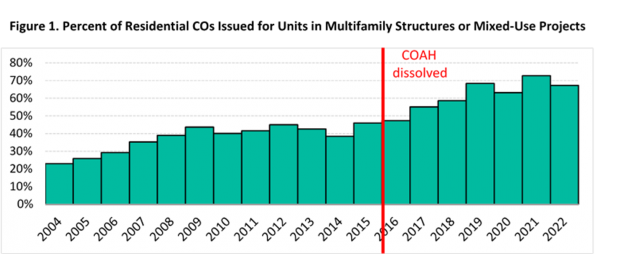
The Mount Laurel doctrine refers to a series of New Jersey Supreme Court decisions that direct municipalities to provide their “fair share” of the regional need for low- and moderate-income housing. For many years, enforcement of the requirements was the responsibility of the Council on Affordable Housing (COAH), but the Council was effectively dissolved in 2015 when the Court deemed it ineffective and handed enforcement authority back to the judicial system. Payne cited her organization’s 2023 report Dismantling Exclusionary Zoning: New Jersey’s Blueprint for Overcoming Segregation to point out that the annual production of affordable units increased substantially after 2015 under the subsequent more rigorous court oversight. (She pointed out that the vast majority of affordable housing is produced in the form of multifamily housing.) The report also found that most of the overall growth in multifamily housing (primarily apartments) over the same time period has been achieved in inclusionary Mount Laurel projects, projects that contain both income-restricted and market-rate units, to the extent that 81% of all multifamily units built since 2015 were built in connection with the Mount Laurel process. Reinforcing this relationship, Evans cited data showing certificates of occupancy (COs) for multifamily housing rising in the post-COAH era (see Figure 1 ) to the point where multifamily units now account for more than half of all housing production. “This shift in permitting activity is being driven by Mount Laurel-associated re-zonings,” Payne said.

Production of multifamily housing has increased steadily in the post-COAH era. More than 4 out of 5 multifamily units built since 2015 are associated with Mount Laurel projects, either as affordable units or as market-rate units that are part of mixed-income projects.


Administration of the Mount Laurel process has recently undergone another significant change with the passage of new legislation, in the form of Assembly Bill 4/Senate Bill 50 this year. Among other things, the legislation sets up an oversight mechanism within the executive branch and directs the Department of Community Affairs to implement a methodology for determining municipal affordable housing obligations, based on three factors—income capacity, non-residential property valuation, and developable land. While the rules will take time to create, Petto said municipalities can and should get started now in preparing plans for compliance, including thinking about where in town the Mount Laurel units will be located and how to earn extra credit for certain types and locations. Kinsey mentioned that the legislation allows for bonus credits for such features as proximity to public transportation, special-needs or supportive housing, and redevelopment of a retail, office, or commercial site.

Redevelopment as the New Paradigm

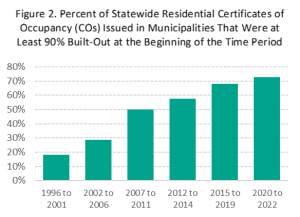
Many new Mount Laurel units will be constructed in redevelopment areas, if the overall pattern of population growth in recent years is any indication. Evans showed that most of the state’s housing growth over the last decade and a half has been happening in already-built-out areas (see Figure 2 ).

Redevelopment is the new normal: An increasing share of New Jersey’s housing growth has been happening in already-built places.

It is clear that “built-out” does not necessarily mean “full,” and that redevelopment areas offer plenty of opportunities for municipalities to create more housing, both for Mount Laurel and market-rate. As such, the new legislation requires municipalities to develop plans for “conversion or redevelopment of unused or underutilized property, including existing structures if necessary, to assure the achievement of the municipality’s fair share” of affordable housing.

The “Missing Middle” Is Still Missing

Payne reminded listeners that the Mount Laurel doctrine originally arose when the New Jersey Supreme Court ruled that municipalities cannot practice “exclusionary zoning,” by which they effectively exclude lower-income households by writing their zoning codes to allow nothing but single-family detached homes, which are less affordable to households of modest means. Such zoning is still very common: “About 75% of land in major US cities is zoned exclusively for single-family housing, which has implications for access to opportunity,” Payne said.

While the Mount Laurel process was set up to ensure the provision of housing for lower-income households, it does not address other types of housing that are left out by exclusionary zoning and are thus in short supply. The wide array of housing options between single-family detached units on one end of the scale and large apartment buildings on the other are often called the “missing middle,” because many places simply don’t plan for them. This includes options like duplexes, triplexes, small apartment buildings, apartments above stores, and accessory dwelling units (ADUs), a category that itself includes small, separate units that are attached to or on the same property as a larger unit, like above-garage apartments or “in-law suites.” Evans illustrated how housing units in 2-, 3-, and 4-unit buildings have declined as a share of total housing units, from 30% of all units in 1950 to half that share as of 2021 (see Figure 3 ). Kinsey further noted that the number of units in structures with 2 to 4 units has actually decreased in absolute terms, dropping from about 514,000 in 1970 to about 490,000 in 2020.

“Missing middle” housing options in buildings with 2 to 4 units have declined dramatically since 1950 as a share of total housing units.

Another conference session, “We’re Missing Middle Housing in New Jersey: How to Fix It,” was devoted entirely to these missing options and strategies to bring them back. One of the speakers in that session, Karla Georges of the national American Planning Association, identified states where “missing middle” housing bills have passed, including Washington, Colorado (HB1316 and HB1175, and Arizona. Kinsey mentioned one modest New Jersey effort, bill S2347 currently being considered by the legislature, that would authorize ADUs statewide. Meanwhile, some New Jersey municipalities have legalized ADUs on their own, without waiting for statewide legislation.

In any event, while New Jersey is ahead of most of the rest of the country in having the Mount Laurel doctrine and its supporting legislation, this is insufficient as a mechanism for ensuring the production of a full range of housing types, without which people will continue to migrate out of New Jersey in search of cheaper options. As New Urbanist pioneer Peter Calthorpe has observed at the national level, “We cannot build this country on subsidized housing. We’re never going to get the end result. We have to create the context, the policies, and the zoning that make middle housing viable and located in the right locations.” New Jersey now needs to follow the lead of other states in exploring strategies to break the stranglehold of single-family zoning, so that households of all incomes can afford to call New Jersey home.

Tags: 2024 NJ Planning and Redevelopment Conference, Affordable housing, Housing, housing and equity, missing middle, Redevelopment


[ad_2]

Source link

Our Favorite Old-School Dining and Drinking Haunts in New Jersey

[ad_1]

Don’t get us wrong—hitting up buzzy restaurants and bars is one of our favorite pastimes. But sometimes, it’s the the old-school, dive-y spots that we crave more than anything else!

Here are some of our favorite homey and historic haunts.

This red-wine, red-sauce, red-checkered-tablecloth establishment is hands down one of the best places to eat in our great state. Chicken Savoy—Frankie Valli’s favorite—was invented here in 1967, the same year it opened. Hospitality and nostalgia oozes from the always-packed Belmont, where you always feel like you belond.

Have you tried the famous deep-fried Ripper hot dog at Rutt’s Hut? Open since 1928, the establishment sits above the intersection of Routes 3 and 21, so if you take your order to go—“traveling,” they call it—you get your hot dog with a side of fumes. Does it get any more Jersey than that?!

It’s gone through numerous transformations, but the Ho-Ho-Kus Inn first opened as a tavern in 1890. Visiting is like stepping back in time: Its farmhouse was built in 1796, and the walls have a palpable history. It’s a nice place for an elegant night out, and there’s even an elevated kids menu.

Open since 1947, Vic’s is the spot to go down the Shore when you’re craving those old-school, absolutely delicious classics your Nonna used to make. The vibes are immaculate, as first signaled by the exterior’s neon signage. Inside, you’re greeted with delightful green leather booths. Oh, and the bar pies are top-notch.

Is it a dive? A burger den? A beer-and-shot joint? Honestly, it’s all three. If you’re feeling sort of mixed up and unsure of things, go to Krug’s, which has been open since 1932. (Get the burger—it’s one of the best in the state.) You’ll emerge from the evening with a renewed sense of calm.

Conte’s, open since 1950, is a constant—and one of NJM‘s favorite restaurants in Princeton. (It was formerly Witherspoon Bar, which opened in 1936.) The thin-crust pizza with zesty sauce is a must-try when you visit this idyllic, historic college town. The space is anchored by a wrap-around bar with glass bricks in red and green; look closely and you’ll spot the restaurant’s name spelled out.

Fishing rods and taxidermied animals dot the walls at this family-owned establishment, open since 1936. (The titular Steve was an avid outdoorsman.) Steaks do indeed come sizzling, and accompanied by fries. You may need a bib to protect your clothes from the famous sauce.

Lee’s is a haunt of the highest order—from the weekend karaoke to the extremely potent tiki drinks to the indoor waterfall to the fumes from the ethanol gel in the Sterno burner underneath the pu-pu platters. A night at Lee’s—which is currently for sale—is one of the top experiences in northern New Jersey.

Atlantic City is best known for its casinos, beaches and first Boardwalk in the country. But for many New Jerseyans, the outstanding White House Subs, open since 1947, doesn’t lag far behind in importance! There’s always a line for these absolutely gigantic sandwiches (and very limited indoor booth seating). The Italian and steak options are popular; we also love the peppers-and-eggs sub!

Which location came first remains up for debate—but the deliciousness of the burgers at both spots does not! The Jersey City location on Tonnelle Avenue was originally built for the 1939 New York World’s Fair.

Open since 1975 (and currently on the market), Lucille’s is known for its pies as well as its country-style comfort food with Jersey touches, like pork roll and a clam chowder nicknamed after the Pine Barrens.


No one knows New Jersey like we do. Sign up for one of our free newsletters here. Want a print magazine mailed to you? Purchase an issue from our online store.


[ad_2]

Source link

Career Classroom: High School Biotechnology Programs Support New Jersey’s Dominance in Health Sciences

[ad_1]

As the “medicine chest of the world,” New Jersey has a rich life sciences community with pharmaceutical, research, medical technology and other industries all finding homes in the state. “They are here for the skilled workforce,” Chrissy Buteas, president and chief executive officer of the HealthCare Institute of New Jersey, said. “So, a real focus for us is supporting that skilled workforce.”

Buteas addressed school leaders from New Jersey’s 21 county vocational-technical schools over the summer, sharing current and emerging job opportunities in health care throughout the state and the need to continue offering programs that encourage and train students for such opportunities.

Buteas commended the vocational-technical schools for broadening program offerings in health sciences to prepare students for a range of careers and next steps. She added that the expansion of biotechnology programs specifically addresses many of the sought-after skills in health sciences. In fact, an analysis by the New Jersey Department of Labor over the summer showed biotechnology among the top five specialized skills required for health sciences job postings.

With such demand, the timing was ideal for the September opening of the Passaic County Technical Institute’s John Currie Biotechnology Innovation Center. Made possible with funding from the Securing Our Children’s Future Bond Act, the state-of-the-art 55,000-square-foot facility increases capacity in the career program for hundreds of additional students from grades 9-12. Inside are highly specialized learning spaces, including New Jersey’s first DNA Learning Center.

The DNA Learning Center is equipped, licensed and operated by Cold Spring Harbor Laboratory and supported by InnovATEBIO, a global leader in biomedical research and education. Such industry involvement makes it possible for students to gain hands-on experience in a rapidly advancing sector of biotechnology. (See video here.)

Michael Petruccelli, supervisor of the PCTI Biotechnology Program, said both Cold Spring Harbor and Passaic County Community College played roles in developing a curriculum to prepare students for a wide range of career opportunities, such as lab technicians, researchers, biophysicists, geneticists and more. Depending on the students’ ambitions, they also can earn an associate degree and industry valued credentials as part of their high school learning experience.

Chrissy Buteas. (File photo)

Buteas said relationships between industry and academia are so important for workforce development that they have become the focus of a new Life Sciences Industry Partnerships initiative led by the New Jersey Department of Labor. “It’s important to create partnerships that help students realize the career paths available in the life sciences and support them in pursuing those paths,” she added.

While the Department of Labor is moving this initiative forward on a state-wide level, the county vocational-technical schools have long incorporated industry partnerships into their educational models. Schools build dedicated Advisory Boards for their career programs, whose members review curriculum, serve as guest speakers and even open their doors for student visits. Most schools also designate individuals or full departments to place students in work-based learning and positions with help from their industry connections.

“Our School-to-Careers Department makes us unique in that we have an entire group of employees dedicated to placing students in industry before or after graduation,” Petruccelli said.

At Biotechnology High School (BTHS), part of Monmouth County Vocational School District, Principal Sharon Bryant, Ed.D., said partnerships are critical for students’ culminating learning experiences. “All seniors participate in a mentorship capstone experience before graduation, and our numerous partners support our students in applying their skills and knowledge in a workplace.” She added that the high school’s alumni and Advisory Board members, as well as area companies like Team Life, Inc. and Sunrise Senior Living, hospital systems and municipality EMT programs, all work closely with BTHS to secure mentors for students. (See video here.)

“The local experiences during mentorship also introduce our students to the relevance and local contribution of nearby companies and facilities in enhancing this field,” Bryant said. She and the BTHS instructors emphasized that their collective goal is to “immerse our students in community engagement and retention within the biotechnology field, while promoting international skills and communication through the International Baccalaureate curricula to grow biotechnology from a global perspective.”

Biotechnology High School in Freehold, part of Monmouth County Vocational School District, was ranked fifth best high school in the state and the 37th best public high school in America by U.S. News & World Report. ­— BTHS

BTHS’ approach has earned the high school impressive results. U.S. News & World Report ranked it the fifth best high school in the state and the 37th best public high school in America. 

BTHS instructors recently polled a small group of students about their motivations to enter such a highly focused, rigorous program. The students: Nicholas French, Alay Galvankar, Emily Gerchak, Annika Raj, Ella Stastney and Kaanchi Utpat said they believe the future is wide open in the field and that new pathways will open that “don’t yet exist or that we don’t even know we need yet.” They also said that working in the biotechnology field will allow them to “make an impact for many people, whether directly in the sciences or changing policy.”

This is the exact sentiment Buteas hopes to instill in bright, ambitious young people as they consider a future in the health sciences. During a recent speaking engagement with the Department of Labor, she addressed student attendees, saying, “This industry is really special; you have the opportunity to either greatly improve or save someone’s life by working in this industry.”

Conversation Starters

Reach Passaic County Technical Institute at pcti.pctvs.org/pcti or call 973-790-6000.

Reach Biotechnology High School at bths.mcvsd.org or call 732-431-7208.

If you’re an industry professional looking to support life sciences programs, including those in biotechnology go to careertechnj.org/become-an-employer-partner.

This series on education and industry is presented by the New Jersey Council of County Vocational-Technical Schools.


[ad_2]

Source link

Atlantic City Looks To Repeat Summer Camp Success

[ad_1]


Hundreds of Atlantic City kids this year got their first ever taste of city-run summer camps. Now the city is looking to make sure it can replicate the experience next year as well as expand its recreation services to seniors and other underserved residents.

Years of financial difficulties and, more recently, the COVID-19 pandemic meant that Atlantic City was unable to staff a recreation department. This spring, however, the city began hiring to build out its youth services, senior services and multicultural offices. Mayor Marty Small said this had been a passion of his and he had been determined since taking office to make more services available to both young people and senior citizens in Atlantic City. Small also wanted available activities to go beyond sports, he said. “Yes, being an athlete is great, but one day those days are over,” Small, a former college basketball player, said. “We wanted to focus on all children, and give them an opportunity.” The city received a $1.5 million anti-violence grant from the state and put some of that money to work running the programs. Small said that while by August last year there had been nine deaths due to gun violence in the city, this year to date there have been none.

Small hopes to expand the camps for next summer and to provide more free services for everyone in the city year-round. Although funding is not yet in place to run camps next summer, the city is confident it will be. “No parent under this administration will be able to say there’s nothing for kids to do in Atlantic City,” Small said. “That just won’t happen.”

The Whelan’s Whales swimming program (photo provided by Atlantic City)

The free programs this July included an NFL Flag Football camp every Friday, as well as an all-sports recreation camp, a youth services camp and a multicultural camp that ran Monday-Thursday afternoons. There was also a swimming program run by a local nonprofit. The camps were held at different neighborhood schools, so that parents and guardians whose children were enrolled in the morning-only summer school program would have childcare through the afternoon.

Although Small’s wife is the superintendent of the Atlantic City school district, city officials said they had to coordinate with the school board and apply for permission to use the school buildings. This was no small task, since all of Atlantic City’s school facilities including playgrounds, sports fields and swimming pools are closed to Atlantic City students outside of school hours and the school district has long been reticent to open its facilities to provide non-school services. The camp kids, however, appreciated the access to the air-conditioned gyms and auditoriums and parents appreciated knowing their kids were safe inside familiar buildings.

NFL Flag Football (photo provided by Atlantic City)

The turnout for the camps was impressive: 300 children registered for the sports camps and the Whelan’s Whales swimming program had 100 students as well as a waitlist of another 100. The smaller multi-cultural and youth services camps were also oversubscribed. Outreach in Atlantic City can be a challenge because of language barriers but Tasha Devonish, assistant director of youth services, said the city worked hard to get the word out about the camps in the two months between the end of April and June, when registration began. “We utilized social media, word of mouth, we passed out flyers. We knocked on doors, we walked through the neighborhoods, we went into stores,” Devonish said.

Photo provided by Atlantic City

The city’s recreation department is now working in collaboration with the school district to offer more sports to children. Before this summer, school sports teams only existed at the high school level but now there are soccer and basketball teams for middle-school-aged students and the city’s Jarrod Barnes hopes to make more sports available. “We want to be able to bring baseball, soccer, lacrosse, pickleball…Pickleball is huge now,” he said.

The youth services and multi-cultural services departments are also working on fall and spring activities, while the city’s department of senior services will host its first senior boat ride day on Monday. Plans for weekly zumba classes are in the works, too.

(Paragraph two of this article was edited on August 22 to reflect the correct size of the anti-violence grant received by the city)


[ad_2]

Source link

Police Officer Job  | Cherry Hill Township, NJ

[ad_1]

On November 11, 2024, the Cherry Hill Police Department will begin accepting applications for the position of Police Officer. Below is a list of the minimum qualifications needed to be eligible to apply:  

 Minimum Qualifications:

  •             18 years of age and hired on or before their 35th birthday
  •             US citizen and resident of New Jersey with unrestricted NJ driver’s license when hired
  •             60 college credits, or 30 credits with 2 years Full Time law enforcement/military experience
  •             Pass background, psychological, medical and drug test
  •             Be of good moral character

 The following is a list of components you must pass:

  •             Written Examination
  •             Physical Ability Test
  •             Interview

 The Cherry Hill Police Department utilizes the National Police Officer Selection Test, additional information can be found at the Stanard and Associates Inc. web site:

            https://www.applytoserve.com/study/

 Minimum testing standards for the Physical Ability Test:

  •             Sit-ups (28 repetitions in one minute)
  •             300 Meter run (70.1 seconds or less)
  •             Push-ups (24 repetitions in a minute)
  •             1.5 Mile run (15:55 minutes of less)

 Qualified applicants may click on the Module I application link below and submit the form.   Applications may be obtained in person from Police Records during normal business hours or email chpdjobs@cherryhillpolice.com and request an application be emailed.  

 APPLICATIONS ARE DUE NO LATER THAN December 16, 2024 at 4:00 PM


Apply here: https://www.chnj.gov/FormCenter/Cherry-Hill-Police-9/2025-Module-I-Cherry-Hill-POLICE-OFFICER-211

Cherry Hill Township is an Equal Opportunity Employer

===============================================================================================

If you are a NJ PTC certified applicant, use the below Module I Application form.

Click on Module I Application(FOR NJ PTC CERTIFIED APPLICANT ONLY)  to complete and submit

 Cherry Hill Township is an Equal Opportunity Employer

[ad_2]

Source link

Rutgers Hosts Leadership from the Federated States of Micronesia : Newsroom

[ad_1]

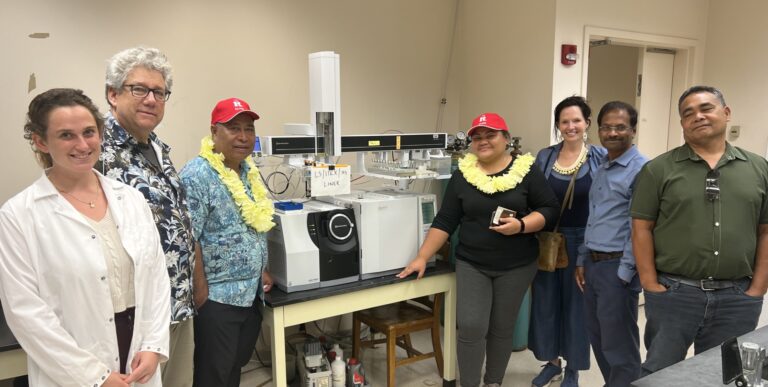
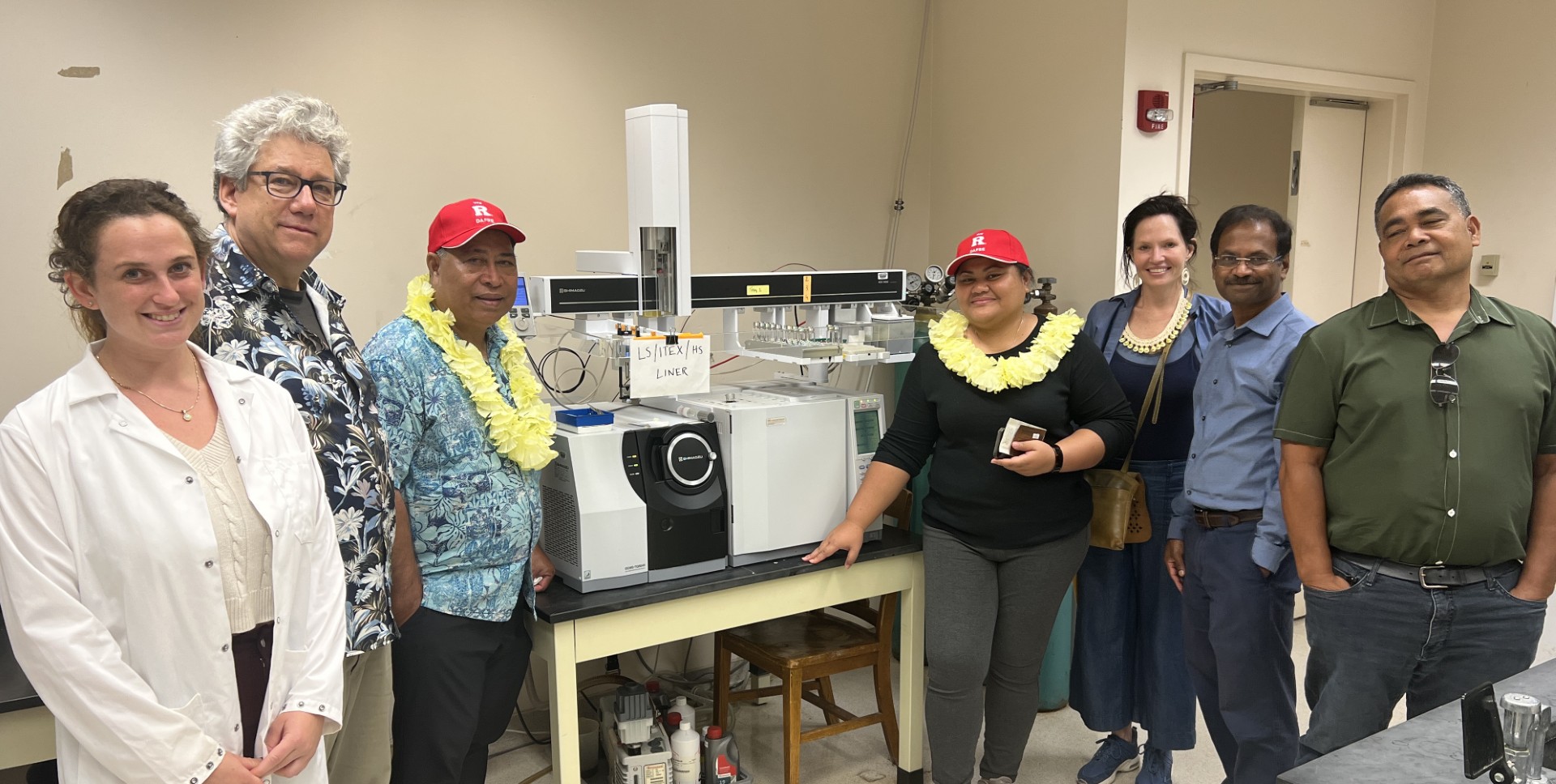
Federated States of Micronesia’s Secretary Andrew Yatilman and Secretary Elina Akinaga visit Rutgers Plant Biology labs.

As one of America’s longest serving and renowned land-grant institutions, Rutgers University empowers food producers worldwide with cutting-edge scientific expertise. The university’s acclaimed “Jersey Roots, Global Reach” initiative shines through in its exceptional partnership with the Federated States of Micronesia (FSM), a vast island nation in the North Pacific.

To celebrate this landmark collaboration, Rutgers had the privilege of hosting two esteemed FSM dignitaries, Honorable Secretary Andrew Yatilman and Honorable Secretary Elina Akinaga, on September 21. Guided by Jim Simon, Dena Seidel, Ramu Govindasamy, AJ Both, Mark Robson, Roland Hagan and Julie Lockwood, the distinguished guests toured SEBS’s premier plant and marine science labs, research fields, and greenhouses, showcasing Rutgers’ advanced research facilities and innovations.

“I am truly grateful to finally visit Rutgers and see first-hand the breadth of scientific expertise that has been assisting our country these past few years,” said Andrew Yatilman, FSM’s Secretary of Environment, Climate and Emergency Management.

The Rutgers interdisciplinary food systems science team began its work with FSM in 2020 and is led by Jim Simon (Plant Biology) in concert with Ramu Govindasamy (DAFRE), Dena Seidel (Plant Biology) and Oscar Schofield (Marine and Coastal Sciences). Rutgers has been supporting FSM’s sustainable food production goals on several projects that include food security policy and assessing climate change’s impact on FSM’s farming families and strategies for the development of local food processing.

Core collaborating scientists from several Rutgers departments include Yariv Ben Naim (Plant Biology), AJ Both and James Shope (Environmental Sciences), Rolan Hagan and Dave Bushek (Marine and Coastal Sciences), and collaborating ethnobotanist Mike Balick from the New York Botanical Gardens as well economist Dr. Surendran Arumugam from Tamil Nadu Agricultural University, and Nolan Lewin and Julie Elmer from the Rutgers Food Innovation Center.

FSM’s Secretary Andrew Yatilman and Secretary Elina Akinaga visit Rutgers research greenhouses.

Additional Rutgers faculty who have contributed significantly to the projects for the FSM include Ethan Schoolman (Human Ecology), Emily Merchant (Public Health) and Daniel Hoffman (Nutritional Sciences). In 2022, Rutgers Global awarded this science team with a $10,000 seed grant to develop a replicable and sustainable food system model in partnership with FSM’s state of Pohnpei.

Rutgers work in the FSM builds upon decades of experience supporting food production in developing countries. “Tackling complex food system challenges internationally requires a multi-pronged approach with teams that include experts from many disciplines with varied skills. At the same time, we work very closely with local partners to ensure that the food production strategy that is developed and implemented is culturally relevant, environmentally and economically sustainable and what the community wants and needs,” said Simon.

To support holistic food system development, Rutgers departments of Plant Biology, Agriculture, Food and Resource Economics (DAFRE) and Marine and Coastal Sciences have joined together.

“Supporting food system development in Micronesia requires addressing food production challenges not just on land but also in the sea. Their ocean is their main resource and so monitoring also becomes key to protecting it,” added Schofield, whose team hosted the guests’ visit to Rutgers Center for Ocean Observation Leadership (RUCOOL).

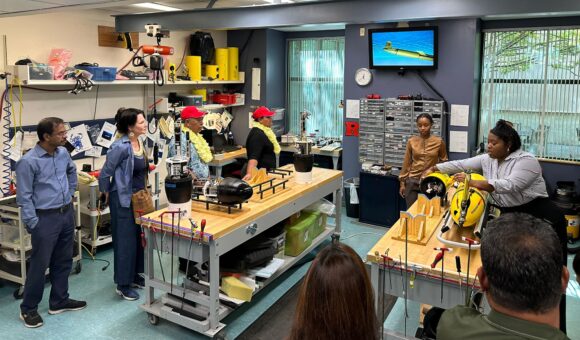
Oceanography graduate students Mya Sharpe and Leah Hopson demonstrate Rutgers glider robots used for ocean monitoring to the visiting dignitaries from the FSM.

The Rutgers Food System Science team has undertaken its fifth project with the Pacific nation. Their current “Food Systems Solutions” initiative, in collaboration with the FSM Department of Resources and Development and Office of Trade, is funded by the US Department of Commerce’s Economic Development Administration. Led by Assistant Secretary Florian J. Yatilman and his team, Stanley Raffilman and Keenen Weirlangt in the FSM, Ramu Govindasamy leads the Food Systems Solutions data collection and research as principal investigator, with Simon and Seidel as co-leaders from Rutgers.


The Food Systems Solutions project aims to drive economic growth and job creation by enhancing local food production and processing. A critical element of this effort involves collecting and analyzing data from ten community stakeholder surveys, designed within the United Nations’ multi-stakeholder framework for sustainable food system development. “Our data shows that over 70% of FSM household expenditure is going toward imported foods which is making them food insecure. This project supports the states and the nation in transitioning to local food production and processing to strengthen local economies, create jobs and increase the health of the people of FSM,” said Govindasamy.


Past projects include the Green Climate Fund Baseline Assessment featuring data from extensive surveys with more than 600 farming families as well as crop forecasting and steps to enhance climate smart agriculture with a foreword by FSM’s President Wesley Simina. Building upon their original data, the Rutgers team was also asked to prepare the FSM’s Third National Communication to the United Nations Framework Convention of Climate Change outlining the impact of a changing climate on all sectors of FSM’s society published on the UN website. The Rutgers team also worked closely with Pohnpei state’s department of Resources and Development to prepare that state’s Food Security Policy and Master Plan.

L-R: Dr. Jim Simon, Secretary Elina Akinaga, Secretary Andrew Yatilman, Dr. AJ Both, Dr. Ramu Govindasamy and Dena Seidel at the Rutgers agrivoltaics research farm in New Brunswick.


This transdisciplinary approach has been exciting and lead to student engagement of Rutgers graduate students that have been invited to collaborate on design, project data preparation and analysis and public policy. While graduate students Tori Rosen and Maxx Guazabara Rivera analyzed the nutritional content of moringa plants from the FSM; other students and visiting scientists have assisted with the data collection and analysis including Lara Brindisi, Eric Gomes, Martin Zorde, Nisha Khanna, and Erin Quinn (from Plant Biology), and  El Hoima Barthelus (from Department of Agricultural, Food, and Resource Economics (DAFRE), and Dr. Rahmiye Figen Ceylan, a visiting DAFRE professor from Akdeniz University in Turkey.

Rutgers’ partnership with the FSM is facilitated and coordinated by Dena Seidel, a researcher and cultural anthropologist in Rutgers’ Plant Biology department, who has long worked in Micronesia and has served as the Honorary Ambassador at Large for Research and Academic Partnerships for two of the FSM states. “It’s exciting to see our scientists and students involved in the co-creation of sustainable food system development with the farming and fishing families of the FSM,” said Seidel.

During the dignitaries’ visit, Dean of the School of Graduate Studies and Distinguished Professor of Plant Biology Mark Robson led a discussion on ways the Rutgers-FSM partnership could grow to include faculty, student and curriculum exchanges. “We are excited to explore how Rutgers and FSM can learn from each other and help strengthen the strong ties that have developed over these last few years,” said Robson.

At the end of their Rutgers visit, Honorable Secretary Elina Akinaga of FSM’s Department of Resources and Development said, “FSM is a developing nation and we are in need of scientific expertise to help us reach our sustainable development goals. We truly appreciate the Rutgers science team’s hard work and dedicated commitment to working with our nation and our states and we look forward to growing this partnership.”

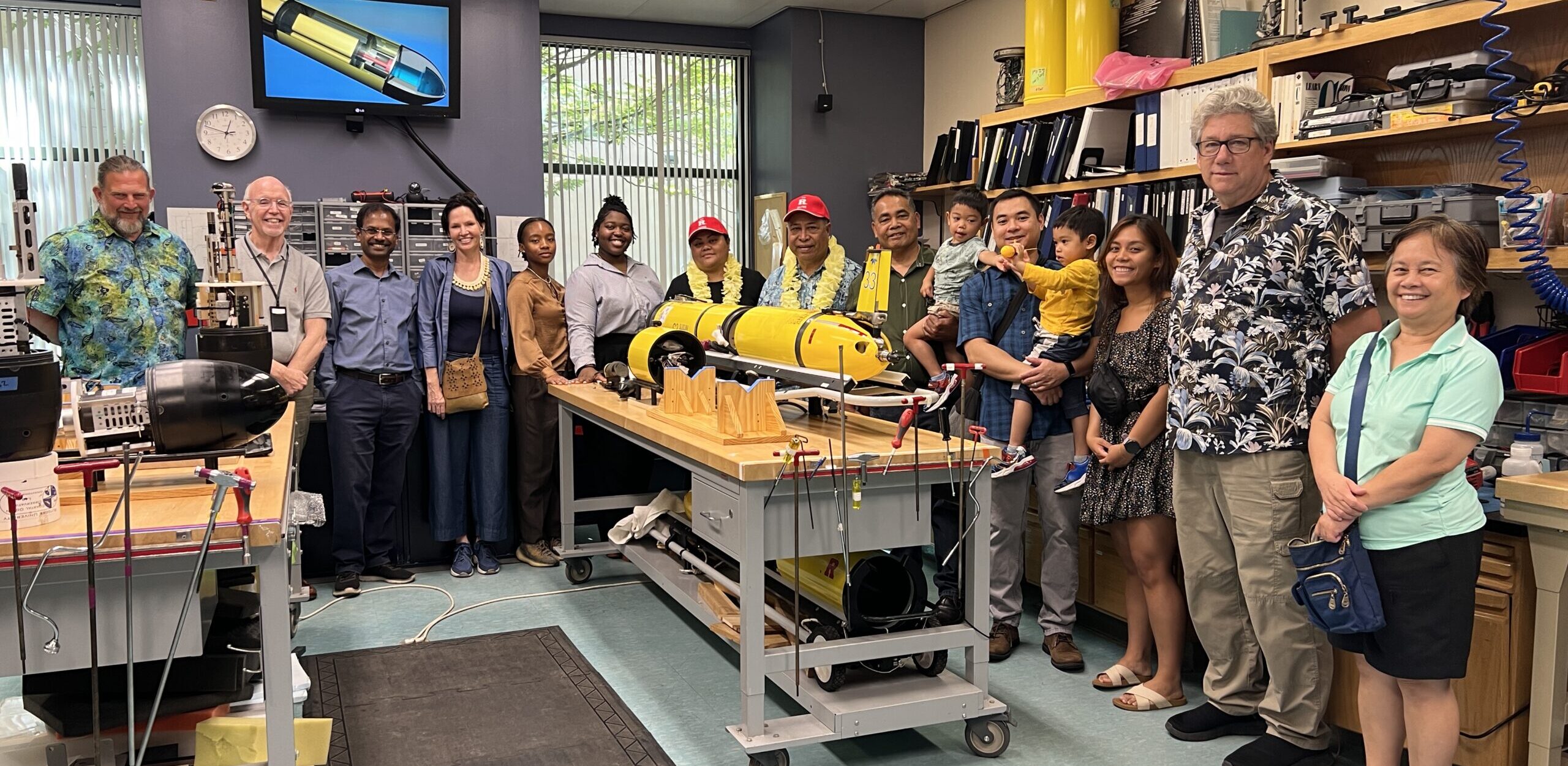
A contingent of Rutgers faculty, staff, students with the visiting dignitaries from the Federated States of Micronesia (wearing leis) at RUCOOL.


[ad_2]

Source link

Across the political divide, we are connected by the arts | Opinion

[ad_1]

By Pamela E. Barnett

The Presidential election is next Tuesday, which means many of us will spend the rest of the month obsessively analyzing the victor’s path and reading informed accounts about what the future could hold.

I hope some of us will take a break from the exhausting news cycle and turn to the arts, which are exactly what we all need in the wake of this highly polarizing and divisive campaign and election season. Artistic experience affirms and expands our humanity. Art connects us.

We need that now more than ever. In an “Arts Talk” for the National Endowment for the Arts, singer and composer Josh Groban made the case that “art matters because it is a hate-killer. Art matters because it is the one true great connector in a world that seems to be very unconnected, and it’s important now more than ever to shine a huge light on that connectivity that we have, that we often forget.”

Art enriches, deepens and elevates all of us. When we truly engage the expression of others – their words and stories, their images and designs and music – we are giving our own consciousness over to the experience, perspective and vision of others. We can feel connection and empathy for people from other nations or other cultural backgrounds. Anyone who has watched a Greek tragedy in horror or sung along to an early American hymn or spiritual knows how art can enable us to connect with others across the very ages.

As NEA staffer Victoria Hutter put it: “The arts matter because I learn something about people and places I would have never known otherwise. The arts make my brain and my heart stretch to make room for newness. Sometimes, parts of me are displaced and replaced by wiser stuff. And that’s a fine thing.”

In the aftermath of this election, art and music can affirm our common humanity, beyond political partisanship. And to go a step farther, I want to direct attention to two specific works that inspire feeling about American democracy: Antonin Dvorak’s Symphony No. 9 “From the New World” and Aaron Copland’s “Lincoln Portrait.”

We don’t always think of the orchestra as the place to go for national unity, but here is why we can and should.

Dvorak was a Czech composer who studied American folk songs during his time in the U.S., from 1892 to 1895. “From the New World” was his endeavor to write a truly American symphony. Dvorak said his classical orchestration incorporates “the spirit” of both African American spirituals and Native American folk music as a way to express the richness of the North American story after the Civil War. His symphony also captures the beauty and expansiveness of vistas in the American Midwest. Astronaut Neil Armstrong took a recording of the symphony to the moon, making it a soundtrack for his “giant leap for mankind.”

The Lincoln Portrait (1942) was commissioned at a time of national crisis; on Dec. 7, 1941, Pearl Harbor was attacked and the U.S. mobilized to enter World War II. Copland was commissioned to “celebrate the spirit of the American people.” This orchestra seeks to convey the character of the Great Unifier, and also inspire great feeling about the preservation of the union, with liberty for all. It includes narration from Lincoln’s famous speeches addressing war, freedom, nation and democracy.

In the days before and after the election, you can type these orchestral works into your preferred music streaming service. You could also hear them performed live at The College of New Jersey on November 8, three days after the election.

Conductor Uli Speth shares the rationale behind this repertoire: “Both pieces celebrate American history and American culture in a way that all citizens can feel good about, regardless of their backgrounds or political views. After a time filled with divisive rhetoric this will hopefully make everyone feel that they belong to the same country.”

We should all be looking for ways to heal our country, and that includes opting out of disrespect and denigration of fellow citizens who voted differently. Art can lead the way. After all of the partisan battle and divisive rhetoric, art calls us to feel our shared humanity and even our common love for American democracy.

Pamela E. Barnett is Dean of The School of the Arts & Communication at The College of New Jersey.

To comment on this op-ed, send a letter to eletters@starledger.com.

Our journalism needs your support. Please subscribe today to NJ.com.

Bookmark NJ.com/Opinion. Follow on Twitter @NJ_Opinion and find NJ.com Opinion on Facebook.


[ad_2]

Source link

Mays Landing Country Club

[ad_1]

Mays Landing Country Club

[ad_2]

Source link