Explore New Jersey

Home Blog Page 504

Making Women’s History Every Month – Meet the Women Board Members at New Jersey Future

[ad_1]

March 29th, 2024 by Susan O’Connor

When women are involved in urban planning, they plan for all, according to Women Mobilize Women, a worldwide network of changemakers seeking to transform the mobility sector to become more diverse and to raise awareness on the topic of gender and transport amongst planners and decision-makers in the sector.

In honor of Women’s History Month, New Jersey Future had the opportunity to interview some amazing women on our Board of Trustees. We asked them about their experiences in the industries that represent, promote, and/or plan smart land use and growth policies and sustainability practices for resilient communities and a strong economy for everyone. 

It was a privilege to hear directly from these women, who built lasting networks, honoring their trailblazing women mentors, advising the next generation of women leaders, and making a better Garden State for all. Each of their experiences, wealth of knowledge, and passion could make for their own blog posts, and we invite you to discover more about them.

None of us can do this all alone – Success comes from the power of women networks.

“Women influenced my interest in placemaking. It’s important to respect where we are and that these places are the beginning of community,” explains Ingrid W. Reed, Co-Founder of New Jersey Future in 1987 and former director of the New Jersey Project, Eagleton Institute of Politics. “It was growing up in Vineland, NJ, that I first became interested in placemaking. Vineland is a combination of what worked, matching older places with the spread that was taking place.”

Ms. Reed moved to Princeton in 1965 and was the recorder of planning meetings for the League of Women Voters. “The women in my community became more involved in town planning and started trading babysitting time so that we could be part of these discussions,” Ms. Reed reflected. “We wanted a say in the extension of US Route 1 and knew decision-making was in the hands of elected officials. The state controlled Route 1, and we wanted to influence the power structure on how it was going to be developed in our community. All along the way, women made a big difference in seeing the relevance of the questions being raised at the fast growth.”

At the time, no women served on boards of the counties, but all that changed in 1970 when Ms. Reed came on Mercer County Executive’s Planning board and remained for over 20 years. Around that time, she began organizing a group of concerned citizens that met in the basement of the Woodrow Wilson Institute. It was the start of discussions on New Jersey’s State Plan, and they knew they had to get involved by having their own informed conversations, as citizens were doing in Oregon and Florida. She reflects on that time fondly when the seeds of New Jersey Future were sown, all over quiche dinners. 

“Region is as important as the individual town you’re living in,” states Ms. Reed. “How you’re growing also emphasizes what kind of infrastructure you have to support that. It was when they opened up development along the Hopewell Corridor that I got involved in conservation and joined the board of the Watershed Institute.”

Ms. Reed talked about the women trailblazers she’s known that have had an impact on New Jersey, including:

Ms. Reed also credits the successful work of our program, Jersey Water Works, with women at the forefront, including NJF’s Board of Trustees, the NJF team that continues to run it, and the many partnerships that we’ve built over the years. 

“Today it’s very different,” expressed Ms. Reed. “While it’s still a man’s world in some ways with their access to credit, bank connections, and investment from the private side, I am delighted to see more and more women in placemaking careers and in elected office for our state.”

Women, be open-minded about where the world of planning can take you.

“After 20 years in this industry and being between generations, Gen X and Millennials, I’ve started to see the shift in the workplace,” states Meishka L. Mitchell, President & CEO of Emerald Cities Collaborative and Board of Trustees Chair of New Jersey Future. “My staff is predominantly women of color. While there are still white, male-dominated spaces, there are more and more spaces where I’m seeing women involved in work for societal improvement. Planners are working in traditional planning firms, but also in nonprofits, consulting, and government.”

Ms. Mitchell is proud of the mission of Emerald Cities Collaborative, working with minority and women-owned businesses, helping them transition to a green economy, especially those struggling to get into the mainstream. The nonprofit teaches contractors about energy efficiency and the renewable sector, provides comprehensive business support, and helps them find clean energy contracting opportunities. “We ask ourselves, how do we give them the tools to be ready for a just transition to clean energy, for federal incentive programs, to bid on government contracts, and to build wealth in their community?”

Regarding advice for the next generation of women planners, Ms. Mitchell feels we may already have an advantage because of the expansive worldviews that women often bring to the workplace. “Cities were historically built for men, but we need to open that view to include consideration for those who need accessibility, such as neighborhoods for children, parents, the elderly, and other needs. Women often bring those additional perspectives, and those skills are needed in sustainability, social services, and government.”

Ms. Mitchell continued, “I’m happy to see a new culture of work that includes self-care and putting yourself first. It’s an amazing shift. After so many years of being in this industry, especially as a woman, a black woman, balancing work and family, you often put yourself last. But I see this slow shift of women having a different relationship with work. They are taking time off and not burning out. The new generation shows us how we’ve been doing it wrong. It doesn’t have to involve sacrificing ourselves.”

Above all, approach life responsibly, grow responsibly, and consider sustainability in all aspects of life.

While we reached out to all the women on New Jersey Future’s Board of Trustees, Jane M. Kenny, Founder and Managing Partner of The Whitman Strategy Group LLC, stressed the importance of interviewing Katie Feery, Director of Strategic Initiatives and Sustainability at New Jersey Resources. Katie knows all about green jobs and meeting our greenhouse gas reduction goals. 

Ms. Feery is responsible for the publication of the Annual Corporate Sustainability Report from New Jersey Resources, the state’s largest developer of renewable energy. “It’s part of our guiding principles,” explains Ms. Feery. “Reporting out transparent, collective corporatewide information on our progress toward our goals and the importance of innovative energy solutions and responsible development. This annual comprehensive report also covers the many engagement channels of New Jersey Resources, our approach to sustainability, environmental issues, and our social responsibility.”

Ms. Feery is also proud to be on the Advisory Board for the PSEG Institute for Sustainability Studies at Montclair State University. The Institute supports transdisciplinary research and community projects that grow more resilient communities globally. Through partnerships with New Jersey-based and multi-national corporations and organizations, they address local and global sustainability challenges, including climate change, emissions, energy, clean water, waste, food, and food insecurity.

“I see a lot of women in the field of sustainability and less in the traditional energy industry,” states Ms. Feery. “My advice to those entering the field is to take advantage of the growing focus on data – what gets measured, gets done. Figure out what we’re striving for and what’s inspiring you as an individual.

“How do women plan?” she continued. “We plan for future generations. We have diverse perspectives that help us to keep others in mind.”

Among her mentors, Ms. Feery counts New Jersey Future’s former board member Kathleen Ellis, a former colleague at New Jersey Resources and the first woman to hold the post of chief operating officer at New Jersey Natural Gas.

As a follow-up, Ms. Feery shared Sustainability Magazine’s article. Sustainability Paves Way for More Women in C-Suite Roles.

McManus

I would love to see more women involved. More voices in a community’s master plan will result in better zoning.

“While I always wanted to ‘save the trees’ and do environmental policy, I didn’t know there was a thing called a ‘planner,’” shares Elizabeth (Beth) McManus, Principal of Kyle + McManus Associates. “I was somewhat interested in water issues and pollution, but when my professor talked about sprawl, that’s when it really changed for me, and I wanted to learn all I could possibly know.”

Ms. McManus has over 20 years of experience in public and private sector planning. She prepares planning studies for various municipal and private clients and advises municipal planning boards, zoning boards, and governing bodies on public policy and land development practice. Ms. McManus has extensive experience serving as Special Master for the New Jersey Superior Court in more than 40 cases where municipalities seek review and approval of their housing plans. 

Even with this prestigious background and experience, Ms. McManus notes, “nearly every boss I have ever worked for and had to fill in during a meeting has been a man. Now, my business partner is a man, and we sometimes fill in for each other. Countless times, the reaction I get when I walk into a room and say, ‘I’m here in place of so-and-so’ is ‘You’re much prettier than him.’

“Another weird thing is that some men, always older, claim they don’t recognize me when I wear my hair down. Not sure which is worse – that they don’t actually recognize me or that they say that.”

Ms. McManus continues, “I understand the demographics have been that white men have been in this longer. A lot of times, I’m the only woman in the room, and when I’m assumed to be someone’s secretary, I do get over it because you have to have tough skin. That said, I am pleased to see more women entering the field every year.”

When it comes to advice for the next generation of women, Ms. McManus explains, “know the reality of long hours, and late nights, in this field. I’m out up to four nights a week, sometimes until 10 or 11 p.m. I’m not a parent, but I can imagine how difficult this job would be if you don’t have flexibility in your personal life. My schedule is unpredictable, and often meetings get canceled last minute, and I’m already on my way. But, the night meetings are exciting – it’s where your work and effort gets realized.”

Where does Ms. McManus see more job opportunities? “It is a very progressive field, especially in affordable housing. I’m proud of our state because we are one of the few that require affordable housing. Also, like New Jersey Future, my values are to work on real infrastructure issues and provide a voice for those in our communities.”

Be resilient. In any career, you will encounter challenges and setbacks, but it is important to remain passionate about your goals and persevere in your efforts to make positive change.

“My inspiration for being in the urban policy field is rooted in what I believe is my sense of responsibility to contribute to the betterment of communities,” states Tenisha N. Malcolm-Wint, Director, Urban Mayors Policy Center, John S. Watson Institute for Urban Policy & Research at Kean University. “I believe my lived experience and that of my immediate family contribute in large and small ways of influencing the decision-making processes and shaping the direction of government actions.”

Ms. Malcolm-Wint commented, “I don’t see as many women as I’d like in this field, and I attribute that to the absence of visible and authentic female leaders. This void can make it challenging for aspiring women to envision themselves succeeding in these fields.

When offering key advice for emerging women leaders, she suggests “staying informed on trends, current challenges, and innovative solutions through podcasts, books, articles, documentaries, and online resources. Another way is to participate in local community initiatives, volunteer for organizations working on urban development or environmental issues, and attend relevant events.” She continued, “This hands-on experience will provide valuable insights and networking opportunities.”

Ms. Malcolm-Wint also has extensive experience working with nonprofits involved in conservation, including being a former Director of Cities Programs for The Nature Conservancy. She is also the Founder and Chief Outdoor Experience Officer (COEO) of Outdoors On Purpose, a hiking community developed to encourage all people to find respite and joy outdoors. 

“I’ve always had a deep love for the outdoors!” she exclaims. “When the pandemic hit, and I found myself with more time and flexibility, I made a conscious decision to spend as much time outdoors as possible, both for my physical well-being and as a means to combat Zoom fatigue. What started as a personal commitment quickly evolved as friends and family began to join me, and it became a movement. It’s been a journey filled with organic growth and the pure delight of sharing experiences in the great outdoors with like-minded individuals.”

Women have a strategic way of thinking that is so valuable. They handle multiple variables and many steps – Super important in ANY industry.

Congratulations to our Board of Trustees Member Madeline Urbish on her new position as Head of Public Affairs, Region Americas at Ørsted, a leader in renewable energy. Prior to this, Ms. Urbish was Ørsted’s Head of Government Affairs and Policy for New Jersey.

“I did not intentionally get into clean energy,” shares Ms. Urbish. “I started my career working in criminal justice policy and then moved to DC to work on Capitol Hill where I was exposed to many different issues, including water resources. When I came back to New Jersey, I worked with NJ Audubon, an organization committed to connecting all people with nature and stewarding the nature of today for all people of tomorrow.

“I’m pleased to see more women entering the industry, but we still have a long way to go,” remarks Ms. Urbish. “When I attend energy conferences at both the US and global level, there are still so many more men than women.

“Advice I would give to young women entering this field is don’t hesitate to join the table and provide your feedback. Diversity brings different perspectives and different life experiences. While It’s a dynamic, fast-moving industry with technology, large-scale infrastructure takes a long time to build together. We need visionaries!”

As for her own mentors, Ms. Urbish shares how lucky she feels to have had so many incredible women as mentors in her career. In particular, Kathleen Frangione, with whom she has worked in the Governor’s Office and at Ørsted, has been an incredible mentor and friend. Additionally, Ms. Urbish reflects fondly on her time as an intern with Assemblywoman Bonnie Watson Coleman. “She is such a force and broke so many barriers. I gained such valuable work experience being part of her team.”

Thank you to all the remarkable women on our Board of Trustees! We are grateful for their commitment to New Jersey Future!

Tags: changemakers, emerging women leaders, next generation, placemaking, planners, planning, sustainability, urban planning, women in planning, women leaders, Women’s History Month


[ad_2]

Source link

Newark, East Orange and Orange See Surge in Luxury Apartments

[ad_1]

Mail icon

get the best of where we live

  • Newsletters


[ad_2]

Source link

In Hoboken, coming end to local landmark (Losurdo’s) shows importance of Small Business Saturday

[ad_1]

We don’t mean to be a downer this holiday season, but the recent announcement that Losurdo’s Italian Deli & Bread Bakery, a beloved family-owned business in Hoboken since 1975, will be closing on Dec. 8, proves a point business leaders have been making for years: You have to support small business if you want Main Street stores to survive.

We know there are plenty of stores in your town. In anticipation of Small Business Saturday – and in recognition of Losurdo’s, we offer a few places to shop in Hoboken.

· Leo’s Grandevous: A Hoboken institution since 1939, Leo’s Grandevous is famous for its Italian-American cuisine and welcoming, family-friendly atmosphere. Known especially for their spaghetti and meatballs, it’s a favorite among locals.

· Piccolo’s Famous Cheesesteak: For 65 years, Piccolo’s has been serving up delicious cheesesteaks, earning its place as a Hoboken classic. Known for its generous portions and authentic flavors, it’s a must-visit for any cheesesteak lover.

· Fiore’s House of Quality: Renowned for its fresh mozzarella since 1913, Fiore’s is a Hoboken legend. This Italian deli brings a taste of Old-World quality with each handmade cheese and classic Italian specialty.

· The Brass Rail: Offering a contemporary twist on American cuisine, The Brass Rail has been a Hoboken favorite for years. With its charming ambiance and classic menu, it’s a popular spot for both dining and special occasions.

· M & P Biancamano: Known for their sandwiches made with freshly baked bread and premium Italian meats, M & P Biancamano has a legacy of quality and service that has made it a favorite in Hoboken for decades.

· Albini Pharmacy: Serving Hoboken for over 75 years, Albini Pharmacy offers personalized pharmacy services and a range of health and wellness products, ensuring the community has reliable, accessible care close to home.

· Muller Insurance: Established in 1906, Muller Insurance is a trusted name for Hoboken’s insurance needs, offering a wide variety of services for residents and businesses. Their longevity and commitment to service make them a staple in the community.


[ad_2]

Source link

Vacant Lot Watch, Donut Edition

[ad_1]


Please see the update posted on Aug. 18, 2022 to last paragraph.

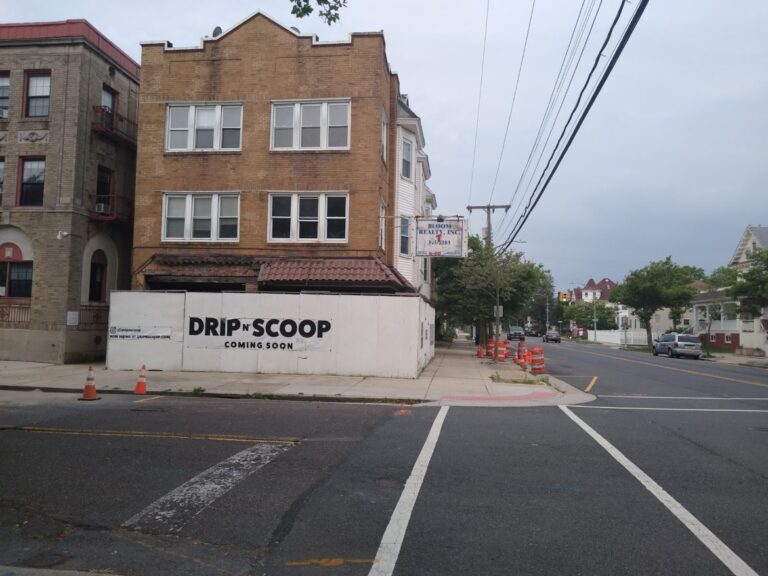
The vacant commercial-plus-residential space at 4400 Ventnor Ave, between Bartram and Aberdeen Aves has been tempting us for several years with its “coming soon” signs for a Drip ‘n’ Scoop location. But perhaps it will become less vacant some time soon? The owner, under the business name 4400 Investments, is Robert Idell and family, which owns Drip ‘n’ Scoop and other Ocean City restaurants. When we last checked in with them two years ago this summer, they were getting started on construction for the Somers Point Drip ‘n’ Scoop location but said they were battling funding issues and COVID-19-related permitting delays in Atlantic City. Now, though, Atlantic City is considering making a Section 108 loan to the project at 4400 Ventnor Ave, backed by Community Development Block Grant money. Fingers crossed…

Atlantic City agreed in mid-August to release funds for the project. In a public notice, the city said “the total funding from the City is $380,000, for a total project cost of $1,776,935.” The project proposes creatin 2,345 square feet of first-floor commercial space and about7,600 square feet of second-floor residential space consisting of two one-bedroom apartments and four two-bedroom apartments. The notice said the city would approach the U.S. Department of Housing and Urban Development for the funds at the end of the month. It is not clear how soon work might begin at the site. HUD details on the section 108 loan program explain that often the program is used to secure additional private funding. If that is the case, work might not start until more of the project financing is covered. Idell did not respond to an additional request for comment.


[ad_2]

Source link

Cows and Solar Panels? In a New Jersey First, Project Melds Farming with Electricity Generation : Newsroom

[ad_1]

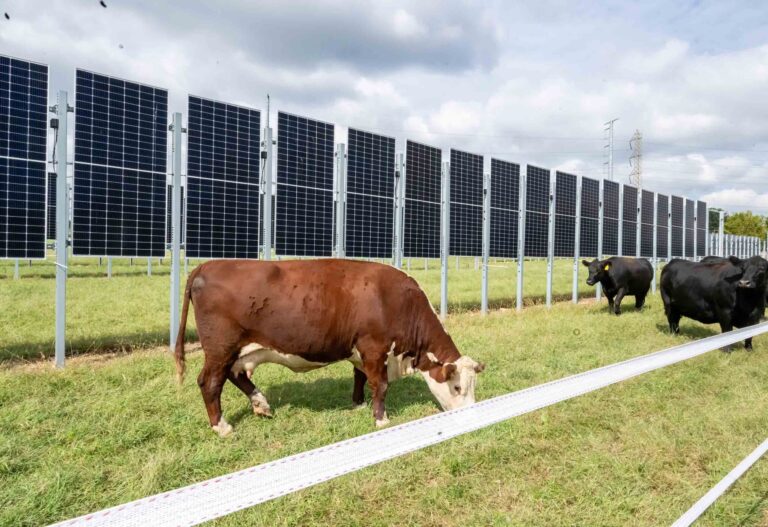
Scientists are investigating how farmers can host a new type of vertical solar panel in their fields while cows can continue to graze. Photo credit: Office of Public Outreach and Communication – Lori Nardoza.

Rutgers-New Brunswick inaugurates state-of-the-art agrivoltaics research and demonstration project for simultaneous production of food and solar energy

Federal, state and university officials are inaugurating a research and demonstration project at Rutgers University-New Brunswick with the purpose of advancing a technology that could produce renewable energy while making farms more sustainable.

The New Brunswick project, part of a $7.4 million effort, consists of 378 vertical bifacial solar panels that can generate electricity whether the sun hits the front or the back of each panel. This design contrasts with typical south-facing fixed-tilt arrays that leave little room in the field for agricultural or horticultural operations.

Installed on a three-acre grassy field at the Rutgers University Animal Farm at the Rutgers School of Environmental and Biological Sciences (SEBS), the system will enable researchers to test whether modern farming practices can be combined with generating solar energy. The vertical bifacial solar array is the first such installation in New Jersey.

 “DOE recognizes the enormous opportunity for agrivoltaics to combine agriculture with clean energy production, while increasing revenue for farmers and landowners,” said Dr. Becca Jones-Albertus, director of the U.S. Department of Energy (DOE) Solar Energy Technologies Office. “We congratulate Rutgers University’s Agrivoltaics Program for its commitment to innovation and driving renewable energy deployment forward for the state of New Jersey and beyond.”

David Specca, Rutgers Agrivoltaics Program Lead, describes the scope of the research and demonstration project at a ribbon cutting ceremony Monday, Sept. 30. Joining him from left are: State Sen. Bob Smith, Rutgers Senior Vice Provost for Research Denise Hien, N.J. Secretary of Agriculture Ed Wengryn, U.S. Department of Energy Solar Energy Technologies Office Director Becca Jones-Albertus, and A.J. Both, a Professor and Extension Specialist in the Department of Environmental Sciences. Other speakers included: Laura Lawson, Rutgers Executive Dean of SEBS and NJAES, N.J. Board of Utilities Commissioner Mariam Abdou and N.J. Assemblywoman Andrea Katz. Photo credit: Office of Public Outreach and Communication – Lori Nardoza.

Agrivoltaics is an emerging technology that involves the practice of using the same land simultaneously for both agriculture and solar energy production. Farming practices suitable to such structures include growing staple crops, such as corn and soybean, vegetables and hay and raising livestock.

“New Jersey continues to be a national leader in solar and today marks another major milestone for solar innovation in the Garden State,” said New Jersey Board of Public Utilities President (NJBPU) Christine Guhl-Sadovy. “As the BPU aims to launch a pilot dual-use program in partnership with the Department of Agriculture, the Rutgers Agrivoltaics Program will continue to inform our efforts to ensure responsible solar development on farmland.”

The project represents a crucial step in efforts to counter the adverse effects of climate change, as sustainable energy solutions like solar power play a significant role in reducing greenhouse gas emissions and mitigating the impacts of climate change, she said.

The installation on College Farm Road on the George H. Cook campus will allow researchers to investigate how the design affects grazing strategies for beef cattle and ease of hay harvesting. Scientists also will assess whether certain crops fare better in New Jersey’s climate using an agrivoltaics system, compared with crops produced in other regions of the United States employing agrivoltaics.

“Rutgers University is proud to be leading the effort in developing agrivoltaics for our region,” said SEBS Executive Dean Laura Lawson, who also serves as executive director of the Rutgers New Jersey Agricultural Experiment Station. “This new technology has the potential to produce renewable energy needed to reduce our carbon dioxide emissions while simultaneously making our family farms more viable and sustainable.” 

Most existing solar farms in the U.S. employ low-mounted and closely spaced solar panel arrays that allow for only limited agricultural applications, such as grazing for small animals or providing pollinator habitats, according to university officials. Such systems usually emphasize electricity generation at the expense of agricultural production.

“There’s always been this issue that when a big solar farm goes in, it pretty much takes that ground out of agricultural production, so you can no longer grow crops or raise animals for the lifespan of the system,” said David Specca, Assistant Director of the Rutgers EcoComplex and lead of the Rutgers Agrivoltaics Program.

As part of the project, two other agrivoltaics systems were installed at the Rutgers Agricultural Research and Extension Center in Upper Deerfield, and at the Clifford E. and Melda C. Snyder Research and Extension Farm in Pittstown. Through these systems, scientists will evaluate a different solar array design known as a single-axis solar tracking system.

Rutgers School of Engineering Professor Dunbar Birnie (at left) and Rutgers colleagues discuss the technology of agrivoltaics with Becca Jones-Albertus, Director of the U.S. Department of Energy’s Solar Energy Technologies Office (second from right.) Photo credit: Office of Public Outreach and Communication – Lori Nardoza.

Executive Dean Lawson added, “Today we celebrate the completion of construction of our three state-of-the-art research and demonstration sites and the beginning of the much-needed research and outreach component of this program.”

Rutgers scientists will study the different designs to better understand how each allows for a variety of different farming practices. A multi-year research plan has been developed and started at the beginning of the 2024 growing season.

“We define agrivoltaics as systems that allow for a more diverse range of agricultural or horticultural practices, including grazing large animals, producing staple and specialty crops, and hay,” Specca said. “Our approach emphasizes food production and considers the generated electricity as a low-risk and supplemental income for farmers.”

Agrivoltaics offers the potential to further the renewable energy goals of New Jersey with an anticipated minimal disruption to New Jersey’s roughly 700,000 acres of farmland, according to A.J. Both, a Professor and Extension Specialist in the Department of Environmental Sciences at SEBS. New Jersey is home to more than 10,000 farms, with about one-third of these farms on preserved land, according to the New Jersey Department of Agriculture.

The New Jersey state legislature and representatives of utility companies are focused on substantially increasing electricity generation from renewable energy sources. The New Jersey Energy Master Plan includes a goal of 100 percent of the state’s electricity generation from renewables by 2050, while Gov. Phil Murphy has proposed to move faster, achieving that objective by 2035, Both said.

“The technology offers several advantages, including reducing the operating costs for farmers by covering some or all of their electric costs,” Both said. “It also will assist in reducing society’s carbon footprint and helping maintain farmland in active production.

Funding from federal and state agencies has made the project possible.

After securing a $104K seed grant from the New Jersey Agricultural Experiment Station that allowed the formation of and early investigations by the members of the Rutgers Agrivoltaics Program, the team received $2.9 million in state appropriations for the construction of the three agrivoltaic systems at three of the university’s farms.

In addition, funding from the U.S. Department of Energy (DOE) was received through a multi-institutional grant totaling $1.6 million as part of the agency’s FARMS program. Collaborators on this grant include Delaware State University, American Farmland Trust and the National Renewable Energy Laboratory. DOE’s goal is to develop strategies that allow agrivoltaics to thrive within diverse agricultural landscapes, protecting farmers and farmland, while expanding clean energy generation.

In addition, the Rutgers Agrivoltaics Program has been awarded a contract for $2.8 million from the New Jersey Board of Public Utilities to assist with the development and implementation of the state-wide Dual-Use Solar Energy Pilot Program.

This article first appeared in Rutgers Today.


[ad_2]

Source link

McCullough’s Emerald Golf Links By Brian Weis

[ad_1]

Whether you have played a course 20+ times a year or looking to play the course for the first time, insights from an insider can help enhance your golf experience. Below is an interview with Sonny McCullough who shares some valuable tidbits about the course, memorable holes and must eats and treats at the 19th.

Give Our Readers An Overview of the Golf Course/Property
Located just minutes from Atlantic City, this layout is a tribute to St. Andrews, Carnoustie, Prestwick, Gleneagles and Turnberry, among others. Designed by architect Alister McKenzie, McCulloughs features a three acre waste bunker plus an island fairway that is 160 yards wide, on the par four 7th hole. With water on 5 holes and the regions only 100 foot elevation changes, visitors to this course are treated to remarkable vistas and a challenging round.

If Someone Was Looking To Golf In The Area, Why Should They Play Your Course?
McCullough’s Emerald Golf Links is a unique golf course for the Atlantic City area. The course has some amazing elevation changes, risk vs reward holes and country club conditioning for a municipal golf course.

What Tips or Local Knowledge Would You Provide To Help Them Score Better At Your Course?
Purchase a yardage book as there are a few blind shots off the tee. This will save you a few shots.

Recent Awards or What You Are Most Proud About The Course?
Top 35 New US Public Course To Open in 2002 – Golf Magazine
Top 2 US Municipal Course To Open in 2002 – Golf Magazine

What Is The Signature, Most Talked About, or Most Photographed Hole?
Architect, Stephen Kay, hailed #7 as our signature hole. The 464 yard hole doglegs left over an acre sized sand trap. An aggressive line will make the hole shorter. Bite off only what you can chew.

What Is Your Favorite Hole? Any Tips to Play It? I love elevation changes and the returning holes to the club house offer some great views and intimating shots. The tee box on the 8th hole is elevated a few stories above the fairway. A precise drive is needed for placement between the pond on the left and woods on the right. Hole 18 mirrors number 8 with an elevated tee. New Jersey is known for being flat so having these holes makes us very unique in the area.

Must Have Dish or Drink after the round at the 19th Hole?
Late fall (2015) we will be reopening the steak house on property. Our steaks were amazing and I am excited to reopen the restaurant. The best way to end your round at McCullough’s Emerald Golf Links is with a juicy steak and ice cold beer!

Back Tee Stats
Par: 71
Yardage: 6535
Slope: 130
Rating: 71.7

More Information
McCullough’s Emerald Golf Links
3016 Ocean Heights Avenue
Egg Harbor Township, NJ, 08234
609-926-3900
www.mcculloughsgolf.com/


[ad_2]

Source link

Celebrate Hanukkah at StocktonPAC with A Cappella Group The Maccabeats on December 8th

[ad_1]

originally published: 11/30/2024

(GALLOWAY, NJ) — The a cappella group The Maccabeats will perform “A Maccabeats Hanukkah” at the Stockton University Performing Arts Center on Sunday, December 8, 2024 at 2:00pm. The unique group of singers formed in 2007 as Yeshiva University’s student vocal group.

They have since acquired a large fanbase, more than 20 million views on their YouTube channel and four successful albums. The all-male, 14-member group specializes in covers and parodies of contemporary hits using Jewish-themed lyrics.

Often travelling with little more than the shirts on their backs and the ties on their necks, the Maccabeats have entertained and inspired hundreds of audiences worldwide, from Alabama to (New) Zealand and everywhere in between. Using nothing more than the unadulterated human voice, a clean-cut presentation, and a little Jewish humor, this unique group of singers is able to connect with fans of all backgrounds and ages.

Tickets are $25 for the general public, $23 for senior citizens (65+), military, Stockton alumni, faculty and staff and $12 for children under 12 and Stockton students. Tickets are available for purchase online or by calling the Box Office at 609-652-9000.  Tickets are also available at the Stockton Performing Arts Center box office from 10:00am to 3:00pm Monday through Thursday and 90 minutes before showtime.

Though the Maccabeats aren’t your grandfather’s synagogue choir, their ideology and identity play an important part in what they do. Strongly committed to the philosophy of Torah u-Madda, the integration of traditional and secular wisdom, the Maccabeats perform an eclectic array of Jewish, American, and Israeli songs. Their breakthrough piece, Lecha Dodi, is the epitome of this synthesis, combining some of the most beloved words of Jewish liturgy with Leonard Cohen’s meaningful and melodic Hallelujah.


Advertise with NJ Stage for $50-$100 per month, click here for info


Perhaps it is these dual goals, this merging of exciting medium and proud message, that some find most appealing about the group. Since the release of “Candlelight,” a Chanukkah themed parody video which garnered international attention and coverage by the major news outlets, the Maccabeats have been approached and emailed time and time again with the same message: that their music has provided for the expression of an enthusiastic and ambitious Judaism that one isn’t afraid to wear on his or her sleeve.

Stockton University is ranked among the top public universities in the nation. Our more than 9,000 students can choose to live and learn on the 1,600-acre wooded main campus in the Pinelands National Reserve in South Jersey and at our coastal residential campus just steps from the beach and Boardwalk in Atlantic City. The university offers more than 160 undergraduate and graduate programs.


Advertise with NJ Stage for $50-$100 per month, click here for info

[ad_2]

Source link

Albert A. Yuknus – Star News Group

[ad_1]

christopher dentistry insurance 4c 3×7.jpg

BH cheese OC group 3×3.5.jpg

coastal kitchen 1-4 4c .jpg

BH needlepoint BHpg 4c 3×3.jpg

gold fever 4c NEW USE V.jpg

bentley black friday 4c 4×4.jpg

Brian Campbell new qr code 2×2.jpg

wall thanksgiving NEW 4c 3×9.jpg

Lobster Shanty 3×10 4c.jpg

Brielle furn shifman 4c 6×10.5.jpg

paonessa screening 3×3.jpg

SL BID 4c center spread.jpg

slipcovers jeanne 2×2.jpg

Hardwood floors & decks 2×2.jpg

01-18 smart carpet BOOST.jpg

Advanced ortho 4c 1-2H.jpg

goldfever OC group 3×3.5.jpg

skibicki capital 4×3.75 4c.jpg

Algonquin Full Page Ad .jpg

Orender #2 We Assist 3×3 .jpg

Obrien Funeral 3×5.5 4c.jpg

wireless zone brielle 1-4 BW.jpg

perio implants 4c 3×6.25.jpg

milltex OC group 3×3.5.jpg

interior design satisfying bw 2×6.jpg

Sunshine Daydream 1-4 4C-1.jpg

kologi 2024 REV NEW 3×3.25.jpg

Hobbie billboard list 2024 YELLOW 6×7.25.jpg

Prime 13 Butcher 3×5 4c.jpg

US coin OS 3×5 4c NEW 9-6.jpg

purr pooch Giving Tuesday 3×9.jpg

learning express 4c 01-04.jpg

mizuki hibachi 4c FULL.jpg

Bomba author 4c 01-04.jpg

Travelsmiths FULL 4C .jpg

Sunnyside Manor CS REV family 4c 3×10.5.jpg

paramount Santa Paws 3×5 4c .jpg

Sunnyside Manor OS REV family 4c 3×10.5.jpg

red bank volvo 6×10.5 4c.jpg

cardiology associates 3×3.jpg

nick & sons ranked 2×3.jpg

rysers holiday shop 4×7 4c.jpg

remax wooley thiele 4c 3×8.jpg

womens club event 2×4.jpg

Travelsmiths 3×5 4C ROP.jpg

lake como tree 4×4 4c.jpg

parker house holiday 6×10.5 4c.jpg

brielle medical 3×4.5.jpg

Sunshine Day Dream 4c OC group 3×3.jpg

jeffrey fabian construct 2×2.jpg

maxwell tassini john 2×3.5 BW.jpg

a main antique 3×5 4c.jpg

Sp Lake xmas list 4C 6×17.jpg

ortho brielle Football 6×3 4c.jpg

defilice carfax 3×5 4c.jpg

childers Whites NEW pic 2×3 BH.jpg

Little Sunshine 4c OC group 3×3.jpg

Find Finn 6×3 with form.jpg

ATL Club milagro 4c 3×10.jpg

Atlantic Shores Offshore 6×20 4c.jpg

pt bch int OC group 3×3.5.jpg

art & sole ara sneakers 2×5.jpg

Barten holiday 4c 6×7.25.jpg

Mullooly USE new photo 2024 (No3) 6×10 4c.jpg

United RE Fioretti 2×3 BW.jpg

ocean grove camp 4c H.jpg

inter views USE 4c 1-4.jpg

A’s Holiday 3×10.5 4c.jpg

manasquan bank NEW 2×2.jpg

jsy sh arts holiday market 3×5.5.jpg

Mccue world NEW 2×4.5.jpg

friends of belmar 4c 1-4.jpg

CWB VV39 -new logo 3×4.jpg

Muellers OC Group page 3×3.5.jpg

VAN sciv sunset 4c 4×9.5.jpg

st catharine 5K 4c 4×7.75.jpg

Volvo Manasquan 6×10.5.jpg

Travelsmiths REV OC page 4c 3×3.5.jpg

Little Sunshine 1-4 4C.jpg

Jenkinsons OC page 3×3.5 4C.pdf .jpg

Belmar self store 2×3 BW.jpg

Photo Center OC 3×3.5 4C.jpg

Earth Treasures (NOW 2700) 3×8 4c.jpg

McCormackSkinReJuvB FALL 2×6.jpg

paver restor mon seal 2×4.jpg

sq chamber LIST REVISED USE 4c 6×12.jpg

lasemedica book 6×6 4c.jpg

[ad_2]

Source link

Hudson Regional Assumes Control of Bayonne Medical Center

[ad_1]

Bayonne Medical Center

Healthcare

Hudson Regional Hospital has assumed control of Bayonne Medical Center and has announced an initial set of improvements to the hospital and its medical operations.

A hearing on Hudson Regional’s Certificate of Need Application to become Bayonne’s permanent owner is scheduled for December 10th, representing the next component in an ongoing process seeking final approval from the New Jersey Department of Health.

Hudson Regional officials, led by Chairman Yan Moshe and CEO Dr. Nizar Kifaieh, hosted Bayonne Medical Center staff, elected officials and community members at a luncheon where it detailed initial plans to transform the facility:

  • Remodeled Emergency Department
  • Reopening and enhancing the CATH LAB, allowing BMC to resume a variety of tests and services and enables EMS to bring code heart patients to the ED at BMC
  • Redesigned entrance, lobby, reception area and cafeteria
  • New physical therapy facility
  • New pharmacy
  • New waiting room
  • 3 additional operating rooms with state-of-the-art robotic equipment
  • New state of the art laboratory
  • New doctors lounge
  • New radiology department and technology

“As the property owner and healthcare operator we are now in a position to assure stability of the hospital for the community,” said Moshe. “Our combined decades of proven experience operating health care facilities and creating integrated systems will be an enormous benefit to the community as we create a new operating plan for Bayonne Medical Center.”

“Today’s health care environment calls for creativity, persistence and a commitment to technological advancement, all qualities at Hudson Regional that will be introduced to Bayonne Medical Center,” says Dr. Kifaieh. “Similar to the work we did at Hudson Regional Hospital, we will transform Bayonne Medical Center into a modern, high-performing acute care facility.”

Hudson Regional Hospital is a community hospital located in Secaucus, NJ. Their mission is to build a healthier community by providing exceptional care for all residents in the Tri-State Area through a significant investment in new technology including the Institute of Robotic Surgery featuring the Da Vinci XI Robotic System, ExcelsiusGPS and the Mazor Robotic Guidance System and access to more physician groups including some of the best physicians in the NYC-metro area.

Hudson Regional Hospital’s ER team provides around-the-clock comprehensive emergency care services that include short wait times, EMS/Ambulance On-Site 24/7, a fully equipped EMS Lounge, 24/7 Access to Specialty Physicians and a multi-lingual staff.

To access more business news, visit NJB News Now.

Related Articles:

[ad_2]

Source link

Health Care | New Jersey League of Municipalities

[ad_1]

Sample Position Descriptions

Health Officer

Serves a principal role in a town’s public health infrastructure, this role is responsible for the enforcement of public health regulations and administers health policies. As a management role in a town, the Health Officer is responsible for administrative and financial oversight of various municipal departments, as well as developing and coordinating all health programs and initiatives. Knowledge of State and local ordinances and regulations is necessary.

Registrar

Maintains vital statistical records for a town, such as birth and marriage certificates. In smaller municipalities this role is often shared with another position, such as municipal clerk.

Health Educator

Responsible for administering core public health functions. Implements actions to prevent the spread of communicable diseases in a community. Gives health demonstrations to community groups to education preventive health measures, answer health questions during home visits, clinics, or school functions. Evaluate and identify health needs or environmental hazards in homes. Develop plans to address public health issues as part of a team of health care professionals.

=""Education Level

High School – Master’s degree

Certifications/Continuing Education

Coming soon

[ad_2]

Source link