
New Jersey has always been fertile ground for grassroots sports, but a new skill-based game arriving in early 2026 is quickly carving out a place alongside cornhole, pickleball, and bocce. Known as Target Ball, this versatile indoor-outdoor competition blends precision, strategy, and friendly rivalry into a format that is as welcoming to children as it is compelling for serious adult leagues.
Unlike trend-driven activities that rely on specialized facilities, Target Ball thrives in everyday spaces. School gymnasiums, municipal turf fields, recreation centers, and even larger backyards can become fully functional courts with minimal setup. That accessibility is helping the game spread rapidly through communities looking for affordable, inclusive ways to get people moving and interacting again.
At its core, Target Ball is a contest of accuracy. Players or teams use their own balls to strike a central scoring ball positioned within a marked field. What begins as a simple objective evolves quickly into a layered game of tactics, positioning, and risk management. With each throw, competitors must decide whether to pursue safe points or attempt high-reward shots that could double their score if the target is driven into designated bonus areas.
The standard playing field is defined by red boundary lines that keep the action focused and fast-paced. Yellow scoring zones introduce an extra strategic wrinkle, rewarding bold, well-aimed throws with doubled points. A misplaced hit, however, can send the target ball outside the lines, triggering penalties and forfeited turns that can dramatically swing momentum. These mechanics keep matches unpredictable and engaging, even for spectators.
One of the game’s greatest strengths is its flexibility. Target Ball can be played as a one-on-one duel, a small family matchup, or a full eight-player-per-side contest under professional-style rules. Each participant typically receives two balls and throws from both sides of the field, ensuring that no one is sidelined for long and that everyone has a meaningful impact on the outcome. A simple coin toss determines the starting team, while the team that goes second gains the advantage of the final turn, adding an element of balance and fairness to every match.
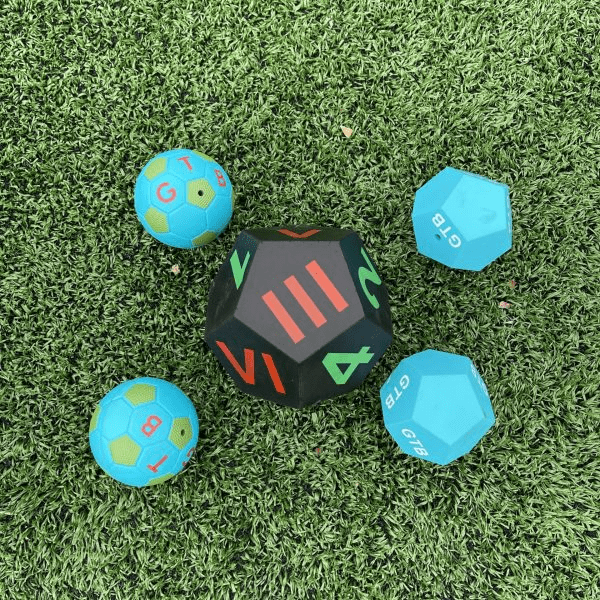
Scoring is straightforward yet surprisingly deep. Target balls are marked with point values, usually ranging from one to six. Hitting the ball in standard play awards the listed points, while driving it into a bonus zone multiplies that total. Amateur games often play to 30 points, making them ideal for quick sessions at school or during family gatherings. Competitive leagues and organized tournaments extend play to 60 points, with a required two-point lead to claim victory, ensuring that matches cannot be won on a fluke final throw.
As interest grows, a more formal competitive structure is emerging. Professional-style play in 2026 emphasizes standardized equipment, with soccer, volleyball, or bocce-style balls all approved for competition. Uniform guidelines encourage numbered shirts, comfortable athletic bottoms, and rubber-soled sneakers to maintain consistency and safety. Matches are overseen by a referee and assistant who manage timing and scoring, using whistles and visible scoreboards to keep the pace organized and tournament-ready.
For schools, Target Ball offers a modern addition to physical education programs. The game naturally develops hand-eye coordination, spatial awareness, and teamwork, all while remaining accessible to students of varying athletic abilities. Recreation departments are also embracing it as a low-cost way to introduce new programming that draws teens, adults, and seniors into shared activity rather than siloed leagues.
Families are finding that Target Ball fills the gap between casual backyard games and full-scale organized sports. It is competitive without being intimidating, easy to learn yet difficult to master, and engaging for players and onlookers alike. A weekend gathering can quickly turn into an impromptu tournament, complete with bracket-style play and friendly trash talk.
New Jersey’s sports culture has long thrived on innovation, from roller hockey rinks in suburban cul-de-sacs to the rise of pickleball courts in public parks. Target Ball fits naturally into that tradition, offering a fresh option that can scale from casual fun to structured league play. For communities eager to expand their recreational offerings, local organizations and schools can find additional inspiration and programming ideas through Explore New Jersey’s dedicated sports coverage by visiting their sports hub, where statewide activities and trends are highlighted.
As the game continues to spread across gym floors, turf fields, and community spaces, Target Ball is poised to become one of the Garden State’s most talked-about new competitions. It is simple enough for first-time players to enjoy immediately, yet layered enough to sustain serious leagues and tournaments. In a state that values both athletic tradition and community connection, Target Ball is arriving at exactly the right moment.
How to Play Target Ball
The game is built around speed and accuracy. It does not involve hitting people; the focus is exclusively on a central objective.
- The Setup: Two teams (or two players) stand at opposite ends of a court, behind marked lines. A single Target Ball (a larger, central object) is placed in the middle.
- The Action: Each team is given multiple balls. Players must throw or roll their balls to hit the central Target Ball.
- The Goal: You score points for every successful hit on the central target. In competitive versions, the objective is to hit the Target Ball enough times to move it across the opponent’s end line.
- Continuous Play: There is no turn-taking. Players can throw as fast as they can. If you miss, you must rush to retrieve your ball and return to your own line before you can throw again.
- Winner: The first team to score three points (or move the ball across the line) wins.
Why it is Unique
- Surface: It is designed to be played on any flat surface, from driveways to gyms, without requiring a “pit” or specialized enclosure.
- Accessibility: It is marketed as a “skill-based game” for all ages that promotes social interaction and focus rather than just physical athleticism.
- Official Equipment: While it can be played with makeshift targets, the official version uses specific weighted balls available through GoTargetBall.com.