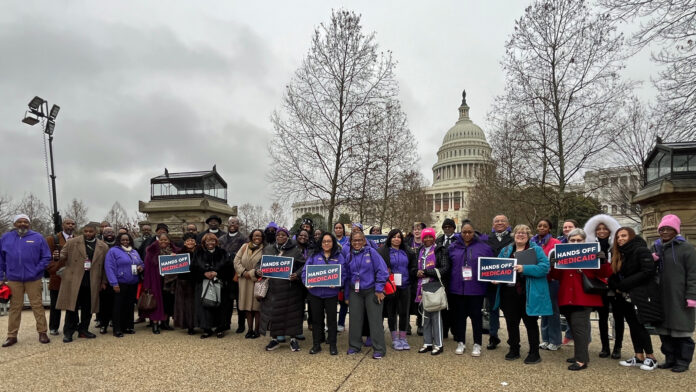

As Medicaid Awareness Month begins, the conversation surrounding health care access in New Jersey has taken on renewed urgency, with mounting concern over policy decisions that are reshaping the future of coverage for hundreds of thousands of residents. Across the state, where health systems, community providers, and families are deeply interconnected, the impact of sweeping Medicaid reductions is no longer theoretical—it is measurable, immediate, and increasingly visible. Within the broader framework of New Jersey’s evolving health and wellness landscape, these developments represent one of the most consequential shifts in recent years, touching nearly every demographic and economic layer of the state.
Medicaid has long served as a foundational component of the American health care system, providing coverage for more than 68 million individuals nationwide, including nearly 1.5 million residents in New Jersey alone as of late 2025. For many, it is not simply an option—it is the only viable pathway to consistent medical care. Children, seniors, individuals with disabilities, and working families all rely on the program to access preventive services, manage chronic conditions, and secure long-term care. In New Jersey, where the cost of living continues to rise and economic pressures remain unevenly distributed, Medicaid functions as both a health care safety net and a stabilizing force within local communities.
Recent federal policy changes, however, have introduced significant reductions in Medicaid funding, triggering a chain reaction that is now unfolding across the state. Within a four-month period between July and November 2025, more than 9,000 New Jersey residents lost Medicaid coverage, contributing to a national decline affecting over 1.8 million individuals. While these numbers are substantial on their own, they represent only the beginning of a longer-term trend that is projected to accelerate in the coming years.
Policy adjustments introducing additional administrative requirements have created new barriers to enrollment and retention, effectively placing thousands of residents at risk of losing coverage due to procedural challenges rather than eligibility changes. Estimates suggest that as many as 173,000 New Jerseyans could ultimately lose access to Medicaid under these conditions, a figure that underscores the scale of the issue. Looking further ahead, projections indicate that by 2034, an additional 211,600 residents may be impacted, contributing to a nationwide reduction of approximately 7.5 million individuals from the program.
The consequences of these shifts extend well beyond individual coverage. In New Jersey, where health care institutions play a central role in both service delivery and economic stability, funding reductions are placing significant strain on hospitals, nursing homes, and care facilities. With an estimated $825 million in hospital funding cuts, providers across the state are being forced to reassess operations, reduce services, and, in some cases, consider closure. Facilities that serve as critical access points for care—particularly in underserved communities—are now operating under increasing pressure, raising concerns about longer wait times, reduced availability of specialized services, and diminished capacity to respond to public health needs.
Several institutions have already been identified as at risk, including Hudson Regional Health, University Hospital, and Secaucus University Hospital. The closure of multiple care facilities and affiliated offices has further intensified the situation, creating gaps in coverage that are not easily replaced. For many communities, these facilities are more than health care providers; they are economic anchors, supporting local employment and contributing to regional stability. Their decline or disappearance carries ripple effects that extend into workforce dynamics, local economies, and overall community resilience.
Economic projections reinforce the broader implications of these changes. Over the next decade, New Jersey is expected to lose nearly $200 million from its general fund as a result of reduced Medicaid investment. At the same time, the health care sector—one of the state’s largest employment bases—could see approximately 11,100 job losses by 2029. These figures highlight the interconnected nature of health policy and economic health, illustrating how shifts in funding can reverberate across multiple sectors simultaneously.
For individuals and families, the impact is both immediate and deeply personal. The loss of Medicaid coverage introduces difficult decisions that affect daily life—whether to seek medical attention, fill necessary prescriptions, or allocate limited resources toward basic needs such as food and housing. For seniors, particularly those reliant on long-term care services, the stakes are even higher. Medicaid currently supports more than half of all long-term care in the United States, making it an essential resource for aging populations who require consistent and specialized support.
The broader context of these developments is shaped by the legacy of Medicaid expansion under the Affordable Care Act, which significantly increased access to care across the country. In New Jersey, expansion has been associated with improved health outcomes, greater financial security for families, and enhanced stability within the health care system. The current trajectory, marked by funding reductions and increased administrative barriers, represents a departure from that progress, raising critical questions about sustainability and access moving forward.
At the center of the debate are policy decisions that have prioritized large-scale fiscal changes with far-reaching consequences. Critics argue that the reallocation of resources has disproportionately affected vulnerable populations while introducing new challenges for states tasked with maintaining health care infrastructure under constrained conditions. Supporters of the changes point to broader economic strategies, but the immediate effects at the state level remain a focal point of concern.
For New Jersey, the path ahead will require a coordinated response that balances fiscal realities with the imperative to maintain access to care. Health systems, policymakers, and community organizations will need to navigate a complex landscape in which demand for services remains high while resources become increasingly limited. The outcome of this process will shape not only the future of Medicaid in the state but also the broader health and wellness of its residents.
As Medicaid Awareness Month brings renewed attention to these issues, the conversation in New Jersey is shifting from abstract policy discussions to tangible, on-the-ground realities. The numbers tell one story, but the lived experiences of those affected provide a deeper understanding of what is at stake. In a state where health care access is closely tied to quality of life, economic stability, and community strength, the decisions being made today will have lasting implications for years to come.