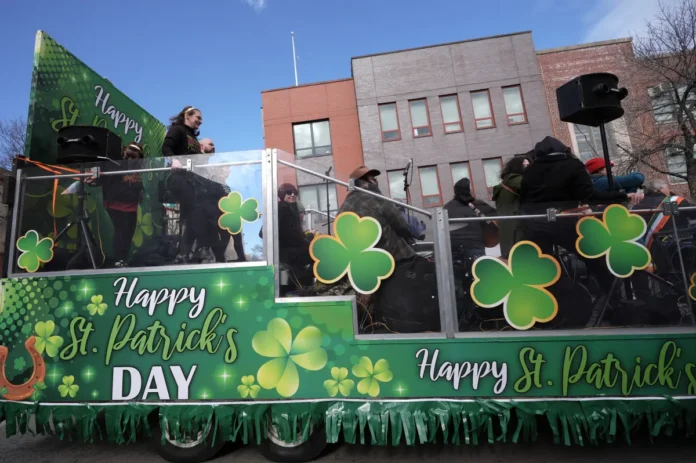

Every March, New Jersey doesn’t just celebrate St. Patrick’s Day—it transforms. Streets become rivers of green, communities gather in force, and centuries of Irish heritage are brought vividly into the present. In 2026, that tradition reached new heights across the Garden State, with parades in Morristown, Jersey City, Asbury Park, and Belmar-Lake Como collectively telling a story that is as much about history as it is about identity, resilience, and cultural pride.
This year’s celebrations were especially meaningful, blending large-scale community turnout with a renewed awareness of New Jersey’s deep historical ties to both Irish heritage and the founding of the United States. From Revolutionary War connections in Morris County to vibrant coastal festivities and urban spectacles, the 2026 St. Patrick’s Day parade season showcased why New Jersey remains one of the most culturally dynamic states in the nation.
Morristown Leads with Legacy: A Parade Rooted in the American Revolution
The centerpiece of this year’s celebrations was the 46th Annual Morris County St. Patrick’s Day Parade, held on Saturday, March 14, 2026, in Morristown. Drawing thousands of spectators and participants, the event delivered more than just pageantry—it offered a living connection to one of the most significant chapters in American history.
Morristown’s St. Patrick’s Day tradition is uniquely tied to the winter of 1779–1780, when General George Washington and the Continental Army endured one of the harshest encampments of the Revolutionary War in the area now known as Jockey Hollow. During that time, Irish soldiers made up a substantial portion of the ranks, and in a remarkable gesture of recognition, Washington authorized a St. Patrick’s Day observance on March 17, 1780—effectively cementing the holiday as part of the American story.
That legacy continues to echo through modern celebrations. Organized by the Friendly Sons of St. Patrick of Morris County, the parade traces its contemporary origins to 1979 in Wharton but carries forward a lineage that predates the nation itself. The event today stands as a powerful convergence of past and present, honoring Irish contributions not only to Morris County but to the foundation of the United States.
The parade route through Morristown became a corridor of history and celebration, with marching bands, cultural organizations, veterans’ groups, and civic leaders all participating. The symbolism was unmistakable: this is not just a parade—it is a reaffirmation of identity, heritage, and the enduring influence of Irish Americans in shaping New Jersey’s civic and cultural landscape.
Jersey City and Asbury Park: Urban Energy Meets Coastal Tradition
While Morristown anchored the historical narrative, other regions of New Jersey brought their own distinct energy to the 2026 St. Patrick’s Day season.
Jersey City kicked off the month’s major celebrations on Saturday, March 7, with one of the state’s most anticipated parades. Known for its scale and diversity, the Jersey City St. Patrick’s Day Parade once again drew massive crowds, reflecting the city’s rich multicultural identity. The event blended traditional Irish elements—pipes, drums, and step dancing—with a distinctly urban vibrancy, creating an atmosphere that was both celebratory and inclusive.
Just one day later, Asbury Park took the spotlight on Sunday, March 8, with its parade along Ocean Avenue. Few locations in New Jersey offer a more visually striking setting for a St. Patrick’s Day celebration than the Jersey Shore, and Asbury Park delivered a uniquely coastal interpretation of the holiday. Against the backdrop of the Atlantic Ocean, the parade brought together local businesses, performers, and community groups, reinforcing the Shore’s reputation as a hub for both cultural expression and seasonal tourism.
These events highlight a key dynamic in New Jersey’s cultural ecosystem: each region interprets tradition through its own lens. Jersey City channels metropolitan intensity and diversity, while Asbury Park infuses its celebration with artistic flair and seaside charm. Together, they expand the meaning of St. Patrick’s Day beyond a single narrative, reflecting the state’s broader cultural mosaic.
Belmar-Lake Como: Resilience in the Face of Winter
No story of the 2026 parade season would be complete without acknowledging the impact of weather—specifically, the blizzard that forced the postponement of the Belmar-Lake Como St. Patrick’s Day Parade.
Originally scheduled for March 1, the parade was rescheduled to March 28, demonstrating the resilience and determination of one of New Jersey’s most beloved St. Patrick’s Day traditions. The Belmar-Lake Como parade is widely regarded as one of the largest in the state, routinely attracting tens of thousands of attendees to the Jersey Shore.
Rather than diminishing the event, the postponement has only heightened anticipation. The late-March rescheduling effectively extends the St. Patrick’s Day season in New Jersey, giving communities and visitors another opportunity to engage with the celebration. It also underscores a broader truth about New Jersey events culture: adaptability is part of the identity, and when challenges arise, communities respond with even greater enthusiasm.
A Statewide Celebration of Irish Heritage and Cultural Identity
Across all these events, a unifying theme emerges: St. Patrick’s Day in New Jersey is not confined to a single day or location. It is a statewide cultural phenomenon that unfolds over weeks, connecting communities from North Jersey to the Shore.
The celebrations reflect centuries of Irish influence in the region, from early immigration waves in the 18th century to the continued presence of Irish-American communities today. They also serve as a reminder of how cultural traditions evolve—maintaining their historical core while adapting to contemporary contexts.
This aligns seamlessly with the broader mission of Explore New Jersey’s coverage of arts and culture, where the focus is not just on events, but on the deeper narratives that define the state. St. Patrick’s Day parades exemplify this approach, offering a lens through which to understand New Jersey’s history, diversity, and creative spirit.
The Economic and Cultural Impact of Parade Season
Beyond their cultural significance, St. Patrick’s Day parades play a critical role in New Jersey’s local economies. Restaurants, bars, retail shops, and hospitality businesses all benefit from the influx of visitors, particularly in high-traffic areas like Morristown, Jersey City, and the Jersey Shore.
These events also drive tourism, drawing attendees from neighboring states and reinforcing New Jersey’s reputation as a destination for major cultural celebrations. The combination of historical depth, geographic diversity, and large-scale participation makes the state’s St. Patrick’s Day season uniquely compelling on a national level.
At the same time, the parades foster community cohesion. They bring together residents, organizations, and local leaders in a shared celebration, strengthening civic bonds and reinforcing a sense of belonging. In an era where community connection is increasingly valued, these events serve as powerful reminders of what collective celebration can achieve.
Extending the Legacy: Why St. Patrick’s Day in New Jersey Matters More Than Ever
The 2026 St. Patrick’s Day parade season in New Jersey was not just a series of events—it was a statement. A statement about heritage, about resilience, and about the enduring power of community-driven celebration.
From the Revolutionary War roots of Morristown to the coastal energy of Asbury Park and the postponed but highly anticipated return of Belmar-Lake Como, each parade contributed to a larger narrative. Together, they demonstrate that New Jersey’s cultural identity is both deeply rooted and constantly evolving.
For residents and visitors alike, these parades offer more than entertainment. They provide a connection—to history, to community, and to a shared cultural legacy that continues to shape the state in meaningful ways.
As the final celebrations of March unfold, one thing is clear: in New Jersey, St. Patrick’s Day is not just observed—it is experienced, expanded, and elevated year after year.