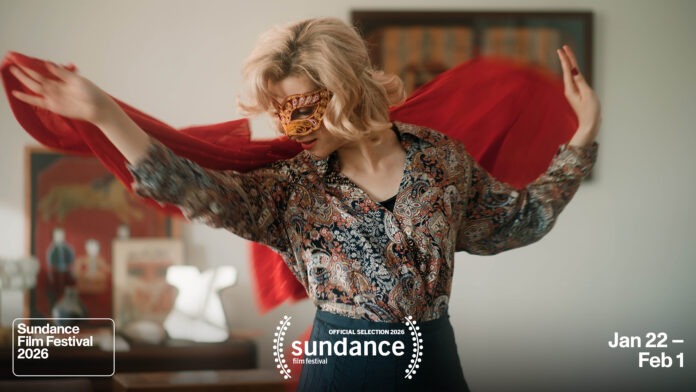

In an era when headlines reduce Iran to flashpoints of conflict and protest, a quietly defiant film made under extraordinary conditions is offering a far more intimate and human portrait. The Friend’s House is Here, a feature created in secrecy by filmmakers Hossein Keshavarz and Maryam Ataei, arrives at the Sundance Film Festival carrying not just artistic ambition, but the weight of lived risk, friendship, and creative resistance. For New Jersey audiences in particular, the film’s journey resonates deeply, as one of its creators traces his formative years back to Middlesex County before returning, again and again, to a homeland shaped by contradiction and courage.
The film was shot last summer in Tehran under circumstances that would have stopped most productions cold. As explosions echoed across the city, anti-aircraft drills punctuated the nights, and security forces intensified raids on artists, Keshavarz and Ataei pressed forward. Just days before cameras rolled, dozens of officers stormed another filmmaker’s home nearby. That reality did not deter them. Instead, it sharpened the urgency of their work. Every scene was captured knowing that discovery could mean arrests, confiscated footage, or worse.
When production wrapped, the danger did not end. The completed film had to be physically smuggled out of Iran, concealed at the end of a religious movie on a hard drive to evade inspection at checkpoints. The journey took it across borders to Turkey and ultimately to the United States, where it now stands as one of the most emotionally charged premieres of the festival season.
At its core, The Friend’s House is Here is a woman-centered narrative following a circle of young artists in Tehran who refuse to surrender their creative lives. Though fictional, the story draws directly from the lived experiences of its cast and creators. Underground theater rehearsals, rooftop conversations, late-night gatherings, and performances staged in defiance of restrictions are woven into a portrait of a city alive with imagination. Women walk unveiled in sunlight, dancers claim public spaces, and artists insist on visibility even when silence would be safer.
The timing of the film’s debut is impossible to ignore. As mass protests sweep Iran and communication blackouts cut families off from one another, Ataei speaks openly about the terror of not hearing her parents’ voices for days at a time. Keshavarz recounts learning that a supporting actor in the film was shot in the face during protests, with the potential loss of her eyesight. These are not abstract stakes; they are the daily costs borne by the community that brought the film to life.
Yet the film does not dwell in despair. Instead, it emphasizes creative joy as an act of survival. Friendship becomes the engine of resistance, binding artists together as they protect one another, collaborate, and refuse to disappear. The title itself nods to Abbas Kiarostami’s landmark Where Is the Friend’s House?, situating the film within a lineage of Iranian cinema that finds profound meaning in intimate, human-scale stories.
For Keshavarz, the project is inseparable from his New Jersey upbringing. Raised in the Colonia section of Woodbridge after his family emigrated from Iran in the 1980s, he grew up navigating cultural identity in a place where difference was often met with suspicion. Those experiences, shaped by moments of prejudice and political backlash, instilled an empathy that now defines his filmmaking. His sister, acclaimed director Maryam Keshavarz, is no stranger to Sundance success, and her influence as an executive producer on this project underscores the family’s enduring connection between New Jersey and global cinema.
Ataei’s path complements his. Born and educated in Tehran, she emerged from the city’s underground theater scene, studying film and dramatic literature while performing in small, often unofficial productions. Their creative partnership began years ago and has always been rooted in collaboration under constraint. Their first feature together, also filmed covertly, earned international recognition and set the foundation for a shared artistic language grounded in authenticity and trust.
That trust extended to every aspect of The Friend’s House is Here. The cast includes real members of Tehran’s underground arts community, including performers known for improvisational theater and dance shared on social media despite constant surveillance. Scenes were shaped through conversation and improvisation, allowing real fears, hopes, and defiance to bleed into the narrative. The result is a film that feels less like a scripted drama and more like an invitation into lived reality.
The dangers of making such a film are never far from the surface. Power outages interrupted shoots. Security forces occupied nearby buildings. Decisions as small as calling in extra performers carried the risk of arrest. Each day required calculating who could be trusted, where cameras could safely roll, and when to stop. Even family members were implicated, as Ataei’s aunt appears on screen in a role that mirrors real conversations urging caution and restraint.
Despite all of this, the filmmakers remain committed to returning to Iran. They speak candidly about accepting the risks inherent in telling these stories, viewing silence as a greater threat than danger. Their stance places them among a generation of artists who refuse to live divided lives, one version in private and another in public. Instead, they reclaim streets, rooftops, and stages as spaces of truth.
For audiences in New Jersey, the film’s Sundance premiere is more than a cinematic milestone. It is a reminder that global stories often have local roots, and that the state’s creative community extends far beyond its borders. The Friend’s House is Here stands as a testament to the power of independent filmmaking to bear witness, connect cultures, and preserve voices that would otherwise be erased. As part of the broader conversation around cinema and storytelling explored in Explore New Jersey’s coverage of film and television, this project exemplifies how art born in secrecy can still reach the world, carrying with it resilience, humanity, and an unyielding demand to be seen.