
New Jersey’s political landscape is buzzing with activity as of Tuesday, December 2, 2025, with high-stakes developments in the State Senate, a critical mayoral runoff in Jersey City, and Governor-elect Mikie Sherrill’s transition team making significant appointments. Lawmakers, voters, and residents across the state are closely following these unfolding events that could shape New Jersey governance in the coming months.
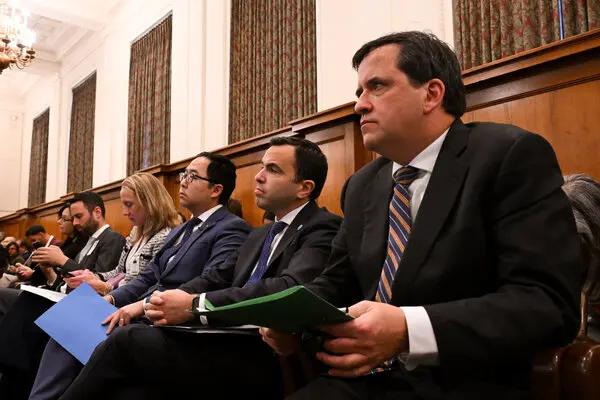
A key story dominating the headlines involves a controversial State Senate bill, S.4924, designed to significantly curtail the powers of New Jersey’s independent comptroller. The legislation would remove subpoena powers and limit the agency’s authority to investigate government waste, fiscal mismanagement, and state contract irregularities. Critics argue this move risks consolidating political power while undermining transparency. On Monday, Senator Andy Kim, along with State Comptroller Kevin Walsh, State Attorney General Matt Platkin, and anti-corruption advocates, testified against the bill before the Senate Committee on Government, Wagering, Tourism, and Historic Preservation. Senator Kim emphasized that New Jerseyans are demanding government accountability, calling out the bill as a dangerous effort to weaken oversight and erode public trust. Kim highlighted that “84 percent of New Jerseyans surveyed believe their elected officials are corrupt” and urged the committee to reject the legislation, stating that protecting the independence of the comptroller is essential for transparency and fairness in state government.
Meanwhile, voters in Jersey City are heading to the polls for a runoff election to determine their next mayor. The contest pits former Governor Jim McGreevey, who resigned in scandal more than two decades ago, against City Councilman James Solomon. McGreevey carries the endorsement of outgoing Governor Phil Murphy, while Solomon has secured backing from Senator Andy Kim and several former primary contenders. The campaign has centered on local concerns, including rent control, affordable housing, and addressing the city’s budget shortfall, with both candidates seeking to present a vision for Jersey City’s future that resonates with residents across the political spectrum.
At the state level, Governor-elect Mikie Sherrill continues to shape her incoming administration with key appointments. She named Kellie Doucette as New Jersey’s first-ever Chief Operating Officer, a role aimed at modernizing state operations, improving efficiency, and driving performance across departments. Lieutenant Governor-elect Dale Caldwell has been named the next Secretary of State, and Sherrill has also established a bipartisan Local Government Advisory Group to provide input during the transition. These steps are part of Sherrill’s effort to ensure a seamless changeover in leadership while addressing systemic challenges and fostering collaboration across New Jersey’s political and administrative landscape.
Sherrill’s move to the governor’s office has created a vacancy in New Jersey’s 11th Congressional District, triggering a special election with 14 candidates—13 Democrats and one Republican—vying to succeed her. With endorsements divided among influential figures like Sherrill and Senator Kim, the race promises to be competitive, with a special primary scheduled for February 5, 2026.
The combination of legislative debate, local electoral contests, and statewide administrative shifts underscores a period of intense political activity in New Jersey. Lawmakers, candidates, and public officials are all navigating a delicate balance between reform, accountability, and public trust, as voters and stakeholders closely monitor developments that will have lasting impacts on governance and civic life across the state.
For ongoing analysis, detailed updates, and insights into New Jersey’s evolving political scene, explore the Politics section, your source for comprehensive coverage of government, elections, and policy news across the state.