
From Algorithms to Answers: New Jersey Marketing Strategist Brad Wetherall Maps the Next Era of Digital Discovery in Breakthrough New Book
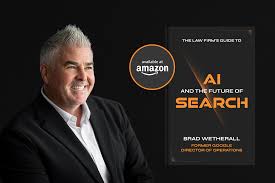
In a digital economy increasingly shaped by artificial intelligence, New Jersey–based marketing strategist Brad Wetherall is challenging businesses to rethink what visibility really means. His newly released book, AI and the Future of Search, published February 10, 2026, has surged to the top of Amazon’s charts, reaching No. 1 in both the Search Engine Optimization and Artificial Intelligence Expert Systems categories within days of its release.
For Wetherall, an Amazon No. 1 bestselling author and long-time digital growth advisor, the rapid response to the book underscores a growing anxiety among business leaders: the search strategies that once powered customer acquisition are being replaced by AI systems that decide what information users see, trust, and act on.
Rather than focusing on traditional keyword rankings and page placement, Wetherall’s new work reframes search as an intelligence-driven ecosystem—one that evaluates credibility, context, and relevance across an entire digital footprint. His central message is clear and increasingly urgent: modern search is no longer built for websites. It is built for answers.
Wetherall brings more than a decade of hands-on experience to the conversation, including senior leadership roles in large-scale digital operations and a background that includes serving as Director of Operations at Google. That operational perspective informs the book’s practical tone. Instead of offering speculative predictions, AI and the Future of Search walks business owners, marketers, and executives through what is already happening inside AI-powered platforms and how those systems interpret brand authority, content quality, and real-world signals.
At the heart of the book is a fundamental shift in how people discover information. AI-driven search engines, voice assistants, and conversational tools are no longer matching individual keywords to pages. They are synthesizing information, evaluating multiple sources simultaneously, and producing direct responses to complex, natural-language questions. In many cases, users never see a list of websites at all.
Wetherall explains that this transformation is quietly changing how companies compete for attention. Brands are being assessed on how clearly they communicate their expertise, how consistently they appear across credible digital environments, and how effectively their content helps users solve real problems. A company may still rank well in traditional search results, he argues, yet remain invisible inside AI-generated answers if its content lacks clarity, authority, or structural depth.
One of the most valuable sections of the book focuses on how organizations should redesign their digital strategies for an AI-first environment. Wetherall emphasizes the rising importance of educational, long-form content that demonstrates genuine subject mastery rather than promotional messaging. In his view, artificial intelligence systems favor material that defines concepts, explains processes, and connects ideas in a way that is logically structured and easy to interpret.
This shift also places new importance on what Wetherall describes as “entity clarity.” Businesses must make it unmistakably clear who they are, what services they provide, where they operate, and why they are qualified to serve their audience. From website architecture and author bios to third-party citations and public profiles, AI models aggregate these signals to determine whether a brand deserves to be surfaced as a reliable source.
For New Jersey companies operating in competitive sectors such as healthcare, professional services, financial advising, technology consulting, and real estate, the stakes are rising quickly. Wetherall warns that AI-driven search platforms are already reshaping how local and regional businesses are recommended, filtered, and prioritized—often without traditional ranking reports or analytics tools revealing what is happening behind the scenes.
Another major theme in the book is the decline of purely traffic-based performance metrics. While clicks and impressions remain useful, Wetherall argues that they no longer tell the full story. AI-generated answers, summarized content panels, and conversational responses often deliver information directly to users without routing them to external websites. In this environment, brand authority, topical recognition, and inclusion in AI-generated responses become more important indicators of influence than page views alone.
The book also explores how predictive and proactive discovery is changing the marketing funnel itself. AI platforms increasingly anticipate what users may need next, delivering recommendations before a formal search query is even entered. According to Wetherall, this shift requires businesses to position their content across the entire customer journey, from early-stage education to advanced problem-solving, in order to remain visible as AI systems guide user decisions.
Importantly, Wetherall does not frame artificial intelligence as a threat to smaller organizations. In fact, he argues that niche expertise and geographic focus can become powerful competitive advantages. Local and regional companies that clearly articulate specialized services and community relevance can outperform larger competitors whose messaging is broad or generic. AI models reward depth, specificity, and consistency—qualities that well-positioned local brands can deliver at scale without enterprise-level budgets.
Throughout the book, Wetherall provides structured frameworks for evaluating a company’s existing digital footprint. These include audits of website architecture, content alignment, platform consistency, and off-site references. He encourages businesses to view their online presence as an interconnected ecosystem rather than a collection of independent marketing channels.
The release of AI and the Future of Search also reflects a broader trend in thought leadership emerging from the region, as more New Jersey-based professionals contribute to national conversations about technology, innovation, and digital transformation. Readers interested in discovering new authors and industry voices shaping these discussions can explore ongoing coverage of new releases and publishing trends through Explore New Jersey’s curated books and publishing features.
What ultimately sets Wetherall’s work apart is its emphasis on strategic clarity. As AI systems increasingly determine which brands are surfaced, cited, and trusted, businesses must stop optimizing solely for machines and start communicating clearly for both people and intelligent systems. In a marketplace where algorithms are rapidly becoming gatekeepers of visibility, AI and the Future of Search offers a timely roadmap for organizations determined not just to be found—but to be understood.
For years, businesses in New Jersey and beyond have built their digital strategies around a single assumption: if you could master traditional search engine optimization, you could control your online visibility. But according to digital marketing strategist and author Brad Wetherall, that entire playbook is being rewritten—faster than most companies realize.
In his newly released book, Wetherall, an Amazon No. 1 bestselling author and longtime digital marketing professional, delivers a clear-eyed look at how artificial intelligence is reshaping the way consumers search, how platforms surface information, and how brands must rethink visibility in a landscape increasingly driven by machine learning rather than keyword rankings alone.
AI-powered search tools, recommendation engines and conversational platforms are no longer simply matching keywords to webpages. Instead, they interpret intent, behavior patterns, context, and content quality in real time. For businesses that still rely on outdated tactics such as narrow keyword targeting or static blog strategies, the result is rapidly shrinking digital reach—even if their websites technically remain optimized.
Wetherall explains that today’s search environment is becoming less about ranking first on a list and more about being selected, summarized and referenced by intelligent systems that decide what information users actually see. These systems evaluate credibility, topical authority, brand consistency, user engagement signals and content structure to determine whether a business is considered relevant enough to appear in AI-generated results, voice responses, or curated recommendations.
For New Jersey companies operating in competitive sectors such as professional services, healthcare, retail, real estate and technology, the implications are significant. Wetherall argues that organizations must stop thinking of search as a traffic channel and start treating it as a trust ecosystem. AI-driven platforms favor brands that demonstrate clarity of expertise, consistent messaging across platforms and verifiable authority in their niche.
One of the most practical sections of the book focuses on how businesses can prepare their content for AI-driven discovery. Wetherall emphasizes that long-form, well-structured educational material now carries more weight than short, promotional blog posts. Content must clearly explain concepts, answer real customer questions, and be written in a way that machines can easily understand, categorize and summarize.
He also highlights the growing importance of entity-based content—material that clearly establishes who a business is, what it does, where it operates and how it serves its audience. This structured clarity allows AI systems to confidently associate a brand with specific topics, industries and geographic regions, making it more likely that the business will appear when users ask complex or conversational queries.
Beyond content itself, Wetherall devotes significant attention to digital footprint alignment. Websites, business listings, social media profiles, press coverage and third-party mentions must reinforce the same narrative about a brand’s expertise. Inconsistent messaging or outdated information can weaken how AI interprets a company’s credibility, even if the brand remains active online.
Another key takeaway from the book is the accelerating role of predictive discovery. Rather than waiting for a user to search, AI-powered platforms increasingly anticipate needs and present information proactively. Wetherall notes that this shift means businesses must position themselves not only as solutions to current problems but also as authoritative resources within broader conversations that users may enter at different stages of decision-making.
For small and mid-sized businesses across New Jersey, this evolution presents both challenges and opportunity. While enterprise brands often have larger content teams and budgets, Wetherall argues that local and regional companies can still compete by narrowing their focus and becoming exceptionally strong in clearly defined niches. AI systems reward depth and specificity far more than generalized marketing claims.
The book also addresses how traditional SEO metrics are becoming less reliable indicators of performance. Page rankings and click-through rates do not fully reflect how often a business may be referenced, summarized or recommended by AI systems that deliver answers without sending users directly to a website. As a result, Wetherall encourages marketers to measure brand authority, content adoption across platforms, and engagement quality rather than relying solely on traffic volume.
Wetherall’s work arrives at a moment when business leaders are increasingly uncertain about how artificial intelligence will affect marketing investments. Rather than framing AI as a threat, he positions it as a filter—one that removes superficial content and elevates organizations that communicate clearly, educate effectively and demonstrate real expertise.
The book is written for entrepreneurs, marketing professionals and executive leaders who want practical guidance rather than theoretical predictions. Throughout the release, Wetherall outlines how companies can audit their existing digital presence, restructure content strategies and begin preparing their online assets for AI-first discovery without completely abandoning traditional marketing channels.
For readers interested in how emerging authors and industry experts are shaping conversations around technology, business and communication, Explore New Jersey regularly highlights new releases and regional voices in its dedicated books and publishing coverage, offering a broader look at how thought leadership continues to evolve across the state.
As AI-driven search continues to replace conventional browsing habits, Wetherall’s message is clear: visibility in the digital marketplace is no longer controlled by who can game algorithms. It belongs to organizations that invest in clarity, credibility and content that genuinely helps people. In an era where machines increasingly decide what information reaches the public, businesses that fail to adapt risk becoming invisible—not because they disappeared, but because they were never chosen.