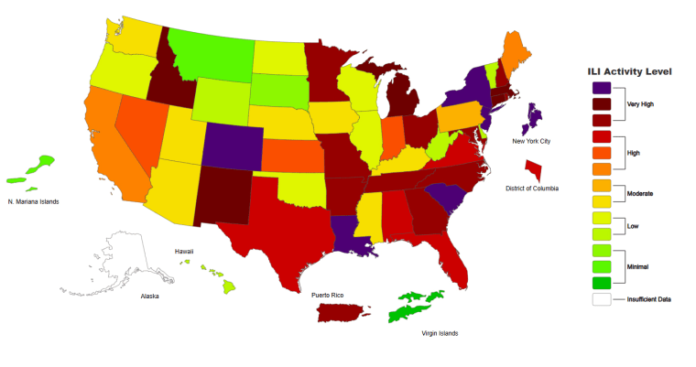

New Jersey has emerged as a focal point in the ongoing U.S. flu season, with recent data from the CDC ranking the state among those experiencing the highest influenza activity in the nation. As of early January 2026, hospitals and public health officials are reporting a sharp rise in cases, hospitalizations, and community concern, signaling a flu season that is proving both intense and unpredictable.
The state is seeing roughly double the number of flu cases compared with the same period last year. New Jersey is classified at the “Very High” activity level, a designation it shares with only a handful of states including New York, South Carolina, Louisiana, and Colorado. Hospitals across the state are feeling the pressure, with emergency rooms and inpatient wards reporting significantly increased admissions for flu-like illnesses. Hackensack Meridian Health and other major hospital networks have responded by implementing mask requirements for unvaccinated personnel to limit transmission and protect patients.
Health authorities attribute much of this surge to a new mutation of Influenza A (H3N2), known as subclade K. This strain emerged after the 2025–2026 flu vaccine had already been finalized, creating a mismatch that may reduce the shot’s effectiveness against this particular variant. Despite the mismatch, state health officials emphasize that vaccination remains the most effective defense, helping prevent severe illness, hospitalizations, and death, particularly among vulnerable populations such as young children and the elderly.
The characteristics of H3N2 strains have historically been associated with more serious illness compared with other flu variants, and experts are urging residents to remain vigilant. Common guidance includes maintaining proper hand hygiene, staying home when sick, and seeking medical care promptly if symptoms worsen. The state Department of Health continues to monitor trends closely, providing regular updates to help residents navigate this challenging season.
The flu is only one aspect of a broader public health landscape currently affecting New Jersey. Across the U.S., measles cases have surged to their highest level in more than three decades, largely affecting unvaccinated populations. Meanwhile, prescription drug prices are set to increase on hundreds of medications, including vaccines for COVID-19, RSV, and shingles, though some reductions are expected on select drugs. On a more positive note, the FDA recently approved the first new treatment for motion sickness in over 40 years, highlighting ongoing advances in medical research and treatment options.
For New Jersey residents looking for guidance, resources, and ongoing coverage on public health, wellness, and preventative measures, the state’s health and wellness section offers detailed updates, advice, and expert insights to help families and communities navigate these challenges safely and proactively.
As influenza activity continues to peak in the weeks ahead, public health officials urge all residents to remain alert, get vaccinated if they have not already, and follow recommended precautions. With proactive measures and community awareness, New Jerseyans can reduce the impact of this aggressive flu season while staying informed about broader health trends affecting the state.