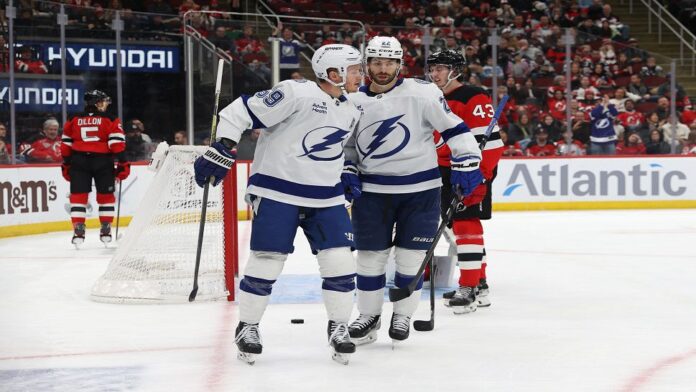

The New Jersey Devils arrived in Tampa hoping to build momentum, but Thursday night quickly unraveled into a frustrating reminder of how thin the margin for error can be in the NHL. An 8–4 loss to the Lightning halted any chance of a modest winning streak and exposed familiar issues defensively, turning what was supposed to be a confidence-building road test into another humbling chapter of an uneven season.
The defeat itself was alarming enough. Defensive coverage broke down repeatedly, goaltending was left exposed, and the Devils struggled to regain control once the game tilted decisively in Tampa Bay’s favor. While there were flashes of offensive pushback, the larger takeaway was how vulnerable New Jersey can look when structure disappears, especially against elite competition that thrives on capitalizing mistakes.
Losses like this do more than dent the standings. They sharpen the focus on long-term roster construction, particularly on defense, where the Devils face an intriguing and potentially complicated future. At the center of that conversation is Simon Nemec, a player whose development trajectory is beginning to intersect directly with the organization’s cap planning and lineup balance.
Nemec appears to be choosing the perfect season to elevate his game. At just 21 years old, he is showing increasing comfort at the professional level, handling tougher matchups and playing with more assertiveness at both ends of the ice. Among the Devils’ upcoming contract decisions following the 2025–26 season, his situation stands out as one of the most consequential, not necessarily because of urgency, but because of fit.
From a contractual standpoint, the Devils are not facing immediate pressure. Most of their defensive core remains under team control beyond next season, with Nemec and a pair of short-term injury call-ups representing the only right-shot defensemen nearing free agency. On paper, that stability is a luxury. In practice, it creates a logjam.
If New Jersey enters next season healthy, the right side of the blue line is crowded. Dougie Hamilton, Johnny Kovacevic, and Brett Pesce are all signed for multiple seasons, combining for a significant cap commitment. Hamilton alone accounts for nearly half of that total, and neither Kovacevic nor Pesce is a realistic trade candidate given their roles and contracts. The question, then, becomes less about whether the Devils can afford Nemec and more about how they justify paying four NHL-caliber right-handed defensemen when only three can dress on a given night.
That dilemma complicates Nemec’s next deal. His age, upside, and recent progress all argue in his favor. At the same time, roster math works against him in the short term. Young right-shot defensemen with legitimate top-four potential are rare commodities, and the Devils are not particularly deep in that area beyond Nemec and Seamus Casey. Moving on from Nemec would risk creating a long-term weakness on the right side just as Hamilton moves further beyond his prime years.
There has been outside speculation that Nemec could become a trade chip, especially as Hamilton ages and the Devils weigh competitive timelines. But dealing a developing defenseman who is just beginning to assert himself would be a gamble, one that could haunt the organization if the return fails to match his eventual ceiling. General manager Tom Fitzgerald has shown patience with young talent before, and there is little evidence suggesting Nemec is expendable.
A short-term bridge contract feels like the most logical outcome. It allows the Devils to manage the current depth chart while giving Nemec continued opportunity to grow into a larger role. With the salary cap projected to rise significantly, a bridge deal also positions both sides for a more lucrative long-term agreement once roster congestion eases, particularly when Hamilton’s contract nears its conclusion.
Games like the loss in Tampa underscore why these decisions matter. Defensive reliability, puck movement, and youthful legs on the back end are not luxuries; they are necessities for a team with playoff aspirations. Nemec’s continued development offers hope that the Devils can address those needs internally rather than searching elsewhere.
As the season continues to unfold, the focus will remain on nightly results, but the bigger picture is already taking shape. Nemec is becoming an increasingly important piece of the Devils’ future, and how the organization handles his next contract will say a great deal about its confidence in the blue line it is trying to build. For ongoing coverage, analysis, and team updates, fans can follow everything surrounding the New Jersey Devils through Explore New Jersey’s dedicated Devils section.