
New Jersey continues to assert itself as one of the most attractive places in the region for older adults seeking a high quality of life, according to AARP’s latest national livability rankings. Drawing from its comprehensive Livability Index, AARP evaluates communities across factors that matter most to residents age 50 and over, including housing affordability, access to healthcare, transportation options, walkability, economic opportunity, and opportunities for civic and social engagement.
The newest list highlights 100 communities nationwide, grouped by population size, that are performing particularly well in creating environments where older adults can thrive. Across multiple categories, New Jersey towns and counties earned prominent placements, reinforcing the state’s reputation for dense, connected communities with strong amenities and proximity to employment centers, cultural attractions, and essential services.
In the largest population category, which includes communities with more than 500,000 residents, both Hudson County and Union County were recognized among the top places in the country. Hudson County’s ranking reflects its extensive public transportation network, high walkability scores, and close access to healthcare facilities, all critical considerations for residents looking to reduce car dependency while remaining active and connected. Union County’s inclusion points to its diverse housing stock, established downtowns, and access to jobs and services throughout Central New Jersey and the greater New York metropolitan area. For older residents considering long-term housing stability or downsizing options, these counties continue to stand out within the broader New Jersey real estate landscape, particularly when viewed through the lens of livability and accessibility.
Among large communities with populations between 100,000 and 499,999, the City of Elizabeth earned national recognition. As one of New Jersey’s most historically significant cities, Elizabeth benefits from robust rail connections, a walkable urban core, and ongoing redevelopment efforts that have expanded housing and retail options. Its presence on the list underscores how established cities can evolve to better meet the needs of aging residents while remaining economically vibrant and socially active.
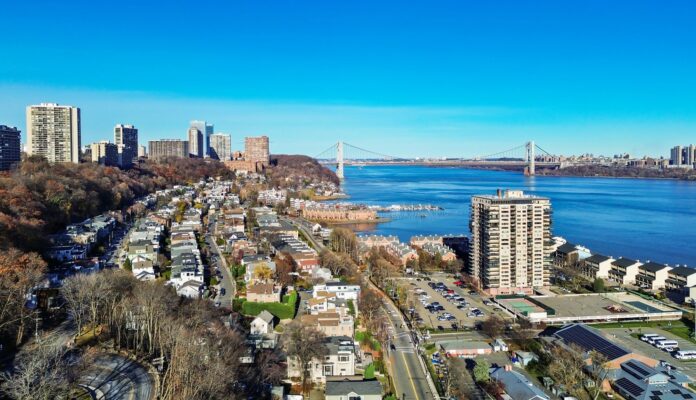
New Jersey’s strongest showing came in the midsize community category, where towns with populations between 25,000 and 99,999 are evaluated for reduced reliance on driving and ease of daily living. Cliffside Park and Fort Lee claimed the top two spots nationally, a notable achievement that speaks to their pedestrian-friendly streets, proximity to shopping and services, and direct access to public transportation into New York City. Bergenfield, Union City, Lodi, and Hoboken also earned high placements, further cementing Bergen and Hudson counties as leaders in creating compact, livable environments. These towns offer a mix of apartments, condominiums, and traditional homes, making them especially appealing to older adults seeking to remain close to family, healthcare providers, and cultural amenities without sacrificing convenience.
Smaller communities were not left out of the conversation. In the category focused on towns with populations between 5,000 and 24,999, Fairview and Wallington both received recognition for fostering strong neighborhood connections and a sense of community. These boroughs exemplify the type of close-knit environments many older adults value, where local shops, parks, and municipal services are easily accessible and residents often know their neighbors by name.
Taken together, the rankings illustrate a broader trend across New Jersey: communities that prioritize walkability, access to transportation, and thoughtful housing options consistently perform well when evaluated for livability. For residents exploring downsizing opportunities, relocating within the state, or making long-term plans around housing and lifestyle, these rankings provide valuable insight into which towns and counties are investing in age-friendly infrastructure. Readers interested in how these livability factors intersect with housing trends can explore additional coverage in Explore New Jersey’s real estate section, where local market dynamics and community development are examined in greater detail.
As New Jersey’s population continues to age, the success of these communities offers a roadmap for others across the state. By focusing on inclusive planning, transportation access, and neighborhood connectivity, many New Jersey towns are not only meeting the needs of today’s older adults but also positioning themselves as desirable places to live for generations to come.