
Access to certified medical equipment is no longer just a matter of inventory — it is a matter of timing, logistics precision, and structured fulfillment systems. MediDepot’s newly announced expansion of fast-ship medical equipment services across the continental United States represents a strategic step forward in healthcare supply chain efficiency, with significant implications for patients, caregivers, and providers in New Jersey.
As healthcare delivery increasingly moves beyond hospital walls and into homes, outpatient centers, rehabilitation facilities, and community clinics, the need for rapid deployment of durable medical equipment has intensified. MediDepot’s expansion strengthens its structured fulfillment infrastructure, enabling faster nationwide delivery while maintaining compliance standards and product certification integrity.
For New Jersey residents and healthcare providers navigating post-acute recovery, chronic care management, or mobility challenges, this development is particularly meaningful.
Why Fast-Ship Medical Equipment Matters in 2026
The healthcare landscape has shifted dramatically over the last decade. Hospitals are discharging patients earlier. Home healthcare programs are expanding. Telehealth consultations are more common. At the same time, supply chain disruptions in recent years exposed vulnerabilities in equipment distribution models.
When a patient requires a hospital bed, mobility aid, oxygen concentrator, or rehabilitation device, delays can directly impact recovery outcomes and quality of life.
MediDepot’s fast-ship model is designed to reduce that gap between prescription and delivery.
Structured Fulfillment as a Competitive Advantage
The key differentiator in MediDepot’s expansion is not simply speed — it is structured fulfillment architecture.
Structured fulfillment refers to a systematic logistics model that integrates inventory tracking, compliance verification, packaging protocols, and carrier coordination into a unified process. By refining these operational layers, MediDepot is able to:
- Accelerate order processing timelines
- Reduce shipping errors
- Maintain equipment certification standards
- Improve inventory forecasting
- Enhance nationwide coverage consistency
This approach is especially important in the medical equipment sector, where regulatory compliance and product integrity cannot be compromised in pursuit of faster delivery.
For healthcare providers across New Jersey, dependable fulfillment reduces administrative burden and increases confidence in equipment reliability.
Meeting the Needs of Home-Based Healthcare
Explore New Jersey’s ongoing coverage of regional health and wellness trends consistently highlights the growing shift toward home-centered care models. From remote monitoring technologies to in-home rehabilitation programs, the demand for durable medical equipment delivered directly to patients has expanded dramatically.
Fast-ship capabilities support:
- Post-surgical recovery at home
- Chronic disease management
- Senior mobility support
- Temporary injury rehabilitation
- Respiratory therapy needs
In many cases, medical equipment must arrive within days — sometimes within hours — to ensure continuity of care.
MediDepot’s expansion addresses that urgency.
Certified Equipment and Compliance Standards
Speed without certification is meaningless in healthcare distribution. MediDepot emphasizes that its expanded shipping infrastructure continues to support certified medical equipment that meets regulatory and safety standards.
For patients and providers, certification ensures:
- Product durability
- Compliance with federal safety regulations
- Insurance eligibility alignment
- Long-term usability
In a healthcare environment where insurance claims and documentation requirements are increasingly complex, maintaining certification standards is essential.
New Jersey’s Healthcare Ecosystem and Distribution Efficiency
New Jersey’s dense population and proximity to major metropolitan healthcare hubs make efficient distribution networks particularly important. The state’s healthcare system includes large hospital networks, outpatient surgical centers, rehabilitation facilities, senior living communities, and home healthcare agencies.
An expanded fast-ship infrastructure serving the continental U.S. naturally enhances availability for New Jersey patients and providers as part of that national network.
Timely equipment delivery supports discharge planning teams, case managers, and physical therapists who depend on reliable vendor partnerships to coordinate patient transitions from hospital to home.
Reducing Supply Chain Friction
Healthcare supply chain management has become a central topic in policy and operational discussions nationwide. Equipment shortages, delayed shipments, and fragmented distribution networks can create bottlenecks that affect patient care.
By strengthening its fulfillment model, MediDepot contributes to reducing friction in the broader healthcare supply chain.
Faster shipping can help:
Minimize extended hospital stays
Prevent readmission due to equipment delays
Support continuity of rehabilitation programs
Reduce emergency replacement orders
In practical terms, this translates into improved patient experience and cost containment.
Digital Ordering and Operational Transparency
Modern medical equipment distribution increasingly relies on digital platforms that allow providers and patients to track orders in real time. Structured fulfillment processes often integrate technology that enhances visibility across the shipping lifecycle.
For healthcare administrators, this level of transparency reduces uncertainty and enables proactive planning.
In a state like New Jersey, where healthcare providers operate within competitive and high-demand markets, reliable order tracking can streamline coordination between discharge teams, insurance providers, and caregivers.
Supporting Aging Populations
New Jersey’s aging population continues to grow, intensifying demand for mobility devices, home safety equipment, and long-term care solutions.
Fast access to:
- Wheelchairs
- Hospital beds
- Lift chairs
- Walkers
- Oxygen equipment
The expansion of fast-ship availability ensures that older residents are not left waiting extended periods for equipment essential to daily living.
Economic and Operational Implications
Beyond patient care, improved distribution networks contribute to economic efficiency within healthcare systems. When equipment arrives on schedule, administrative costs decline. Fewer delays mean fewer emergency procurement orders and less reliance on temporary workarounds.
Healthcare systems benefit from predictable supply cycles, while patients benefit from continuity.
In a competitive healthcare market like New Jersey, operational excellence in logistics becomes part of the broader standard of care.
Aligning With Broader Health and Wellness Trends
Explore New Jersey’s Health & Wellness coverage regularly spotlights innovations improving accessibility, preventative care, and patient-centered services across the state.
MediDepot’s expanded shipping capacity aligns directly with these trends by addressing one of the most practical aspects of healthcare delivery — physical equipment access.
As care models evolve, infrastructure must evolve alongside them. Logistics may not always receive headline attention, but it plays a foundational role in healthcare quality.
A National Expansion With Local Impact
Although MediDepot’s announcement emphasizes continental U.S. availability, the local impact is immediate for New Jersey residents and providers.
With strengthened fulfillment operations and faster delivery timelines, the pathway from prescription to patient becomes more efficient.
For families coordinating post-surgical care, for caregivers managing chronic conditions, and for healthcare professionals overseeing rehabilitation plans, time matters.
MediDepot’s expansion represents a structural improvement in how certified medical equipment reaches those who depend on it most.
Hudson Regional Health Extends Emergency Department Operations at Heights University Hospital Amid Financial Crisis and State Scrutiny
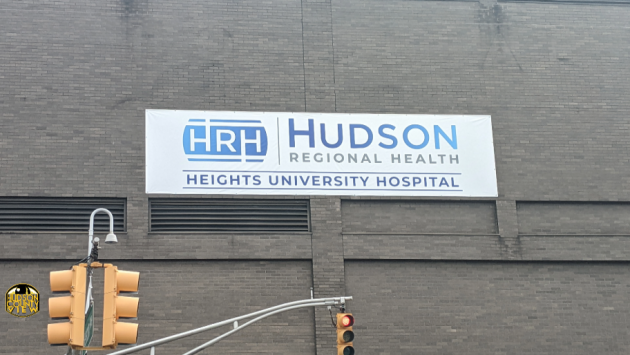
Hudson Regional Health announced Friday that it will extend operations at the Emergency Department at Heights University Hospital into March, temporarily delaying a previously announced Feb. 28 suspension. The two-week extension moves the anticipated closure date to March 14, 2026, offering a brief reprieve for residents of Jersey City’s Heights neighborhood while intensifying debate over the future of emergency care access in the area.
The facility, formerly Christ Hospital, has become the center of a widening financial and regulatory conflict involving Hudson Regional Health leadership, Jersey City officials, state lawmakers, and the New Jersey Department of Health.
A Two-Week Extension Amid Growing Pressure
According to Hudson Regional Health, the decision to extend emergency services comes after direct requests from Jersey City officials and discussions with state health authorities. Chairman Yan Moshe agreed to personally cover approximately $1 million in operating costs during the extension period, a move the system describes as a good-faith effort to provide continuity while broader funding solutions are explored.
However, the system maintains that without additional state funding or alternative financial support, emergency services at Heights University Hospital are expected to be suspended on March 14.
The announcement does not resolve the long-term viability question — it postpones it.
Financial Losses and Systemwide Risk
Hudson Regional Health reports steep financial losses at the facility despite significant post-acquisition investment. After acquiring the hospital out of bankruptcy, the system says it invested more than $100 million into revitalization efforts. Nevertheless, it absorbed $74 million in losses and projects another $30 million deficit this year.
The financial strain is attributed to several compounding factors:
Medicaid reimbursement reductions
Reduced Charity Care funding
Rising numbers of uninsured patients
Lower-than-expected emergency room utilization
HRH leadership argues that continued losses at Heights University Hospital threaten care delivery across its broader network, including facilities in Secaucus, Bayonne, and Hoboken.
For a health system operating in an increasingly complex reimbursement environment, leadership frames the potential ER suspension as a sustainability measure rather than a retreat.
Local Leaders Push Back
The possibility of losing emergency services has drawn strong criticism from Jersey City officials and local representatives who argue that access to emergency care is non-negotiable for Heights residents.
In a joint statement issued Feb. 27, Mayor James Solomon, Councilmember Tom Zuppa, and Councilmember Ephros acknowledged that the two-week extension represents progress. However, they emphasized that it does not fulfill the long-term commitment they say HRH made to provide high-quality healthcare in the Heights community.
The group pledged continued collaboration with Gov. Mikie Sherrill, the New Jersey Department of Health, and Jersey City Health and Human Services to identify a permanent solution that guarantees emergency care access — whether through HRH or another provider.
The tone from city leadership is clear: temporary relief is not structural security.
Regulatory Compliance Questions
Adding another layer to the issue, the New Jersey Department of Health has publicly stated that Heights University Hospital remains out of compliance with state regulatory requirements.
Acting Health Commissioner Dr. Raynard Washington confirmed that while the Department was notified of the two-week extension, the hospital’s Certificate of Need application — filed in fall 2025 — remains under review. Under state law, emergency department closures require formal approval.
According to the Department of Health, shuttering all but the emergency department without legally required authorization places HRH in regulatory violation.
The state signaled it will continue exercising available enforcement options to protect public resources and ensure statutory compliance.
This regulatory backdrop introduces legal uncertainty into the timeline of any potential closure.
What Happens if Services Are Suspended?
If emergency services are suspended on March 14, Hudson Regional Health states it plans to implement transitional measures designed to reduce immediate impact:
Relocating affected staff within the broader health system
Stationing an ambulance outside the facility for two weeks
Deploying a Mobile Health Unit after the ambulance phase
Exploring redevelopment plans for a financially sustainable hospital model in Jersey City
While these measures may offer short-term support, critics argue that mobile and temporary solutions cannot replace a fully operational emergency department in a densely populated neighborhood.
Access to Emergency Care in New Jersey’s Urban Corridors
Explore New Jersey’s ongoing coverage in our Health & Wellness section consistently highlights the structural importance of accessible emergency services in urban communities.
Jersey City’s Heights neighborhood is home to thousands of residents who rely on proximity-based emergency response. Travel time to alternative emergency departments could increase during peak hours, particularly given regional traffic patterns and hospital capacity constraints.
Emergency department access directly influences:
Stroke and cardiac response outcomes
Trauma stabilization windows
Pediatric emergency intervention
Mental health crisis management
Healthcare infrastructure in Hudson County operates within a tightly interconnected system. Removing even one node can shift pressure onto surrounding facilities.
Broader Healthcare System Strain
The situation at Heights University Hospital reflects larger national and state-level pressures facing community hospitals. Medicaid reimbursement models, shifts in patient volume, rising operational costs, and capital investment demands have created sustainability challenges, particularly for facilities serving high numbers of uninsured patients.
New Jersey’s Charity Care funding structure has historically supported safety-net hospitals, but funding reductions combined with inflationary cost pressures are reshaping viability calculations.
In this context, the Heights situation represents both a localized crisis and a broader policy conversation.
Balancing Fiscal Responsibility and Public Access
Hudson Regional Health leadership frames the potential ER suspension as a difficult but financially necessary decision designed to preserve systemwide stability. City officials and residents frame it as a matter of essential public service access.
The two perspectives intersect at a central question: how should emergency care be funded in communities where reimbursement fails to match operational cost?
This debate extends beyond Jersey City. It touches on statewide healthcare infrastructure strategy and public-private healthcare partnerships.
What Comes Next
Between now and March 14, negotiations and regulatory reviews will likely intensify. State intervention, emergency funding mechanisms, or alternative operational partnerships remain possible, though no definitive solution has been announced.
For Heights residents, the coming weeks are critical.
For Hudson Regional Health, the decision carries implications for financial sustainability across its network.
For the State of New Jersey, the situation tests regulatory authority, funding frameworks, and public trust in healthcare governance.
Explore New Jersey will continue monitoring developments in this evolving healthcare story as stakeholders seek a path that balances fiscal realities with community access to emergency care.
The stakes are not theoretical. They are immediate, measurable, and deeply connected to the health and safety of one of New Jersey’s most vibrant urban communities.
Explore New Jersey will continue monitoring developments in healthcare infrastructure, patient access innovations, and wellness initiatives shaping the future of care across the Garden State.