
A dramatic wildlife rescue on the Hudson River has captured the attention of communities across New Jersey and the greater region, as a 21-year-old male bald eagle — discovered stranded on a floating slab of ice near the George Washington Bridge — is now receiving intensive medical care at a renowned New Jersey rehabilitation facility. The rescue not only underscores the fragility of wildlife in harsh winter conditions but also highlights the Garden State’s growing leadership in animal protection, conservation, and humane intervention.
The injured eagle, found in severe distress on February 17, 2026, represents more than a single rescue story. It reflects New Jersey’s broader commitment to environmental stewardship, wildlife rehabilitation, and compassionate response efforts that continue to define the state’s evolving identity as a leader in animal welfare — a mission explored through Explore New Jersey’s ongoing coverage of humane initiatives across the Humane State.
A Dramatic Rescue on the Hudson River
The rescue unfolded during a routine training exercise conducted by officers from the NYPD Harbor Unit around 9:30 AM near the George Washington Bridge. While navigating the frigid waters of the Hudson River, officers spotted a bald eagle stranded atop a drifting slab of ice.
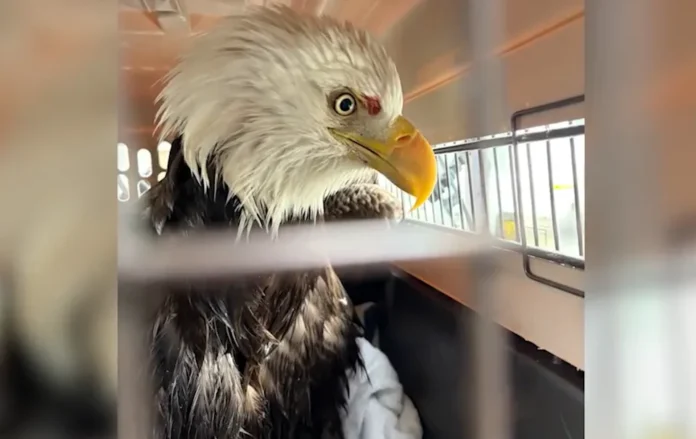
The bird was visibly injured and unable to fly. Officers reported that the eagle appeared to be in extreme distress, calling out and showing signs of significant physical trauma. Blood was visible on its wing, face, and one claw, suggesting serious injury or possible impact trauma.
Using careful handling techniques, officers deployed a catch pole and a protective tarp to safely retrieve the eagle from the unstable ice. Body camera footage from the rescue captured a striking moment of compassion, as officers reassured the frightened bird while securing it safely aboard their vessel.
The successful operation prevented what could have been a fatal outcome in freezing river conditions and demonstrated the importance of coordinated wildlife response efforts in densely populated regions.
Transport to New Jersey’s Premier Wildlife Rehabilitation Center
Following the rescue, the eagle was transported to The Raptor Trust in Long Hill Township’s Millington section, one of the nation’s leading nonprofit wild bird rehabilitation centers.
The facility immediately admitted the eagle into its intensive care unit, where specialists began emergency stabilization procedures. As of February 18, the bird was reported to be in very serious condition, requiring continuous monitoring and advanced diagnostic evaluation.
Veterinary teams are conducting comprehensive medical assessments, including:
- X-ray imaging to evaluate fractures or internal injuries
- Blood work to assess infection or systemic trauma
- Stabilization treatment to support recovery
- Intensive observation to monitor neurological and physical health
The Raptor Trust’s specialized expertise in treating birds of prey makes it a critical institution in regional wildlife protection efforts.
A Known Resident of the Palisades
Rehabilitation teams were able to identify the eagle through a band placed when the bird was a juvenile in Stony Brook, New York, in 2005. The identification revealed that the eagle is 21 years old and has nested in the Palisades region for many years.
This discovery adds emotional significance to the rescue, as the eagle represents a long-standing member of the region’s ecosystem — a symbol of environmental recovery and ecological stability.
Bald eagles were once critically endangered in the United States due to habitat loss and environmental contamination. Their recovery over recent decades stands as one of the nation’s most celebrated conservation achievements, making each individual bird an important part of ongoing ecological success.
Why Bald Eagles Gather Along the Hudson River
Wildlife experts note that bald eagles frequently winter along the lower Hudson River from December through February. The river’s unique conditions provide access to open water and abundant fish populations, making it an ideal seasonal habitat.
During colder months, eagles often perch on floating ice formations while hunting for fish. However, winter conditions also present significant risks, including:
- Ice instability
- Injury from territorial conflicts
- Collisions with vessels or structures
- Exposure to extreme cold
- Limited mobility due to injury or illness
The rescued eagle’s presence on drifting ice aligns with typical seasonal behavior, though its injuries suggest a potentially traumatic incident prior to its discovery.
New Jersey’s Role in Wildlife Protection and Rehabilitation
The eagle’s treatment in New Jersey highlights the state’s critical role in regional wildlife rescue efforts. Facilities like The Raptor Trust serve as essential hubs for injured animal care, conservation education, and environmental advocacy.
New Jersey’s wildlife protection framework includes:
- Specialized rehabilitation centers
- Volunteer-driven rescue networks
- Conservation education initiatives
- Environmental monitoring programs
- Community engagement in animal welfare
These efforts contribute to the state’s broader commitment to compassionate environmental stewardship and humane intervention.
The Symbolism of the Bald Eagle
The bald eagle holds profound national and ecological significance as the official symbol of the United States. Its presence represents strength, resilience, and environmental recovery.
For many residents, the rescue carries powerful symbolic meaning — demonstrating the importance of preserving natural heritage and protecting vulnerable wildlife.
The survival and recovery of individual eagles contribute to maintaining stable populations and supporting ecological balance within regional habitats.
Community Response and Public Awareness
The rescue has generated widespread public interest and support, drawing attention to the challenges wildlife face in urbanized environments. Stories of successful intervention often inspire greater community awareness and engagement in conservation efforts.
Public response reflects growing recognition that wildlife protection requires cooperation among:
- Emergency response units
- Environmental organizations
- Veterinary specialists
- Local communities
- Government agencies
Such collaboration strengthens the infrastructure needed to protect vulnerable species.
The Broader Importance of Wildlife Rehabilitation
Wildlife rehabilitation centers play a crucial role in maintaining ecological health. Beyond treating injured animals, these institutions support research, conservation strategy development, and public education.
Their work helps address threats including:
- Environmental pollution
- Habitat loss
- Climate-related stressors
- Human-wildlife conflict
- Disease transmission
By stabilizing injured animals and returning them to the wild when possible, rehabilitation efforts support long-term biodiversity.
Environmental Stewardship in the Garden State
New Jersey continues to invest in environmental preservation and humane initiatives that protect both domestic and wild animals. From wildlife rescue operations to conservation programs, the state demonstrates a commitment to balancing urban development with ecological responsibility.
The eagle’s rescue serves as a powerful reminder of this mission — showcasing how compassion, expertise, and swift action can preserve life even under extreme circumstances.
A Story of Survival and Hope
As the rescued bald eagle continues receiving intensive care, its condition remains closely monitored by wildlife specialists dedicated to its recovery. While its prognosis remains uncertain, the coordinated rescue and immediate medical response have provided the bird with a vital chance for survival.
The story represents more than a dramatic rescue — it reflects the values of compassion, stewardship, and environmental responsibility that continue to shape New Jersey’s role as a leader in humane action.
Across the region, the Garden State’s wildlife protection community stands ready to respond to future challenges, ensuring that the natural world remains protected for generations to come.