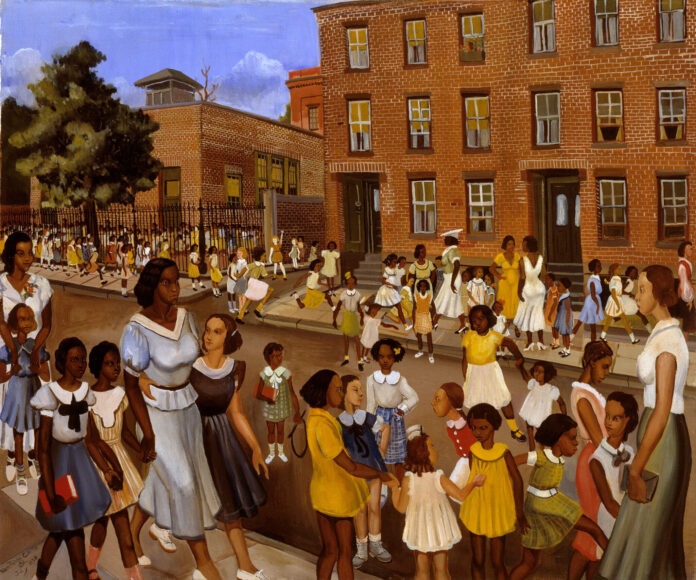

A new exhibition at the Zimmerli Art Museum at Rutgers–New Brunswick is bringing a powerful New Jersey story back into focus—one rooted not in spectacle, but in streets, stoops, sanctuaries, and the quiet heroism of everyday life. Allan Rohan Crite: Neighborhood, opening February 11 and continuing through July 31, 2026, presents a wide-ranging portrait of an artist whose work transformed ordinary moments into enduring records of Black life in twentieth-century urban America.
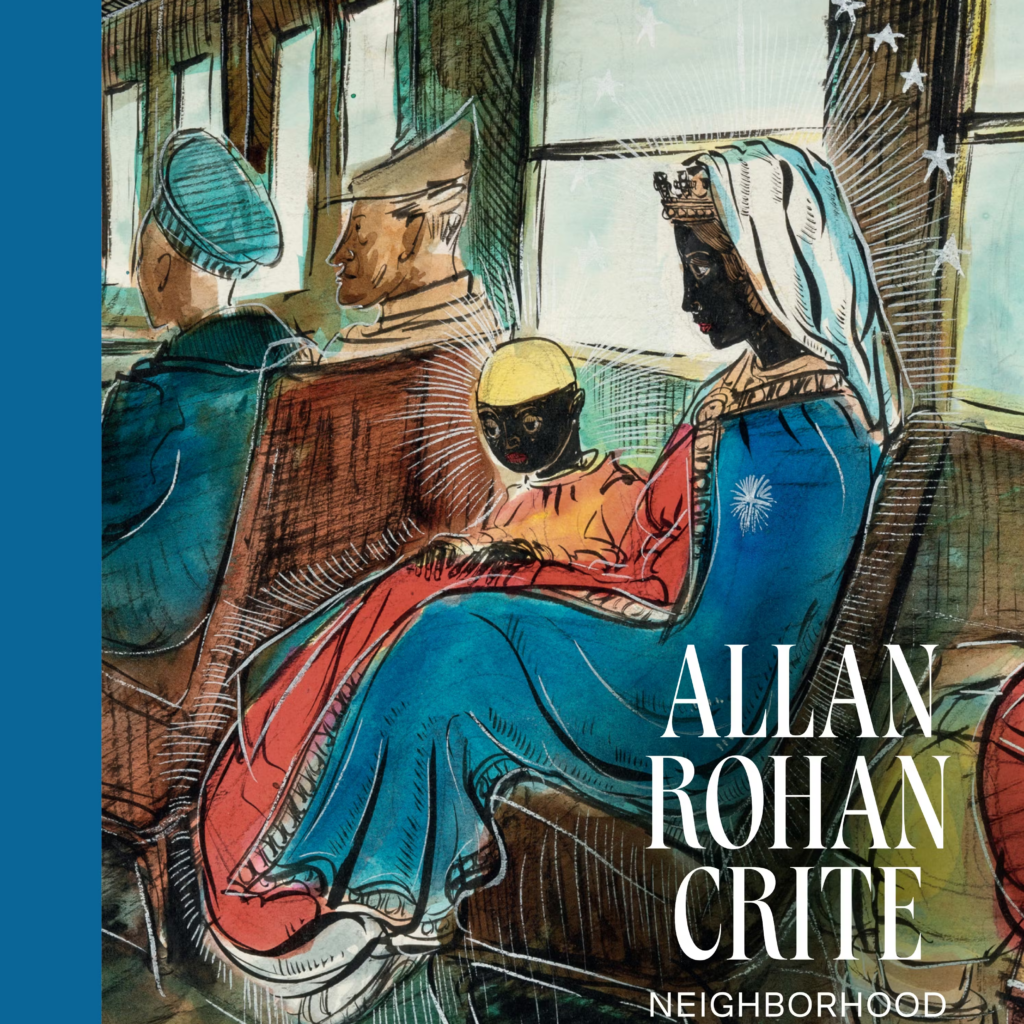
Born in North Plainfield, New Jersey, in 1910 and raised in Boston, Allan Rohan Crite built a career that bridged fine art, social history, and community memory. While his professional reputation extended well beyond any single city, the perspective that shaped his artistic voice was formed early, grounded in a lived understanding of what it meant to grow up within tight-knit neighborhoods defined by shared faith, cultural resilience, and collective survival.
The Zimmerli exhibition offers the most comprehensive regional look in years at Crite’s lifelong commitment to documenting Black communities as they existed on their own terms—joyful, complex, faithful, political, and deeply human. Spanning more than six decades of creative work, the exhibition traces how Crite became not only a painter and printmaker, but also a visual chronicler of American social life during a period marked by segregation, migration, war, civil rights activism, and shifting urban landscapes.
What makes Allan Rohan Crite: Neighborhood especially compelling for New Jersey audiences is the way it reconnects the artist’s national legacy to the state where his story began. Though Crite spent most of his adult life in Boston, his New Jersey roots are central to understanding how his art evolved. Growing up within a family that valued education, church life, and cultural continuity, Crite developed an early sensitivity to the rhythms of communal life—who gathered, who cared for one another, and how daily rituals held deeper meaning beneath the surface.
That sensibility would become the defining feature of his artistic career. Rather than centering his work on dramatic historical moments alone, Crite repeatedly turned his attention to everyday scenes: children playing in the street, neighbors talking on front steps, families attending church, workers navigating city life, and friends lingering in familiar public spaces. In doing so, he rejected the limited narratives that often defined Black life in mainstream American art during the twentieth century.
The Zimmerli presentation positions Crite as a storyteller whose visual language resisted both romanticization and erasure. His figures are neither anonymous nor idealized. They are portrayed with dignity, humor, fatigue, devotion, and emotional depth. Whether rendered in oil, watercolor, drawing, or print, Crite’s compositions reveal an unwavering belief that everyday life itself deserves artistic permanence.
One of the exhibition’s most important contributions is how it highlights the spiritual dimension that runs through much of Crite’s work. Faith was not simply a background element in his imagery; it was a central organizing force in the communities he documented. Church processions, choir gatherings, religious festivals, and moments of prayer appear throughout his career, not as symbols of abstraction but as lived practices that anchored families and neighborhoods through decades of social change.
This attention to spiritual life also allowed Crite to portray Black communities as self-sustaining cultural ecosystems. The exhibition carefully situates his work within broader historical movements, including the Great Migration, the rise of Black political organizing in northern cities, and the emergence of community institutions that supported housing, education, and artistic development. Viewers are invited to see how his visual storytelling evolved alongside these transformations, becoming more layered and socially reflective as the twentieth century progressed.
Importantly, Allan Rohan Crite: Neighborhood does not treat the artist as an isolated figure working apart from his surroundings. Instead, the exhibition underscores how deeply embedded he was in the communities he portrayed. His neighbors were often his subjects. His friends and fellow congregants became recurring figures in his compositions. This proximity gave his work a rare authenticity—an insider’s record shaped by long-standing relationships rather than distant observation.
The Zimmerli installation places particular emphasis on Crite’s commitment to accessibility and community education. Alongside his studio practice, he devoted significant energy to teaching, mentoring, and participating in local cultural initiatives. He believed that art should circulate within the same communities that inspired it, not remain confined to institutional walls. That philosophy aligns powerfully with the exhibition’s title, Neighborhood, which speaks as much to Crite’s worldview as it does to the scenes he painted.
For Rutgers and the broader New Jersey arts community, the exhibition reinforces the state’s enduring role in shaping nationally significant cultural voices. It also expands the public’s understanding of what constitutes American modernism by foregrounding an artist whose career unfolded largely outside the commercial art centers that typically dominate historical narratives.
Visitors moving through the exhibition will encounter works that reflect both consistency and quiet evolution. Early pieces reveal Crite’s careful attention to composition and narrative clarity, while later works demonstrate increasing confidence in color, movement, and symbolic layering. Across every period, however, the same guiding principle remains: a refusal to let everyday Black experience be reduced to stereotype, tragedy, or historical footnote.
The timing of this exhibition also feels especially resonant. As conversations about representation, memory, and cultural authorship continue to shape museums and academic institutions nationwide, Crite’s career offers a model for how artists can serve simultaneously as creators, historians, and community witnesses. His work does not attempt to summarize Black life. Instead, it preserves fragments of lived reality—moments of connection that collectively form a deeper, more durable historical record.
For New Jersey residents, the exhibition is also an opportunity to reclaim a native son whose artistic achievements deserve wider local recognition. North Plainfield may appear only briefly in the arc of Crite’s biography, but its presence is foundational. It represents the beginning of a perspective that would later resonate across cities, generations, and social boundaries.
The Zimmerli Art Museum’s commitment to presenting this expansive view of Crite’s career strengthens the region’s cultural landscape and affirms Rutgers–New Brunswick as a critical hub for scholarship and public engagement in the visual arts. Readers interested in exploring additional exhibitions, artist profiles, and cultural programming across the state can discover more through Explore New Jersey’s art and culture coverage, which highlights the institutions and creators shaping the Garden State’s creative identity.
Allan Rohan Crite: Neighborhood ultimately asks visitors to reconsider how history is recorded—and who is entrusted to record it. Through scenes of ordinary life rendered with extraordinary care, Crite built a visual archive that honors presence, resilience, and collective memory. More than a retrospective, the Zimmerli exhibition functions as a homecoming, reconnecting a nationally significant artist to the New Jersey roots that quietly helped shape one of the most meaningful visual chronicles of twentieth-century urban Black life.