
Rare European masterpieces, early Marklin treasures and museum-quality mechanical toys ignite national attention at Bertoia’s landmark December sale
A remarkable private collection of antique toys and model trains assembled over a lifetime by Martin and Deborah Maloy has rewritten the modern auction record books in New Jersey, generating more than $1.6 million at a high-profile December 13 sale conducted by Bertoia’s Auction House.
The event, held at the respected New Jersey auction firm known internationally for specialty collectibles and historical objects, drew aggressive bidding from collectors across the United States, Europe and Asia, firmly establishing the Maloy collection as one of the most significant antique toy and train offerings to reach the market in recent years.
The sale placed New Jersey at the center of the global collectibles conversation and underscored the region’s growing influence in the high-end world of historical toys, mechanical amusements and early model engineering. For enthusiasts following the state’s expanding cultural and live-event scene, the auction has become a defining moment in New Jersey’s growing reputation for premium collector experiences and cultural entertainment.
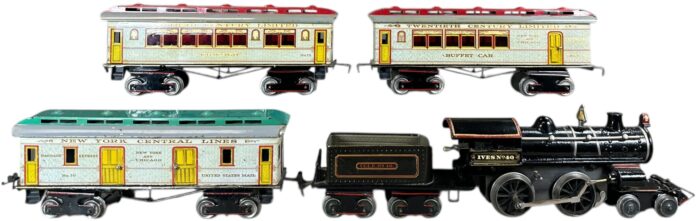
At the heart of the auction were exceptionally rare early 20th-century works by the legendary German manufacturer Märklin, widely regarded as one of the foundational innovators of precision toy and model production.
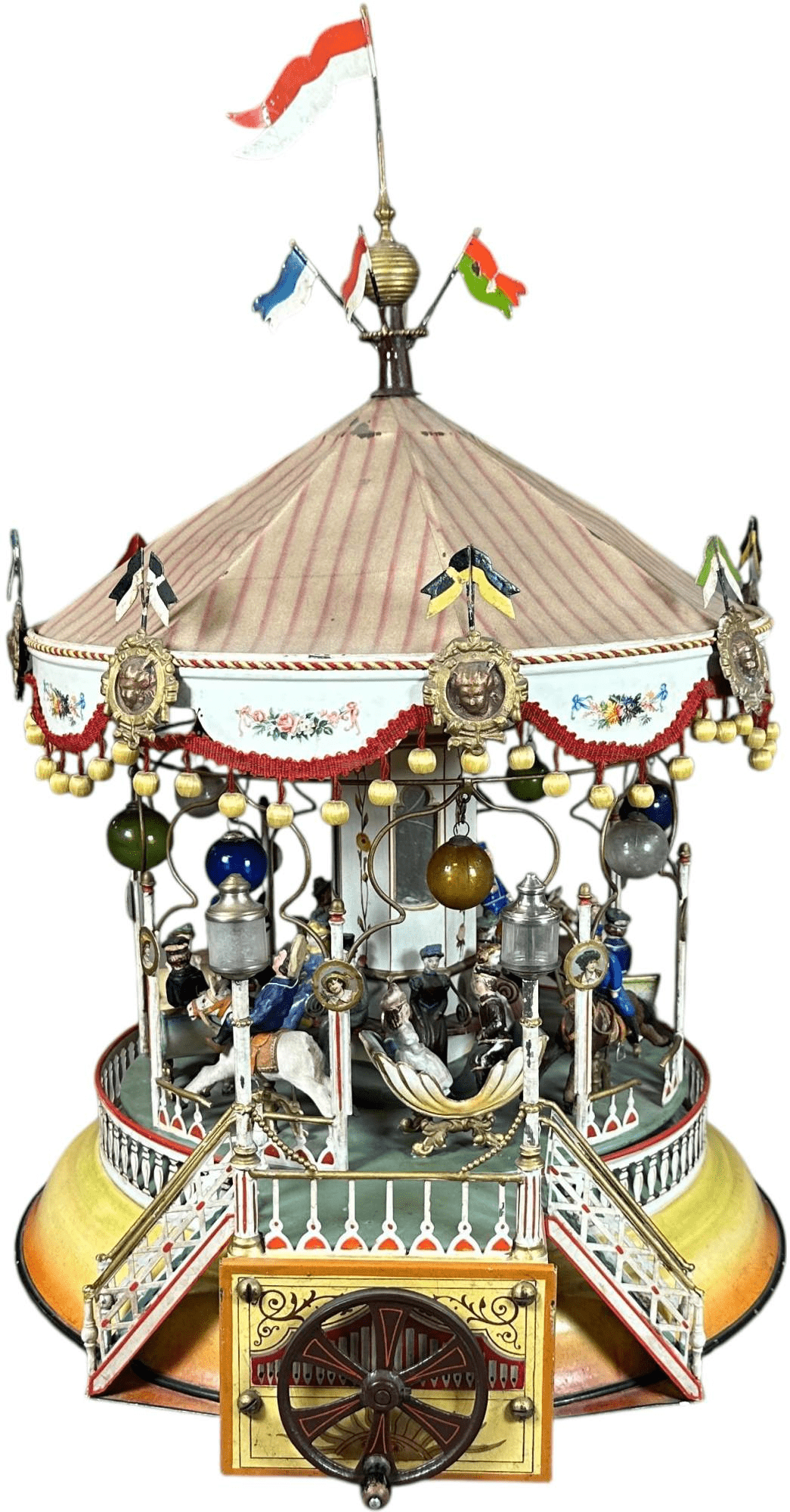
The top lot of the day was a hand-painted Märklin musical carousel, an early mechanical showpiece featuring elaborate lithographed panels, fine detailing and a fully functioning musical movement. Dating from the early 1900s, the carousel commanded a staggering $120,000 after intense international competition.
Collectors and specialists noted that surviving examples of large Märklin mechanical fairground pieces in original condition have become increasingly scarce, particularly those retaining factory paint, original drive components and intact musical mechanisms.
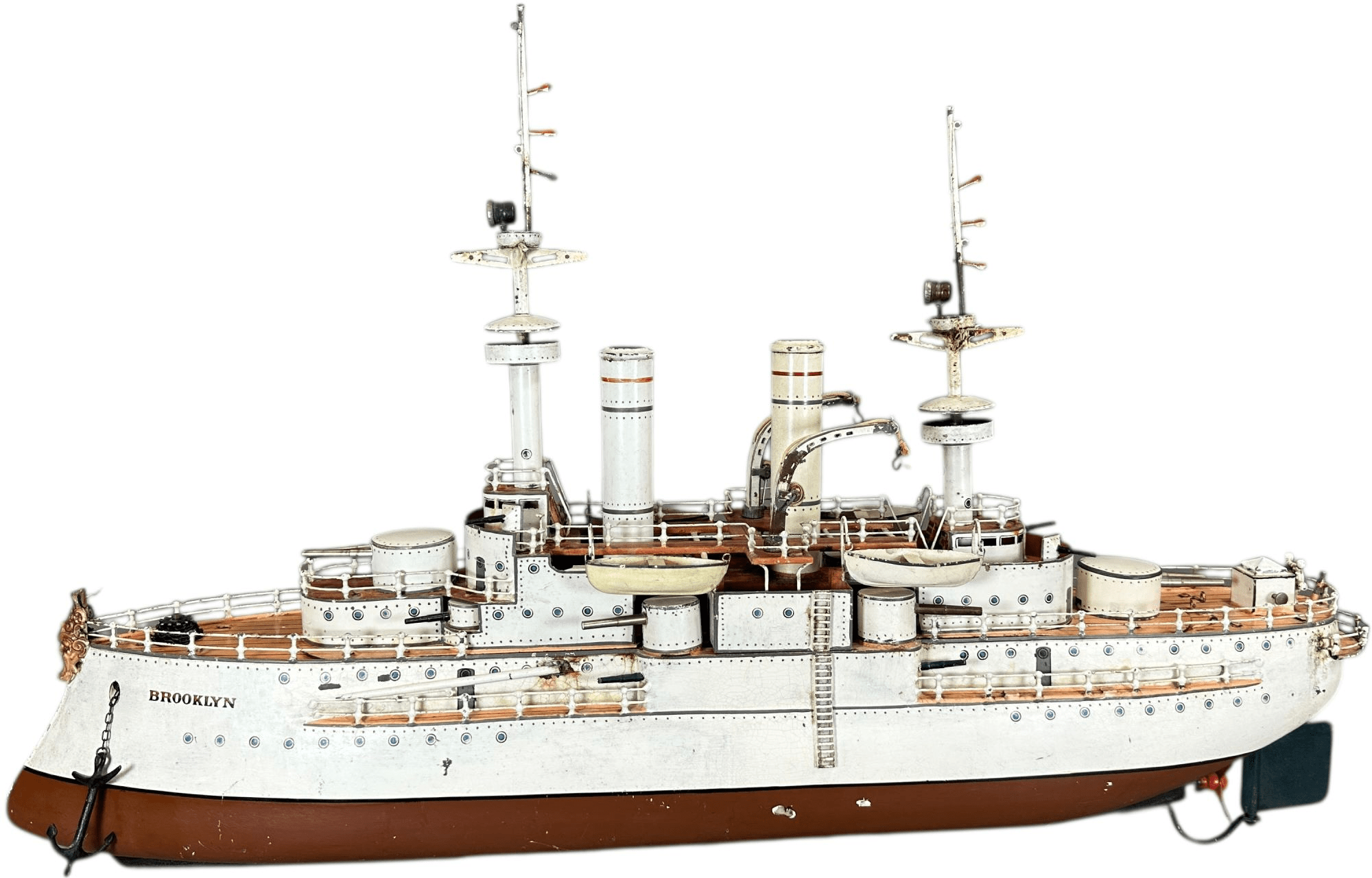
Another standout from the Maloy collection was a circa 1912–1915 Märklin Series II model of the famed U.S. Navy vessel “Battleship Brooklyn.” The highly detailed, early production model—celebrated for its craftsmanship, scale accuracy and hand-finished components—sold for $90,000, placing it among the most valuable American naval toy ship models ever sold at a New Jersey auction.
Auction specialists described the Brooklyn battleship model as an exceptional convergence of historical subject matter and elite European manufacturing quality, appealing equally to toy collectors, maritime historians and early industrial design enthusiasts.
The overall result—surpassing $1.6 million in total sales—reflected both the depth of the Maloys’ collection and the dramatic rise in demand for museum-grade antique toys and trains.
Industry observers say the market has evolved well beyond nostalgia.
Serious collectors increasingly view early mechanical toys, miniature transportation models and hand-crafted playthings as cultural artifacts that document early industrial engineering, design aesthetics and social history. Unlike many modern collectibles, high-end antique toys were produced in limited quantities and were often subjected to heavy use, making surviving examples in premium condition exceptionally rare.
The Maloy collection was widely praised for its consistent quality and scholarly depth. Rather than focusing on a single category, the collection offered a carefully curated range of European mechanical toys, early train systems, novelty mechanisms and display-quality pieces representing multiple eras of pre-war manufacturing.
Several bidders participating remotely through live platforms were reportedly museum buyers and institutional collectors, further validating the historical importance of the offering.
Beyond the marquee results, the auction also featured strong performances across multiple categories, including early tinplate trains, mechanical figures, wind-up novelty pieces and display models from premier European workshops. Specialists noted that bidding momentum remained steady throughout the day, a sign that demand in the upper tier of the toy and train market remains resilient despite broader fluctuations in luxury collectibles.
For New Jersey’s cultural and lifestyle landscape, the Maloy auction represents more than a financial milestone.
It highlights a rapidly expanding appetite for immersive collector events and heritage-driven experiences that blend history, craftsmanship and design. As interest grows in regional attractions tied to arts, exhibitions and specialty events, auctions of this caliber are increasingly seen as part of the state’s broader entertainment identity.
Collectors and cultural tourists alike are now looking more closely at New Jersey as a destination for high-level auctions, gallery showcases and historical exhibitions. That momentum is also reflected in the state’s expanding calendar of cultural programming, exhibitions and live events featured through New Jersey’s broader entertainment coverage.
Bertoia’s, long known within specialist circles for its leadership in the antique toy and train sector, has quietly transformed its New Jersey auction floor into a global marketplace. The Maloy collection now stands among the firm’s most celebrated single-owner sales, further elevating the state’s standing within the international collecting community.
For Martin and Deborah Maloy, the sale marked the culmination of decades of careful collecting, scholarship and preservation. Friends and colleagues familiar with the collection described it as the product of deep personal passion, extensive historical research and meticulous care—qualities that translated directly into bidder confidence and record-setting results.
As demand for rare, mechanically sophisticated and historically important toys continues to climb, industry experts believe the Maloy auction may serve as a benchmark for future high-end toy and train sales nationwide.
More importantly for New Jersey, the success of this extraordinary auction reinforces a growing truth: the state is no longer simply hosting major cultural moments—it is creating them.