
A single arrest, carried out quietly in New Jersey, helped ignite one of the most consequential Mafia investigations in the state’s modern history. It also launched a chain of events that would ultimately dismantle the criminal organization long believed to have inspired the fictional underworld of The Sopranos.
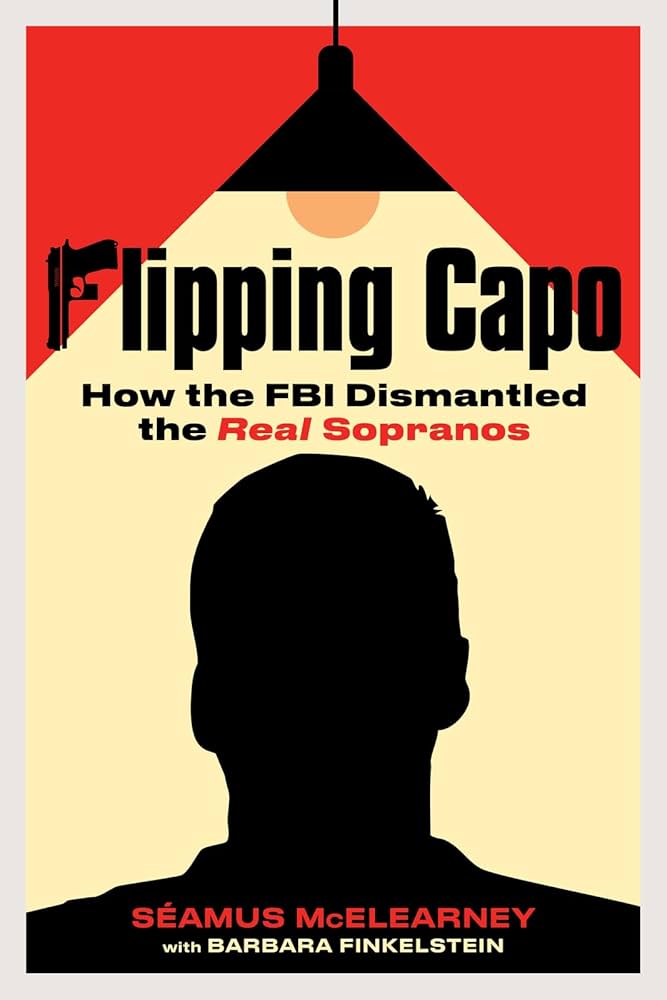
That story now takes center stage in the newly released true-crime book Flipping Capo: How the FBI Dismantled the Real Sopranos, written by Séamus McElearney in collaboration with veteran journalist Barbara Finkelstein. The book delivers a firsthand, behind-the-scenes account of how a newly minted FBI agent found himself at the heart of a sweeping federal operation that would permanently alter the landscape of organized crime in New Jersey.
McElearney was still a rookie when he joined a multi-agency crime squad focused on the DeCavalcante crime family, a long-entrenched Mafia organization operating across North Jersey and deeply embedded in construction, labor, gambling, and organized extortion schemes. What began as a standard assignment quickly escalated into one of the most aggressive federal offensives the state had seen in decades.
The task force eventually arrested 39 organized crime figures in a coordinated sweep. Among them was Anthony Capo, a made member of the DeCavalcante family and a deeply trusted figure within its operational structure. At the time of Capo’s arrest, few investigators could have predicted that he would become the most critical insider the government had ever secured against the organization.
According to McElearney’s account, barely a week after the arrests, Capo agreed to cooperate.
The speed of the decision shocked even veteran agents. Capo not only admitted his role in extensive racketeering activity, but provided confessions to a staggering range of violent crimes, including two murders and participation in eleven murder conspiracies. More consequential than any individual confession, however, was Capo’s agreement to testify against the very crime family he had served.
In doing so, he became the central human intelligence source that allowed federal investigators to map the inner structure, leadership hierarchy, financial pipelines, and internal enforcement mechanisms of the DeCavalcante organization with unprecedented precision.
Flipping Capo reconstructs the psychological, legal, and strategic maneuvering that unfolded during those critical days after Capo’s arrest. McElearney offers a rare perspective on how federal agents evaluate potential cooperators, how leverage is built during proffer sessions, and how trust—an almost impossible currency in organized crime investigations—is cautiously established between law enforcement and a lifelong criminal.
The book also exposes the extraordinary risks inherent in flipping a high-ranking Mafia figure. Once Capo agreed to cooperate, the investigation transformed from a standard prosecution into a long-term intelligence operation. Surveillance strategies shifted. Witness protection planning became a constant concern. Prosecutors began reshaping indictments to reflect evidence that only an insider could provide.
For New Jersey, the significance of the Capo cooperation cannot be overstated. The DeCavalcante crime family had operated for decades with a reputation for insulation and internal discipline. Its leadership structure, while smaller than New York’s major families, proved resilient, adaptive, and deeply connected to regional labor and construction industries. The family’s profile surged into national pop culture consciousness after it became widely regarded as one of the real-world inspirations for The Sopranos, placing unprecedented attention on its activities and leadership.
Flipping Capo moves beyond the pop-culture mythology to show how methodical federal investigations actually dismantle organized crime networks in the modern era. McElearney details how wiretaps, controlled recordings, financial audits, and corroborated informant testimony were woven together to build cases that could withstand years of courtroom scrutiny.
Equally compelling is the author’s candid examination of his own role as a first-year agent suddenly operating inside one of the most sensitive organized crime cases in the country. The book traces how young investigators are mentored, tested, and pushed into leadership roles far earlier than most people realize, particularly when large-scale operations demand around-the-clock coordination.
Rather than portraying the takedown as a single dramatic moment, McElearney frames it as a sustained campaign—months of surveillance, countless briefings, and carefully staged arrests designed to prevent information leaks and internal retaliation. Readers are brought into squad rooms, interview chambers, and late-night strategy sessions where agents debated how far to trust intelligence provided by someone who, until days earlier, had been enforcing the will of a criminal organization through violence.
Capo’s cooperation reshaped multiple prosecutions and triggered a cascading effect throughout the family. Once leadership realized the depth of information Capo possessed, paranoia spread rapidly within the organization. Long-standing alliances fractured. Communication channels tightened. Several members attempted to distance themselves from operations, while others became more aggressive in an effort to maintain control. That internal disruption, McElearney argues, proved just as damaging as the courtroom convictions that followed.
The book also explores the emotional and ethical complexity of working with a cooperating witness responsible for violent crimes. McElearney does not sanitize the reality of Capo’s past. Instead, he confronts the uncomfortable truth that dismantling sophisticated criminal enterprises often requires cooperation from individuals who have inflicted profound harm. The narrative examines how agents and prosecutors reconcile that reality with the broader objective of protecting communities and preventing future violence.
Flipping Capo ultimately positions the DeCavalcante takedown as a case study in how organized crime investigations have evolved since the peak Mafia era of the late twentieth century. Technology, digital financial trails, and modern surveillance tools have altered investigative methods, but the book makes clear that human intelligence—carefully cultivated and meticulously verified—remains the decisive factor.
For readers fascinated by New Jersey’s deep and complicated relationship with organized crime history, law enforcement culture, and courtroom drama, the book offers one of the most detailed insider accounts ever published about a local Mafia family collapse. It also adds an important new voice to the state’s growing body of narrative nonfiction and investigative storytelling featured across Explore New Jersey’s book coverage, where regional history, crime, and biography continue to draw a wide and dedicated readership.
Beyond the headlines and television mythology, Flipping Capo provides a sobering look at what it truly takes to dismantle a criminal enterprise that has operated for generations. It reveals the procedural discipline behind federal prosecutions, the personal pressures faced by agents working under constant secrecy, and the fragile, high-stakes decisions that can either break a case—or make it historic.
What began with the arrest of one mobster in New Jersey ultimately became the unraveling of an entire criminal organization. And at the center of that unraveling stood a rookie FBI agent, a deeply compromised insider, and a narrow window of opportunity that permanently reshaped the state’s organized crime landscape.