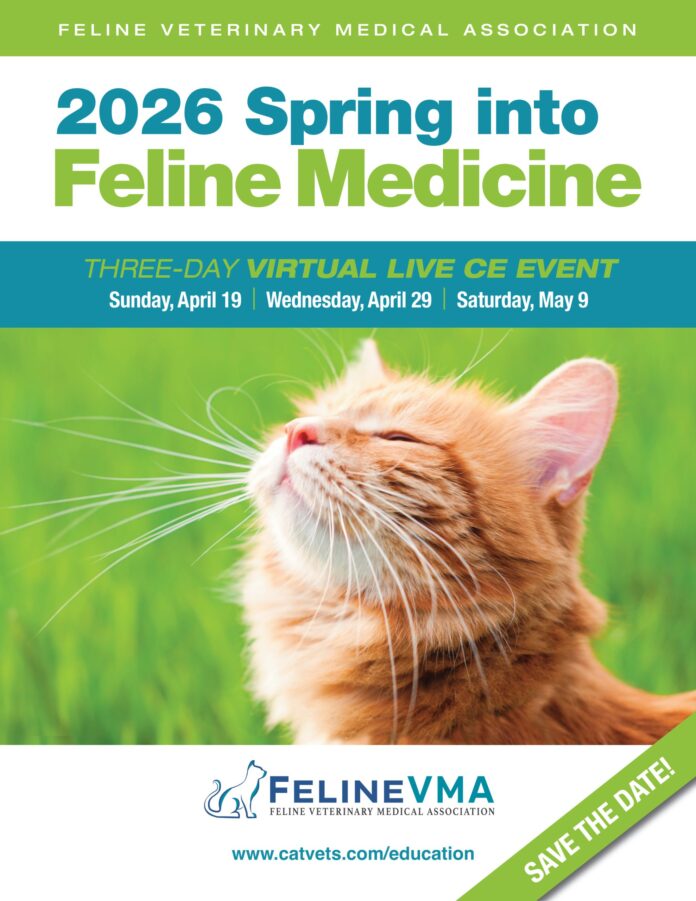

The future of feline health care education will once again take center stage in 2026, as FelineVMA prepares to deliver its highly anticipated Spring into Feline Medicine eConference—an immersive, three-day virtual learning experience built specifically for veterinary professionals dedicated to advancing the quality of care for cats around the world.
Set to return next spring, the 2026 edition of the Spring into Feline Medicine eConference is being designed as a comprehensive, clinically driven educational event featuring internationally recognized speakers, in-depth medical sessions, and practical, case-based instruction that reflects the rapidly evolving science of feline health. With growing awareness that cats require a distinctly different clinical approach than dogs, the conference continues to position itself as one of the most focused professional learning environments in modern veterinary medicine.
Unlike broad-spectrum veterinary conferences that divide attention across multiple species, this fully feline-centered program delivers three uninterrupted days of expert instruction addressing the unique physiological, behavioral, diagnostic, and therapeutic challenges encountered in cats. Organizers have emphasized that the 2026 agenda will build on the momentum of previous years by offering expanded clinical tracks, deeper dives into emerging research, and interactive learning opportunities designed to support both early-career clinicians and seasoned veterinary specialists.
The upcoming conference is expected to feature a diverse slate of speakers representing academic medicine, private specialty practice, and cutting-edge research institutions. Sessions will focus on real-world clinical applications—ranging from complex internal medicine cases and advances in diagnostic imaging to pain management strategies, geriatric feline care, and updates on infectious disease protocols. Behavioral medicine and stress-reduction practices in clinical environments will also remain a central theme, reflecting the growing emphasis on cat-friendly handling and practice design.
Veterinary leaders involved in developing the 2026 program note that feline medicine is experiencing one of the most significant periods of growth and specialization in the profession’s history. Improved diagnostic tools, deeper understanding of feline-specific disease progression, and expanding pharmacological options are reshaping how clinicians approach long-standing conditions such as chronic kidney disease, diabetes, cardiomyopathies, and inflammatory disorders.
The Spring into Feline Medicine eConference is structured to translate these advances into practical clinical decision-making. Attendees can expect detailed case reviews, protocol updates, and evidence-based treatment discussions that go beyond theory and focus on real outcomes in everyday practice.
One of the defining strengths of the eConference model is accessibility. By offering the program entirely online, the association removes geographic and scheduling barriers that often limit participation in traditional in-person conferences. Veterinary professionals from across New Jersey, the broader United States, and international markets will be able to attend live sessions, engage with presenters, and access recorded presentations without the costs associated with travel and time away from their clinics.
This approach is especially meaningful for smaller and independent practices, where staffing limitations can make multi-day travel impractical. The virtual format allows entire teams—veterinarians, veterinary technicians, and support staff—to participate in continuing education without interrupting patient care.
The 2026 conference will also continue its commitment to offering high-quality continuing education credits, allowing attendees to meet licensure requirements while gaining specialized training that directly enhances their feline caseloads. For many clinicians, the Spring into Feline Medicine eConference has become a cornerstone event in their annual professional development calendars.
Beyond its educational value, the program reflects a broader shift within the veterinary profession toward prioritizing species-specific medicine and individualized care pathways. Cats are now the most common companion animal in many households, yet they remain historically underserved in terms of dedicated medical research, clinical training, and public awareness. Events such as this eConference are helping close that gap by elevating feline medicine to the same level of specialization long established in canine and equine care.
The 2026 agenda is expected to include sessions addressing the growing role of tele-triage, data-driven diagnostics, and multidisciplinary collaboration in feline practice. Presentations exploring the intersection of nutrition, environmental enrichment, and preventive medicine will further highlight the importance of holistic care strategies that extend well beyond the exam room.
In addition to advanced medical topics, the conference will incorporate content focused on communication strategies and client education—critical tools for improving compliance and strengthening relationships between veterinary teams and pet owners. As cats are well known for masking illness until disease is advanced, clinicians increasingly rely on owner awareness and early intervention to improve long-term outcomes.
The Spring into Feline Medicine eConference also plays an important role in fostering professional connection within a field that can often feel isolated, particularly for practitioners who work primarily in small clinics or rural communities. Live discussion segments, moderated Q&A sessions, and peer-to-peer interaction provide participants with an opportunity to exchange perspectives, share clinical challenges, and learn from colleagues who face similar day-to-day realities.
For New Jersey’s veterinary community in particular, the event offers a valuable bridge between local practice and global expertise. The state is home to a large concentration of companion animal hospitals, specialty clinics, and academic institutions, making ongoing professional education essential to maintaining the high standards of care that pet owners increasingly expect.
Readers who follow advances in animal health and clinical education can also explore broader coverage of wellness initiatives and medical innovation through Explore New Jersey’s Health and Wellness section, which highlights how evolving healthcare trends—both human and animal—are shaping communities across the state.
As planning for the 2026 conference continues, organizers have indicated that additional session tracks and speaker announcements will be released in the coming months. The goal, they say, is to create a learning experience that not only reflects current best practices in feline medicine but also anticipates the future needs of a profession adapting to rapid scientific progress and changing client expectations.
In an era when veterinary professionals are being asked to deliver increasingly sophisticated care while navigating staffing shortages, rising operational costs, and growing emotional demands, the Spring into Feline Medicine eConference stands out as a focused investment in clinical excellence, professional resilience, and the long-term health of the world’s cats. By assembling a global faculty, embracing accessible digital education, and centering every discussion on feline-specific care, the 2026 program is poised to reinforce its reputation as one of the most influential learning platforms in modern feline medicine.