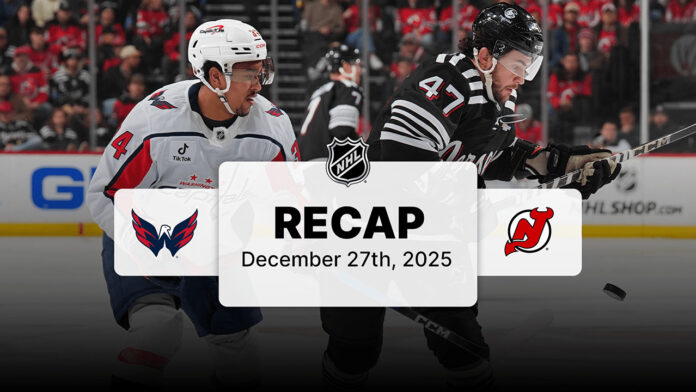

The New Jersey Devils came out of the holiday break with energy, urgency, and a clear understanding of what was at stake. A home-and-home style intradivisional showdown with the Washington Capitals is never just another game, and this one carried added weight for a Devils team attempting to stabilize its season and reassert itself in the Metropolitan Division picture. What unfolded, however, was a frustrating reminder that progress and consistency remain very different things.
New Jersey ultimately walked away with a 4–3 overtime loss that felt heavier than a single point in the standings. Against a Capitals club built around patience, experience, and opportunistic finishing, the Devils repeatedly put themselves in vulnerable positions and paid for it in the most unforgiving way possible.
From the opening faceoff, the Devils skated with pace and purpose. Their forecheck created turnovers, their zone entries were clean, and they consistently generated quality looks at five-on-five. Jack Hughes’ return to the lineup immediately injected speed through the neutral zone and forced Washington’s defense into early adjustments. His presence opened lanes, pulled defenders out of structure, and gave New Jersey a layer of creativity it had been missing in recent games.
That spark showed up on the scoreboard, as the Devils jumped out to an early lead and appeared poised to take control. Yet the game gradually shifted as a series of small, avoidable mistakes crept in. Defensive zone exits became rushed. Neutral-zone turnovers allowed Washington to counter with numbers. Penalty trouble gave the Capitals additional time to settle into their power play rhythm.
Washington did what veteran teams often do. They absorbed pressure, waited for breakdowns, and capitalized on the few openings they were given. Alex Ovechkin remained a constant gravitational force on the ice, pulling coverage and creating space for secondary scoring threats to exploit. The Devils’ inability to consistently clear their zone and close out shifts became a growing problem as the game moved into the later stages.
By the third period, the tone had shifted from confident to cautious. New Jersey still generated chances, but the decisiveness seen early began to fade. Pucks were held a second too long. Shooting lanes closed. Washington steadily pushed back, eventually leveling the score and forcing overtime.
The extra frame highlighted the fine margins that continue to define the Devils’ season. A missed assignment in coverage and a lost battle along the boards quickly swung possession to the Capitals, and the game ended almost as suddenly as it had unraveled. One point was secured, but two slipped through their grasp.
The loss dropped New Jersey into an uncomfortable position in a crowded Metropolitan Division, where every head-to-head matchup carries amplified significance. It also underscored the reality that this roster, while undeniably talented, is still learning how to consistently close games against structured, veteran opponents.
There were positives. Hughes looked like himself again, adding speed, vision, and scoring punch to a lineup that had lacked offensive fluidity in recent weeks. Timo Meier’s return provided additional physicality and shot volume. Jake Allen’s steady presence in goal helped keep the game within reach during stretches when Washington tilted the ice.
But there are also larger roster considerations looming. The Devils remain pressed tightly against the salary cap ceiling, limiting flexibility for call-ups or lineup tweaks. Forward combinations continue to shuffle as the coaching staff searches for consistency. Every roster decision now carries both short-term and long-term implications, especially with the trade market beginning to take shape around the league.
For a team that entered the season with postseason expectations, nights like this serve as reminders that potential alone does not guarantee results. New Jersey has the pieces. What it must now develop is the discipline, situational awareness, and late-game execution that separate good teams from reliable contenders.
As the Devils prepare for the next stretch of their schedule, fans tracking the club’s progress, roster updates, and future matchups can continue to follow comprehensive coverage through the New Jersey Devils hub on Explore New Jersey, which provides ongoing insight into one of the state’s most closely followed franchises.
The path forward remains open. The standings remain fluid. But games like this are the ones that ultimately define seasons, not because of the loss itself, but because of what teams choose to learn from it.