The Vienna Lessons
The Vienna Lessons Brings Mozart and Beethoven to Life in a Bold, Music-Driven Stage Production at New Jersey Repertory Company
June 4 @ 20:00 – June 7 @ 23:30
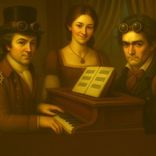
New Jersey’s cultural calendar continues to evolve with programming that merges intellectual depth with performance precision, and on June 4 at 7:00 PM, New Jersey Repertory Company in Long Branch will present The Vienna Lessons, a sharply constructed comedic drama that imagines a pivotal and often-debated moment in music history. Set in Vienna in 1787, the production explores a speculative encounter between Wolfgang Amadeus Mozart and a young Ludwig van Beethoven, two figures whose influence on Western music remains unmatched. Within the broader framework of live performance across the state—consistently reflected in Explore New Jersey’s music coverage—this production stands out as a hybrid theatrical experience, combining narrative, historical interpretation, and live musical integration.
At its foundation, The Vienna Lessons is built around a single premise with expansive implications: the meeting of two composers at dramatically different points in their lives. Mozart, already an established and prolific composer yet facing financial instability, represents artistic maturity shaped by experience and contradiction. Beethoven, portrayed as a driven and highly self-assured young musician, embodies ambition, discipline, and the early formation of a revolutionary voice. The dramatic tension of the piece emerges from this contrast—one artist navigating decline despite mastery, the other ascending with untested certainty.
The play’s structure leverages this dynamic to explore broader questions about mentorship, legacy, and creative identity. Rather than presenting a straightforward historical narrative, the work operates within a speculative framework, constructing dialogue and interaction that reflect what such a meeting could have revealed about both composers. This approach allows the production to move beyond biography into interpretation, using character-driven exchanges to examine how artistic influence is transmitted, challenged, and ultimately transformed.
A defining feature of The Vienna Lessons is its integration of music into the dramatic framework. The inclusion of compositions from both Mozart and Beethoven is not ornamental—it is structural. These works function as extensions of character, reinforcing emotional states, thematic transitions, and the evolving relationship between the two figures. The performance also introduces imagined collaborative elements, creating a conceptual space where the musical languages of both composers intersect. This aspect of the production requires careful coordination, ensuring that the musical components align with the narrative arc rather than operating independently.
From a performance standpoint, the material demands a high level of control and interpretive clarity. The dialogue is constructed to balance humor with intellectual engagement, requiring actors to navigate shifts in tone while maintaining consistency in character portrayal. Timing becomes critical, particularly in scenes where comedic elements are layered over deeper thematic content. In a venue like New Jersey Repertory Company, where audience proximity heightens the impact of performance detail, these elements are amplified, creating an environment where subtle shifts in delivery carry significant weight.
The Long Branch location of New Jersey Repertory Company provides an ideal setting for a production of this nature. Known for its focus on new works and playwright-driven programming, the theatre offers a space where narrative and performance can operate without distraction. Its scale supports an intimate viewing experience, allowing audiences to engage directly with both the dialogue and the musical elements of the production. This alignment between venue and material is central to the effectiveness of The Vienna Lessons, ensuring that the conceptual framework of the play is fully realized in performance.
Thematically, the production engages with the enduring relevance of Mozart and Beethoven within contemporary culture. While their work is often associated with historical distance, The Vienna Lessons positions them as immediate and relatable figures, defined not only by their achievements but by their struggles, ambitions, and interactions. This approach reflects a broader trend within live performance, where historical subjects are reinterpreted through a modern lens to emphasize their continued significance. As highlighted across Explore New Jersey’s music platform, this type of programming contributes to a more dynamic understanding of classical music, bridging the gap between past and present.
Ticket pricing for the June 4 performance is set at $65, reflecting the level of production and the specialized nature of the work. This positions the event within the upper tier of regional theatre offerings while maintaining accessibility for audiences seeking a performance that combines intellectual rigor with artistic execution. The single-evening format further reinforces its status as a focused engagement, encouraging early planning for those interested in attending.
Within the broader context of New Jersey’s 2026 performance calendar, The Vienna Lessons occupies a distinct position. It is neither purely theatrical nor strictly musical; it exists at the intersection of both, requiring an audience willing to engage with its hybrid structure. This positioning aligns with the continued diversification of programming across the state, where venues are increasingly presenting work that challenges conventional categorization while maintaining a high standard of execution.
As the performance unfolds on June 4 in Long Branch, The Vienna Lessons will offer a carefully constructed exploration of artistic connection, conflict, and influence. It is a production that leverages historical imagination, musical integration, and disciplined performance to create an experience that is both engaging and analytically rich. Within New Jersey’s evolving cultural landscape, it stands as a clear example of how live theatre can intersect with musical history to produce work that is both intellectually grounded and theatrically compelling.