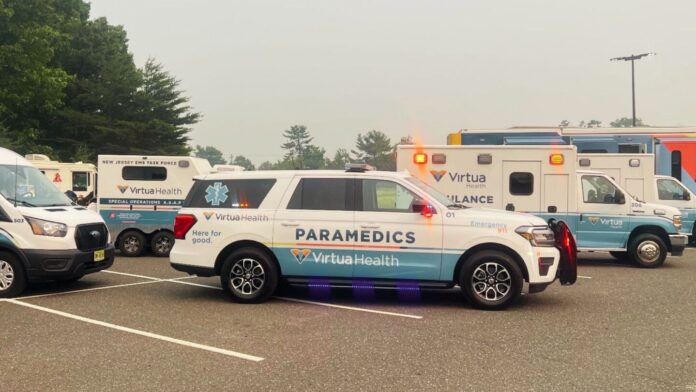

A growing statewide conversation around emergency medical services is now playing out in South Jersey, where Collingswood officials are formally responding to legal challenges tied to the borough’s evolving approach to ambulance and paramedic coverage. At the center of the dispute is a broader issue confronting communities throughout New Jersey in 2026: how to maintain safe, reliable emergency response amid rising costs, shrinking staffing pools, and increasing call volumes.
Collingswood leaders have moved to rebut claims brought by County Commissioner Jim Maley, asserting that his lawsuit is rooted in a misreading of events and a flawed interpretation of conflict-of-interest law. Borough officials maintain that their actions were driven by a pressing public safety need, citing years of worsening staffing shortages among local first responder crews. According to the borough, personnel gaps have reached levels that pose operational risk, particularly during peak demand periods when call volume and response times intersect.
To stabilize emergency coverage, Collingswood has explored partnerships that would allow trained medical professionals from Virtua to supplement local response capacity. Officials argue that this model is designed to protect residents by ensuring ambulances and paramedic teams remain available when municipal staffing cannot meet demand, rather than dismantling public safety services.
The situation in Collingswood reflects a much larger debate unfolding statewide. EMS privatization—where municipalities contract private or hospital-based providers to manage ambulance transport and advanced life support—has become an increasingly common strategy in communities struggling to balance budgets while maintaining response reliability. Instead of operating fully municipal ambulance services, towns often enter agreements with regional health systems or private medical transport firms, shifting funding from tax-based models to insurance reimbursement and user-fee structures.
Many municipalities now rely on hybrid public-private partnerships. Under these arrangements, local fire departments or police units remain first on scene to stabilize patients, while contracted EMS providers handle transport and advanced care. Supporters view this structure as a way to preserve community presence while improving access to equipment, staffing, and administrative resources that smaller towns may lack.
The policy conversation has intensified following legislative action in Trenton. A bill introduced in late 2025 aims to classify emergency medical services as an essential service in New Jersey, addressing long-standing gaps that leave some municipalities without guaranteed EMS coverage. The measure reflects growing concern that communities are increasingly dependent on mutual aid and short-term contracts that can change with little notice.
Labor organizations and public safety unions have voiced strong concerns about privatization, warning that outsourcing can displace long-serving municipal EMTs and firefighters while lowering wages and benefits. They also caution that profit-driven models could affect response times or service prioritization, particularly in lower-revenue areas. At the same time, municipalities counter that many private providers are themselves exiting long-standing contracts due to financial strain, forcing towns to reevaluate how emergency medical care is delivered.
For residents, the debate goes beyond policy. It touches on personal safety, neighborhood trust, and the reliability of emergency response in moments that matter most. Communities want assurance that ambulances will arrive quickly, care will be consistent, and local accountability will remain intact regardless of who holds the service contract.
As the legal challenge in Collingswood moves forward, it underscores the urgency of finding sustainable, transparent EMS solutions that can adapt to staffing shortages, economic pressures, and growing healthcare demand. The outcome may influence how other municipalities structure emergency response in the years ahead, shaping not only budgets but also public confidence in frontline medical care.
The Debate: Pros and Cons
| Pros (Arguments for) | Cons (Arguments against) |
|---|---|
| Cost Savings: Reduces the need for municipalities to pay for expensive equipment, public pensions, and full-time staff. | Profit Motive: Critics argue private companies may prioritize “profitable” transports over patient care or response times. |
| Expertise: Provides access to specialized medical equipment and management that small towns may lack. | Job Loss: Can result in the layoff of long-serving local EMTs and firefighters. |
| Innovation: Competition can lead to faster adoption of new technologies, like AI-powered dispatch. | Reduced Oversight: Governments may lose direct control over how the service is run once it is outsourced. |
Ongoing coverage of public health policy, community wellness, and emergency services can be found through Explore New Jersey’s health and wellness section, where statewide trends intersect with local stories that affect daily life across the Garden State.