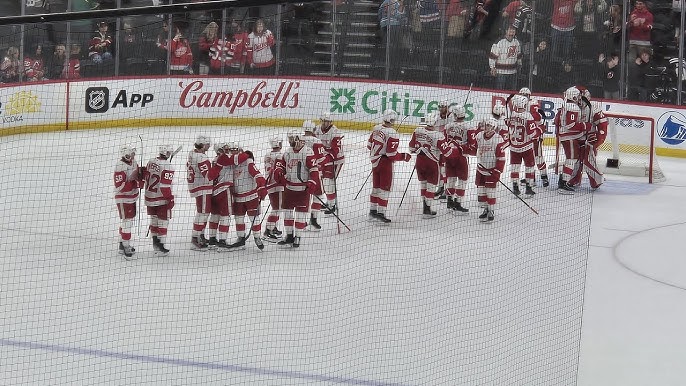

The New Jersey Devils entered Sunday night at Prudential Center knowing the stakes. March hockey in the NHL is rarely forgiving, and for a team trying to claw its way back into the playoff conversation, every game carries amplified meaning. The Devils arrived riding momentum, energy, and a four-game winning streak that had revived hope across the Garden State.
Instead, the night ended in frustration.
Detroit shut down New Jersey’s attack and walked out of Newark with a 3–0 victory, snapping the Devils’ surge and delivering a reminder of how thin the margin for error has become as the season pushes toward its final stretch.
For fans following the team through the season’s twists and turns, the result wasn’t just another loss in the standings. It was a snapshot of where the Devils currently stand — a talented but inconsistent team fighting injuries, navigating trade-deadline decisions, and attempting to stay alive in a crowded Eastern Conference race.
For continued Devils coverage, analysis, and updates across the season, readers can explore the full coverage hub at New Jersey Devils on Explore New Jersey.
A Winning Streak Ends at the Worst Possible Time
Momentum had been building in Newark.
The Devils entered the matchup against Detroit playing some of their most inspired hockey of the season. A four-game winning streak had injected energy into the locker room and reignited conversations about a potential late-season surge.
Just days earlier, New Jersey delivered one of its most electric performances of the year — a 6–3 victory over the New York Rangers in which Jack Hughes exploded for a hat trick, sending Prudential Center into a frenzy and reminding everyone why the Devils’ young core remains one of the most exciting groups in the NHL.
That stretch of success had begun to reshape the narrative surrounding the team. Instead of focusing on inconsistency, the conversation shifted toward possibility.
Sunday night abruptly halted that momentum.
Detroit controlled the pace of the game, neutralized New Jersey’s top offensive weapons, and capitalized on scoring opportunities while the Devils struggled to generate sustained pressure.
For a team that had begun to feel like it was finding its rhythm, the shutout served as a harsh reset.
The Reality of the Standings
The loss drops the Devils further into the uncomfortable math of the playoff chase.
New Jersey currently sits at 32–30–2, hovering around the .500 mark as the regular season moves deeper into its decisive stretch. The standings remain unforgiving, and the gap separating the Devils from a postseason position has been difficult to close.
As the NHL trade deadline approached earlier in the week, the Devils were reportedly nine points out of a playoff spot, forcing the organization to take a measured approach rather than aggressively buying or selling.
For fans hoping for a dramatic late-season rally, the math remains daunting — but not impossible.
The Eastern Conference playoff race has been volatile all year, and teams that find momentum in March can quickly shift the landscape.
Still, performances like Sunday’s loss highlight how difficult that climb will be.
A Quiet but Strategic Trade Deadline
The March 6 NHL trade deadline offered insight into how the Devils’ front office views the current roster.
Rather than executing sweeping moves, New Jersey adopted a “stand-pat seller” approach — a strategy that preserved the team’s core while making smaller adjustments.
One of the notable changes involved depth center Luke Glendening, who was claimed off waivers by the Philadelphia Flyers. While not a headline-grabbing move, it signaled that the Devils were willing to adjust the bottom of the lineup without dismantling the roster.
Equally significant were the players who stayed.
Despite heavy speculation across league circles, Dougie Hamilton and Simon Nemec both remained with the Devils after the deadline passed. Keeping those defensemen signals that the organization still believes the current roster — particularly its young foundation — has a meaningful future together.
Earlier in the season, the biggest roster shift came when veteran winger Ondřej Palát was moved to the New York Islanders in exchange for forward Maxim Tsyplakov, a deal that hinted at the team’s willingness to reshape its forward group while maintaining long-term flexibility.
The deadline decisions reveal a franchise balancing two realities: trying to stay competitive now while continuing to build toward sustained success.
Injuries Continue to Complicate the Devils’ Season
If the Devils’ season has had a defining theme, it might be health.
Injuries have repeatedly forced the coaching staff to adjust line combinations and defensive pairings, disrupting chemistry just as the team begins to find it.
Defenseman Brett Pesce is currently listed as week-to-week with a lower-body injury and missed both the Rangers victory and the Detroit matchup. His absence removes a stabilizing defensive presence and limits the team’s ability to manage difficult matchups against top offensive lines.
The injury list extends beyond the blue line.
Forward Zack MacEwen underwent ACL surgery in January and is out for the remainder of the season. Meanwhile, Stefan Noesen remains on long-term injured reserve following knee surgery.
When a team already struggling with consistency loses key depth pieces, every lineup adjustment becomes more complicated.
For a club attempting to maintain momentum in the middle of a playoff race, those injuries create additional challenges every night.
Offensive Silence Against Detroit
The most frustrating aspect of Sunday’s loss was the Devils’ inability to generate offense.
New Jersey has shown flashes of explosive scoring this season, particularly when Jack Hughes, Nico Hischier, and the team’s young playmakers begin dictating pace. When the offense is flowing, the Devils can overwhelm opponents with speed and transition play.
Against Detroit, that engine never fully started.
The Red Wings successfully disrupted New Jersey’s breakout patterns and prevented sustained zone time. Without extended offensive pressure, the Devils were forced into lower-percentage shots and struggled to establish the kind of rhythm that had defined their recent winning streak.
For a team capable of scoring in bunches, being held scoreless at home was a difficult pill to swallow.
Prudential Center Remains Central to the Season’s Story
Despite the loss, one factor still working in the Devils’ favor is the current schedule.
New Jersey is in the middle of a seven-game homestand at Prudential Center, a stretch that could ultimately define whether the team remains in the playoff conversation.
The building in downtown Newark — affectionately known as “The Rock” — has long been one of the most energetic environments in the NHL when the Devils are playing meaningful games. The organization, which has captured three Stanley Cup championships in its history, carries a legacy that continues to resonate with fans across the state. (Explore New Jersey)
When the Devils play their fastest and most aggressive hockey, Prudential Center becomes an intimidating venue for visiting teams.
That makes the upcoming schedule particularly important.
Upcoming Matchups Could Shape the Season
The Devils’ homestand continues with several critical matchups that will test both the roster’s depth and its resilience following the Detroit setback.
New Jersey’s upcoming games include:
March 12 — Calgary Flames
March 14 — Los Angeles Kings
March 16 — Boston Bruins
Each opponent brings a different challenge.
Calgary’s physical style demands disciplined defensive structure. Los Angeles plays one of the league’s most structured systems. Boston remains a perennial contender capable of exposing mistakes quickly.
For the Devils, success during this homestand could keep their postseason hopes alive.
Struggles, however, could push the team further away from the playoff line.
The Importance of Leadership and Young Talent
Even with the challenges this season has presented, the Devils still possess one of the NHL’s most intriguing young cores.
Jack Hughes continues to evolve into a superstar capable of dominating games offensively. Nico Hischier provides leadership and two-way reliability. The defensive group, anchored by experienced players and emerging talents, still offers long-term promise.
The question now is consistency.
The Devils have demonstrated throughout the season that they can defeat top teams when they play at their best. The challenge has been sustaining that level of performance over extended stretches.
Sunday’s loss illustrated that inconsistency once again.
March Hockey in Newark Is Still Meaningful
Despite the disappointment of the Detroit loss, the Devils are not out of the race.
The NHL season is long, unpredictable, and often shaped by momentum swings. A strong run over the next two weeks could dramatically alter the standings picture.
More importantly, the Devils are continuing to build a culture around a talented young core that remains capable of competing at a high level.
The shutout loss to Detroit was a setback — but it also served as a reminder of the urgency required to compete in the NHL’s stretch run.
With games remaining on a pivotal homestand and a fanbase eager to see the team push forward, the Devils now face a simple challenge.
Respond.
The next chapter of the season begins immediately at Prudential Center.